

More news on this day
Severe weather and knock-on congestion across China’s busy aviation network triggered 60 flight cancellations and 197 delays today, disrupting operations at major hubs including Beijing and Shenzhen and leaving many domestic and regional passengers facing missed connections and overnight uncertainty.
Get the latest news straight to your inbox!
Beijing and Shenzhen Among Hardest-Hit Airports
Publicly available airport and flight-tracking data indicate that disruption has been concentrated at large hubs such as Beijing Capital, Beijing Daxing and Shenzhen Bao’an, where dense schedules and marginal weather quickly translated into widespread knock-on delays. While the absolute numbers are modest compared with past nationwide shutdowns, the clustering of 60 cancellations and nearly 200 delayed departures in peak periods created visible strain in terminals.
In Beijing, low cloud, rain bands and shifting winds reduced runway acceptance rates during the morning and early afternoon, forcing controllers to meter arrivals and departures. Even short reductions in capacity caused aircraft to queue on taxiways and at holding points, pushing back scheduled departure times and eroding connection buffers for travelers heading onward to secondary cities.
Shenzhen Bao’an, a frequent choke point in southern China during convective weather, experienced similar constraints as thunderstorms and reduced visibility moved across the Pearl River Delta. The combination of weather-related routing restrictions and heavy traffic on trunk routes linking Shenzhen with Beijing, Shanghai, Chengdu and Xi’an meant that a relatively small number of primary delays cascaded across multiple rotations throughout the day.
Operational reports from other airports, including Guangzhou, Hangzhou and Kunming, show additional delays but on a smaller scale than at the Beijing and Shenzhen hubs. However, because many domestic itineraries connect through these cities, disruption there further complicated rebooking options for travelers already affected at the main centers.
Domestic Trunk Routes See Most Disruption
The bulk of the affected flights operated on busy domestic routes linking major economic corridors. Services between Beijing and Shenzhen, Beijing and Guangzhou, as well as legs connecting Shenzhen with Chengdu, Xi’an and Kunming, feature tight turnarounds and high daily frequencies, which made them especially vulnerable once weather-related flow restrictions came into force.
On some Beijing–Shenzhen rotations, ground stops and en-route weather avoidance extended flight times and turnaround windows, prompting airlines to cancel selected frequencies to stabilize schedules. These targeted cancellations reduced short-term congestion but contributed to pockets of stranded passengers at both ends of the route, particularly travelers relying on same-day onward connections to smaller cities.
Secondary and regional sectors, including flights from inland hubs toward coastal destinations, were also affected where crews and aircraft were scheduled to arrive from the most disrupted airports. Even where local weather remained within operating limits, late-arriving equipment resulted in rolling delays into the evening, complicating crew duty planning and aircraft positioning for the next day’s operations.
International services appear to have been less severely hit in numerical terms, but delays on outbound and inbound regional flights through Beijing and Shenzhen still caused missed onward domestic connections. This was particularly challenging for travelers on separate tickets, who have more limited protection than those booked on through itineraries with a single carrier or alliance partner.
What Stranded Passengers Are Experiencing On The Ground
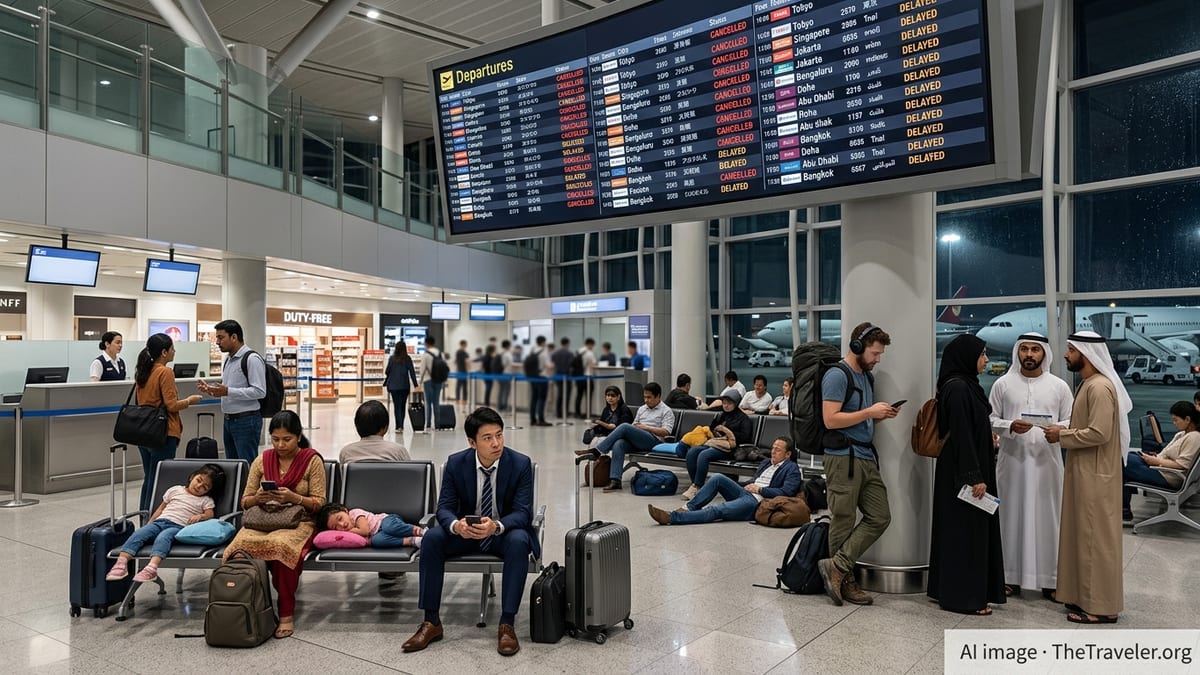
Scenes described in local media coverage and shared on social platforms show long queues at check-in counters, transfer desks and airline service points at several large Chinese airports. Many passengers reported receiving initial notification of delays via airline apps or text messages, followed by limited information as estimated departure times were repeatedly pushed back.
In Beijing and Shenzhen, congestion in airside waiting areas worsened as multiple delayed flights shared the same departure windows. Seating quickly became scarce, and some families with young children and elderly travelers sought out quieter corners of the terminal while awaiting new information about their flights. Varying policies on food vouchers and hotel accommodation meant that the level of support differed significantly between carriers and ticket types.
Travelers on tight itineraries, including those scheduled for same-day business meetings or onward international departures from other Asian hubs, faced particularly acute uncertainty. In several cases documented by travel-industry reporting, passengers missed onward flights entirely when rebooked departure times from Chinese hubs slipped by several hours beyond the original schedule.
Despite the frustration, publicly available images and accounts so far point to orderly if crowded conditions, with airport staff attempting to manage queues and direct travelers toward self-service kiosks and customer-service counters where available. However, language barriers and differing levels of familiarity with airline apps added to the stress for some international visitors trying to navigate last-minute changes.
Rebooking, Refunds And What Travelers Can Do
According to information published by major Chinese airlines, standard options during weather-related disruption typically include free rebooking on the next available flight in the same cabin, refunds for unused tickets under specified conditions, or the ability to change routing within a limited date window. Some carriers also allow voluntary date changes at no additional fee when adverse weather is forecast to persist, encouraging passengers to avoid peak disruption periods.
Travelers whose flights are canceled outright generally receive priority for rebooking, but availability depends on seat capacity on subsequent departures and the degree of network-wide disruption. On high-demand routes such as Beijing to Shenzhen or Guangzhou, same-day alternatives can quickly sell out, leading airlines to route passengers through secondary hubs or offer travel on partner carriers where interline agreements exist.
For delayed flights that still operate, eligibility for accommodation, meal vouchers and other care measures varies by airline and by whether the disruption is classified as weather-related or operational. Publicly accessible policy documents indicate that many carriers treat severe weather as an uncontrollable event, which may limit compensation obligations while still providing discretionary support such as refreshments or basic amenities.
Passenger-rights regulations for purely domestic Chinese itineraries differ from frameworks in regions such as the European Union, and experts regularly advise travelers to review the conditions of carriage for their specific airline. Those who booked via third-party agencies or online platforms may need to coordinate both with the ticketing intermediary and the operating carrier to confirm rebooking or refund options.
Practical Tips For Travelers Caught In Today’s Disruptions
For passengers currently facing cancellations or extensive delays in Beijing, Shenzhen or other affected airports, travel specialists generally recommend starting with the airline’s official app or website to check real-time status and available self-service options. Many Chinese carriers now offer in-app rebooking tools that allow customers to select alternative flights without waiting in physical lines.
Where self-service tools are limited or unavailable, joining the queue at a dedicated transfer or ticketing desk remains essential, but travelers can often save time by preparing alternative routing suggestions in advance. For example, those attempting to travel between Beijing and Shenzhen may find earlier space via Guangzhou, Wuhan or Changsha, depending on aircraft availability and weather patterns across the network.
Keeping boarding passes, receipts for meals and accommodation, and written confirmation of any new travel arrangements is also advisable, particularly for travelers who plan to seek reimbursement or travel insurance claims later. Policies differ, but many insurers expect clear evidence of disruption, including airline notifications or screenshots from flight-status tools.
Finally, with weather-related disruptions predicted to remain a periodic feature of air travel in China’s busiest corridors, analysts suggest building longer connection times into itineraries that route through Beijing, Shenzhen and other congestion-prone hubs, especially during seasons associated with thunderstorms, heavy rain or strong winds. Allowing an extra buffer of several hours can reduce the risk of missed onward flights when the aviation system is under strain.