

More news on this day
Heavy rain, thunderstorms and poor visibility have triggered a fresh wave of aviation disruption across parts of China, with 45 flights reportedly cancelled and at least 441 delayed across Guangdong, Sichuan, Xinjiang and Zhejiang as major carriers China Southern, China Eastern and Shenzhen Airlines struggle to keep services running on schedule.
Get the latest news straight to your inbox!
Storm Systems Drive Widespread Operational Disruption
Recent severe weather patterns over southern and western China have combined heavy rainfall, thunderstorms and low cloud to create difficult operating conditions at airports in several major provinces. Publicly available meteorological assessments indicate that Guangdong and neighboring coastal areas have been affected by intense convective storms and hail, while inland regions including parts of Zhejiang have faced dense fog and sharply reduced visibility. Further west, snow and sleet have complicated operations in sections of Xinjiang, adding another layer of risk for airline dispatchers and air traffic managers.
Operational data compiled from aviation tracking platforms and regional travel-industry coverage shows that these conditions translated into at least 45 flight cancellations and 441 delays across key airports serving Guangdong, Sichuan, Xinjiang and Zhejiang over a short period. The disruption has been concentrated in busy hubs and focus cities that act as connective tissue in China’s domestic network, amplifying the impact as delayed aircraft and crews cascaded through subsequent rotations.
The pattern mirrors broader instability seen in China’s skies in recent weeks, where waves of thunderstorms and low-visibility events have repeatedly intersected with already tight airspace and scheduling constraints. Analysts note that while China’s aviation system has become adept at managing localized storms, simultaneous pressure across multiple provinces can quickly overwhelm buffers designed to absorb short-term timetable shocks.
China Southern, China Eastern and Shenzhen Airlines Under Pressure
China Southern, China Eastern and Shenzhen Airlines, three of the largest players in the domestic market, have borne a significant share of the latest disruption. Public data on daily operations indicates that these carriers together account for a large portion of movements through airports in Guangdong and Sichuan, while also operating extensive networks into Xinjiang and Zhejiang. When storms disrupt departures at one or two hubs, their schedules across the country often feel the effects within hours.
In Guangdong, Shenzhen Bao’an International Airport functions as a major base for both China Southern and Shenzhen Airlines, meaning that any weather-related slowdown at this coastal hub can quickly turn into a tangle of delayed inbound and outbound sectors. Aviation performance trackers show that on recent high-disruption days, Shenzhen Bao’an has recorded several hundred delays and dozens of cancellations, a proportion of which fall under these carriers as primary operators.
China Eastern faces similar challenges from its strong presence in eastern China. The airline’s dense schedule into Zhejiang’s key airports and its role linking western cities in Sichuan and onward to eastern hubs means that even modest weather deterioration can erode on-time performance if alternates are constrained or if traffic flow restrictions are imposed. In this most recent episode, reporting indicates that China Eastern and China Southern together accounted for a substantial share of the 45 cancellations, while all three major airlines featured prominently among the 441 delayed flights.
Industry observers point out that such concentration of traffic among a handful of large carriers can magnify the perceived impact when weather turns hostile. With few spare aircraft and crews during peak periods, large network airlines must triage routes, protecting trunk services while postponing or consolidating others, leaving some regional passengers facing extended waits.
Passenger Experience: Long Queues, Missed Connections and Limited Information
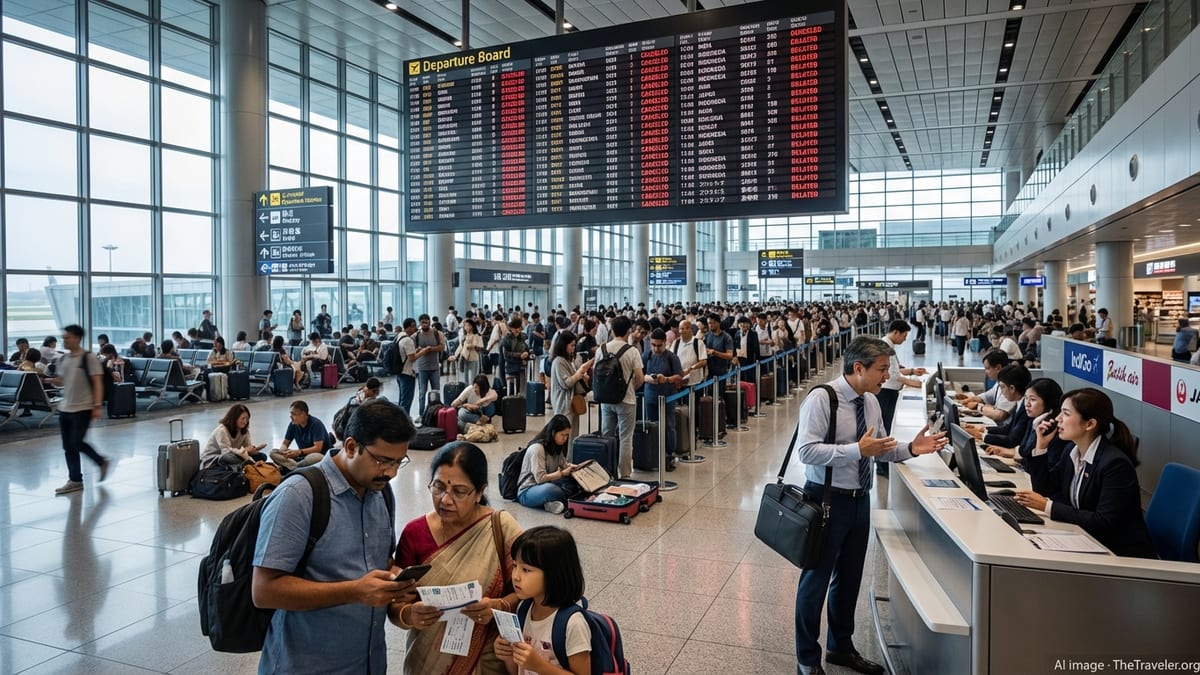
For travelers across Guangdong, Sichuan, Xinjiang and Zhejiang, the numbers translate into long lines at check in and boarding gates, missed onward connections and unexpected overnight stays. Social media posts and traveler forums from recent days describe passengers spending several hours in crowded departure halls as rolling delays pushed back departure times multiple times, often with only brief announcements attributing the disruption to weather and air traffic flow controls.
At large hubs such as Shenzhen and Chengdu, passengers on China Southern, China Eastern and Shenzhen Airlines have reported challenges obtaining clear rebooking options when cancellations were confirmed, particularly on heavily booked evening departures. Some accounts describe travelers being offered same-day standby status or confirmed seats only for the following day, reflecting the limited spare capacity on popular domestic routes.
In Xinjiang and parts of western Sichuan, the combination of snow-affected airfields and fewer daily services left some passengers with even fewer alternatives when flights were cancelled outright. Travel-industry reporting notes that in several instances, travelers opted to reroute via distant hubs or switch to high-speed rail on overlapping corridors in eastern provinces such as Zhejiang, adding hours but providing more certainty than waiting for backlogged flights to clear.
Consumer advocates in the region emphasize that, under prevailing rules, weather-related disruption generally triggers care obligations such as meal vouchers or hotel arrangements rather than monetary compensation. However, in practice, the level of support can vary by airport and by carrier, leaving many passengers reliant on their own resources to arrange accommodation or alternative transport during extended delays.
Key Hubs in Guangdong, Sichuan, Xinjiang and Zhejiang Feel the Strain
The latest round of disruption has again highlighted the vulnerability of several strategic airports that underpin connectivity across southern and western China. In Guangdong, Guangzhou Baiyun and Shenzhen Bao’an together handle vast volumes of domestic traffic and act as transfer points linking coastal cities with inland provinces. When storms, low cloud or lightning warnings slow operations here, knock-on effects spread quickly to secondary airports in Sichuan and beyond.
In Sichuan, Chengdu’s twin airports have been central to recent delay patterns. Publicly available aviation statistics from recent high-impact days show elevated delay counts at these facilities, reflecting both local weather challenges and the arrival of already delayed aircraft from eastern hubs. For travelers relying on Chengdu for onward links into Xinjiang or eastern seaboard provinces, even modest schedule slippages can mean missed connections and same-day travel plans unraveling.
Xinjiang, with its long-haul domestic sectors and limited frequencies on many routes, is particularly exposed when large network carriers are forced to reschedule aircraft. Disruption to one or two rotations can ripple across several days as airlines work to reposition planes and crews. Zhejiang’s coastal airports, meanwhile, have contended with periods of dense fog and heavy rain linked to the same weather systems affecting Guangdong, constraining runway capacity and forcing holding patterns or diversions that further erode punctuality metrics.
Aviation analysts suggest that the combination of meteorological volatility, high traffic volumes and structurally constrained airspace means these hubs will remain sensitive to even moderate storms. While investments in infrastructure and air traffic management have improved resilience over the past decade, concurrent disturbances across multiple provinces continue to expose systemic bottlenecks.
What Travelers Can Do When Weather Disrupts Chinese Flights
For passengers planning trips through Guangdong, Sichuan, Xinjiang and Zhejiang while unsettled weather persists, aviation experts recommend a more cautious approach to scheduling. Reports from recent disruption days indicate that travelers with tight domestic connections, especially those changing between China Southern, China Eastern and Shenzhen Airlines at major hubs, faced some of the most stressful experiences when upstream delays snowballed.
Practical guidance drawn from recent travel-industry coverage and passenger accounts suggests building in longer connection windows, particularly at Shenzhen, Guangzhou and Chengdu, and avoiding the last flight of the day on key routes where possible. Keeping airline apps installed and notifications enabled can provide earlier warning of gate changes or rolling delays, giving travelers a better chance to rebook before flights sell out.
Passengers are also encouraged to familiarize themselves with each airline’s disruption policies. While weather-related events typically limit eligibility for cash compensation, carriers often provide meal vouchers, hotel accommodation or free changes in cases of severe delay or cancellation. Having travel insurance that explicitly covers weather-related disruption can also help offset unexpected costs, especially for those connecting onward to international flights.
The latest tally of 45 cancellations and 441 delays across Guangdong, Sichuan, Xinjiang and Zhejiang underscores how quickly travel plans can be upended when storms intersect with a busy domestic aviation network. For now, with unsettled conditions still forecast in some regions, travelers through these provinces may continue to face challenging days at the airport and should plan accordingly.