

More news on this day
Severe winter weather across Western Europe has triggered a fresh wave of air travel disruption, with at least nine flights canceled and 12 more postponed on key Brussels Airlines, Lufthansa and British Airways routes linking Brussels, Munich and London, leaving hundreds of passengers stranded or facing overnight delays at major hubs.
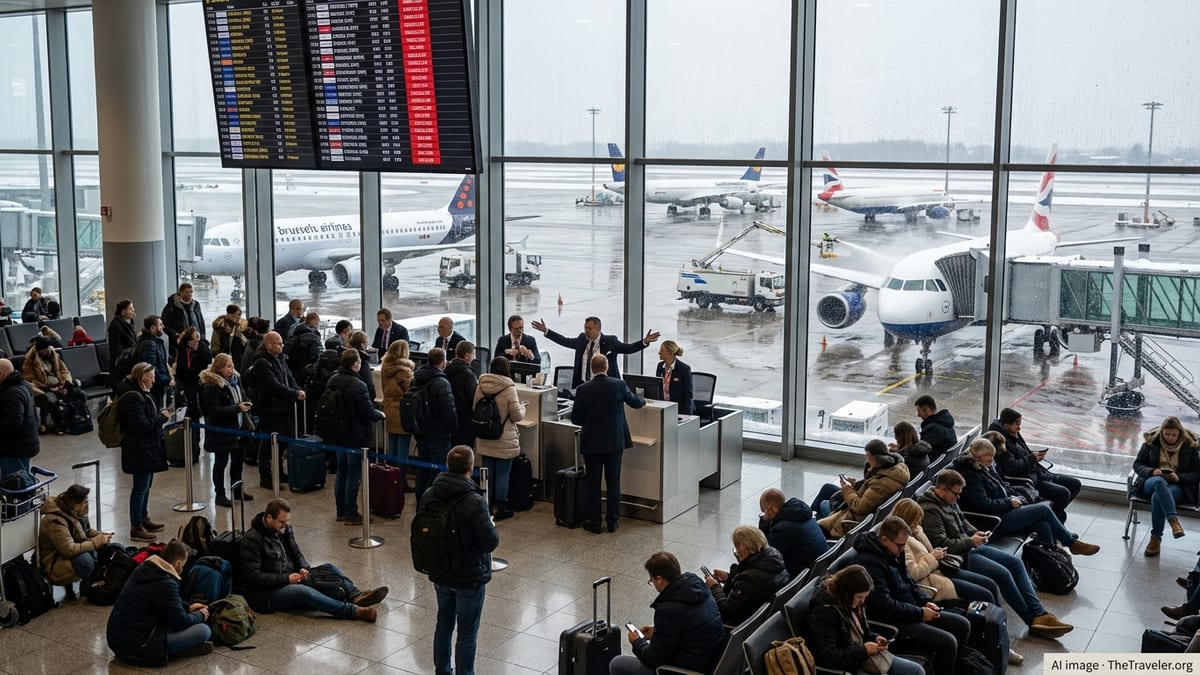
Blizzard Conditions and High Winds Disrupt Key European Hubs
The latest round of disruptions unfolded as a band of winter storms swept across Belgium, southern Germany and the United Kingdom, bringing heavy snow, freezing rain and crosswinds strong enough to repeatedly halt ground operations. Airport authorities in Brussels, Munich and London said runway clearing operations and low visibility forced them to reduce capacity and, at times, suspend movements altogether.
In Brussels, plummeting temperatures overnight led to black ice on taxiways, requiring intensive de-icing and slowing departures. Munich reported periods of whiteout conditions and strong gusts that pushed crosswind limits for several aircraft types, while London Heathrow and London City grappled with a mix of sleet, low cloud and wind shear on approach. The combination created a perfect storm for schedule planners and forced airlines to prioritize safety over punctuality.
Operational data compiled from airport information boards and airline advisories on Friday indicated that the most affected services were short-haul European links, where aircraft typically operate multiple rotations per day. When one morning sector was canceled or heavily delayed, the impact cascaded across later flights, straining crew rosters and available aircraft and contributing to the total of nine cancellations and 12 postponements recorded on the day.
Brussels Airlines Routes to Munich and London Among Hardest Hit
Brussels Airlines, based at Brussels Airport, bore a significant share of the disruptions on routes connecting Belgium with Germany and the United Kingdom. Multiple rotations between Brussels and Munich were either canceled outright or rescheduled to later time slots after de-icing queues and runway clearance delays extended turnaround times far beyond their allocated windows.
According to operational updates issued at Brussels Airport, at least three Brussels Airlines departures and corresponding returns on the Brussels–Munich corridor were affected. Two round-trip services were canceled, leaving passengers to be rebooked on later flights or rerouted via Frankfurt and Zurich, while a third was postponed by several hours as ground crews worked through a backlog of aircraft awaiting de-icing. Knock-on effects were also reported on Brussels–Berlin and Brussels–Vienna services that relied on the same aircraft and crews.
Flights between Brussels and London also faced significant disruption. A morning Brussels–London Heathrow sector was canceled after weather-related restrictions at both ends made it impossible to guarantee a safe arrival within the available slot window. Other services on the city pair were delayed, with one afternoon departure pushed into the evening. Brussels Airlines advised passengers to travel with hand baggage where possible to enable quicker transfers onto replacement flights and to allow more flexibility for last-minute rebooking.
Lufthansa Cancellations and Diversions Centered on Munich Hub
Lufthansa’s Munich hub, a critical gateway for southern Germany and the wider Alpine region, once again found itself at the center of weather-driven chaos. The airline confirmed that several flights to and from Munich had to be curtailed as shifting wind patterns and intermittent snow forced air traffic controllers to space out arrival and departure streams, effectively cutting the airport’s usable capacity for large parts of the day.
On the Brussels–Munich route, Lufthansa reported at least two canceled rotations and multiple delays. One morning departure from Munich to Brussels was dropped from the schedule entirely, while its return sector from Brussels to Munich was also canceled, contributing to the overall tally of nine scrapped flights. Passengers on these services were offered rebooking via Frankfurt, which experienced fewer weather constraints, or placed on later Munich flights that remained operational but heavily oversubscribed.
Additional disruption was felt on Lufthansa’s services between Munich and London. A midday Munich–London Heathrow flight was postponed beyond its scheduled slot due to congestion and runway checks following heavy snowfall earlier in the day. With runway conditions improving only gradually, the airline opted to consolidate some lightly booked services and prioritize flights with the highest number of connecting passengers, especially those heading to long-haul departures later in the evening.
British Airways Faces Weather Bottlenecks at London Heathrow
In the United Kingdom, British Airways once again found Heathrow’s tightly scheduled operation vulnerable to sudden weather shifts. The airline confirmed that several short-haul European flights, including services to Brussels and Munich, were forced into a mix of cancellations and long postponements as high winds and poor visibility triggered go-around maneuvers and temporary runway closures for inspection.
On the London–Brussels route, at least one British Airways flight was canceled, with its passengers shifted to later departures and, in some cases, to flights operated by alliance partners. Another service was postponed by several hours, leaving travelers waiting in congested departure lounges as crew rosters were reshuffled and aircraft awaited new de-icing slots. The airline emphasized that safety remained the overriding consideration, and that weather conditions would be monitored continuously before further decisions on the schedule were taken.
British Airways connections between London and Munich also suffered. A late-morning Heathrow–Munich rotation was postponed to late afternoon, while its returning Munich–Heathrow sector faced a rolling delay as conditions at Munich fluctuated. The airline warned that such postponements could change on short notice and urged passengers to sign up for real-time alerts rather than relying solely on static departure board information at the terminal.
Full Breakdown of the 9 Canceled and 12 Postponed Flights
A preliminary breakdown of Friday’s disruptions across Brussels, Munich and London indicates that the nine cancellations were split among the three carriers, with Brussels Airlines and Lufthansa accounting for the majority of scrapped services. Industry sources reported that four of the canceled flights were Brussels–Munich rotations operated by a combination of Brussels Airlines and Lufthansa aircraft, while another two involved links between Brussels and London.
The remaining cancellations were on Munich–London and feeder routes feeding the three hubs, where airlines chose to remove lightly booked sectors from the schedule in order to free capacity for rebooking displaced passengers. This strategy, airlines said, allows them to consolidate operations during weather events and ensures that the limited number of flights that can operate do so with higher load factors and more efficient use of crews and gates.
The 12 postponed flights were more evenly distributed across the day, affecting morning, midday and evening departures. In several cases, postponements stretched beyond three hours as ground handling teams cycled aircraft through de-icing bays and waited for intervals of improved visibility. Passengers boarding postponed flights reported repeated gate changes and revised departure times, with some services only departing once new runway friction measurements confirmed that braking conditions met regulatory requirements.
Passenger Experience: Overnight Stays, Missed Connections and Crowded Terminals
Across the three major hubs, passengers described a familiar pattern of long queues, packed seating areas and a scramble for accurate information. In Brussels, travelers heading to business meetings in Munich and London said they received notification of cancellations only after arriving at the airport, forcing last-minute hotel bookings or a switch to rail services where available. Families returning from school holidays reported difficulties finding adjacent seats on rebooked flights as remaining services quickly filled up.
At Munich, some connecting passengers arriving from North America and Asia found their onward flights to Brussels or London removed from departure boards after they had already cleared passport control. With hotels near the airport rapidly reaching capacity, airport staff distributed food vouchers and provided blankets and basic amenities for those unable to secure accommodation. Social media posts from travelers showed crowded gate areas and long lines at Lufthansa service desks as agents worked through complex rebooking tasks.
London Heathrow saw a similar scene, with British Airways passengers reporting that airport staff made repeated announcements urging travelers to use airline apps and self-service kiosks instead of queuing at manned desks. While some passengers praised frontline staff for their efforts under pressure, others complained of confusing or contradictory messages as the situation evolved with the changing weather. Nonetheless, airlines stressed that, compared with previous major storms, the scale of cancellations was more limited, thanks to earlier schedule trimming and a more cautious approach to planning.
What Affected Travelers Can Expect in Terms of Assistance and Rights
Under European air passenger protection rules, travelers whose flights are canceled are entitled to a choice between a refund of the unused ticket portion and re-routing at the earliest opportunity, subject to available seats. In practice, this means that passengers on the nine canceled flights can seek rebooking on later Brussels Airlines, Lufthansa or British Airways services, or in some cases on partner airlines that operate similar routes. Those who choose not to travel can apply for a refund via the airline’s customer service channels.
In cases of long delays and postponements, airlines are obliged to provide care and assistance once waiting times pass certain thresholds, which vary according to flight distance. This can include meal vouchers, access to phone calls or Wi-Fi, and hotel accommodation if an overnight stay becomes necessary. Passengers stuck in Brussels, Munich or London overnight reported receiving email notifications offering hotel bookings, transportation to accommodation and food allowances, though availability and responsiveness varied by airport and time of day.
Financial compensation for canceled or heavily delayed flights is more complex when bad weather is involved. Because severe meteorological conditions are typically classified as extraordinary circumstances outside an airline’s control, carriers are usually not required to pay additional compensation beyond refunds and re-routing. Travel experts therefore advise passengers to keep detailed records of receipts and to review their travel insurance policies, many of which include specific provisions for weather-related disruptions that can cover extra costs such as hotel nights and alternative transport.
Looking Ahead: Ongoing Weather Risks and Operational Adjustments
Weather forecasters warned that unsettled conditions would likely persist across parts of Western and Central Europe over the coming days, with further snowfalls, freezing rain and gusty winds possible around the Benelux region, southern Germany and the British Isles. While no mass shutdowns of Brussels, Munich or London airports were anticipated at the time of writing, airlines acknowledged that additional short-notice cancellations or postponements could not be ruled out if conditions deteriorate.
In response, Brussels Airlines, Lufthansa and British Airways have moved to increase staffing at call centers and airport service desks, added more flexible rebooking policies and pre-emptively reduced some frequencies on vulnerable short-haul routes. By trimming schedules slightly in advance, they aim to create more slack in their operations, allowing room to absorb delays and to reposition aircraft and crews when sudden weather disruptions occur.
For passengers planning to travel through Brussels, Munich or London over the next several days, industry specialists recommend building in extra connection time, traveling with carry-on baggage only when feasible and closely monitoring flight status via airline apps and airport information channels. While the latest episode of nine cancellations and 12 postponements is modest compared with some of this winter’s more dramatic disruptions, it underscores how quickly bad weather can upset even the most carefully planned European itineraries.