

More news on this day
Severe weather across the Eastern United States triggered major disruption at Ronald Reagan Washington National Airport on Sunday, with 96 flights delayed and five canceled, snarling operations for American Airlines, Delta Air Lines and JetBlue and spilling disruption into key hubs including New York, Chicago, Boston and Atlanta.
Get the latest news straight to your inbox!
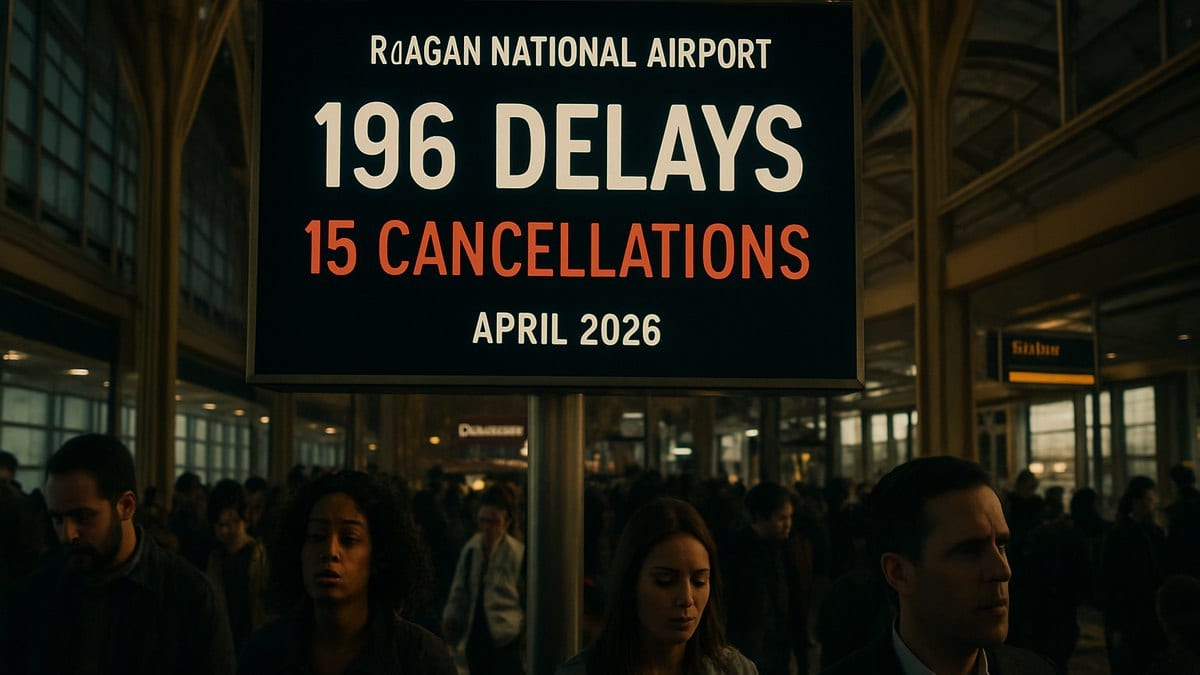
Weather Front Stalls Departures at Reagan National
Publicly available flight tracking data and aviation industry coverage indicate that Reagan National in Washington, DC, was among the hardest hit airports on April 5, as a line of storms and low clouds moved through the Mid Atlantic and Northeast. Arrivals into the compact airport were placed under flow restrictions, forcing aircraft to hold or divert and pushing departure times back across the afternoon and evening banks.
The latest tallies showed 96 flights at Reagan National recorded as delayed and five canceled, with American Airlines, Delta Air Lines and JetBlue among the carriers most affected. The figures reflect disruptions across both mainline and regional operations, including flights marketed by the major airlines but operated by their partners. With Reagan National already running near peak capacity on a busy spring travel weekend, the weather related slowdowns quickly translated into crowded concourses and rolling gate changes.
Reagan National is particularly vulnerable to weather driven delays due to strict runway and airspace constraints along the Potomac River corridor. Government and industry reports have repeatedly highlighted how thunderstorms and low visibility can rapidly reduce arrival rates into the airport, forcing airlines to hold aircraft on the ground at origin cities or to cancel shorter regional segments when schedules compress.
Travel news outlets note that similar patterns have emerged during previous storm systems, with Reagan National consistently ranking among the airports with the highest percentage of weather related delays when frontal systems linger over the region. The latest disruption fits that trend, coming during a period of strong leisure and business demand that left airlines with limited slack to reassign aircraft.
Ripple Effects Across New York, Chicago, Boston and Atlanta
The bottleneck at Reagan National did not remain a local problem. Network wide data and airline advisories show knock on delays spreading through major hubs including New York, Chicago, Boston and Atlanta, as late arriving jets and crew timing limits cascaded through tightly timed schedules.
Chicago O Hare and Boston Logan, both heavily linked to Washington routes, registered elevated levels of delays and cancellations over the same period, according to published disruption tallies. When storms or low ceilings interrupt operations at one end of a route, aircraft and crews can arrive hours behind schedule at the other, pushing subsequent departures past their planned slots and compressing turnaround times.
In the Southeast, Atlanta, the primary hub for Delta Air Lines, reported additional weather driven constraints, with Delta issuing a weather advisory for Eastern U.S. thunderstorms that included guidance for travelers using Atlanta and several East Coast cities. That added another layer of complexity for passengers trying to connect between Washington and the broader domestic network, particularly those traveling through multiple affected hubs in the same day.
New York area airports, which already operate within some of the most congested airspace in the country, also experienced delays as the same storm system and air traffic flow measures curtailed operations. Travel industry coverage describes a patchwork of hold programs, ground delay programs and reroutes that slowed traffic into and out of New York, further limiting airlines ability to recover their schedules.
American, Delta and JetBlue Confront Network Strain
For American Airlines, Delta Air Lines and JetBlue, the disruption at Reagan National combined with weather constraints at their major hubs to produce a complex operational challenge. Public dashboards tracking airline performance on April 5 show hundreds of delays across the three carriers as they worked within air traffic control limits and weather related restrictions.
American, which maintains a significant presence at Reagan National and large hubs at airports such as Dallas Fort Worth and Charlotte, recorded one of the highest totals of delayed flights in the national system that day, according to financial and aviation industry reporting. The combination of weather along the East Coast and storms affecting interior hubs left aircraft out of position and reduced the number of spare jets available to plug gaps.
Delta, anchored in Atlanta and with important operations in New York and Boston, was contending with both local thunderstorms and the broader Eastern U.S. weather pattern. The airline had already published a weather advisory encouraging passengers to monitor their flights closely and consider rebooking within flexible travel windows when storms threatened key hubs.
JetBlue, with a network heavily concentrated in Boston and New York and a meaningful presence in Washington, also faced schedule pressure as holding patterns, reroutes and reduced arrival rates limited its ability to keep turnarounds on time. Public disruption summaries show dozens of delayed JetBlue flights systemwide on the day of the Reagan National turmoil, reflecting how quickly adverse weather in the Northeast can ripple through a point to point network.
Travelers Face Long Waits, Tight Connections and Limited Options
For passengers on the ground, the numbers translated into long lines at customer service counters, tight or missed connections and extended waits on airport concourses. Reports from travel focused outlets describe departure boards at Reagan National and other East Coast hubs filled with rolling delay notices, as estimated departure times were pushed back in small increments while airlines awaited updated flow rates from air traffic control and confirmation of crew availability.
With only five flights officially canceled at Reagan National, many travelers still reached their destinations, but often several hours later than planned. Some passengers connecting through multiple affected hubs encountered particular challenges, as a late arrival into Washington or New York could easily cause a missed onward flight in Chicago, Boston or Atlanta, where seats on later departures were limited during a busy spring weekend.
Industry analysts note that while cancellation rates in the United States have generally fallen below pre pandemic levels, the system remains highly sensitive to clusters of storms at major hubs. When weather constrains operations in several critical airports on the same day, airlines have few easy options beyond delaying flights, trimming frequencies on shorter routes or encouraging travelers to shift to less affected days.
Travel advice circulating across aviation and consumer platforms in the wake of the latest disruption emphasized the value of booking longer connection windows during spring storm season, keeping airline apps updated for real time notifications and considering earlier departures when itineraries rely on multiple busy hubs. For many of the travelers stuck at Reagan National on Sunday, the experience served as another reminder of how quickly weather in one region can upend plans across the national air network.