

More news on this day
A burst of late-season winter weather in early April 2026 snarled operations at Québec City’s Jean Lesage International Airport, stranding hundreds of passengers as airlines cancelled and delayed flights across eastern Canada.
Get the latest news straight to your inbox!
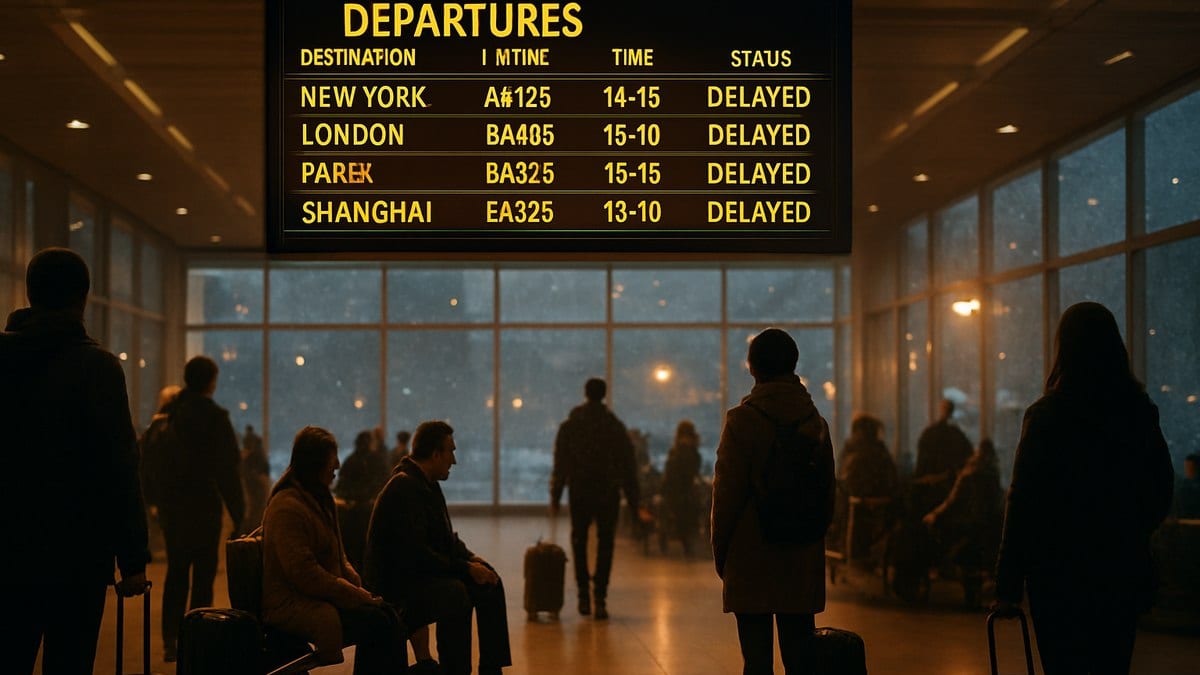
Storm System Hits Southern Quebec at Peak Travel Time
Publicly available aviation data and meteorological reports indicate that the disruption at Québec City’s Jean Lesage International Airport coincided with a broader spring storm pattern affecting much of southern Quebec and Ontario in the first week of April 2026. Snow, freezing rain and poor visibility moved across the region just as holiday and early spring travel demand remained high.
National flight-board snapshots and analytics for April 5 and April 6 show more than 400 delays and over 80 cancellations across Canada’s major airports, with hubs in Toronto and Montreal absorbing the largest share. Québec City, while smaller, was directly affected as aircraft and crews arriving from those storm-hit hubs struggled to maintain schedules, contributing to mounting knock-on delays.
Conditions remained unsettled into April 6, as patches of rain, sleet and low cloud persisted around the St. Lawrence corridor. This combination created intermittent runway contamination and forced periodic de-icing, slowing down turnarounds for both domestic and transborder services that connect through Québec City.
The storm’s timing, coming after a series of winter-weather episodes over the preceding months, added to the fragility of the regional network. Airlines entered April with little slack in aircraft rotations, meaning that each cancellation elsewhere in Canada increased the likelihood of schedule disruptions at secondary airports such as Québec City.
Hundreds of Passengers Face Overnight Stranding
Based on seat capacity on affected routes and typical April load factors for regional and mainline services into Québec City, industry observers estimate that several hundred travelers were stranded at Jean Lesage International Airport over the course of the early April disruption. Many of these passengers were connecting onward via Montreal or Toronto, creating additional complexity for rebooking efforts.
With evening departures among the first to be cancelled as the storm intensified, travelers arriving at the airport after work hours encountered long queues at customer service desks, reduced same-day rebooking options and limited alternative transport. Publicly available accounts from travel forums and social media posts describe passengers sleeping in terminal seating areas and relying on airport concessions that remained open into the night.
For some, hotel rooms in the immediate vicinity of the airport proved difficult to secure as cancellations accumulated. Québec City’s airport is located outside the downtown core, and public transport options during late-night hours are limited, further complicating efforts by stranded travelers to reach alternative accommodation on short notice.
Families with young children and international visitors unfamiliar with local conditions appeared particularly affected, as the combination of language barriers, rapidly changing departure boards and weather-related ground transport issues made it challenging to navigate contingency plans.
Ripple Effects Across Airlines and Regional Routes
Published coverage of the wider Canadian network over the same period shows that the storm’s primary impacts were felt at Toronto Pearson and Montreal-Trudeau, where heavy snow, ice and reduced visibility drove the bulk of cancellations and de-icing delays. Québec City’s role as a spoke in this system meant that disruptions at larger hubs quickly translated into missing inbound aircraft and crew timing issues.
Air Canada, WestJet and regional partners such as Jazz Aviation and PAL Airlines all reported schedule adjustments across Canada during the storm window, with some short-haul flights consolidated or preemptively cancelled to preserve longer-haul operations. Québec City, linked to both Montreal and Toronto by frequent regional services, saw rolling gate changes and departure pushes as airlines attempted to work within air traffic flow restrictions and reduced runway capacity.
Analysts note that even when local weather at Québec City briefly improved, delays often persisted because aircraft were trapped earlier in the day at other airports. This pattern is consistent with systemwide disruptions observed during previous Canadian winter storms, where secondary airports experience protracted irregular operations long after conditions at their own runways have stabilized.
Several carriers also issued flexible travel advisories for parts of Quebec around the storm dates, allowing passengers to change flights without standard penalties if they chose to avoid the worst of the weather. While such measures help reduce congestion at peak disruption times, they also contribute to complex re-accommodation patterns that can leave remaining passengers with fewer same-day options.
Operational Challenges at a Smaller Canadian Airport
Jean Lesage International Airport, known by its code YQB, handles a mix of domestic, transborder and limited international services. Compared with Canada’s largest hubs, its infrastructure and staffing levels are calibrated for modest but steady volumes, which can pose a challenge during sudden spikes in disruption.
Operational overviews indicate that during the April weather event, the airport had to juggle aircraft de-icing, runway and taxiway treatment and tight gate availability as airlines amended schedules in real time. Each additional de-icing cycle lengthened turnaround times, while crews approached duty-time limits that can force last-minute cancellations even after the weather begins to improve.
Ground handling resources, including baggage teams and de-icing crews, can become stretched when multiple flights depart within a compressed window following a lull in the storm. For travelers, this translates into longer waits at baggage claim, occasional late delivery of checked luggage and increased likelihood that tight connections later in the journey will be missed.
Public transport coordination also becomes more difficult during such events. Buses and taxis faced the same slippery roads and reduced visibility as private drivers, meaning that passengers who opted to leave the airport and try again the next day still contended with challenging conditions to reach hotels or homes across the greater Québec City area.
Travelers Adapt as Late-Season Storms Become More Common
The April turmoil at Québec City’s airport fits into a broader pattern of late-season storms that have affected Canadian and U.S. aviation in recent years. Climate and weather specialists have highlighted an increasing tendency for significant winter-like systems to extend deeper into the spring travel period, catching some travelers off guard.
Consumer rights organizations and travel advisory services in Canada urge passengers flying through smaller airports such as Québec City to build extra flexibility into itineraries from March through early April. Recommended strategies include avoiding the last flight of the day when possible, planning longer connection times at major hubs and monitoring both origin and connecting airport forecasts rather than relying solely on departure-city conditions.
In the wake of the early April 2026 disruption, publicly available information shows renewed discussion among travelers about trip insurance, credit-card protections and airline rebooking policies for weather events. While carriers are not generally required to compensate passengers for weather-related cancellations, some offer meal or accommodation support on a case-by-case basis, particularly when extended irregular operations stretch into multiple days.
For Québec City and other regional gateways, the episode underscores how quickly routine spring travel can be upended when a storm intersects with a tightly wound aviation network. As the 2026 travel season progresses, many passengers are watching forecasts more closely, hoping that the worst of the winter-like turbulence has finally passed.