

More news on this day
Severe weather and knock-on disruption across major U.S. hubs have triggered at least 15 flight cancellations at OKC Will Rogers International Airport on March 8, stranding passengers and disrupting key routes to Dallas–Fort Worth, Atlanta, Las Vegas, Phoenix, Washington and other cities across the country.
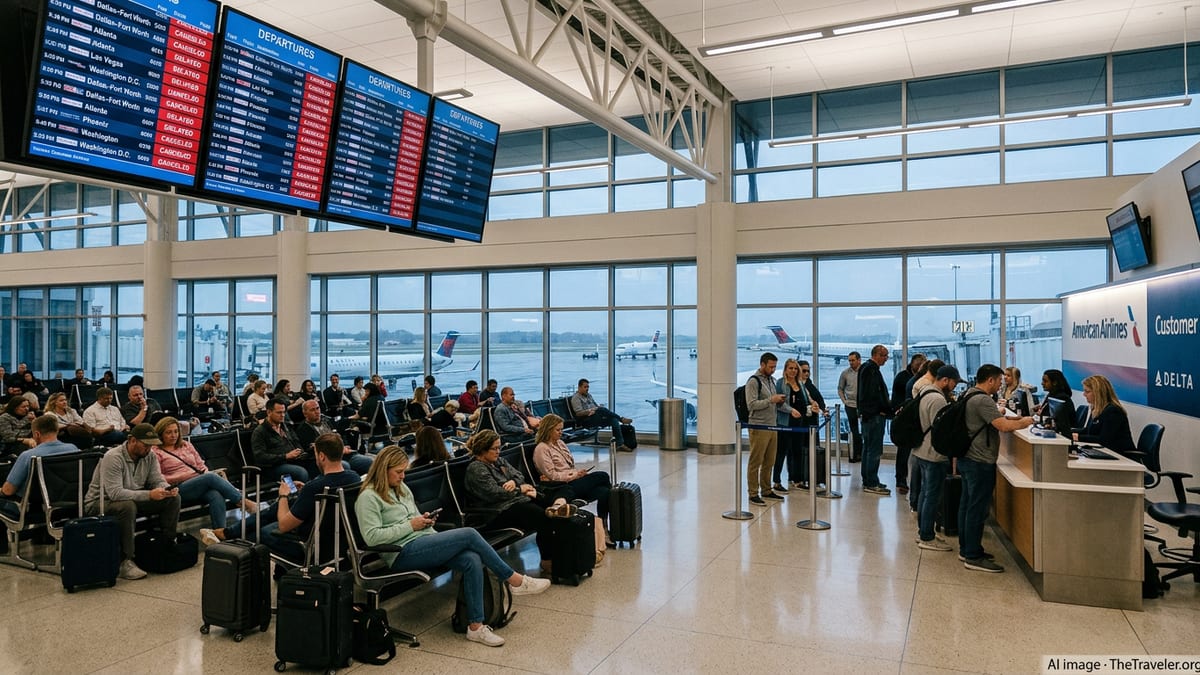
OKC Becomes Latest Flashpoint in Nationwide Airline Disruptions
OKC Will Rogers International Airport, a growing regional gateway for both legacy and regional carriers, saw its Sunday schedules trimmed as airlines worked to absorb cascading disruptions originating from Dallas–Fort Worth and Atlanta. Delta Air Lines, American Airlines and their regional partners SkyWest, Envoy Air and PSA Airlines were among the most affected, with a combined 15 departures and arrivals cut from the board.
The cancellations are part of a wider pattern of turbulence in the U.S. aviation system this weekend, as strong thunderstorms and unsettled conditions around North Texas and the Southeast triggered large numbers of delays and cancellations at Dallas–Fort Worth International Airport and Hartsfield–Jackson Atlanta International Airport. With both airports serving as critical hubs for Delta and American, schedule problems quickly propagated outward to spokes such as Oklahoma City.
While some flights were scrubbed outright, others were consolidated or significantly delayed, creating a ripple effect for travelers attempting to connect onward to destinations in the Southeast, Mountain West and East Coast. Airport officials in Oklahoma City urged passengers to verify their flight status before leaving for the terminal and to be prepared for longer lines at rebooking counters.
Major Routes to Dallas–Fort Worth and Atlanta Hit Hard
Among the most heavily affected links from Oklahoma City were the high-frequency shuttles into Dallas–Fort Worth and Atlanta, which serve as primary connection points for OKC-based travelers heading to both domestic and international destinations. Multiple American Airlines and Envoy Air services into Dallas–Fort Worth were canceled as crews and aircraft failed to arrive on time from earlier disrupted rotations.
On the eastbound side, Delta and SkyWest flights between Oklahoma City and Atlanta also experienced cancellations and rolling delays as the carrier dealt with weather-related constraints at its Atlanta hub. The loss of these departures sharply limited same-day connectivity for passengers aiming to reach cities across the Southeast, Northeast and Europe via Atlanta connections.
For many travelers, the cancellations meant missed cruises, sports events and business meetings, as re-accommodation options through alternative hubs such as Chicago and Denver quickly filled. Some passengers opted to drive to Dallas or other nearby airports in search of open seats, while others chose to postpone trips altogether in light of uncertain conditions.
Las Vegas, Phoenix and Western Gateways Also Affected
It was not only southern and eastern corridors that felt the strain. Services linking Oklahoma City to popular western gateways such as Las Vegas and Phoenix also came under pressure. American and its regional partners trimmed select departures as they juggled aircraft assignments and attempted to restore schedule integrity systemwide.
Las Vegas, a key leisure destination for Oklahoma travelers, saw reduced connectivity as one evening departure was canceled and others experienced extended delays. Phoenix-bound passengers reported rebookings that added hours to their itineraries, often involving extra stops or overnight connections due to tight seat availability at the end of the busy spring travel weekend.
The disruptions underscored how interconnected the U.S. air network has become. Even when weather appears manageable in Oklahoma City itself, operational snarls at faraway hubs can quickly curtail options for local travelers. Airlines emphasized that safety considerations, including avoiding severe weather cells and ensuring rested crews, remained the driving factor behind the cancellations.
Washington and East Coast Connections See Knock-On Impacts
Farther afield, passengers bound for Washington and other East Coast cities also encountered complications as the Oklahoma City cancellations cascaded through carriers’ networks. While OKC does not always have nonstop service to the nation’s capital, scheduled one-stop itineraries via Dallas–Fort Worth and Atlanta were heavily affected.
Travelers heading to Washington-area airports reported last-minute itinerary changes, including reroutes via Chicago, Charlotte and New York, as airlines worked to bypass the most congested hubs. In several cases, passengers arriving from Oklahoma City missed their onward connections due to late inbound aircraft, forcing overnight stays arranged with meal and hotel vouchers.
The tightening of capacity on eastbound routes came as federal agencies and business travelers prepared for a busy week of meetings in Washington, adding urgency for many stranded passengers. Airline agents at OKC and at larger hubs faced long lines as they processed waivers, rebookings and refund requests for affected customers.
Airlines Urge Passengers to Monitor Status and Consider Flexible Plans
Airlines operating out of OKC Will Rogers International Airport urged customers to stay flexible as operations gradually normalize in the wake of the weekend storms. Delta, American, SkyWest, Envoy Air and PSA all encouraged passengers to make use of mobile apps and text alerts to track real-time changes, gate moves and rebooking options.
Carriers also reminded travelers that same-day changes and waivers may be available for those willing to travel at off-peak times or route through alternative hubs. In some cases, passengers from Oklahoma City were offered later flights via secondary connecting points, which, though less direct, allowed them to reach their final destination within 24 hours.
With severe weather season ramping up across the central United States, aviation analysts note that days like this may become more common through spring. For Oklahoma City travelers, the latest wave of cancellations serves as a reminder to build extra time into itineraries, especially when connecting through weather-sensitive hubs such as Dallas–Fort Worth and Atlanta, and to keep contingency plans in mind when skies start to darken over the nation’s busiest airports.