

More news on this day
Operations at Toronto Pearson International Airport were significantly disrupted on Saturday as publicly available tracking data showed 265 flight delays and 36 cancellations affecting major carriers including Air Canada, WestJet, Delta Air Lines, Lufthansa and British Airways, with knock-on impacts for passengers traveling between Canada, the United States, Europe and the Middle East.
Get the latest news straight to your inbox!
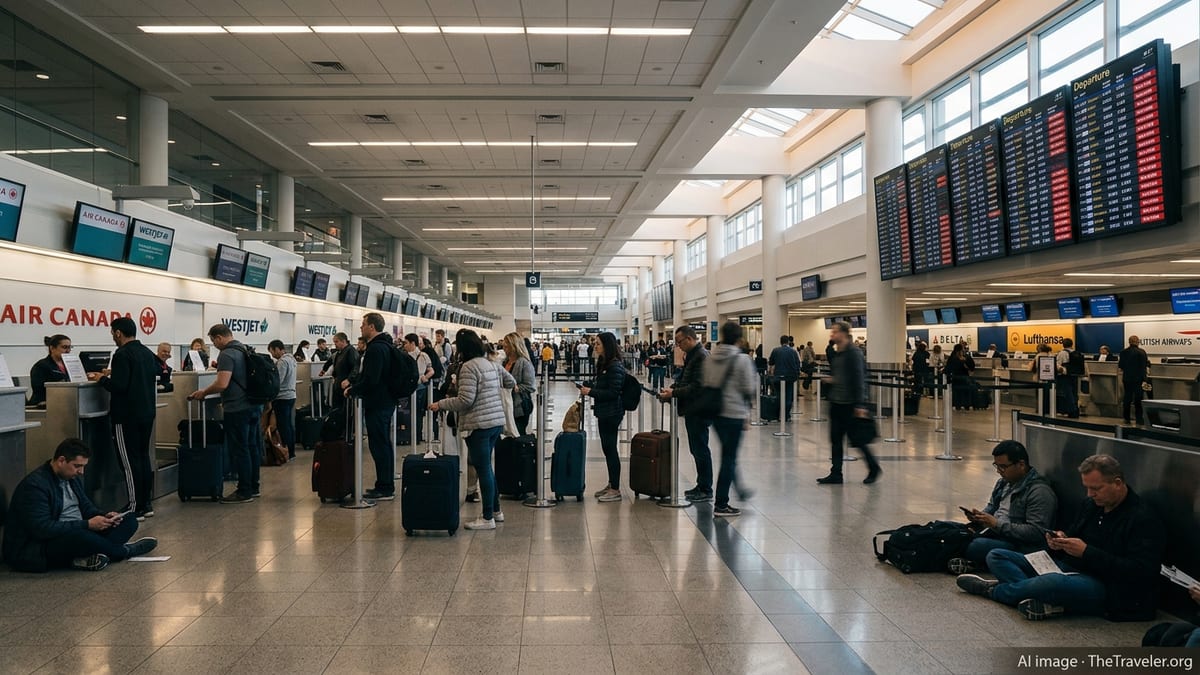
Heavy Operational Strain at Canada’s Busiest Hub
Toronto Pearson, Canada’s largest airport and a primary transatlantic and transborder gateway, experienced another day of strained operations as airlines worked through a fresh wave of schedule disruptions. Data from flight-tracking platforms indicated that delays touched hundreds of flights across domestic, U.S. and long-haul international routes, reaffirming Pearson’s status as one of the region’s most congestion-prone hubs during periods of adverse conditions.
Air Canada and WestJet, the two dominant Canadian carriers at Pearson, accounted for a substantial share of the irregular operations tally. Air Canada’s domestic and international banks were notably affected, particularly morning and early afternoon departures, which recorded extended ground holds as aircraft waited for turnarounds, gate availability and flow-management clearance. WestJet’s services into Western Canada and selected sun destinations also reported late departures and arrivals, compounding connection challenges for travelers.
U.S. and European airlines operating from Pearson were not immune. Delta Air Lines saw disrupted services on core transborder routes to major American hubs, while European network airlines such as Lufthansa and British Airways reported delayed turns on their transatlantic rotations. The pattern reflected a familiar dynamic at Pearson, where congestion, weather and crew-availability constraints can quickly cascade across multiple carriers sharing the same runway and gate infrastructure.
The 36 cancellations recorded on Saturday, while smaller in number than the delays, added an additional layer of complexity for passengers, many of whom were rebooked onto later departures or rerouted through alternative hubs across North America and Europe.
Domestic Links to Vancouver and Calgary Hit Hard
Domestic connectivity across Canada was among the most visibly affected segments, with flights linking Toronto to Vancouver and Calgary bearing the brunt of delays. These trunk routes, normally served multiple times each day by widebody and narrowbody aircraft, saw departure times pushed back by operational restrictions at Pearson, with some rotations departing well behind schedule.
Passengers traveling between Toronto and Vancouver reported extended waits at departure gates and onboard aircraft as crews navigated a combination of aircraft repositioning, de-icing queues where required, and air traffic flow programs. The high frequency of service on this route, while offering more rebooking options, also meant that even modest disruptions to a few flights could ripple across the day’s schedule.
Calgary services similarly encountered knock-on delays, particularly for flights scheduled to feed onward connections to western and northern destinations. According to published aviation performance data, Pearson’s role as a central east-west hub makes it particularly vulnerable to timing disruptions, as late-arriving aircraft from earlier legs can cascade into subsequent departures throughout the day.
In some cases, same-day rebooking within Canada was constrained by high load factors at the outset of the busy spring travel period. Travelers bound for leisure destinations via Vancouver and Calgary faced a higher risk of missed connections, with airlines prioritizing long-haul and high-volume services for available seats.
Transatlantic Services to Frankfurt and Amsterdam Disrupted
Transatlantic operations from Toronto to Europe were also affected, with flights to key continental hubs such as Frankfurt and Amsterdam reporting notable delays. Lufthansa’s services between Toronto and Frankfurt, an important Star Alliance and cargo corridor, experienced late departures that pushed arrival times further into the European morning, compressing connection windows for travelers heading onward into Central and Eastern Europe.
Amsterdam-bound flights operated by major European carriers and partner airlines saw similar disruption patterns. Extended ground times in Toronto, in some cases tied to crew rest requirements and aircraft rotation challenges, translated into late-night or early-morning arrivals in the Netherlands, complicating transfers onto short-haul European networks already operating near capacity.
Published coverage of recent winter and early spring weather in Ontario has highlighted the sensitivity of long-haul schedules to even brief interruptions at Pearson, particularly during peak departure banks in the late afternoon and evening when many transatlantic flights depart. Once departure slots begin to compress, airlines may be forced to push flights later into the night or, in more constrained scenarios, cancel select services to maintain overall network stability.
While Saturday’s figures did not approach the most severe disruption days recorded during major winter storms, the number of affected transatlantic passengers was significant, given the large aircraft typically deployed on Frankfurt and Amsterdam routes and the wide range of onward connections they support.
Middle East Connections Through Toronto Also Affected
Ripple effects extended beyond Europe to services connecting Toronto with the Middle East and North Africa, including itineraries involving Cairo. Pearson functions as a crucial North American gateway for travelers originating in Canadian cities and connecting via European or Gulf hubs to destinations such as Egypt, the United Arab Emirates and beyond.
Delays on Toronto’s European departures, combined with adjustments to partner schedules, narrowed connection margins for itineraries that depend on tightly timed transfers in Frankfurt, Amsterdam and London. Passengers connecting onward to Cairo faced an elevated risk of missed flights, particularly where minimum connection times were already short due to earlier schedule changes.
Publicly available flight information indicated that some Cairo-bound travelers were reprotected on alternative routings or shifted to later departures, sometimes involving overnight layovers in Europe or the Middle East. Such changes can be especially disruptive for passengers with time-sensitive travel, including work commitments, tours or family events.
Although direct disruption statistics for every Middle East destination were not immediately available, the interconnected nature of global airline alliances and codeshare agreements meant that delays concentrated at Pearson had an outsized impact on itineraries spanning three or more regions.
Passengers Face Long Lines and Tight Connections
For travelers inside the terminals, the irregular operations translated into long lines at check-in counters, security checkpoints and customer service desks as passengers sought updated information and alternative options. Reports from recent busy travel days at Pearson have frequently described crowded departure halls and extended waits, and Saturday’s pattern of delays appeared to follow a similar trajectory.
Those with connections through Toronto were particularly vulnerable. Even moderate delays on inbound flights from smaller Canadian or U.S. cities could erase carefully planned transfer times to long-haul departures for Europe or the Middle East. Some travelers with separate tickets or complex multi-airline itineraries faced the prospect of additional costs to rebook or overnight in Toronto when alternative same-day options could not be secured.
Consumer advocates and transport analysts regularly note that airports with hub-style operations, like Toronto Pearson, are acutely exposed to compounded disruption risks. When weather, congestion or equipment issues hit during peak periods, the knock-on effects can persist for many hours after conditions begin to improve, as airlines work through backlogs of aircraft and crew that are out of position.
Passenger experiences on days such as this underscore the ongoing call for clearer real-time communication, more resilient scheduling practices and robust contingency planning across airline and airport operations, particularly at major North American hubs entering a traditionally busy spring and summer travel season.