

More news on this day
Severe spring weather has triggered fresh disruption across China’s aviation network, grounding 60 flights and delaying a further 197 services at major hubs including Beijing and Shenzhen, leaving passengers scrambling for information on cancellations, missed connections, and limited rebooking options.
Get the latest news straight to your inbox!
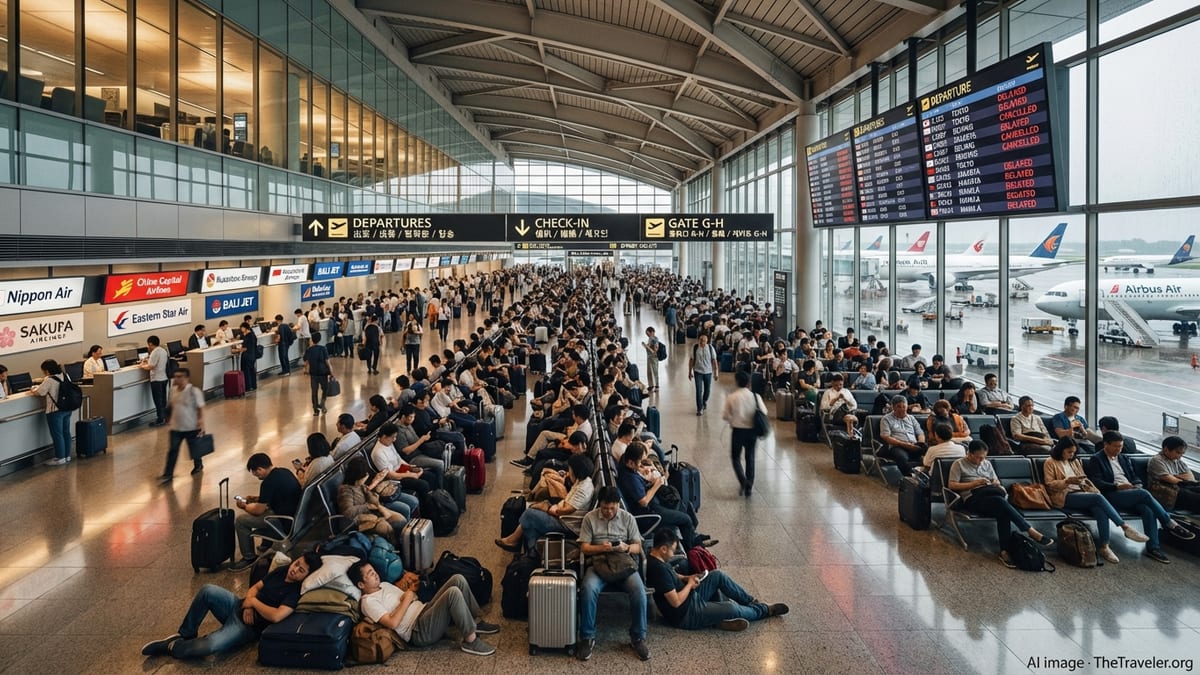
Stormy Conditions Hit Beijing, Shenzhen and Other Key Airports
Publicly available flight tracking data for Tuesday, April 7, indicates that weather systems over parts of northern and southern China have combined with existing congestion patterns to create concentrated disruption at several major airports. Beijing Capital, Beijing Daxing and Shenzhen Bao’an are among the most affected, with a cluster of grounded departures and rolling delays that have rippled through domestic and regional schedules.
Reports from aviation and travel industry outlets show that a total of 60 flights were cancelled outright across the Chinese network, while 197 services were delayed beyond standard turnaround windows. The pattern is delay heavy rather than dominated by mass cancellations, but the impact on individual travelers has been significant, particularly at hubs that handle substantial connection traffic between northern, central and southern China.
Weather is emerging as a primary trigger, with strong winds and unstable conditions historically known to disrupt operations at Beijing’s airports, and low visibility and thunderstorms frequently affecting Shenzhen in the warm season. The latest turbulence has arrived during a period of generally rising traffic, which has made it harder for airlines and airports to absorb schedule shocks without visible disruption on departure boards.
Analysts note that China’s airspace structure and tight control over certain corridors give storms and low clouds disproportionate power to upend operations. When weather systems sit over key routes between Beijing, the Yangtze River Delta and the Pearl River Delta, even a modest number of grounded flights can quickly translate into long queues at check in, gate changes and missed onward connections.
Airports and Routes Facing the Heaviest Disruption
Among the latest wave of disruption, Beijing Capital has seen a mix of domestic and limited international services affected, with routes to southern business centers such as Shenzhen and Guangzhou bearing the brunt of cancellations and delays. Flight status boards show that a subset of flights on trunk routes linking the capital to Shanghai, Chengdu and Xi’an also experienced extended holding or late departures as control centers spaced out traffic during adverse conditions.
Shenzhen Bao’an, one of China’s fastest growing hubs, has again emerged as a hotspot for weather related irregularities. Travel industry roundups highlight a pattern of operational strain at the airport, with several services to and from Beijing, Hangzhou, Kunming and other inland cities among the 60 grounded flights. Delay statistics for the day point to Shenzhen as one of the airports with the highest concentration of late departures, mirroring trends observed during previous bouts of heavy rain and storms.
Other affected airports include regional connectors in central and western China, where flights feeding into Beijing and Shenzhen have been held back to avoid knock on congestion. This has created a cascade in which passengers on multi segment itineraries, such as Urumqi or Xi’an to Shenzhen via Beijing, have seen their plans upended even if their specific leg was not officially cancelled.
Travel data platforms also indicate that a number of evening departures, often critical for business travelers aiming to arrive same day, have been among the delayed services. That has increased the risk of misaligned hotel bookings and missed early morning meetings for those relying on tight overnight connections through Beijing or Shenzhen.
How Airlines Are Handling Rebooking, Rerouting and Refunds
Publicly available airline notices for Chinese carriers show a familiar hierarchy of options when weather disrupts flights. For services cancelled as part of the 60 grounded flights, most major airlines are offering free rebooking on the next available flight on the same route, subject to seat availability in the original cabin. In some cases, passengers may be allowed to shift travel to a nearby date without change fees, though fare differences can still apply on more expensive departures.
For the 197 delayed flights, rebooking policies are more nuanced. When a delay stretches beyond several hours and risks causing missed connections, some carriers are permitting same day changes to alternative routings, for example rerouting a Beijing to Shenzhen passenger via an intermediate hub such as Guangzhou or Hangzhou. However, this is typically dependent on available capacity and on the passenger having a single through ticket rather than separate point to point bookings.
Refund eligibility remains closely tied to the reason for disruption. Since current disruptions are being attributed primarily to adverse weather and wider air traffic constraints, many airlines classify them as outside their control. Under such classifications, full cash refunds for voluntarily cancelled trips are not always automatic, and travelers may instead be offered date changes or travel credits. Passengers holding flexible or premium tickets are generally finding it easier to secure no penalty refunds or changes compared with those on deeply discounted fares.
Separate coverage from consumer travel resources stresses that passengers who booked through online travel agencies rather than directly with airlines may face longer processing times for reissues and refunds. In these cases, the intermediary often has to request authorization from the airline before altering the booking, which can add complexity on days when hundreds of flights are simultaneously disrupted.
What Stranded Passengers Are Experiencing on the Ground
Scenes described in media reports and traveler accounts from Beijing and Shenzhen indicate crowded departure halls, long lines at airline counters and busy call centers, but relatively orderly conditions compared with earlier episodes of mass disruption in China. Many passengers are relying heavily on airline mobile apps and airport screens to track rapidly shifting departure times, gate assignments and rebooking offers.
Those with tight same day connections have been among the most affected. When a delay on a first leg exceeds an hour or two, passengers can lose protected onward connections even if the original arrival time would technically have allowed for a comfortable transfer. Once a misconnection occurs, travelers are often rebooked onto later flights, sometimes arriving at their final destination many hours behind schedule.
Families and travelers unfamiliar with China’s domestic travel system are facing particular uncertainty, especially where language barriers complicate access to schedule updates. Publicly available information suggests that airport staff are encouraging passengers to stay close to their gates, keep boarding passes readily available and monitor announcements in both Mandarin and English where provided.
Accommodation support policies also vary by airline and fare type. Because the disruption has been linked to weather, some carriers are not routinely offering hotel vouchers when passengers are forced to stay overnight. As a result, travelers with limited flexibility in their budget may be seeking out airport seating areas and public transport alternatives while waiting for rebooked flights the following day.
Practical Guidance for Travelers Navigating China’s Weather Chaos
Travel experts observing the current wave of Chinese flight disruptions recommend that passengers treat weather related delays as a structural feature of peak travel rather than as isolated incidents. For those yet to travel, this means allowing wider buffers between domestic connections, aiming for itineraries that include at least several hours of transfer time when connecting through Beijing or Shenzhen during storm prone seasons.
Passengers already holding tickets on routes that have seen cancellations or heavy delays are being advised to act quickly when irregular operations are announced. The fastest way to secure a replacement seat is often through airline apps or official websites, where rebooking tools can show alternate routes and dates in real time. Contact centers and airport counters remain options, but experience from recent disruption days suggests that queues can grow long once cancellations begin to stack up.
Travel insurance with clear provisions for weather related disruption can be an important backstop, particularly for international visitors unfamiliar with local consumer protection frameworks. Policies that cover additional accommodation, meals and replacement transport can help offset the financial burden when an overnight stay becomes unavoidable after a grounded or heavily delayed flight.
Finally, observers highlight the value of keeping documentation organized. Screenshots of original itineraries, written confirmation of delays or cancellations, and records of any additional expenses can be useful when seeking reimbursement from airlines, travel agencies or insurers. In a system where 60 cancellations and nearly 200 delays can occur on a single day across just a portion of the network, well documented claims are more likely to be processed smoothly once the immediate weather chaos passes.