

More news on this day
Dozens of flights at Detroit Metropolitan Wayne County Airport were disrupted on April 11 as unsettled weather across the Upper Midwest and lingering operational impacts from a ground stop the previous evening rippled through one of the nation’s busiest hubs.
Get the latest news straight to your inbox!
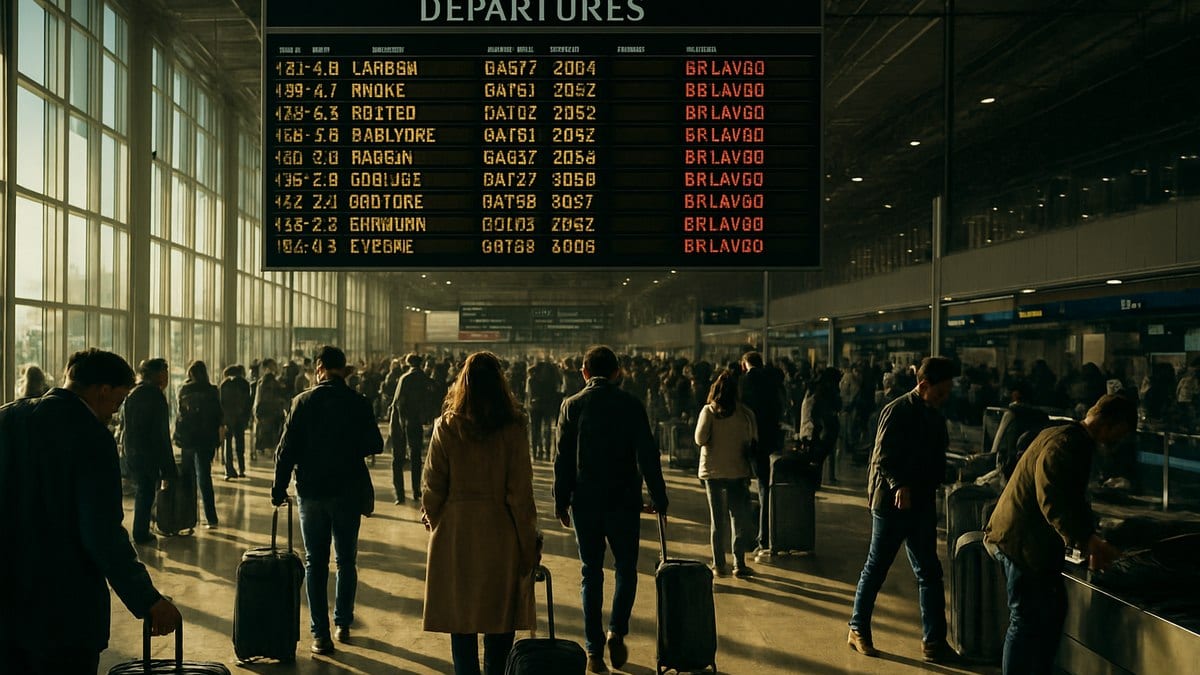
Weather Systems Pressure a Key Midwestern Hub
Publicly available aviation and weather data indicate that a series of fast-moving spring storm systems over the Great Lakes region contributed to extensive schedule disruptions at Detroit Metro on April 11. The storms followed several weeks of volatile conditions in the central United States, including major winter weather and severe outbreaks that have periodically strained airline operations and air traffic control capacity.
Detroit Metro, a primary connecting hub for domestic and international traffic, is particularly sensitive to systemwide weather shocks. When storms affect large swaths of the Midwest, Detroit often receives diverted flights from nearby airports while simultaneously coping with its own arrival and departure restrictions, magnifying the effect on local schedules.
In this latest episode, a combination of low clouds, rain and gusty winds over southeast Michigan triggered airspace management measures and slowdowns that reduced the number of aircraft able to land and depart each hour. As carriers adjusted their schedules, the number of delayed and cancelled flights at Detroit grew steadily through the morning and early afternoon.
The pattern mirrors broader national trends this year, in which repeated storm systems and lingering winter weather have periodically disrupted travel at major hubs. Detroit’s role as a key connecting point between the Midwest, East Coast and international destinations leaves it exposed whenever weather or air traffic constraints emerge across the network.
Ground Stop Ripple Effects From the Previous Evening
According to flight-tracking platforms and social media posts from travelers, Detroit Metro experienced a ground stop on the evening of April 10, temporarily halting departures and limiting arrivals. Such pauses are typically ordered by air traffic managers when storms or low visibility threaten safe operations or when congestion builds beyond manageable levels.
Even relatively short interruptions can have prolonged impacts. Aircraft scheduled to operate late-night or early-morning flights on April 11 in and out of Detroit arrived behind schedule or never reached the airport at all. Airlines then faced the dual challenge of repositioning aircraft and crews while accommodating passengers whose connections had been missed the night before.
By early April 11, these residual effects converged with the day’s fresh weather constraints, leading to clusters of cancellations and late departures. Passengers connecting through Detroit to smaller Midwestern and East Coast cities appeared to be among the most affected, based on publicly shared itineraries and airport operations data.
Operational disruption of this type often unfolds in waves. Initial cancellations and long delays can force additional schedule changes throughout the day, as crews reach duty time limits and aircraft fall out of position. Detroit’s hub-and-spoke role means that a delay on one leg can cascade across multiple subsequent flights, affecting travelers who never set foot in Michigan.
Impact on Travelers and Regional Connectivity
Travelers transiting Detroit on April 11 reported missed connections, extended tarmac waits and rebookings onto later flights, with some itineraries pushed into April 12. Passengers heading to secondary markets that rely on Detroit connections, such as smaller Michigan, Ohio and East Coast cities, appeared to experience some of the most significant disruptions.
Regional surface transportation providers that feed Detroit Metro, including intercity coach services and commuter shuttles, were also indirectly affected as pick-up times fluctuated and late-arriving flights forced schedule adjustments. For some passengers, alternative ground options became a fallback when onward flights were cancelled or substantially delayed.
Data from previous months show that Detroit Metro typically maintains relatively efficient security processing and terminal operations even during busy periods. On April 11, however, crowds in gate areas swelled as delayed flights stacked up, and some passengers reported difficulty securing same-day alternatives on already full routes.
The disruptions also highlighted the reliance of many Midwestern communities on Detroit as a primary gateway. When weather and ground stops constrict operations at the hub, there are few immediate substitutes, and travelers may face long detours via other hubs or overnight stays while waiting for capacity to free up.
How Airlines and Passengers Responded
Publicly available information from airline status pages showed that carriers operating at Detroit Metro issued flexible travel notices for some itineraries touching the region, allowing passengers to move their plans without standard change penalties. These accommodations are now common practice during widespread weather events, particularly at major hubs.
Many travelers used airline mobile apps and customer service channels to rebook onto later Detroit departures or reroute through other hubs. Reports shared on social platforms indicated that, in some cases, passengers accepted longer total travel times in exchange for more reliable itineraries that bypassed the most heavily affected time windows at Detroit.
Airport guidance materials emphasize that, during weather-related disruptions, the most accurate and up-to-date information typically comes directly from airlines rather than from general flight boards. On April 11, Detroit passengers who monitored carrier apps and notifications appeared better positioned to adjust quickly as schedules shifted throughout the day.
Some travelers, particularly those with flexible plans, chose to delay departures from Detroit to later in the weekend, hoping to avoid the tail end of the disruption cycle. Historical operations data suggest that once the immediate weather and ground stop impacts pass, Detroit’s flight schedule often normalizes within 24 to 48 hours.
Looking Ahead to Spring Travel at Detroit Metro
As the spring travel season accelerates, Detroit Metro is likely to remain vulnerable to fast-changing weather patterns across the Upper Midwest and Great Lakes. The April 11 disruption underscores how tightly coupled airline schedules have become, with even brief interruptions creating knock-on effects for thousands of passengers.
Aviation statistics published for recent years show that Detroit continues to handle millions of passengers each month, serving as both an origin and a connecting point. That volume, combined with its geographic position, means that the airport must regularly balance demand against the realities of Midwestern weather and national airspace constraints.
For travelers planning trips through Detroit in the coming weeks, transportation experts recommend building extra time into connections, especially when routing through late-afternoon and evening banks that are more susceptible to cumulative delays. Monitoring forecast trends across the central United States can also provide early hints of potential disruption days in advance.
While the April 11 event caused significant inconvenience, the airport’s track record during previous storms suggests that operations typically rebound quickly once weather stabilizes and aircraft and crews are repositioned. Nevertheless, the episode serves as a reminder that even well-run hubs such as Detroit Metro can experience sudden, large-scale interruptions when storms and airspace restrictions converge.