

More news on this day
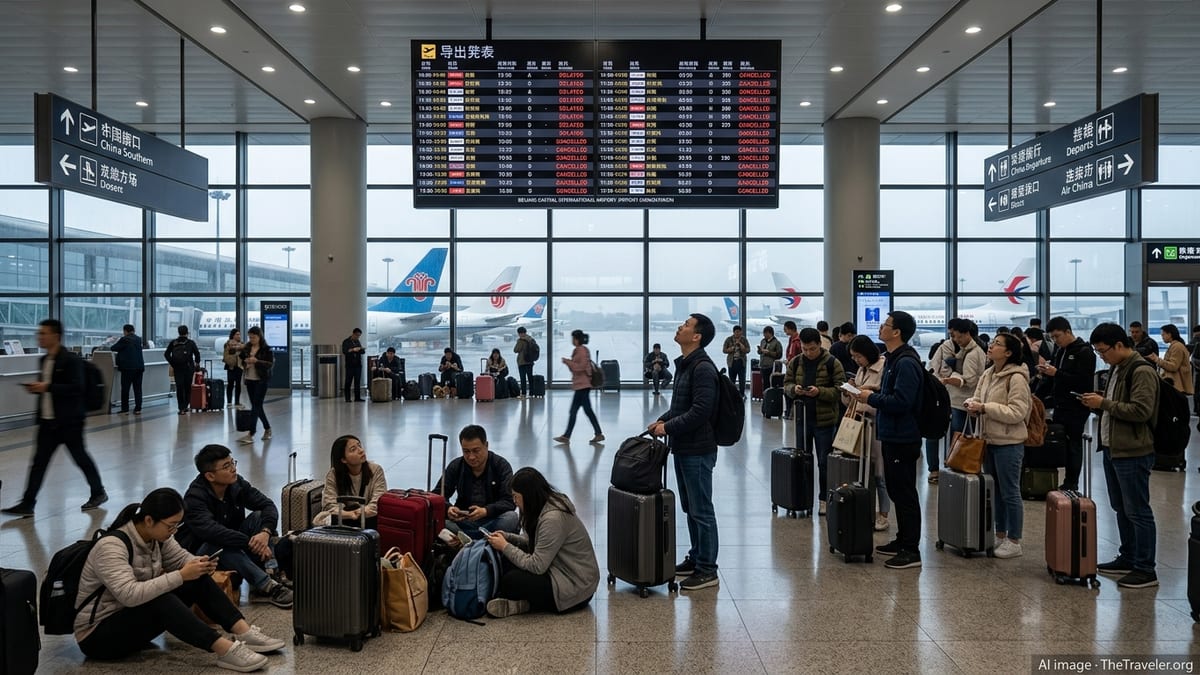
Severe spring weather across parts of China has disrupted air travel at several major hubs, with 55 flight cancellations and 687 delays reported across the network and passengers in Shenyang, Wuhan, and Beijing facing long waits, missed connections, and rapidly changing schedules on China Southern, Air China, and China Eastern services.
Get the latest news straight to your inbox!
How Weather Disrupted Flight Operations Across China
Publicly available airport and aviation data indicate that a band of unstable spring weather brought low clouds, rain, and periods of thunderstorms to northeastern and central China, affecting flight operations from the morning through the late evening. These conditions reduced visibility on approach and departure paths and forced air traffic controllers to increase spacing between aircraft, cutting hourly runway capacity at several airports.
According to aggregated flight-tracking information, the disruptions translated into at least 55 cancellations and 687 delays across the domestic network over the course of the day. While these numbers are modest compared with some large-scale storm events, they were concentrated at key transfer hubs, amplifying the impact for connecting passengers.
Airlines including China Southern, Air China, and China Eastern bore the brunt of the disruption, as they operate dense schedules through Beijing and major regional hubs in Shenyang and Wuhan. With weather-driven constraints limiting the number of movements per hour, carriers prioritized aircraft already airborne and long-haul operations, leaving some shorter domestic legs subject to rolling delays or cancellation.
Reports from Chinese-language media and flight status dashboards show that the pattern of disruption followed the worst of the weather, with delays initially mounting in northeastern cities before spreading southward and then gradually easing as conditions improved late in the day.
Airports and Routes Most Affected: Shenyang, Wuhan, Beijing
The largest passenger impacts were felt at three airports that serve as important domestic and regional connectors: Shenyang Taoxian International Airport in Liaoning, Wuhan Tianhe International Airport in Hubei, and the Beijing system, including both Beijing Capital and Beijing Daxing. These airports link dozens of secondary cities to trunk routes and international services operated by China Southern, Air China, and China Eastern.
In Shenyang, low cloud ceilings and intermittent rain led to arrival flow restrictions, according to aviation weather bulletins. This meant flights bound for the city were placed into holding patterns or slowed en route, which then cascaded into late departures on the return legs. Regional spokes feeding Shenyang from smaller northeastern cities saw some of the earliest cancellations as airlines sought to reduce congestion.
Wuhan’s central location within the domestic network created additional complexity. Public data show that Wuhan handled a wave of delayed arrivals from the northeast just as local conditions deteriorated, leading to a stack-up of aircraft waiting for gates and departure slots. This impacted China Southern and China Eastern services in particular, since both use Wuhan as a connecting point for itineraries between northern and southern China.
In Beijing, the combination of high traffic volume and variable weather translated into extended departure queues and revised arrival times. Flight status pages for Beijing Capital and Daxing showed clusters of delays on key trunk routes, with ripple effects felt on later evening departures to other parts of the country as aircraft and crews ended the day out of position.
China Southern, Air China, China Eastern: What Happened to Their Schedules
China Southern, Air China, and China Eastern collectively operate a large share of domestic capacity in and out of Shenyang, Wuhan, and Beijing, making them especially exposed whenever weather constrains traffic at those hubs. On the day of disruption, publicly available schedules and live status boards show that these three carriers accounted for most of the 55 cancellations and a sizable portion of the 687 delays.
For China Southern, a carrier with a strong presence in Wuhan and extensive point-to-point routes across central and southern China, the weather-related bottleneck in Hubei contributed to a series of late departures on afternoon and evening flights. Passengers with tight domestic connections, particularly those traveling onward from Wuhan to Beijing and other major cities, faced missed links and unplanned overnight stays.
Air China, which focuses heavily on Beijing as a primary hub, experienced significant schedule compression when arrival rates into the capital were reduced. Flight-tracking data show clusters of Air China flights departing more than an hour behind schedule, especially on routes linking Beijing with northeastern and central cities. With aircraft and crew rotations built on precise timetables, these delays spilled into later flights, compounding inconvenience for travelers.
China Eastern, based in Shanghai but operating important services through both Wuhan and the Beijing airports, also saw a series of late departures and a smaller number of outright cancellations. Publicly available customer guidance from the airline emphasizes that weather remains a primary cause of schedule disruption and notes that operations teams will adjust flight times or routes to maintain safety margins whenever convective weather appears along key corridors.
What Stranded Passengers Experienced on the Ground
Travelers passing through Shenyang, Wuhan, and Beijing reported long waits at departure gates, reissued boarding passes, and shifting estimated departure times as airlines responded to changing weather and evolving traffic restrictions. Social media posts and traveler forums described crowded waiting areas and short-notice announcements that flights were either cleared for boarding or withdrawn from the schedule.
At Shenyang, some passengers described repeated pushes of departure times in 30 to 60 minute increments as arrival flow constraints were adjusted. In Wuhan, where flights from various regions converged, late-arriving aircraft meant that some outbound flights could not depart at their original times, forcing airlines to consolidate services or reroute travelers through alternative hubs later in the day.
In Beijing, the combination of high passenger volumes and complex transfer itineraries added to traveler stress. Public accounts highlight that many passengers who had built what normally would be safe connection windows saw those buffers evaporate as inbound flights landed late. Those who missed onward journeys sought rebooking options at transfer desks or through airline apps, often competing for the limited seats remaining on late-night departures.
Across all three airports, passengers also faced practical challenges such as rebooking hotel stays, rearranging ground transport, and updating visa or permit details where required. For international travelers unfamiliar with Chinese domestic aviation, the sudden changes underscored how quickly weather can unravel even well-planned itineraries.
Key Advice for Travelers Facing Similar Disruptions in China
Recent events highlight several practical steps that can help travelers navigate weather-related disruption in China’s busy domestic air market. Publicly available airline guidance consistently encourages passengers to monitor flight status through official apps or websites on the day of travel, as these channels are usually updated more quickly than airport display boards during irregular operations.
Given the frequency of schedule changes when weather systems move across large parts of the country, building longer connection windows can provide valuable protection, particularly when transferring through hubs such as Beijing, Wuhan, or Shenyang. Travel industry advice frequently suggests allowing several hours between flights at major Chinese airports, especially in peak travel seasons or during months known for thunderstorms or low-visibility events.
Travelers are also encouraged by consumer advocates to keep all boarding passes and receipts for meals, accommodation, and ground transport incurred during a disruption. While compensation policies for weather events are more limited than for airline-controlled delays, documentation can be important when requesting goodwill gestures, vouchers, or partial reimbursements where airline policies allow.
Finally, having a backup plan before departure can reduce stress if conditions deteriorate. This might include knowing alternative routes by high-speed rail between key city pairs, being aware of later flight options on the same day, or having flexible hotel reservations that can be adjusted without substantial penalties if a delay or cancellation forces an unplanned overnight stay.