

More news on this day
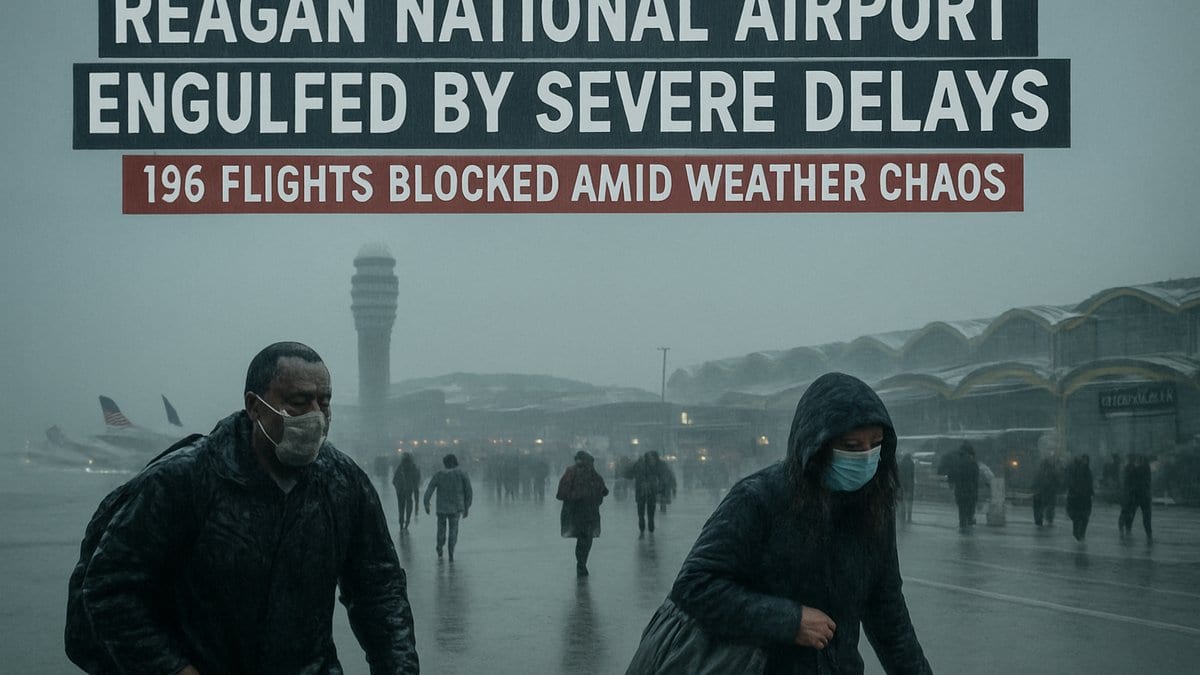
Spring weather volatility and ongoing congestion in the national air network have converged on Ronald Reagan Washington National Airport, where roughly 196 flights were delayed or canceled in a single day, leaving travelers to navigate hours of uncertainty and disrupted plans across the Washington region and beyond.
Get the latest news straight to your inbox!
Weather Systems Collide With a Fragile Flight Network
Publicly available flight-tracking dashboards and airport status pages for April 3 indicate that Reagan National (DCA) experienced one of its most challenging days of the season, with about 196 flights either significantly delayed or canceled as unstable spring weather rippled through the Mid Atlantic. The disruption followed a pattern seen across multiple U.S. hubs in recent weeks, where relatively short-lived storms triggered outsized consequences for tightly scheduled airline operations.
Reports on nationwide disruption show that convective weather, low clouds and shifting wind patterns have repeatedly affected major hubs in early April, including Chicago O’Hare, Dallas–Fort Worth and New York–area airports. When those hubs slow down, connecting itineraries into and out of Washington quickly feel the strain, forcing crews and aircraft out of position even when conditions at DCA briefly improve.
Recent coverage of 2026 travel patterns also highlights how recurring winter and early spring storms, coupled with lingering staffing and infrastructure constraints, have left the U.S. aviation system more vulnerable to cascading delays. Reagan National’s compact footprint and intensely scheduled runway operations mean that any weather-induced slowdown can rapidly create a backlog both on the ground and in surrounding airspace.
Federal dashboards for DCA on April 3 showed a mix of mostly cloudy conditions and intermittent visibility reductions, a combination that typically leads to spacing requirements between arrivals and departures. Once those flow restrictions are in place, flights can stack up for hours, translating weather that lasts minutes into operational problems that stretch deep into the evening.
Reagan National’s Recent History of Disruption
The latest wave of delays at DCA comes on the heels of a difficult winter for the Washington aviation market. A major North American winter storm in late January forced widespread cancellations across the region, including near-total shutdowns of operations at Reagan National on January 25 as snow and ice swept through the Mid Atlantic.
In March, the broader Washington area also experienced a short but intense halt to flights after a strong odor affected an air traffic facility, leading to ground stops not only at Reagan National but also at Dulles International, Baltimore/Washington International Thurgood Marshall and Richmond International. While that episode was resolved within hours, it underscored how sensitive the capital region’s airports are to any disruption at shared control centers.
Regan National has also been in the spotlight for airspace and safety concerns after recent midair incidents over the Potomac River corridor prompted new restrictions and operating reviews. Even when unrelated to a specific weather event, these adjustments can reduce flexibility in routing and sequencing aircraft around the airport, narrowing the margin for recovery when storms or low visibility arrive.
Historical performance data compiled by transportation analysts consistently show that tightly constrained urban airports are more likely to experience elevated delay percentages during adverse weather. DCA, hemmed in by the Potomac River, restricted approach paths and federal airspace, fits squarely in that category, which helps explain why a single day of unstable conditions can trigger nearly 200 affected flights.
How 196 Blocked Flights Rippled Across the Country
The roughly 196 disrupted flights at Reagan National on April 3 represented more than isolated local inconvenience. Published coverage of national operations that day indicates that weather and flow restrictions at multiple hubs interacted like falling dominos, with DCA serving as both an origin and destination node in a larger web of delays.
When an early departure from Washington leaves late, the aircraft and crew scheduled for subsequent legs often arrive out of sequence in other cities. Industry briefings on recent disruption patterns emphasize that this can quickly remove aircraft from already tight schedules in places far from the original weather event, compounding delays throughout the afternoon and evening.
Data drawn from tracking services show that some DCA flights on April 3 were delayed not because of conditions in Washington, but because aircraft were held or rerouted earlier in the day by storms and congestion in the Midwest and South. By the time those jets reached the capital region, the remaining operating window had narrowed, forcing airlines to consolidate or cancel later services.
The result for travelers was a patchwork of rolling departure boards, where a flight might initially show a modest delay, then shift repeatedly as new air traffic control programs and crew limitations took effect. By nightfall, many passengers faced missed connections, extended layovers or overnight stays as airlines worked through the backlog.
Passenger Experience at a Strained Capital Hub
Accounts posted to social platforms and local media coverage on April 3 described crowded concourses at Reagan National, with long lines at rebooking counters and customer-service desks. Travelers reported waiting through multiple schedule changes as airlines attempted to thread limited departure slots between storm cells and upstream congestion.
For some passengers, the disruption meant being re-routed through secondary airports or accepting itineraries with lengthy connections as carriers tried to reposition aircraft and crews. Others opted to abandon same-day travel plans entirely, seeking ground transportation options along the busy Northeast Corridor when seats became scarce on remaining flights.
Consumer guidance from transportation advocates notes that U.S. airlines are generally not required to provide meal or hotel vouchers when delays are caused by weather, a reality that often leaves stranded travelers searching for last-minute accommodation during major storms or system-wide congestion days. Policies vary by carrier, and in some cases passengers reported receiving limited assistance, but many were left to navigate out-of-pocket costs.
The experience at DCA mirrored scenes reported at other hubs during the same disruption period, suggesting that the issues go beyond a single airport. Strong travel demand in early 2026, combined with tight capacity and complex routing, has left little slack in the system when weather or technical issues arise.
What Travelers Through DCA Can Do Next Time
Travel advisors and frequent flyer advocates responding to the latest wave of delays are increasingly recommending that passengers treat spring itineraries through Reagan National with added caution. Suggestions commonly include booking earlier departures, allowing longer connection times and avoiding the final flight of the day on critical routes whenever possible.
Guidance compiled from airline and airport resources emphasizes the importance of monitoring carrier apps and text alerts closely on days when storms are forecast anywhere along a route, not just in Washington. Because disruption at a distant hub can still affect a DCA departure, early awareness improves the odds of securing alternate options while seats remain available.
Travelers are also encouraged to understand each airline’s policies on rebooking during severe weather, including whether same-day changes to nearby airports such as Dulles or Baltimore/Washington can be made without additional fees during major events. On high-impact days like April 3, some passengers were able to recover their trips by accepting alternative routings through less congested hubs.
With forecasts pointing to continued volatility in spring weather patterns and ongoing constraints in the national air system, Reagan National is likely to remain a flashpoint for disruption. For now, the 196 blocked flights stand as a clear signal that even brief bouts of bad weather can generate outsized consequences at one of the country’s most capacity-constrained airports.