

More news on this day
Travelers at Orlando International Airport faced hours of uncertainty as Delta Air Lines, Spirit Airlines, and JetBlue Airways suspended 16 flights and logged more than 100 delays, disrupting major domestic and international routes linking Orlando with cities including Calgary, London, Atlanta, Austin, and Nashville.
Get the latest news straight to your inbox!
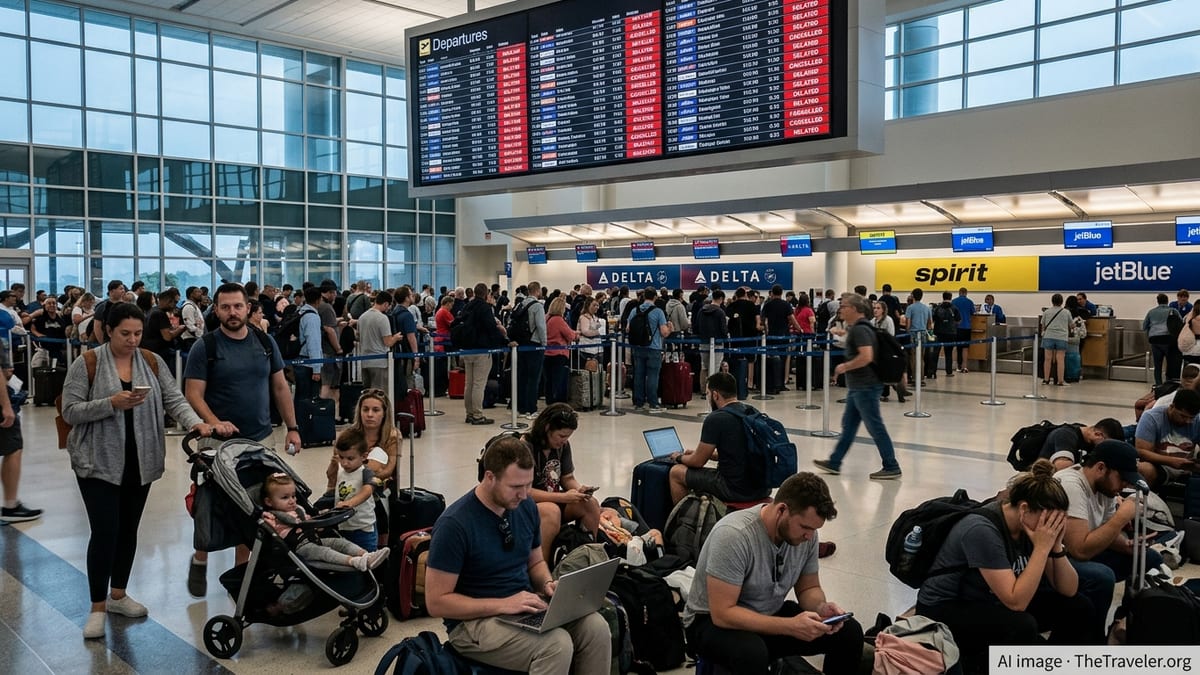
Stormy Skies and System Strain Converge Over Orlando
The latest wave of disruption at Orlando International Airport comes amid a turbulent early 2026 for North American air travel, with severe weather repeatedly sweeping across key aviation corridors. Publicly available weather and aviation data indicate that strong thunderstorms and unstable conditions around central Florida, layered on top of broader nationwide systems, have sharply reduced the airport’s capacity at peak times. As spacing between takeoffs and landings increases, delays quickly cascade across already tight schedules.
The decision by Delta Air Lines, Spirit Airlines, and JetBlue Airways to suspend 16 flights at Orlando in a single operating window illustrates how vulnerable busy leisure gateways remain to both local storms and knock-on effects from weather further north. When arrivals are forced into lengthy holding patterns or diverted to other airports, aircraft and crew are left out of position, amplifying the impact far beyond the initial weather cell.
Operational data and traveler reports suggest that the majority of affected flights were short and medium haul services, including links to major hubs and popular getaway cities such as Atlanta, Austin, and Nashville. Several longer-haul connections, including transatlantic links via partner hubs serving London and seasonal services tied to Calgary, also faced knock-on schedule pressures.
While the headline numbers of 16 cancellations and more than 100 delays are modest compared with nationwide totals during major winter storms, the concentration of disruptions at a single, heavily trafficked airport during a busy travel period translated into packed terminals, long queues, and missed connections for thousands of passengers.
Delta, Spirit, and JetBlue Routes Hit Across North America
Delta Air Lines, Spirit Airlines, and JetBlue Airways collectively operate a dense web of routes into and out of Orlando, linking central Florida with major hubs such as Atlanta and New York, as well as fast-growing markets including Austin and Nashville. Airline schedule publications and airport route maps show that many of these flights are timed to connect Orlando’s leisure traffic with broader domestic and international networks, particularly for travelers continuing on to Canada and Europe.
The latest round of disruptions affected this network at multiple points. Short-haul feeder services between Orlando and Atlanta, a key connecting point for Delta’s broader system, were among those delayed or scrubbed, limiting options for travelers aiming to reach onward long-haul departures. At the same time, low-cost carriers Spirit and JetBlue experienced rolling delays on services to and from major eastern and central U.S. cities, intensifying pressure on gate space and staffing in Orlando’s terminals.
These route interruptions ripple outward. Published route data show that Orlando is increasingly tied into seasonal and connecting itineraries for travelers heading to cities such as Calgary, via hubs in the northern United States and western Canada, as well as to London through large transatlantic gateways. When a departure from Orlando is delayed or cancelled, passengers may miss these onward links, turning a few dozen grounded flights into a much larger web of disrupted journeys.
The pattern also highlights the reliance of budget-conscious travelers on a small number of carriers. Spirit and JetBlue, in particular, have built Orlando into a cornerstone of their Florida operations, so any concentrated disruption at MCO can disproportionately affect holidaymakers, cruise passengers, and theme park visitors trying to travel on tight schedules and limited budgets.
Passenger Experience: Long Queues, Missed Holidays, and Scrambled Plans
Accounts shared publicly by travelers describe scenes of crowded concourses and extended waits as delays mounted and cancellations accumulated. Many passengers reported rebookings pushed by a day or more, particularly on popular northbound and northeast-bound routes where seat availability tightened quickly. Families returning from theme parks, sports fans, and business travelers alike found themselves sleeping in terminals or scrambling for last-minute hotel rooms across the Orlando area.
With only a limited number of flights departing late into the evening, options narrowed as the day wore on. Once the affected airlines made the decision to cancel a cluster of remaining departures, rebooking responsibilities shifted to digital channels, customer-service counters, and call centers, each facing heavy demand at the same time. Travelers noted that while airlines offered alternative routings through hubs like Atlanta or other Southeast and Mid-Atlantic airports, seats on those services were scarce.
Missed connections were a particular issue for those relying on Orlando as a gateway rather than a final destination. Travelers scheduled to connect, for example, from Orlando to Atlanta and onward to western Canada, or from Orlando into a northeastern hub ahead of flights to London, reported losing entire itineraries once the initial leg was scrubbed. In many cases, next-day seats on equivalent routings were already heavily booked, prolonging the disruption beyond a single calendar day.
Even for flights that eventually departed, delays of several hours reshaped travel days and created logistical challenges at both ends of the journey. Late-night arrivals meant missed ground transportation, shortened hotel stays, or lost work hours, costs that do not appear in cancellation statistics but weigh heavily on traveler confidence.
Operational and Staffing Pressures Amplify Weather Impacts
While adverse weather around central Florida appears to have been the spark for the latest disruption, available aviation commentary indicates that operational and staffing constraints magnified the impact. Airlines across North America have been operating with tight schedules and limited spare aircraft or crew, a situation that leaves little buffer when storms or airspace restrictions intervene. If one inbound aircraft or crew is delayed beyond regulated duty limits, the next departure can be forced to cancel even if skies have cleared.
Low-cost carriers that emphasize aircraft utilization and lean staffing, such as Spirit, tend to be especially exposed when irregular operations stretch over many hours. If reserve pilots or flight attendants are not available in Orlando, or if they are already deployed to cover earlier issues, later departures may have no legally available crew even once the weather window improves. Similar dynamics can affect larger network carriers like Delta and hybrid models like JetBlue when they operate tight turnarounds at busy leisure airports.
These constraints are not unique to Orlando. Industry analyses over the past year point to recurring patterns of concentrated cancellations at major hubs and tourist gateways during winter and early spring weather events. In this case, the clustering of 16 cancellations and more than 100 delays among three carriers at a single airport underscores how quickly normal operations can unravel when multiple flights lean on the same crews, gates, and ground resources.
For airport operators, such episodes stress everything from baggage systems to passenger information services. As delays accumulate, travelers crowd into gate areas and customer-service queues, creating the perception of broader chaos even when a majority of the day’s flights depart close to schedule. Managing expectations through accurate, timely information becomes as crucial as clearing the backlog of flights once weather and staffing conditions improve.
What Travelers Can Expect in the Coming Days
In the immediate aftermath of large-scale delays and cancellations, residual disruption is common. Aircraft and crews often remain out of their planned positions for several rotations, meaning that even flights scheduled a day or two later can be affected. For Orlando, where weekend demand is heavily skewed toward leisure and family travel, this can translate into limited last-minute seat availability on the most popular routes and departure times.
Published travel advisories and industry guidance recommend that passengers departing from Orlando in the days following major disruptions build in additional time at the airport, monitor their flight status frequently, and remain flexible about routings and connection points. Rebooking through alternative hubs, such as redirecting via different southeastern or northeastern cities, can sometimes restore itineraries more quickly than waiting for a direct replacement service from Orlando.
Analysts also note that this episode is likely to refocus attention on the resilience of airline operations at high-volume leisure airports. Questions over staffing levels, reserve crew availability, and the balance between aircraft utilization and schedule robustness are expected to continue, particularly for carriers that rely on Orlando as a cornerstone of their Florida networks.
For travelers, the latest disruption serves as a reminder that even as airlines refine schedules and add capacity to meet strong demand, the combination of volatile weather and finely tuned operations can still leave plans grounded without warning. Travel insurance, flexible ticket options, and contingency plans for accommodation and ground transport remain valuable tools for navigating one of the world’s busiest vacation gateways.