

More news on this day
Wellington Airport is accelerating a pivotal runway upgrade that aviation analysts describe as a potential turning point for long-haul travel across Australasia, with new infrastructure designed to support larger, longer-range aircraft capable of linking the New Zealand capital directly with major hubs in Asia and North America.
Get the latest news straight to your inbox!
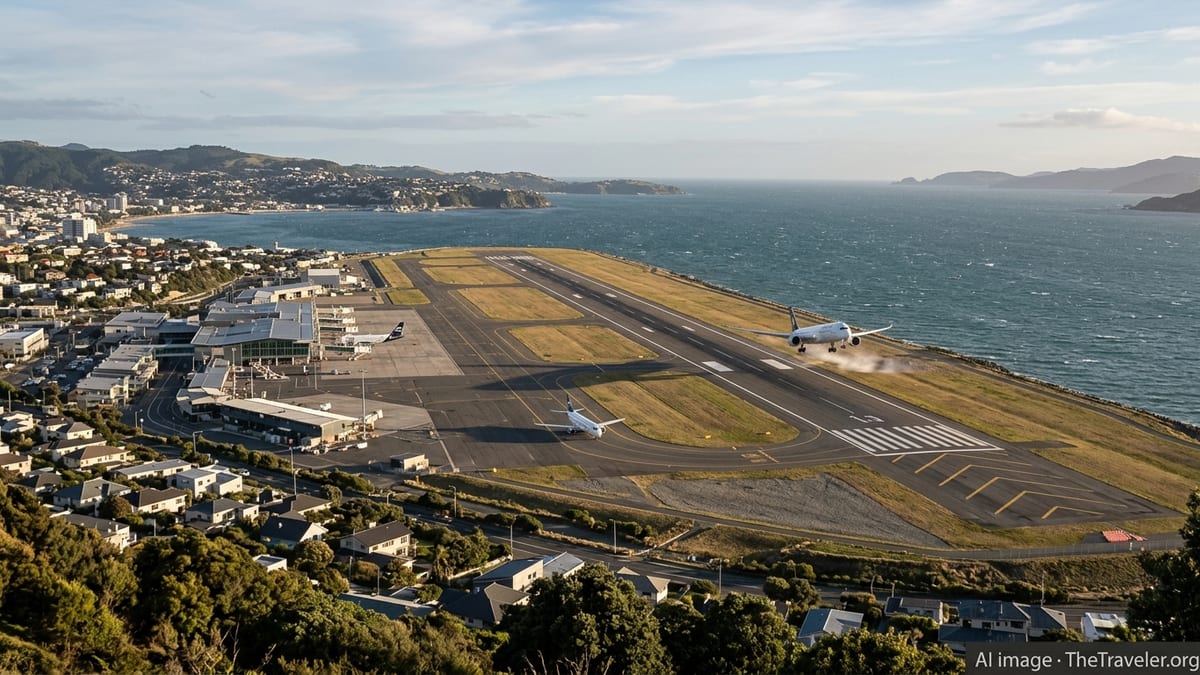
Runway Project Targets Long-Haul Capability by 2026
Publicly available planning documents show Wellington Airport is in the final stages of a multi-year airfield enhancement program centred on installing an Engineered Materials Arresting System, or EMAS, at both runway ends. The system, made of crushable blocks that safely decelerate an aircraft that overruns the strip, is being used to unlock more effective runway length without extending further into Lyall Bay.
Technical data circulated to industry partners indicates that from late March 2026 the airport’s single runway is expected to gain around 132 metres of additional landing distance and modest extra take-off distance, effectively lifting available declared distances to about 1,947 metres in both directions. While that figure remains short of the 2,600 to 3,000 metres typically associated with fully loaded intercontinental operations, the airport and local business interests are positioning the change as a catalyst for new aircraft and route possibilities.
Strategic statements from the airport’s shareholders describe the EMAS-based upgrade as a cost-effective alternative to the larger-scale reclamation previously considered, which would have pushed the runway further into Cook Strait. Earlier schemes for a full 300-metre physical extension were paused in 2024 amid consenting challenges and coastal resilience concerns; the current project is framed as a more pragmatic path to achieving enhanced performance within the existing footprint.
Aviation commentators note that the upgrade aligns with improvements in new-generation widebody and long-range narrowbody aircraft, many of which are more capable on shorter runways than their predecessors. The combination of EMAS-enabled declared distances and modern airframes is seen as the key to redefining what “long haul” could realistically mean out of Wellington.
Pathway to Asia and North America Still Requires Fleet Innovation
Route-planning analyses that have circulated in the New Zealand market for several years suggest that with roughly 300 metres of added runway, non-stop services from Wellington to major Asian and North American gateways would fall within range for aircraft such as the Airbus A350 and Boeing 787. While the current EMAS project delivers a smaller numerical gain, airport-focused commentary increasingly points to a blended solution that pairs incremental runway performance with more capable aircraft and tailored payload strategies.
Industry presentations have long cited examples such as Tokyo, Hong Kong, Singapore, Los Angeles and Honolulu as plausible destinations from Wellington, assuming a suitable balance of runway length, aircraft type and passenger or cargo loads. The new runway configuration is expected to reduce operational penalties for larger aircraft and improve margins in wet and windy conditions, long viewed as defining characteristics of the capital’s airfield.
Aviation forums and local business groups have also highlighted the growing potential of long-range narrowbodies like the Airbus A321XLR for thinner long-haul markets. While these aircraft remain sensitive to runway performance and fuel weight, their combination of range and lower trip costs is seen as one way carriers might test direct links between Wellington and secondary Asian hubs where demand is growing but not yet at the scale of Auckland or Sydney.
Reports indicate that the airport is actively exploring route-development partnerships, including a memorandum of understanding with Guangzhou Baiyun International Airport. Observers view this as a sign that the capital is seeking to position itself as a complementary long-haul gateway in New Zealand, rather than a direct rival to Auckland’s much longer runway and broader catchment.
Regional Connectivity and Competitive Pressures Across Australasia
Within the wider Australasian aviation landscape, Wellington’s move comes as other regional airports pursue their own runway and terminal upgrades to attract long-haul traffic. Major gateways such as Auckland and Sydney already host an extensive network of intercontinental services, while cities like Adelaide and Christchurch are steadily rebuilding or extending their long-haul offerings as global travel demand recovers.
Analysts argue that Wellington’s ambition lies not in matching the scale of these larger hubs, but in capturing a slice of premium and government-related traffic that currently funnels through multiple domestic and international transfers. Direct or one-stop itineraries via the capital could appeal to time-sensitive travellers who value reduced connection complexity, especially on routes to key Asian financial centres or tech hubs on the west coast of North America.
At the same time, commentary from aviation specialists points out that even with the upgraded runway, airlines will weigh Wellington’s relatively modest catchment against the economics of operating widebody aircraft. Comparisons are frequently made with Christchurch, which has a long runway and strong tourism appeal yet has struggled to sustain year-round flights to the United States. This experience is often cited as a reminder that infrastructure alone does not guarantee enduring long-haul success.
Nonetheless, the competitive dynamic is shifting as carriers deploy more flexible fleets and look for differentiated markets. Wellington’s runway enhancement is expected to feature prominently in negotiations with airlines evaluating whether a limited schedule of seasonal or high-frequency business flights might be viable once the EMAS project is complete.
Economic Stakes for Wellington and the Lower North Island
Regional development advocates have long argued that improved international connectivity would deliver outsized benefits for Wellington and its hinterland, which extends north toward Palmerston North and the Wairarapa. Studies cited in public debate suggest that more direct long-haul access could boost inbound tourism, support the city’s growing screen and technology sectors, and strengthen links to Asian and North American investment markets.
Local chambers of commerce and tourism bodies have consistently pointed to the friction of current travel patterns, which usually require passengers to route via Auckland, Christchurch or Australian hubs before boarding long-haul services. The added time and complexity are often described as barriers for both business travel and high-value visitors, particularly for short-notice trips to and from the capital.
With the runway upgrade approaching its operational date, expectations are building that the airport will intensify its pitch to global carriers. Observers anticipate a focus on routes that complement, rather than duplicate, existing long-haul services from other New Zealand cities, potentially including links to secondary Asian hubs that feed larger networks or targeted connections to North American tech and media centres aligned with Wellington’s creative economy.
Economic commentators caution, however, that any new long-haul services are likely to emerge gradually and on a trial basis. They suggest that a realistic first phase could involve seasonal or limited-frequency flights designed to test demand, with potential expansion contingent on sustained passenger volumes and yield.
Balancing Safety, Sustainability and Coastal Resilience
Safety and environmental considerations have been central to the evolution of Wellington’s runway plans. Earlier legal challenges focused on runway end safety areas, while more recent debates have centred on the implications of building further into an exposed stretch of Cook Strait coastline subject to strong winds, storm surges and long-term sea-level rise.
By opting for an EMAS-based solution and avoiding major reclamation, the current project is framed in public documentation as a compromise that enhances safety margins and operational performance while limiting new encroachment into Lyall Bay. The system is widely used at constrained airports overseas and is designed to meet international safety standards for overruns.
Sustainability arguments are also reshaping the conversation about long-haul growth. Proponents of the upgrade contend that more direct flights from the capital could reduce the number of short domestic feeder legs required for international trips, lowering overall emissions per journey. Critics counter that any additional long-haul capacity will increase absolute emissions and should be weighed against national climate commitments and emerging aviation decarbonisation strategies.
As construction milestones approach in 2026, Wellington Airport’s runway project is increasingly viewed as a test case for how mid-sized, coastal airports can navigate the competing demands of connectivity, safety and environmental responsibility. The decisions that airlines ultimately make about deploying long-haul giants to the capital will be closely watched across Australasia’s tightly contested aviation market.