

More news on this day
A fast-escalating conflict in West Asia has triggered the most severe aviation disruption since the pandemic, with more than 11,000 flights cancelled or diverted in a matter of days and key Gulf hubs brought to a standstill.
Airspace Closures Ripple Across a Critical Global Corridor
The latest surge in cancellations follows joint U.S. and Israeli strikes on Iran beginning on 28 February, and subsequent retaliatory attacks that prompted widespread airspace closures across West Asia. Authorities in Iran, Iraq, Israel, Bahrain, Kuwait, Qatar, Saudi Arabia, Syria and the United Arab Emirates have imposed at least partial shutdowns of their skies, instantly severing one of the world’s busiest aviation corridors between Europe and Asia.
Air-traffic tracking data shows that more than 11,000 flights have now been cancelled since the first strikes, with at least 3,400 scrubbed in the opening phase of the crisis and thousands more added as the closures extended into this week. Airlines have also diverted hundreds of flights that were already airborne, forcing lengthy detours around the conflict zone, emergency fuel stops and in some cases returns to origin airports after hours in the air.
Major Gulf hubs including Dubai International, Abu Dhabi’s Zayed International and Doha’s Hamad International have at various points halted almost all operations, severely constraining global connectivity. These airports normally handle tens of thousands of long haul transit passengers every day; their effective shutdown has created a domino effect that is now being felt at airports from London and Frankfurt to Delhi, Singapore and New York.
Industry analysts say the sheer scale and geographic spread of the airspace closures now surpass previous regional crises, including airspace restrictions during the 2022 invasion of Ukraine and flare ups in the Gulf over the past decade. With military activity continuing and no clear timeline for fully reopening skies, airlines are preparing for a prolonged period of reduced capacity, schedule upheaval and higher operating costs.
Airlines Cancel Routes, Reroute Fleets and Brace for Higher Costs
Global carriers have responded with sweeping cancellations and rerouting strategies as they attempt to keep passengers and crews out of harm’s way. Leading Gulf airlines Emirates, Qatar Airways and Etihad Airways temporarily suspended most services to and from their home hubs, grounding large portions of their widebody fleets and cutting off popular one stop connections between Europe, Africa, Asia and Australasia.
European airlines including Air France, KLM, Lufthansa and British Airways have cancelled flights to destinations such as Tel Aviv, Dubai, Riyadh and Beirut, while also avoiding Iranian, Iraqi and Israeli airspace on longer haul routes. This has pushed flight times significantly higher on some Europe to South and Southeast Asia services, adding hours of flying and fuel burn via detours over the Caucasus, Central Asia or the Mediterranean.
In North America, U.S. and Canadian carriers have halted nonstop services into Israel and the Gulf, and in some cases have suspended overflight of the broader region. Delta Air Lines and Air Canada are among the operators that have extended cancellations into at least mid March, while American Airlines has paused certain services linking Doha to U.S. hubs.
Indian, Pakistani and other South Asian carriers, which depend heavily on West Asian airspace and hubs, have also been forced into drastic schedule cuts. Indian airlines alone have cancelled hundreds of international flights over the past several days, while Pakistan has scrapped more than 500 domestic and international services, disrupting both passenger and cargo flows. With fuel prices already edging higher on fears of wider regional instability, airline executives warn that the conflict could quickly erode margins on long haul routes even after limited services resume.
How Travelers Are Being Affected Around the World
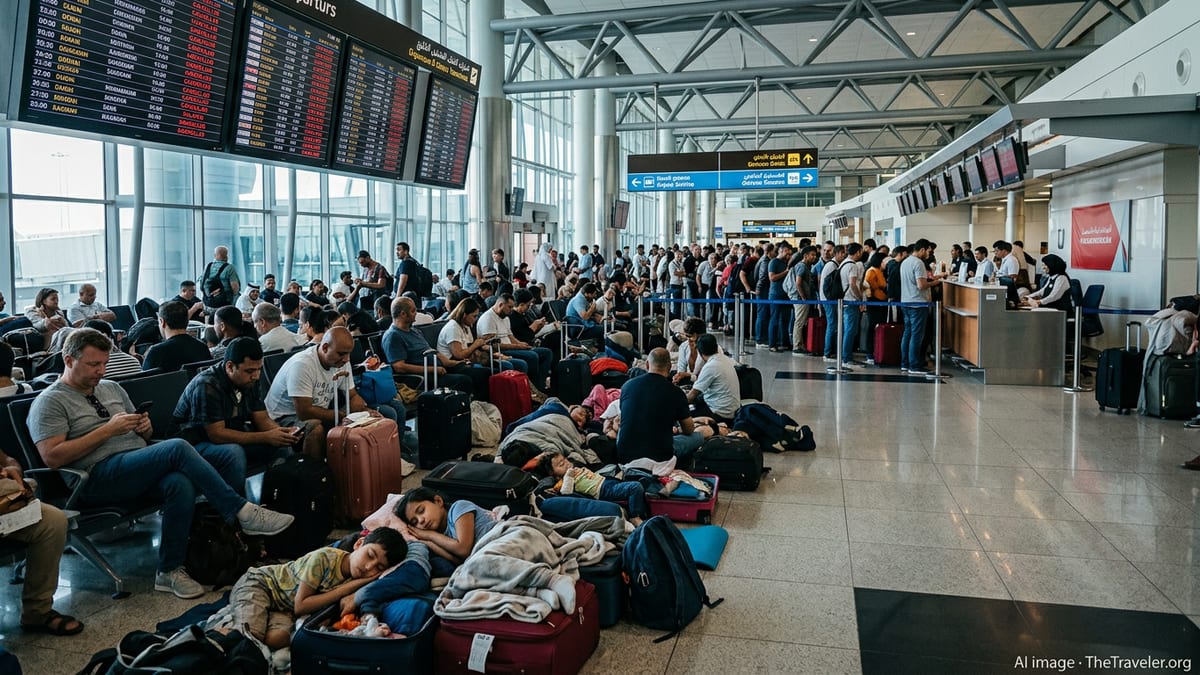
For travelers, the impact is immediate and deeply disruptive. Hundreds of thousands of passengers have been stranded at or en route to Gulf and regional hubs, often with little advance warning as airspace closures and missile alerts forced last minute shutdowns. Many who were already in the air when restrictions came into force found their aircraft diverted to secondary airports or returned to their departure point after extended holding patterns and fuel dumping procedures.
Airports across Europe, South Asia and Southeast Asia are reporting crowded transfer halls and long lines at airline service desks as rerouted passengers seek alternative connections. In India, major gateways such as Delhi and Mumbai have seen waves of cancellations and extended delays on flights to the Middle East and beyond, while secondary cities are grappling with knock on disruption to international and domestic networks.
Travelers transiting between Europe and destinations in Australia, New Zealand and East Asia are particularly affected, as many itineraries rely on one stop connections through Dubai, Doha or Abu Dhabi. With those hubs largely offline or operating limited recovery flights, passengers are being rebooked via more northerly routings through Istanbul, Central Europe or East Asian hubs, often adding a full day or more to total journey times.
The disruption is also straining hotel capacity in key diversion points, where airlines are required under consumer protection rules to provide accommodation and meals during extended delays. Ground transportation and airport services are under pressure as crews and aircraft end up in the wrong places, complicating efforts to restore regular schedules even if airspace restrictions ease.
What Passengers Need to Know Right Now
With the situation evolving by the hour, aviation authorities and consumer rights groups are urging passengers to adopt a cautious and flexible approach to any travel that involves West Asia or overflies the region. Travelers booked on routes touching the Middle East, the eastern Mediterranean or the usual Europe Asia corridors should anticipate potential cancellations or significant delays, even if their airline has not yet adjusted schedules.
Experts advise that travelers avoid heading to the airport until they have received explicit confirmation that their flight is operating. Reconfirming departure status through airline apps or customer service channels on the day of travel is essential, as schedules that appear available several days in advance can still be pulled at short notice in response to security advisories.
Passengers whose flights are cancelled are generally entitled to a choice between a refund and rebooking at the earliest opportunity, subject to each airline’s policy and the jurisdiction’s consumer protection laws. In practice, however, limited spare seats on alternative routings and the wide geographic scope of the disruption mean that same day or next day options may be extremely scarce on popular long haul routes.
Travelers with imminent departures are also being encouraged to travel light, keep medication and essentials in carry on luggage in case bags are separated during diversions, and maintain updated contact details with airlines so they can receive real time alerts. Those with non essential or discretionary trips involving the region are being urged to consider postponement until there is greater clarity on airspace access and schedule stability.
Planning Ahead: Rerouting Options and Safety Considerations
For passengers still needing to travel, rerouting via alternative hubs is possible but requires careful planning. Airlines are increasingly favoring northerly or southerly corridors that avoid Iranian and Iraqi airspace, sending flights through parts of Central Asia, the Caucasus, Egypt or the Arabian Sea where approved by regulators. This has prompted some carriers in Turkey, Central Europe and East Asia to add capacity on select routes, though demand is outstripping supply on many dates.
Travel agents and corporate travel managers report a surge in requests to rebook itineraries that previously routed through Dubai, Doha or Abu Dhabi onto services via Istanbul, Singapore, Bangkok and European mega hubs. While these paths restore connectivity in many cases, travelers should expect longer flight times, tighter connections and a higher risk of missed onward flights as airlines adjust complex global schedules on short notice.
Safety remains the overriding factor in airline and regulatory decisions. Aviation safety agencies in Europe, North America and Asia have reiterated that carriers are prohibited from entering airspace where there is a credible risk of misidentification or spillover from military action. In recent days, reports of drones, missile activity and misdirected military engagement near civilian corridors have reinforced the caution driving widespread closures.
Until the conflict de-escalates and airspace authorities are confident that civil aviation can operate without undue risk, travelers should be prepared for an extended period of elevated disruption. For now, the skies over West Asia, long a vital bridge between continents, have become a chokepoint that is reshaping how and where the world flies.