

More news on this day
Escalating conflict across West Asia has thrust key Gulf tourism hubs and air corridors into sudden uncertainty, as the United Arab Emirates joins Kuwait, Qatar, Lebanon, Bahrain, Saudi Arabia and other states in grappling with airspace closures, travel advisories and knock-on disruption for the ICC Men’s T20 World Cup now under way in India and Sri Lanka.
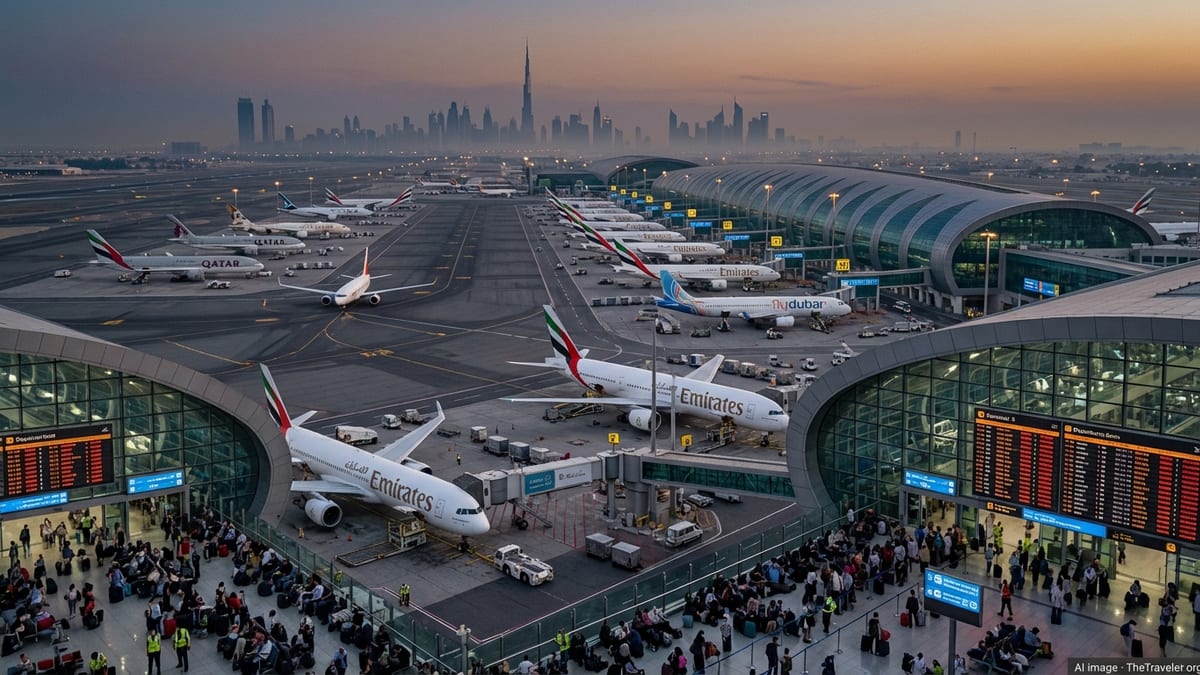
Airspace Closures Turn Gulf Hubs into Bottlenecks
Following coordinated U.S.-Israeli strikes on Iran and retaliatory attacks across the region in late February, multiple West Asian states temporarily shut portions of their airspace, triggering a cascading disruption in global aviation. Authorities in the United Arab Emirates, Kuwait, Bahrain, Qatar and others imposed short-notice restrictions that forced airlines to cancel or reroute hundreds of flights, according to airport and carrier statements.
Dubai, Abu Dhabi and Doha, normally among the world’s most reliable long-haul transit hubs, saw their role reversed almost overnight as aircraft diverted to European and South Asian gateways. Industry estimates suggest that more than 1,800 flights were cancelled or severely delayed in the first 48 hours of the crisis, leaving hundreds of thousands of passengers stranded or facing multi-leg detours.
The closures have been particularly disruptive for South and Southeast Asian travellers, many of whom rely on Gulf hubs for connections to Europe, North America and Africa. With airlines rebalancing schedules around new routings and higher fuel burn, analysts warn that fares on some routes are likely to rise in the short term, even as capacity remains constrained.
Gulf carriers say they are working with civil aviation authorities to restore normal operations once security assessments permit, but there is little clarity on how quickly full transit flows through the UAE, Qatar and Bahrain can resume amid continued military activity.
Tourism Confidence Shaken in UAE and Neighbouring States
Before the latest escalation, tourism across much of the Middle East had been on a strong upward curve, with Saudi Arabia, the UAE, Qatar, Bahrain, Lebanon and others all reporting robust visitor growth and hotel pipelines. Dubai International Airport, for example, handled more than 92 million passengers in 2024, surpassing its pre-pandemic record and reinforcing the emirate’s status as a global gateway.
The new conflict has abruptly chilled that momentum. Travel and hospitality executives report a spike in cancellations and postponements for trips to Dubai, Abu Dhabi, Doha, Jeddah and Beirut, particularly from long-haul leisure markets and corporate clients subject to stricter risk assessments. Some tour operators say they are fielding hourly calls from travellers asking whether to reroute through alternative hubs or defer journeys entirely.
Regional governments are trying to steady nerves without downplaying genuine risks. The UAE’s Ministry of Foreign Affairs issued updated guidance to citizens this week, urging them to review passport validity, maintain comprehensive insurance and register itineraries with consular services so officials can assist in emergencies. Similar advisories and reassurance campaigns have been launched in Saudi Arabia, Qatar and Kuwait, even as authorities step up visible security around airports, hotels and tourist districts.
For destinations like Lebanon and parts of the Gulf that have worked hard to market themselves as safe, sophisticated short-break options, the timing is particularly challenging. Industry bodies warn that even a brief period of instability can have an outsized reputational impact, with some travellers shifting plans to Mediterranean Europe, South Asia or Southeast Asia for the coming peak seasons.
How the ICC T20 World Cup Is Being Affected
Although the ICC Men’s T20 World Cup is being staged in India and Sri Lanka, the tournament is deeply exposed to the unfolding West Asia crisis because so many teams, officials and broadcasters rely on Gulf hubs for transit. The International Cricket Council confirmed this week that it has activated contingency plans to safeguard travel and logistics for all accredited stakeholders.
In a recent statement, the ICC said it is closely monitoring the situation and has mobilised its travel, logistics and security units to ensure that players, support staff, match officials and media crews can return home safely after their fixtures. With Dubai, Abu Dhabi and Doha facing rolling disruptions, planners are shifting bookings to European, South Asian and Southeast Asian gateways wherever possible.
So far, there has been no direct threat to match venues in India and Sri Lanka, and fixtures are proceeding as scheduled. However, officials acknowledge that continued airspace uncertainty could complicate mid-tournament movements, including late call-ups, medical transfers and the travel of neutral umpires. There is also concern about fans who chose Gulf routes for their journeys and now face lengthy detours or unexpected stopovers.
Tournament organisers emphasise that safety and operational continuity remain the priority. They are urging spectators and teams alike to stay in close contact with airlines and to factor in extra time for any cross-continental travel linked to the World Cup, particularly travel that would normally pass through West Asian hubs.
Fans and Travellers Face a Maze of Advisories
For individual travellers, the patchwork of fast-changing restrictions and advisories has made trip planning unusually complex. Several Western governments, including the United States, have issued worldwide caution notices highlighting an elevated risk environment and warning of possible airspace closures and security incidents in the broader Middle East.
Many national foreign ministries now recommend that citizens transiting or visiting the region register with consular alert systems and regularly check for updates. Insurance companies are also scrutinising policies, with some excluding coverage for travel to specific high-risk locations or requiring policyholders to follow official advice to remain fully covered.
Travel agents say that one of the most common questions from cricket fans is whether it is still feasible to fly via the UAE, Qatar or Bahrain to reach India and Sri Lanka for remaining World Cup matches. The answer depends heavily on the evolving security picture and each carrier’s operational decisions. Some airlines have temporarily suspended services on selected routes, while others are operating at reduced frequencies with altered flight paths to avoid sensitive airspace.
Experts recommend that travellers heading to or from the subcontinent build in additional buffer days, opt for flexible tickets and retain digital copies of their documents. They also advise monitoring official channels rather than relying solely on social media, where unverified reports of closures or attacks can spread faster than confirmed information.
What to Watch in the Coming Weeks
Much hinges on whether regional tensions ease or deepen through March, when many World Cup teams and fans are due to disperse and when Gulf destinations typically look ahead to spring and early summer visitor flows. A rapid de-escalation could allow airspace and scheduling to stabilise, limiting the long-term damage to the region’s reputation as a dependable crossroads for global travel.
If the crisis persists, however, Gulf tourism strategies could face a more fundamental test. Countries such as the UAE, Saudi Arabia and Qatar have invested heavily in positioning themselves as year-round leisure and events destinations, counting on the reliability of their aviation networks and perceived security to attract millions of visitors. Extended flight disruptions or heightened threat perceptions would complicate those ambitions and may push some travellers toward alternative hubs and holiday markets.
For the ICC and its stakeholders, the immediate priority is simply to complete the World Cup safely while ensuring that players and supporters can get home without undue risk. For the wider travel industry, the events of recent days are a reminder of how intertwined West Asia’s air corridors, tourism economies and global sporting calendars have become, and how quickly that interconnected system can be thrown off course by geopolitical shock.