

More news on this day
Escalating conflict in West Asia is colliding with a high-stakes election season in Kerala, as disrupted Gulf flight schedules and a tightening LPG supply squeeze reshape how parties campaign and how non-resident Keralites plan to vote.
Get the latest news straight to your inbox!
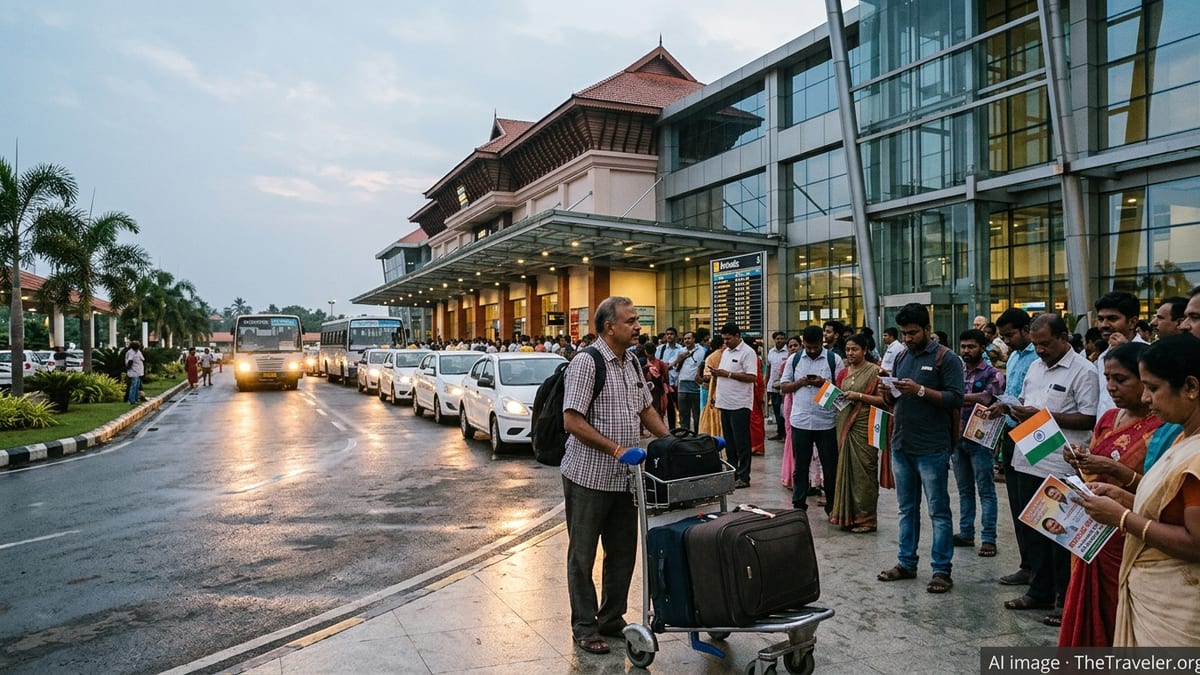
War Ripples From West Asia Reach Kerala’s Campaign Trail
The latest phase of the West Asia conflict, including strikes on key oil and gas infrastructure and prolonged disruption around the Strait of Hormuz, is reverberating far beyond the region’s borders. India, heavily dependent on crude and LPG shipments that transit these sea lanes, is grappling with tighter energy supplies and higher import costs just as Kerala moves into full election mode.
Publicly available assessments of the conflict describe it as one of the most serious shocks to global energy flows in decades, with tankers rerouted, insurance costs spiking and cargoes delayed. Indian policy responses have focused on securing alternative supplies and prioritising essential sectors, but distribution strains are increasingly visible on the ground.
In Kerala, where overseas remittances and Gulf migration are central to the state’s economy and political narrative, these macro-level disruptions are feeding directly into the conduct and symbolism of the election. Longstanding themes such as jobs for returnees, fuel prices and social welfare are now layered with immediate concerns over flight reliability and cooking gas availability.
The timing has sharpened the political edge. The formal campaign for the 2026 Kerala Assembly election gathered pace in early March, just as the energy crisis intensified globally, creating an unusual overlap between regional geopolitics and state-level electoral strategy.
NRI ‘Vote Flights’ Face Turbulence as Gulf Routes Are Disrupted
Kerala’s elections have, for more than a decade, been closely intertwined with the mobilisation of its large diaspora in the Gulf. Previous polls saw organised “vote flights” bringing thousands of non-resident Keralites home, with reports in 2024 highlighting charter services and near-full bookings on scheduled flights from the United Arab Emirates, Saudi Arabia and other Gulf states as expatriates flew back to vote.
This year, the pattern is under new strain. Aviation and shipping analyses indicate that air corridors skirting conflict zones are being replanned, leading to longer flight times, higher operating costs and selective cancellations or consolidations on certain routes. Kerala’s Gulf-facing airports, particularly in Kochi, Kozhikode and Thiruvananthapuram, are reporting heavier rescheduling as airlines juggle capacity between safer routes and strong demand.
Travel industry commentary suggests that last-minute fares on remaining Gulf–Kerala connections have climbed sharply, complicating efforts by community groups that traditionally negotiate block bookings for expatriate voters. In some cases, outbound workers nearing the end of home leave are reportedly postponing travel to avoid uncertain transit conditions, while others are bringing trips forward, creating additional pressure on already busy pre-poll schedules.
The cumulative effect is a more fragmented, harder-to-plan diaspora participation in the election. While Kerala-origin workers continue to express interest in returning to vote, the combination of volatile flight schedules and costlier tickets appears to be narrowing the window for such travel, potentially muting one of the state’s most visible electoral rituals.
LPG Shortages Bite as India Reorders Energy Priorities
Parallel to the aviation disruption, LPG availability has emerged as a critical domestic concern. Commentaries on India’s energy system note that a significant portion of LPG imports normally moves through West Asian shipping lanes, making the current conflict particularly sensitive for household and commercial supply.
Across several Indian states, reports point to rationing measures, stretched delivery intervals and a redirection of scarce LPG towards domestic kitchens. Online discussions and local coverage from March highlight growing anxieties over refill delays and a sharp tightening of commercial LPG access for hotels, restaurants and canteens, especially in southern urban centres.
Kerala, with its dense network of small eateries, coastal tourism establishments and institutional kitchens, appears especially exposed to a prolonged disruption. Social media posts and regional commentary describe delivery backlogs in districts around Kochi and Thiruvananthapuram, with commercial users reporting curtailed supplies and uncertainty over future allocations.
Nationally, policy signals emphasise protecting household consumption, implying that non-domestic users may bear the brunt of any sustained import shortfall. For a state entering an intense campaign season that relies heavily on roadside food stalls, political rallies and touring cadres, such a squeeze is beginning to alter logistics and voter outreach.
Campaigns Forced to Rethink Rallies, Travel and Messaging
Parties contesting the 2026 Kerala Assembly election had entered March with ambitious roadshows, statewide yatras and high-frequency travel by central leaders all mapped out. The emerging constraints on fuel and LPG, alongside the uncertainty on Gulf air routes, are now prompting visible adjustments in the style and scale of campaigning.
Local media coverage of early rallies notes a gradual shift towards shorter, more localised events and a heavier reliance on digital and television outreach. Analysts point out that high-profile tour programmes, which typically involve extensive motorcades, sound stages and catering arrangements, have become more expensive and logistically complex under current fuel and LPG conditions.
Smaller parties and independent candidates, with less capacity to absorb rising costs, may be disproportionately affected. Travel within Kerala, especially multi-district tours that criss-cross the length of the state, demands dependable fuel availability and catering support for volunteers. Rising expenses and sporadic LPG shortages at highway eateries could limit the geographic spread of their face-to-face campaigning.
At the same time, energy and cost-of-living concerns are moving closer to the centre of the political conversation. Public discussions increasingly link global conflict to local price pressures, and parties are sharpening their narratives on fuel subsidies, social support and the state’s ability to shield households from international volatility.
Voters Confront Uncertainty as Poll Day Nears
For ordinary voters, the overlapping crises are translating into a mix of practical and emotional calculations as polling day approaches. Families with members working in the Gulf, long accustomed to synchronising annual leave with Kerala’s elections, now face harder choices over whether a vote justifies navigating unstable flight schedules and higher travel costs.
Within Kerala, diners, hotel workers and small business owners are watching LPG deliveries and fuel prices as closely as manifesto releases. For many, the immediate question is whether kitchens can stay open and vehicles can keep moving through the campaign period and beyond, especially if disruptions in West Asia persist or escalate.
Election researchers observing the state suggest that such material uncertainties can influence turnout patterns and issue salience, even if the broader party alignments remain stable. If return travel from the Gulf becomes more difficult, some constituencies with historically strong diaspora-linked mobilisation could see subtle shifts in voting numbers.
As Kerala prepares for a closely watched election, the unfolding crisis in West Asia is a reminder that regional wars and chokepoint disruptions can unsettle political processes far from the front lines. The extent to which flight chaos and LPG shortages alter campaign strategies and voter behaviour will become clearer only as parties and citizens navigate the final stretch to the polls.