

More news on this day
Rapidly escalating tensions across West Asia have triggered sweeping airspace closures from the United Arab Emirates to Kuwait, Qatar, Lebanon, Bahrain and Saudi Arabia, abruptly halting the region’s tourism rebound and forcing emergency travel workarounds for the ICC Men’s T20 World Cup.
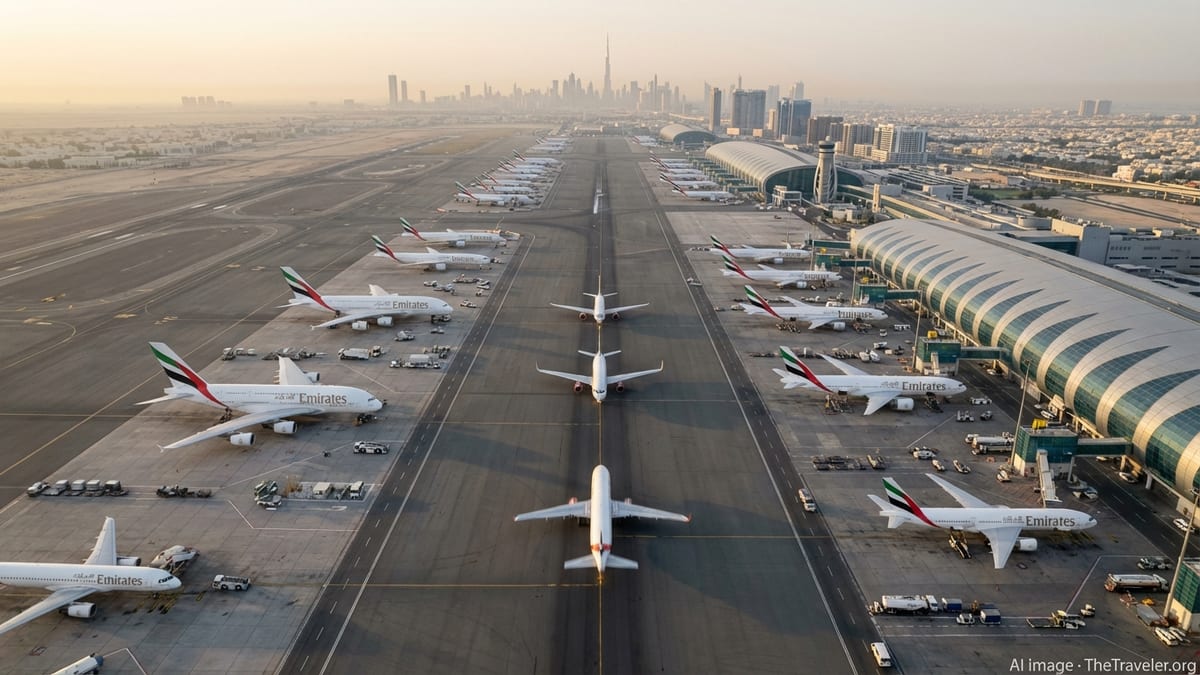
Gulf Hubs Shut Down As Conflict Spills Into Airspace
What began as a sharp military escalation involving the United States, Israel and Iran has quickly morphed into a full-blown aviation crisis, with a string of West Asian states temporarily closing or restricting their skies. Authorities in the United Arab Emirates, Qatar, Kuwait, Bahrain and Saudi Arabia have imposed precautionary airspace shutdowns or curbs as missiles and drones have been reported across the region. Lebanon and other neighbours are also on heightened alert, with carriers diverting around their airspace.
Key hub airports in Dubai, Abu Dhabi and Doha have suspended or sharply reduced operations while risk assessments continue, according to multiple aviation and government briefings. That decision has rippled outward through global flight networks, leaving hundreds of thousands of travellers stranded, rerouted or facing last‑minute cancellations as airlines scramble to replan long-haul routes away from conflict zones.
Major Gulf carriers such as Emirates, Etihad and Qatar Airways, which collectively move close to 90,000 passengers a day through their hubs, have been forced to axe services or send aircraft on longer detours. International airlines from Europe, North America and Asia have followed suit, either suspending flights into the Gulf or avoiding affected air corridors entirely, adding hours to journey times between continents.
Early data from airline trackers and route-optimization firms suggests that thousands of flights have already been delayed or cancelled since the first strikes, with disruption expected to continue at least into the coming week. For now, the guiding principle from regulators is conservative: keep civilian aircraft away from any potential theatre of conflict until the security picture stabilises.
Tourism Powerhouses Face Sudden Reversal
The timing could hardly be worse for West Asia’s tourism economies. The region entered 2026 in record form, with industry analysts estimating more than 100 billion dollars in regional travel bookings and visitor numbers in several Gulf states well above pre-pandemic levels. The UAE alone was accounting for more than half of all regional bookings, Saudi Arabia was pushing toward 30 million annual visitors, and Qatar, Bahrain and Kuwait were all reporting double‑digit growth in arrivals.
That surge depended heavily on seamless aviation links. With airspace closed over parts of Iran, Iraq and Israel and airlines now steering clear of Jordan, Kuwait, Qatar, Bahrain and sections of the UAE, the intricate web of connections that underpins Gulf tourism has been badly frayed. Long-haul flights that once hopped efficiently across the Gulf are now being rerouted over Central and South Asia or further north, lengthening flight times by up to three hours on some Europe–Asia corridors.
Industry specialists warn that the shock will be felt far beyond airport terminals. Gulf destinations have invested aggressively in hotels, entertainment districts and cultural attractions designed around high volumes of international arrivals. Average hotel occupancy across leading markets had been tracking in the mid‑60 percent range; operators now face a wave of cancellations, no‑shows and shortened stays as visitors reconsider trips.
Travel agents and tour wholesalers say they are fielding a surge of calls from nervous holidaymakers with itineraries touching Dubai, Doha, Riyadh or Manama. Some are attempting to salvage trips by rebooking via alternative hubs in Europe or South and Southeast Asia, but others are postponing visits indefinitely. Regional tourism boards, which had positioned 2026 as a watershed year, must now pivot to crisis communications and flexible booking policies to avoid a prolonged slump in visitor confidence.
Travelers Grapple With Cancellations, Detours And Safety Questions
On the ground, the crisis is playing out in check‑in queues and departure halls. At major Gulf airports, passengers have reported abrupt gate changes, rolling delays and mass cancellations as airspace notices are updated in near real time. With some runways damaged and others effectively closed for security reasons, airlines are prioritising aircraft already in the air, forcing ground delays that can stretch into many hours.
Rerouted flights are taking the long way around the affected zone, sometimes adding an extra fuel stop in South Asia, Central Asia or Eastern Europe. That has knock‑on effects across airline schedules, with aircraft and crew out of position for onward legs. Carriers have rolled out limited rebooking waivers, but availability on alternative routes is tight, especially in economy cabins during peak travel periods.
Safety remains the overriding concern for both travellers and operators. Aviation regulators in the Gulf and beyond have issued advisories urging passengers to monitor airline channels closely and to expect last‑minute changes. Insurers, meanwhile, are examining policy wordings to determine what disruption is covered as a result of war or security events affecting airspace, leaving some travellers uncertain about their ability to recoup losses on prepaid trips.
For now, travel specialists are advising anyone with imminent plans involving the UAE, Qatar, Kuwait, Bahrain, Lebanon or Saudi Arabia to stay in close contact with airlines, consider flexible booking options and, where possible, route through unaffected hubs. Travellers already in the region are being encouraged to register with their consular authorities and allow generous buffers between connecting flights, as schedules remain fluid.
T20 World Cup Logjams: ICC Scrambles To Keep Cricket Moving
The crisis has also spilled into global sport, with cricket’s showpiece event, the ICC Men’s T20 World Cup 2026 in India and Sri Lanka, facing an unexpected logistical test. While matches continue as planned in the host nations, the International Cricket Council has confirmed that airspace closures across West Asia have complicated travel plans for players, match officials, broadcast crews and thousands of fans whose itineraries relied on Gulf hubs for transit.
In a statement issued at the weekend, the ICC said it had activated what it described as comprehensive contingency plans to safeguard travel, logistics and the well‑being of all tournament stakeholders. A dedicated travel support desk has been set up, and the governing body’s logistics and security teams are now working around the clock to map safe alternative routes and secure seats on flights that avoid closed or high‑risk airspace.
Dubai International Airport, long the primary transit hub for international cricket, features heavily in the contingency calculus. Many players and officials had been scheduled to exit the subcontinent via Dubai after their World Cup commitments, connecting onwards to destinations in Africa, Europe and Oceania. With services through the Gulf constrained, the ICC is coordinating rerouting through major European gateways as well as hubs in South and Southeast Asia to ensure squads can still disperse promptly once their campaigns end.
Crucially, tournament organisers stress that there is currently no change to the World Cup match schedule, which is entering its knockout phase with semi‑finals and the final due in the coming days. However, they acknowledge that outbound travel after the tournament could remain disrupted for some time, and they are urging supporters to monitor official advisories closely and build extra flexibility into their post‑match travel plans.
What Travellers And Fans Should Be Watching Next
For both leisure travellers and cricket fans, the next few days will be critical in determining whether this is a short, sharp shock or the start of a longer period of instability for West Asia’s skies. Aviation authorities in the UAE, Qatar, Kuwait, Bahrain and Saudi Arabia are conducting continuous security assessments, weighing when and how to reopen airspace without compromising passenger safety.
Analysts say much hinges on whether the current exchange of strikes and counterstrikes subsides or widens. A rapid de‑escalation could see phased reopening of key corridors, with airlines gradually restoring schedules and trimming detours. A protracted conflict, by contrast, would cement new routings and could push up fares on Europe–Asia and Africa–Asia sectors as carriers grapple with higher fuel burn and longer flying times.
In tourism circles, the concern is more about perception than immediate capacity. The UAE, Saudi Arabia, Qatar, Bahrain, Kuwait and Lebanon have spent heavily to market themselves as safe, modern destinations and to build trust in their aviation systems. Prolonged headlines about missile strikes and airport damage risk undermining that narrative just as the region was cementing its status as a global travel crossroads.
For now, the message from both tourism authorities and the ICC is cautious but measured: non‑essential travel that depends on Gulf transit should be reconsidered, itineraries should remain flexible, and official guidance should be followed closely. The resilience of West Asia’s travel and tourism sector, and the smooth homeward journey of the cricket world after its showcase tournament, will depend on how quickly the region’s skies can safely reopen.