

More news on this day
Austria’s long-distance rail market has entered a new era as private operator Westbahn launches high-speed SMILE services on the Southern Line, offering faster and greener journeys between Vienna, Graz, Klagenfurt and Villach via the newly completed Koralm corridor.
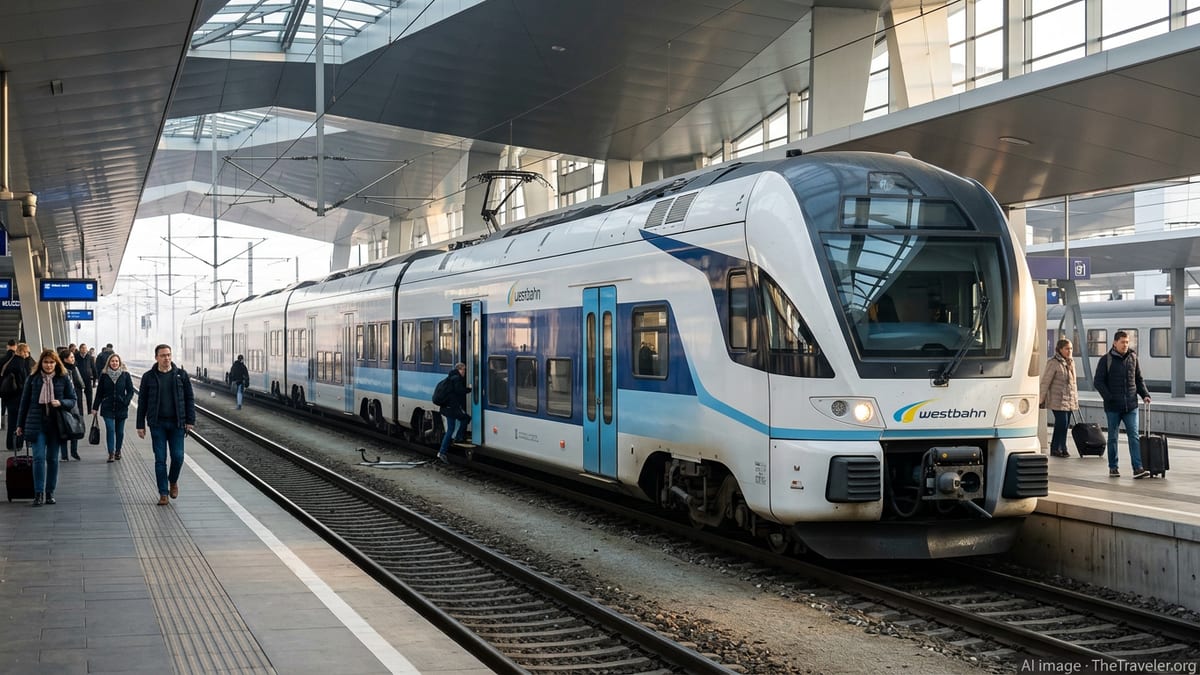
New High-Speed Era on the Southern Line
Westbahn’s expansion onto Austria’s Southern Line became reality on 1 March 2026, when the company began regular passenger services linking Vienna, Graz, Klagenfurt and Villach. The move opens a fresh chapter in the country’s rail landscape, long dominated by state operator ÖBB, and brings a new player to one of Austria’s most important intercity corridors.
The launch closely follows the full opening of the Koralm Railway, including the 33 kilometre Koralm tunnel, which drastically shortens travel times between Styria and Carinthia. By routing its new trains over this north–south axis, Westbahn is positioning itself as a fast, competitive alternative for both business and leisure travellers heading to and from southern Austria.
The Southern Line debut was preceded by a ceremonial run on 28 February, during which invited guests and rail enthusiasts sampled the new service on a special trip from Vienna via Graz and Klagenfurt to Villach. Demonstration segments between Villach and Kühnsdorf-Klopeiner See, as well as train viewings in Wiener Neustadt and Graz, offered an early look at the new rolling stock that will now operate daily on the line.
With commercial operations now underway, Westbahn is gradually ramping up frequencies. Initial services are being supplemented by additional weekend and holiday departures before moving to five train pairs per day in each direction from late May, providing a regular, clockface pattern between the capital and Carinthia.
SMILE Trains Set New Comfort and Speed Standards
At the heart of the new Southern Line offer are Westbahn’s SMILE high-speed trains, purpose-built by Swiss manufacturer Stadler for long-distance service at up to 250 kilometres per hour. The single-deck multiple units, configured with 11 cars and a total length of around 202 metres, are currently the fastest passenger trains in Austria, tailored to match the capabilities of the upgraded infrastructure.
Inside, the focus is on comfort and a clear, contemporary design. Each SMILE set offers 422 leather seats, including 288 in Standard Class, with generous legroom and large windows intended to showcase the Alpine and lake landscapes of southern Austria. Power sockets at every seat, complimentary Wi-Fi throughout the train and ample luggage space cater to modern travel expectations on journeys of two to four hours.
Accessibility has been integrated into the core design. Two level-access doors for passengers with reduced mobility, step-free transitions within the train and dedicated spaces for wheelchairs are complemented by bicycle storage and wide aisles. The SMILE interior lighting has been tuned to a cooler colour temperature, creating a bright atmosphere intended to feel both modern and practical for reading or remote work.
Onboard, Westbahn is extending its established service concepts from the Western Line to the south. Digital Relax Check-in allows ticket validation from the seat, while the Westbahn Fixplatz system provides free seat reservations, giving passengers additional certainty during busy peak travel times and holiday periods.
Faster, Greener Travel Between Vienna and Carinthia
The combination of high-speed rolling stock and the new Koralm route delivers significant travel time reductions across southern Austria. The journey between Graz and Klagenfurt, which historically could take well over two hours via the traditional mountain alignment, now takes around three quarters of an hour on the new line, even with an intermediate stop at Kühnsdorf-Klopeiner See.
Westbahn’s through services from Vienna Hauptbahnhof to Villach Hauptbahnhof connect key intermediate cities including Bruck an der Mur, Graz, Kühnsdorf-Klopeiner See, Klagenfurt and Pörtschach am Wörthersee. Once the full timetable is in place from late May, passengers will have up to five direct trains in each direction every day, offering a regular, high-capacity connection linking the capital with major regional centres and popular holiday destinations.
The operator is keen to underline the environmental credentials of the new service. Electrified high-speed trains offer one of the lowest-emission ways to travel medium and long distances, and Westbahn is marketing the Southern Line as a greener alternative to car journeys on the parallel motorway and domestic flights within Austria. The company expects the combination of shorter journey times, improved comfort and competitive fares to attract both existing rail users and new passengers away from road and air.
For regional authorities in southern Styria and Carinthia, the enhanced rail connection is also seen as a lever for economic development and tourism. Direct high-speed trains to Vienna are expected to make cross-regional commuting easier, expand labour markets and support visitor flows to lakes, spa towns and mountain resorts along and beyond the route.
Competition and Ticketing Boost Passenger Choice
Westbahn’s arrival on the Southern Line introduces open-access competition on a route that has until now been served predominantly by ÖBB. The private operator runs its services at its own commercial risk, independent of public service contracts, and is banking on customer-oriented service and dynamic pricing to win market share.
Additional capacity on the corridor is expected to benefit passengers through more choice in departure times, seating classes and onboard amenities. Rail analysts say the presence of two operators on the same high-speed axis could spur improvements in punctuality, reliability and customer service, mirroring developments seen earlier on Western Line routes where private and state operators compete.
Westbahn is also working with regional transport authorities to integrate its trains into local fare systems. The nationwide KlimaTicket Österreich is accepted on board, and in Carinthia, Verkehrsverbund products such as the regional ticket can be used on Westbahn services. This interoperability allows commuters and leisure travellers to combine long-distance journeys with local buses and regional trains without purchasing separate tickets.
For football supporters and event visitors, the company has moved to position itself as a mobility partner. In Graz, Westbahn has entered into a sponsorship and transport partnership with top-flight club SK Sturm Graz, promoting rail as the preferred way for fans to travel to home fixtures along the Southern Line.
Regional Gains for Tourism and Everyday Mobility
Communities along the new route are already highlighting the opportunities created by the high-speed connection. Towns such as Kühnsdorf-Klopeiner See, which now enjoy several daily Westbahn calls in each direction, anticipate benefits for both commuters and tourism businesses. Shorter door-to-door travel times are expected to expand the catchment area for jobs and education in Graz and Klagenfurt while making it easier for visitors to reach lakes and outdoor recreation areas.
Rail operators and regional tourist boards alike are marketing the Southern Line as an access route to the wider Alpine-Adriatic region. With Villach as a hub, passengers can connect onward towards Italy and Slovenia, potentially using the new SMILE trains as the first leg of cross-border journeys. The improved comfort and reliability of long-distance services are seen as key factors in persuading travellers from abroad to explore southern Austria by train instead of rental car.
Beyond tourism, the Southern Line upgrade is expected to reshape everyday mobility patterns. With frequent, high-quality long-distance services complementing regional trains and buses, residents have more alternatives to private cars for commuting, shopping and leisure trips. This aligns with Austria’s broader climate and transport policy goals, which aim to shift more journeys onto rail and reduce congestion and emissions on road corridors.
For Westbahn, the first weeks of operation on the Southern Line will be closely watched as an indicator of demand and passenger response. If the SMILE trains can deliver on promises of speed, comfort and reliability, the Vienna to Villach corridor could become a showcase for how new infrastructure, modern rolling stock and competition can combine to transform rail travel in a key European market.