

More news on this day
Global aviation is being rapidly redrawn as prolonged airspace closures and repeated shutdowns at key Gulf hubs force Western airlines to reroute traffic, leaving up to 15 percent of worldwide flights disrupted and thousands of passengers stranded from Dubai and Doha to Paris and Frankfurt.
Get the latest news straight to your inbox!
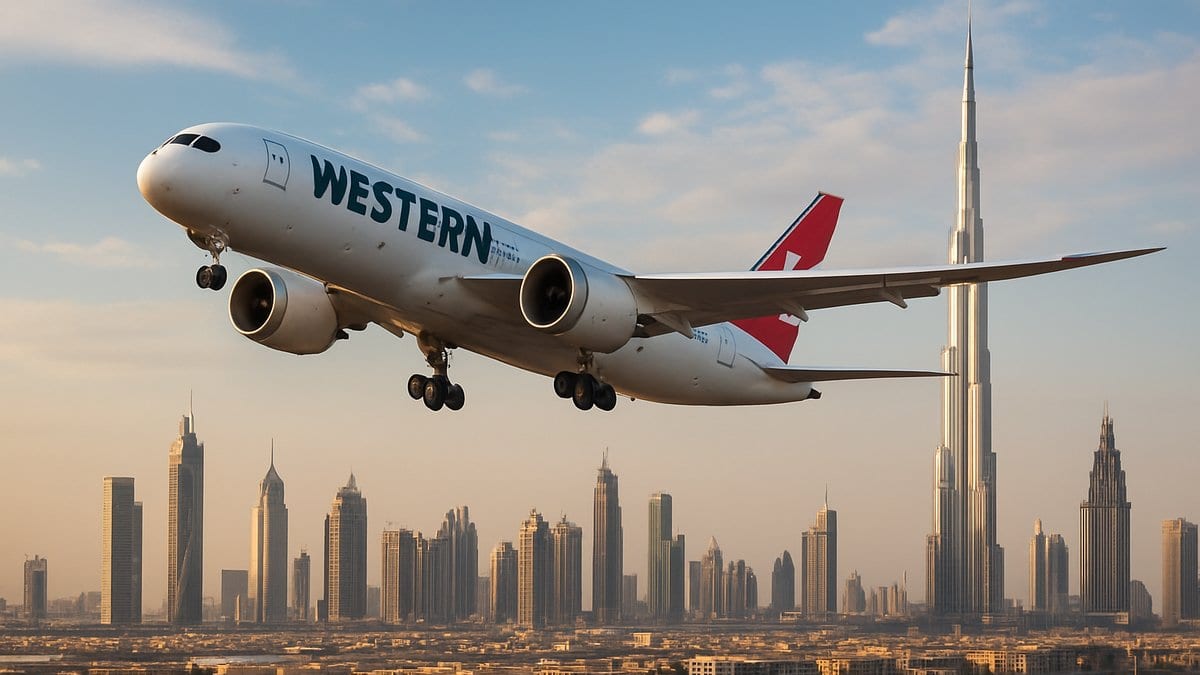
Gulf Hubs Turn Into Bottlenecks After Conflict Escalation
Weeks of military escalation involving Iran and Gulf states have pushed the region’s aviation system into an extended crisis, according to publicly available flight tracking data and industry analyses. Airspace restrictions over Iran, Iraq and parts of the Gulf, imposed after late February strikes, have shut or severely constrained operations at major hubs including Dubai International and Doha’s Hamad International Airport.
Reports indicate that Dubai, Doha and other regional gateways have experienced rolling suspensions of commercial traffic since the end of February 2026, with periods in which scheduled passenger flights were largely halted. A recent overview of Middle East operations describes airports in Qatar, the United Arab Emirates, Bahrain and Kuwait as effectively non functional for normal hub traffic during the worst days of the shutdowns.
Specialist disruption trackers show that cancellations and diversions have cascaded far beyond the Gulf itself. One global claims platform reported thousands of flights canceled or delayed as airlines attempted to work around closed corridors, while aviation data reviewed by travel industry outlets points to a prolonged shock to the main East West trunk routes that usually pass through the region.
Academic and consultancy briefings on the crisis characterize the Gulf’s main hubs as having shifted almost overnight from high throughput transit platforms into choke points, with stranded transfer passengers, disrupted cargo flows and long duration diversions altering the global map of air connectivity.
Drone Strikes, Fuel Fires and Rolling Closures Compound Disruption
Operational challenges at Gulf airports have been intensified by a series of discrete incidents layered on top of the wider airspace shutdown. A drone related fire near jet fuel storage infrastructure serving Dubai International in mid March, followed by additional debris related closures at the end of the month, repeatedly forced the world’s busiest international hub to suspend arrivals and departures for hours at a time.
Industry media report that one late March incident alone kept Dubai’s main field partly closed for more than three hours, triggering a wave of diversions and departure delays of up to five hours on key regional routes. Low cost and network carriers based in the emirate were among those most heavily affected, with knock on effects on connecting services into Europe, Africa and Asia.
Similar patterns have emerged in Doha, where airspace closures linked to missile activity have periodically halted or sharply reduced commercial operations at Hamad International. Public documents referencing notices to airmen describe windows of very limited civilian traffic and a backlog of passengers awaiting onward connections once restricted corridors briefly reopened.
Across the wider Middle East, published disruption tallies from travel industry outlets indicate hundreds of delayed or canceled flights on some peak days in late March and early April, with airports in Dubai, Riyadh, Jeddah, Cairo, Amman and Damascus all reporting significant schedule disruption. Analysts suggest that, when combined with global rerouting away from the Gulf, the cumulative impact amounts to disruption affecting roughly 10 to 15 percent of scheduled worldwide traffic during the most acute phase.
Western Airlines Redraw Long Haul Networks
With traditional Gulf corridors compromised, Western and Asian carriers are moving quickly to redraw long haul networks in ways that bypass the region. Airline route announcements collated by specialist aviation publications show European and North American operators accelerating capacity growth on non stop Europe Asia and transpolar services that avoid Middle Eastern airspace entirely.
Several major European groups have extended suspensions of flights to Dubai, Doha and Tel Aviv into late May, substituting additional frequencies on alternative hubs and point to point routes. A recent analysis of schedule filings indicates that carriers from Europe, North America and parts of Asia are prioritizing direct connections between their home markets and destinations in India, Southeast Asia and East Asia that once relied heavily on Gulf connections.
Industry observers note that capacity is being shifted into secondary hubs in Europe and the Mediterranean as airlines attempt to preserve connectivity between Asia and the West. New or expanded services via Istanbul, Athens, Rome and select Eastern European cities are emerging as temporary bridges while traditional Gulf waypoints remain constrained.
While some of these adjustments were already in motion as part of broader network strategies, the present crisis appears to be accelerating decisions. Route tracking updates for the week starting March 30 highlight a surge of new seasonal and permanent links launched or brought forward by Western carriers, effectively re weaving parts of the global network around the Gulf’s disrupted core.
Passengers Stranded From Dubai and Doha to Paris and Frankfurt
For travelers, the upheaval has translated into queues, missed connections and unplanned overnight stays across multiple continents. Images and eyewitness accounts published by news agencies and travel outlets in early March showed long lines of stranded passengers at airports as far afield as Bali, following sudden cancellations of flights bound for Doha, Dubai and Abu Dhabi after fresh strikes on Iranian targets.
In the Gulf itself, travel industry reporting from April 1 documented more than 800 delays and over 30 cancellations in a single day across leading regional airports, leaving hundreds of passengers stuck in terminals in Dubai, Riyadh, Doha, Cairo and Amman. Community forums dedicated to Middle East aviation are filled with accounts from travelers who have spent days in transit hotels or temporary accommodation awaiting scarce seats out of the region.
The disruption has spread deep into European hubs that previously relied on smooth Gulf connections. Passenger reports and local coverage from Paris Charles de Gaulle and Frankfurt describe waves of missed inbound connections from the Middle East, forcing rebookings onto limited remaining services via alternative routings. Tight aircraft availability and duty time limits for crews have, in some cases, turned what might once have been a same day rebooking into multi day delays.
While some Gulf based airlines have mounted limited repatriation flights during brief windows of partial reopening, travel advisories from multiple governments and carriers continue to warn of rapidly changing schedules. Consumer advocates are urging passengers to verify routings carefully, monitor airline notifications closely and be prepared for significant last minute changes to itineraries involving the wider region.
Economic and Competitive Stakes for Gulf and Western Carriers
The turmoil is reshaping not only passenger experiences but also the competitive landscape of global aviation. Gulf carriers built their business models on high frequency connecting waves linking Europe, Asia, Africa and Oceania through a handful of mega hubs. With those hubs constrained by conflict related closures, analysts suggest that the foundations of that model are under acute stress.
Briefings by travel economists and regional think tanks argue that prolonged disruption could accelerate a structural shift toward more point to point flying by Western and Asian airlines. If sustained, expanded non stop networks that bypass the Gulf may prove attractive enough for passengers and corporate travel buyers that some traffic does not return even after regional airspace reopens fully.
At the same time, Gulf airlines are attempting to defend their positions by relocating limited operations to alternative airports, adding temporary routes from secondary hubs and lobbying for safe transit corridors where possible. Industry case studies of previous crises show that carriers which maintain at least partial connectivity can recover traffic more quickly once conditions stabilize.
For now, however, publicly available schedule data and travel advisories indicate that the center of gravity in global aviation has shifted west and north, at least temporarily. With a significant share of global air traffic still affected and no clear end date to regional tensions, passengers and airlines alike are bracing for a prolonged period in which the familiar Dubai and Doha connection model gives way to a more fragmented, improvised network linking East and West.