

More news on this day
The launch of Singapore Airlines flights from the new Western Sydney International (Nancy-Bird Walton) Airport on 23 November 2026 is poised to reshape Sydney’s visitor economy, with rising demand from China and the United Kingdom expected to fuel a fresh wave of hotel development and hospitality investment across the city.
Get the latest news straight to your inbox!
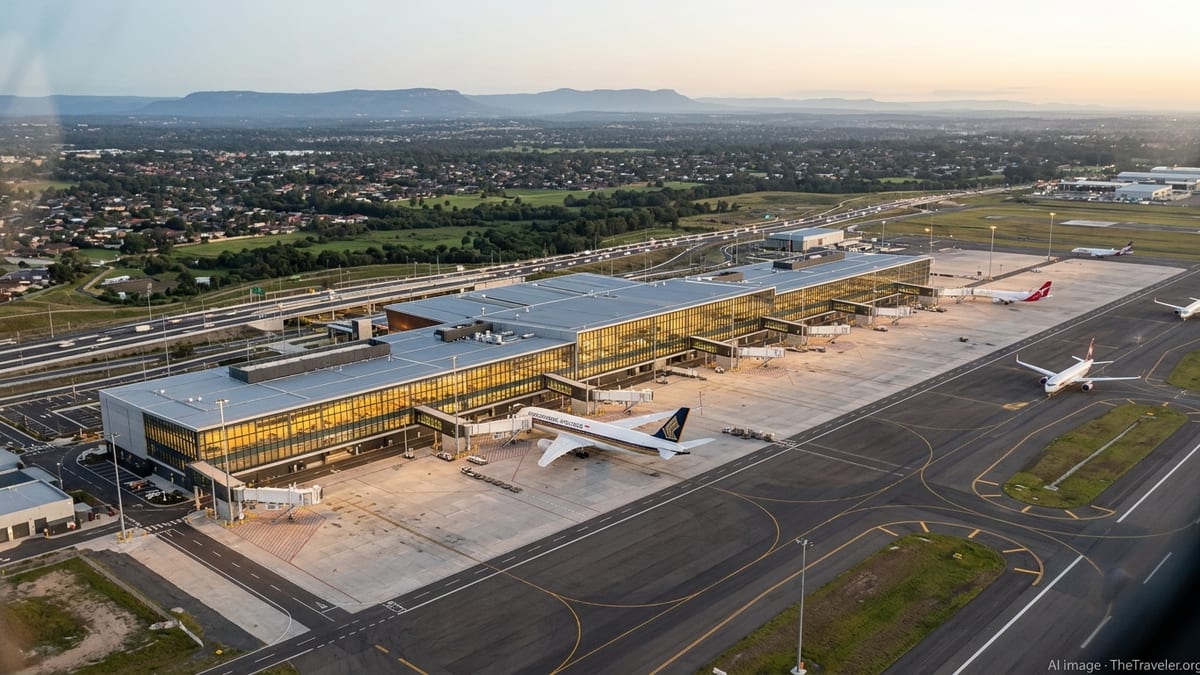
New 24-Hour Gateway Rewires Sydney’s Aviation Map
Western Sydney International Airport is planned to open in late 2026 as Sydney’s second major gateway, with a 24-hour operating model that contrasts with the night-time curfew at the existing Kingsford Smith Airport. Government fact sheets and corporate reporting indicate that from day one it is intended as a full-service international airport, with parallel runway capacity and room for staged expansion over the next decade.
Singapore Airlines has emerged as the first international carrier to publicly commit to scheduled passenger services at the new airport, with industry coverage and airline network data pointing to a 23 November 2026 start date for daily flights to and from Singapore Changi. The service will complement the carrier’s existing operations at Sydney’s primary airport and is expected to provide more late-night departure options that are not possible under the current curfew regime.
Transport infrastructure in Western Sydney is being reshaped around the airport’s arrival. The new M12 motorway, which opened in March 2026, is designed to link the airport precinct directly to the M7 and the broader Sydney motorway network, while a dedicated metro rail line is under construction to create a high-frequency connection via St Marys. Even with the rail project now projected to open after the first flights, planners see the combined road and future rail links as central to shifting visitor flows into greater Western Sydney.
Publicly available planning documents suggest that freight operations will begin ahead of full passenger services, but the late-2026 commencement of international flights is widely viewed as the true catalyst for a tourism surge, offering airlines fresh slot capacity into Australia’s largest city at a time when global networks are rebuilding long-haul schedules.
China and UK Demand Sets the Pace for Visitor Growth
Recent tourism statistics from national and state agencies show that China has re-emerged as one of Australia’s fastest-growing inbound markets, with strong year-on-year increases in arrivals and spending as outbound Chinese travel normalises. China has returned to a top-tier position for total expenditure, supported by both education-related stays and a rebound in holiday travel.
New South Wales has regained its position as the leading destination state for Chinese visitors, according to tourism data covering the year to March 2025. Travel industry reports highlight rising interest in Sydney and surrounding regions, aided by targeted marketing campaigns and the resumption of additional air capacity on key city pairs. Analysts expect a second wave of growth as new aviation slots at Western Sydney International become available.
At the same time, the United Kingdom remains one of the largest and most resilient source markets for New South Wales. Official visitor economy updates released in early 2026 report more than 350,000 visitors from the UK in the year to September 2025, with spending lifted by a calendar of marquee sporting events, including major rugby tours that pushed Sydney hotel occupancy above 90 percent on key match nights.
Tourism forecasters note that both China and the UK are particularly sensitive to improved flight connectivity. For Chinese travellers, additional long-haul seats and new airport gateways can quickly translate into higher visitation and longer stays. For UK visitors, especially sports and event travellers, flexible arrival and departure times, as well as easier access to suburban stadiums and venues in Western Sydney, are viewed as significant advantages of the new airport.
Hotel Pipeline Gears Up for a Western Sydney Wave
New South Wales has set a long-range target to unlock more than 40,000 additional accommodation rooms across the state by 2035 as part of its visitor economy strategy, with Western Sydney identified as a priority growth corridor. Strategy documents released by the state government describe Western Sydney International Airport as a “transformative” project that will underpin a broader expansion of hotels, serviced apartments and short-stay offerings.
Tourism Research Australia data, summarised by Destination NSW, already shows Western Sydney as a visitor economy powerhouse, with strong growth in both domestic and international overnight stays. The region’s attractions, from major sporting venues and entertainment precincts to multicultural dining districts and nature-based experiences, have been drawing increasing numbers of visitors even before the airport becomes operational.
Industry analysts expect the opening of the airport and the arrival of Singapore Airlines to accelerate investment timelines. The combination of 24-hour flight operations, growing international seat capacity and supportive government targets for visitor expenditure is anticipated to encourage new hotel brands to enter the market around the airport precinct, Parramatta, Penrith and the emerging Bradfield city centre.
Developers are expected to focus on a mix of business-friendly accommodation aligned with the airport’s logistics and corporate catchment, alongside midscale and upscale properties catering to leisure visitors from China, the UK and other long-haul markets. Observers note that property investors are closely watching early airline schedules, with the 23 November 2026 launch of Singapore Airlines flights viewed as a clear signal that demand will ramp up quickly from the northern winter season.
Shifting Visitor Patterns Across Greater Sydney
The advent of a second international airport is likely to redistribute how tourists experience Sydney. Destination strategies increasingly highlight Western Sydney’s cultural diversity, with local government and tourism bodies positioning the region as a stand-alone destination rather than simply a gateway to the traditional harbour and city icons.
Demographic studies of Western Sydney show a high proportion of residents born overseas, with particularly strong communities linked to the UK, China and other parts of Asia. Tourism planners believe this multicultural footprint will support visiting friends and relatives travel, one of the most resilient segments of international demand, and that direct access via Western Sydney International will make it easier for these visitors to stay within the region for longer periods.
New road connections such as the M12, combined with future metro services, are set to draw more visitors into Western Sydney’s entertainment and retail hubs, including Parramatta’s CBD, major stadiums, and new cultural institutions in the planned Bradfield city. Industry commentary suggests that tour itineraries will increasingly blend classic harbour experiences with Western Sydney dining, nature and sport, broadening the geographic spread of tourism expenditure.
While Sydney’s original airport will remain a key international gateway, the additional capacity at Western Sydney International is expected to relieve pressure on constrained slots closer to the CBD. In turn, this may support growth in both premium long-haul services and more competitively priced leisure capacity, benefiting travellers from price-sensitive markets such as China while sustaining strong demand from the UK.
Singapore Airlines as a Catalyst for Broader Airline Growth
Singapore Airlines’ decision to inaugurate service on 23 November 2026 positions the carrier as a launch partner for Western Sydney International and sets a precedent for other global airlines considering entry. Previous announcements from the airport and government agencies have identified Qantas, Jetstar and Air New Zealand among the airlines preparing to operate from the new hub, indicating a mix of domestic and international connectivity from the start.
Aviation commentators point to the strategic importance of Singapore as a global hub for traffic from Europe, the UK and Asia. A daily Singapore Airlines service from Western Sydney is expected to open new one-stop options for travellers from cities such as London, Manchester, Shanghai and Beijing, feeding into Sydney’s western suburbs and regional New South Wales.
For the hospitality sector, the timing of the new flight is critical. Launching just ahead of the peak southern summer and the northern hemisphere holiday period, the 23 November 2026 start date provides hotels, tour operators and retailers with a clear planning horizon for marketing campaigns and staffing. Many businesses are expected to align promotions in China and the UK with the commencement of services to capture early adopters curious about Sydney’s newest airport.
As airlines continue to rebuild and refine their post-pandemic networks, the combination of new infrastructure, strong demand from China and the UK, and Singapore Airlines’ first-mover role at Western Sydney International suggests that Sydney’s hospitality boom is only at the beginning of its next phase.