

More news on this day
WestJet passengers across Canada and Cuba are facing a wave of disruption today, with at least 74 flights cancelled and around 80 delayed as the airline races to wind down operations to Cuba amid a worsening jet fuel shortage and navigates broader weather and operational challenges across its network.
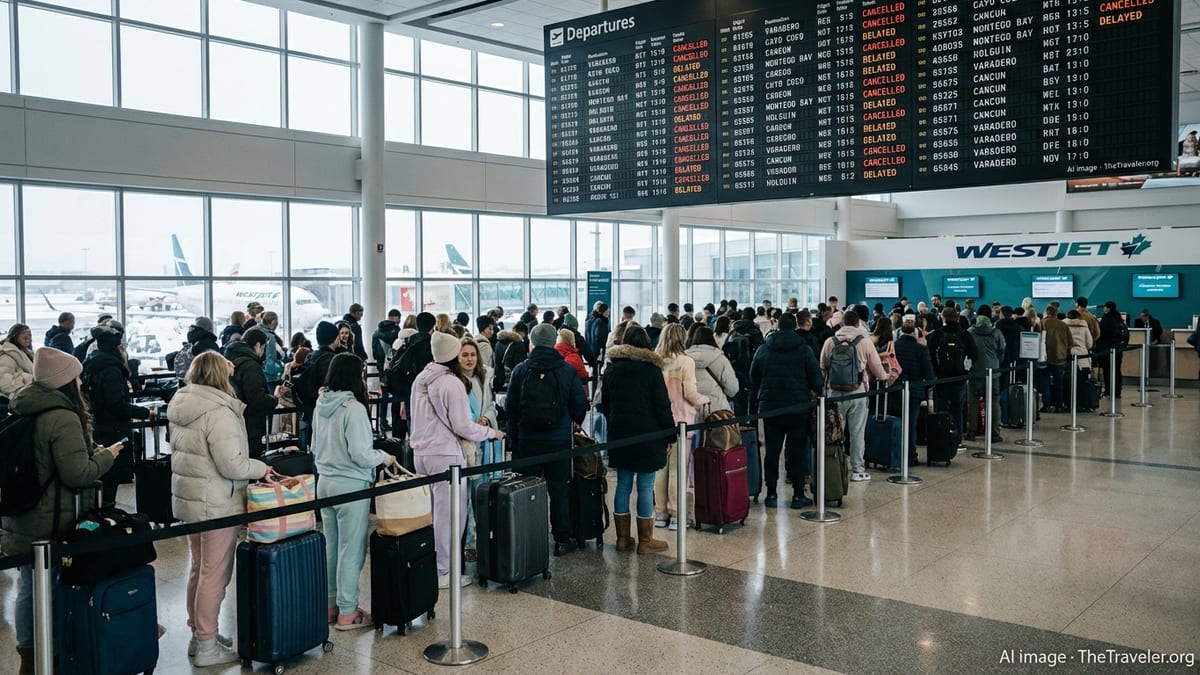
Fuel Crisis in Cuba Triggers Systemwide Turmoil
The latest disruption follows an unprecedented aviation fuel shortage in Cuba that has upended winter travel plans for thousands of Canadian holidaymakers. A formal aviation notice warned that Jet A-1 fuel would not be commercially available at multiple Cuban airports from February 10 through at least March 11, forcing airlines to either suspend service or operate complex repatriation flights carrying their own fuel.
WestJet responded by cancelling all remaining flights to Cuba and shifting to an orderly wind down of its winter program to the island. The carrier confirmed that scheduled service to Cuban destinations would be suspended from February 18, with sales halted earlier in the month and aircraft redeployed to bring guests home without refuelling locally. The move affects routes into Havana as well as popular resort gateways such as Varadero, Holguín, Cayo Coco and Santa Clara.
As WestJet repositions aircraft and crews to manage repatriation flights and cancellations, ripple effects are being felt throughout its North American network. Seats and aircraft capacity once dedicated to sun routes are now being used to stabilise core domestic and transborder operations, leaving limited flexibility when weather or technical issues strike key hubs in Canada.
The result for travellers is a complex mosaic of disruptions: cancelled departures from Canadian cities that previously fed into Cuba flights, delays as aircraft rotate to cover repositioning missions, and schedule changes on short notice as the airline adjusts to unfolding fuel and operational realities.
Major Canadian Hubs Bear the Brunt
In Canada, the heaviest impact has fallen on WestJet’s largest bases, including Calgary, Toronto and Edmonton, where cancellations and rolling delays are compounding the disruption linked directly to Cuba. Toronto Pearson and Calgary International serve as critical connection points for WestJet’s leisure network, funnelling winter passengers from across the country to sun destinations throughout the Caribbean.
As Cuba flights are pulled from the schedule or repurposed for repatriation, departures that once operated as straightforward out-and-back rotations are now part of a patchwork of revised routings. Travellers booked from cities such as Winnipeg, Ottawa and Vancouver into Toronto or Calgary for onward journeys to Havana and other Cuban airports have seen their trips cancelled entirely or converted into partial itineraries with missing final legs.
Edmonton has also seen knock-on effects as WestJet shuffles aircraft between western Canadian gateways to keep high-demand domestic and U.S. services running. With reserves already tight during the busy winter peak, even small schedule changes can cascade quickly, resulting in late-arriving aircraft, crew timing constraints and longer-than-expected delays for passengers who are not travelling anywhere near the Caribbean.
Airport departure boards in these hubs on Tuesday reflected a familiar pattern for disrupted days: clusters of WestJet flights marked as cancelled beside others showing delays stretching well beyond an hour, particularly on domestic routes that rely on aircraft previously assigned to Cuba rotations.
Havana and Resort Cities Feel the Shock
In Cuba, the effect has been even more dramatic. Havana’s José Martí International Airport, along with resort airports such as Varadero, Holguín, Cayo Coco and Santa Clara, has seen a steep reduction in incoming flights from Canada as WestJet and other major carriers suspend service. What would ordinarily be a peak winter month for Canadian visitors has instead turned into an operation focused on getting holidaymakers home.
WestJet has confirmed that its remaining flights into Cuba are operating primarily as repatriation services, with aircraft arriving from Canada carrying enough fuel for both legs of the journey. The strategy is designed to avoid any reliance on local fuel supplies, which have become increasingly unreliable as the island contends with broader power and energy shortages affecting essential services.
For passengers still in Cuba, the immediate concern has shifted from enjoying the final days of vacation to confirming a seat on a homebound flight. While WestJet has pledged to bring guests back on existing or added services, the compressed timetable and limited number of operating days have heightened anxiety in resort areas, where local infrastructure is already stretched.
Hotel operators and tour representatives have reported full briefing sessions with Canadian guests, many of whom are being advised to stay close to their accommodation, keep contact information for their airline handy and be ready for departure time changes with limited notice as repatriation schedules are finalised.
Growing Traveller Frustration Across the Network
The combination of 74 cancellations and around 80 delays has sparked mounting frustration among WestJet passengers, particularly those who say they received little warning before their flights were scrubbed or rescheduled. Social media posts on Tuesday captured scenes of crowded check in areas, long lines at service desks and departure boards at Canadian airports dominated by red cancellation indicators.
Some travellers reported learning of their cancellations only after arriving at the airport, while others received overnight emails or app notifications advising them that their itineraries were no longer operating. For passengers travelling to or from Cuba, reports varied between those quickly rebooked on repatriation flights and those still seeking clarity on when and how they would be able to leave.
Families bound for winter holidays in Havana and resort destinations have been particularly vocal, describing months of planning undone just days before departure. Many are now weighing whether to accept alternative destinations offered by the airline or to opt for refunds and postpone their trips until fuel and service levels in Cuba stabilise.
Domestic travellers, meanwhile, have expressed frustration at being caught in the fallout of a crisis thousands of kilometres away. With aircraft and crew diverted to cover Cuba-related operations, some passengers flying entirely within Canada have seen their flights cancelled despite no weather issues at either end of their journey.
WestJet’s Response and Flexible Options
WestJet has framed its response as a necessary step to protect guests and crew while maintaining the integrity of its broader operation. The airline has introduced flexible policies for those affected by the Cuba shutdown and related disruptions, including automatic refunds for cancelled Cuba flights booked directly with the carrier and options to change to alternate destinations without standard penalties, subject to fare differences and availability.
For passengers booked on WestJet Vacations and affiliated tour brands into Cuban destinations between mid February and late April, the company has begun processing automatic refunds back to the original form of payment. Travel protection plans, prepaid seat selections and baggage fees associated with those packages are also being reimbursed, and any existing travel credits used for payment are being reinstated with extended validity.
Guests who prefer to travel elsewhere are being offered the chance to switch to comparable sun destinations, with WestJet advising that replacement travel must generally be completed within a set period from the original departure date. However, limited seat availability during the busy winter season means that popular alternatives can sell out quickly, leaving some travellers with fewer options than usual.
Across the wider network, WestJet says it is working to re-accommodate passengers on cancelled Canadian and transborder flights onto the next available departures. The airline has encouraged guests to monitor their bookings online and use digital self service tools where possible, acknowledging that call centres and airport desks are handling unusually high volumes of inquiries.
Weather and Operational Pressures Add to the Strain
The fuel crisis in Cuba has collided with a period of seasonal weather and operational pressures for WestJet and its competitors. Early February brought significant winter storms to southern Ontario and parts of the Prairies, disrupting operations at key airports including Toronto and Calgary. Heavy snow, gusting winds and freezing conditions forced de-icing delays and temporary runway capacity reductions at Toronto Pearson, triggering widespread knock-on effects for airlines.
For WestJet, which operates a tightly scheduled fleet and relies on efficient aircraft and crew rotations, the storms reduced the margin of error at the very moment its Cuba program began to unravel. Flights that might normally absorb minor delays became vulnerable to cancellations as duty time limitations, maintenance windows and slot restrictions left limited room to recover.
The airline has also continued to manage the tail end of earlier technology and staffing challenges that have affected Canada’s aviation sector since the pandemic era. While overall reliability had improved heading into the 2025 26 winter season, the sudden loss of predictability on Cuba routes combined with adverse weather has exposed lingering fragilities in scheduling and resource planning.
Industry analysts note that the simultaneous impact of an external fuel shock, winter weather and persistent staffing constraints creates a particularly volatile environment, where even small surprises can rapidly propagate into dozens of cancellations and delays across a network the size of WestJet’s.
Travel Advice for Affected Passengers
With schedules still in flux and fuel availability in Cuba uncertain into March, travel experts are urging passengers to treat any WestJet itinerary touching the island as subject to change until operations clearly stabilise. Travellers are being advised to confirm their flight status repeatedly in the days and hours before departure and to maintain backup plans, especially if they are connecting onward from Canadian hubs.
Those currently in Cuba are encouraged to stay in close contact with their airline or tour operator, confirm that their contact details are up to date and keep important documents, medications and essential items ready in case of short notice departure changes. Given pressure on local infrastructure, including intermittent power and communication outages, relying solely on hotel notice boards or printed itineraries may not be sufficient.
Canadian passengers who have not yet departed are weighing whether to switch to alternate Caribbean or Mexican destinations where fuel supplies and flight operations are more stable. Travel insurance specialists suggest that holidaymakers review their coverage carefully, paying close attention to clauses related to government advisories, known events and supplier default. In some cases, future trips to Cuba booked after the current crisis became widely known may have limited cancellation benefits.
Across Canada, consumer advocates are reminding passengers that even when compensation may not be owed under air passenger protection rules for events deemed outside an airline’s control, customers are still entitled to rerouting or refunds when flights are cancelled. Keeping detailed records of communications with airlines and out of pocket expenses can help travellers navigate any subsequent claims process.
Cuba Tourism and Canadian Connectivity at a Crossroads
The scale of the current disruption has implications far beyond the immediate wave of cancellations and delays. Canada is one of Cuba’s most important tourism markets, and the suspension of nearly all direct flights by major carriers, including WestJet, represents a significant blow to resorts and local economies that depend on winter visitors from the north.
Tourism operators in Cuban coastal regions report plunging occupancy rates as large blocks of Canadian guests disappear from their reservation books. The knock on effects are being felt by workers in hotels, restaurants, transport services and excursion providers, many of whom face reduced hours or temporary closures during what would normally be a lucrative peak season.
For WestJet, the episode underscores the vulnerability of its sun destination portfolio to geopolitical and infrastructure shocks in key leisure markets. While the airline is moving quickly to redeploy capacity to more stable routes, questions remain about how and when Canadian services to Cuba will resume at anything close to previous levels, particularly if fuel and power issues persist on the island.
In the longer term, both WestJet and Cuban tourism authorities will have to rebuild traveller confidence in the reliability of air links between Canada and the island. For now, with dozens of cancellations and delays still unfolding across Canadian airports and Cuban gateways, that recovery remains firmly on the horizon rather than on the immediate departure board.