

Some trips slip into your memory because everything goes according to plan. My journey across Ohio was memorable for the opposite reason. From industrial skylines to quiet marsh boardwalks and wind-strafed Lake Erie beaches, the state refused to fit into a single story. Moving between cities, state parks, and lake shores, I found a place that felt both familiar and surprising, where the Midwest’s practical streak meets unexpected nuance, natural beauty, and a deep sense of local pride.
Reframing Expectations: Ohio Beyond the Flyover Stereotype
Before I started tracing a rough loop across Ohio, most of my associations were clichés: endless interstates, factory towns, football on fall weekends. That narrative still lives here, but it is only part of the truth. On the ground, Ohio feels less like a monolith and more like a patchwork of river cities, college towns, and shorefront communities tied together by the quiet presence of Lake Erie and the old pathways of industry and migration.
What surprised me most was how often the state asked me to slow down. Instead of marquee “bucket list” sights, I found small, cumulative experiences: a barista in Columbus recommending a neighborhood park, a ranger in a Lake Erie wetlands preserve describing migrating warblers, a retiree in a former factory town talking about how his city was slowly pivoting toward the outdoors and the arts. The value here is not spectacle but texture, revealed in everyday encounters.
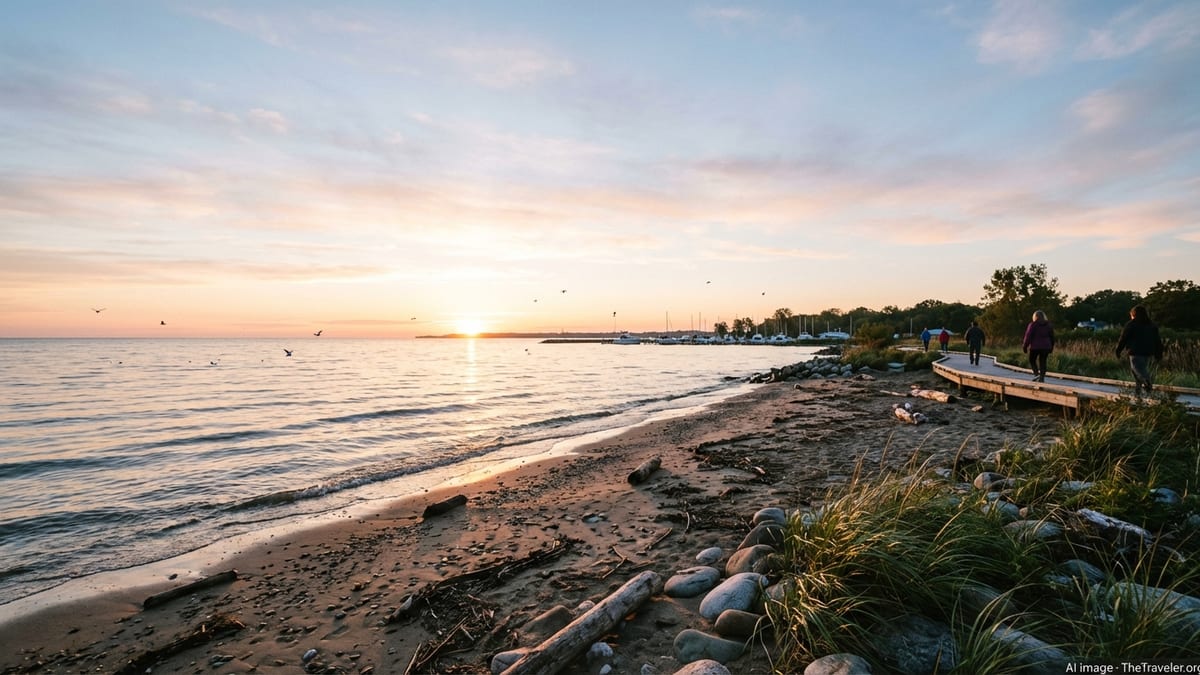
Traveling in early shoulder seasons, when lake winds still bit through my jacket and trees were just starting to leaf out, I saw Ohio at its most honest. Boardwalks were not crowded, downtown streets felt lived-in rather than curated, and the economic contrasts between neighborhoods were plain. If you come to Ohio looking only for attractions, you might miss the point. If you come looking for stories, you will find more than you can carry home.
By the time I reached the Lake Erie islands and parks, my perspective had shifted from “What is there to do?” to “Who is this place for?” That change in mindset made each city block and shoreline trail feel less like a stop on an itinerary and more like an invitation to understand how Ohioans work, unwind, and redefine their relationship with the lake and land.
City Lessons: From Revival Streets to Honest Skylines
Ohio’s cities are not polished in the way coastal travelers might expect, and that turns out to be their strength. In places like Cleveland, Toledo, and Columbus, you can still see the bones of industry in brick warehouses converted to breweries, in the echo of rail yards along river valleys, and in the scale of old factory complexes on the edges of town. Rather than hiding that history, many neighborhoods are incorporating it into new identities built around food, art, and green spaces.
In Cleveland, walking from downtown toward neighborhoods along the Cuyahoga River, I passed office towers that give way quickly to repurposed industrial buildings and low-rise housing. The transition is abrupt but revealing. Murals, small galleries, and neighborhood bakeries share space with loading docks and rail lines, sending a clear message: the city is not trying to present a flawless facade. It is comfortable showing its seams, including the difficult stretch from deindustrialization to its current, tentative renewal.
Toledo, sitting close to the western edge of Lake Erie, felt more intimate but no less complex. Its downtown revival centers on art museums, riverfront walks, and a growing food scene that leans heavily on local produce and lake fish when available. On cold evenings, the streets can still feel quiet, a reminder that economic change here has been uneven and slow. Yet in conversations with locals, I heard a similar refrain: people are determined to stay, to build something rather than leave in search of some imagined elsewhere.
Columbus, the state capital, offered a different lesson: how a city can bridge its roles as government hub, university town, and growing tech center. Neighborhoods ring the downtown core, each with its own character, from historic streets with brick homes to districts filled with coffee shops and start-ups. What I learned in Ohio’s cities is that progress here rarely arrives in sweeping gestures. Instead, it comes through incremental projects, neighborhood associations, and small businesses, each stitch strengthening the larger fabric.
Inside the Parks: Why Ohio’s Green Spaces Matter More Than They Look on the Map
On a map, Ohio’s state parks appear as modest green patches compared with the dramatic peaks of western states or the vast preserves of the South. On the ground, those same green spaces feel far more significant. Maumee Bay, East Harbor, Kelleys Island, Middle Bass, and Geneva State Park, among others, show how the state leans into the subtler drama of marshes, alvars, glacial grooves, and reclaimed shorelines rather than mountains or canyons.
At Maumee Bay State Park, just east of Toledo, the first thing I noticed was the interplay between water and wetlands. Boardwalks weave through marshes alive with birdlife, especially during migration seasons, when warblers, herons, and waterfowl move along the Lake Erie flyway. The lodge and golf course remind you that this is a managed recreation area, but step onto the trails and the sound of traffic fades, replaced by wind over reeds and the creak of wooden planks underfoot.
East Harbor State Park, on the Marblehead Peninsula, offered a different perspective on the lake. Here, a slim strand of sand separates sheltered harbors from open water, with breakwalls standing guard against the kind of storms that once carved away larger beaches. Campsites sit within walking distance of the shoreline, and multi-use trails wind through wetlands, allowing day hikers and cyclists to share space without crowding one another. The park’s history of storm damage is a reminder that the Lake Erie coast is not static but constantly reshaped by wind and waves.
Kelleys Island and Middle Bass Island state parks reveal yet another layer of Ohio’s natural story. On Kelleys Island, trails lead past old quarries and lime kilns to rare glacial grooves etched into limestone, physical evidence of ice sheets that once covered this region. On Middle Bass, restored historic structures, wetlands, and shoreline habitats sit beside a small marina and primitive campsites. Together, these island parks show how Ohio balances heritage conservation, low-impact recreation, and fragile ecosystems in relatively small but meaningful spaces.
Along Lake Erie’s Edge: Shore Towns and Working Waterfronts
Lake Erie is not a backdrop in northern Ohio. It is the main character, even when it remains just out of sight behind bluffs or breakwalls. Traveling through towns such as Ashtabula, Geneva-on-the-Lake, and smaller lakefront communities, I began to understand how the shoreline has shaped local identities. This is a coast that has known both prosperity and decline, with ports once busy with ore and coal now reinventing themselves as leisure destinations, heritage districts, or quiet residential enclaves.
In Ashtabula, the harbor district tells this story almost block by block. A historic lift bridge still spans the river, connecting streets lined with brick buildings that once served port workers and sailors. Today, many of those spaces house independent restaurants, shops, and a maritime museum. The shift from industrial to cultural economy is incomplete, and some storefronts remain empty, but the overall feeling is one of cautious optimism. Standing on the riverbank, watching the bridge rise for passing boats, I felt the continuity between Ashtabula’s port past and its present-day efforts to draw visitors.
Farther west, Geneva-on-the-Lake and neighboring Geneva State Park reveal the leisure side of Lake Erie. The town combines nostalgic amusement vibes with a growing number of wineries and small inns. In the state park next door, the focus shifts back to nature: wooded trails, lakeside cottages, a marina, and a stretch of shoreline where anglers line up at dawn. Here I learned how Lake Erie tourism is broadening, adding quiet getaways and nature-based activities alongside traditional summer crowds.
Throughout the shoreline, I noticed an ongoing tug of war between access and erosion control. Breakwalls, segmented offshore barriers, and carefully managed beaches show how communities are working to keep sand in place while preserving swimmers’ and boaters’ access to the water. For travelers, it is worth paying attention to these details. They reveal how climate, storm patterns, and human choices are reshaping the coast that so many Ohioans depend on for work and recreation.
Seasonality, Weather, and the Subtle Drama of the Lake
Lake Erie’s temperament defines much of the travel experience in northern Ohio. The lake is relatively shallow compared with other Great Lakes, which means it warms and cools quickly and can shift from calm to choppy faster than many first-time visitors expect. In practice, this translates into cool, misty mornings even in late spring, hot and humid afternoons in midsummer, and abrupt squalls that can turn planned beach days into museum or coffee shop days.
Traveling across seasons taught me that there is no single “right time” to visit, only different moods of the same places. In early spring, when boardwalks through marshes at Maumee Bay or along protected areas near East Harbor are still quiet, you notice migrating birds, subtle wildflowers, and the stark geometry of leafless trees reflected in dark water. Summer brings families, festivals, and crowded beaches at towns like Geneva-on-the-Lake, where the atmosphere feels almost old-fashioned in its focus on arcades, ice cream stands, and evening strolls.
Autumn along the lake can be particularly rewarding. Trees in parks and along shore bluffs burn with color, and the crowd thins without evaporating. Many wineries and agritourism spots in northern Ohio hit their stride in this season, pairing harvest events with lake views. Winter, while quieter and more demanding in terms of gear, opens its own chapter: frozen shorelines, ice fishing in the right conditions, and snow-covered trails. In all seasons, the key lesson is flexibility. Lake effect clouds and storms will alter your plans at least once. Embracing that unpredictability, rather than fighting it, turns weather from a nuisance into part of the narrative.
For anyone planning to follow a similar route, the practical takeaway is to over-prepare for conditions and under-schedule your days. Waterproof layers, windproof outerwear, and footwear that can handle wet boardwalks or muddy trails matter as much as your camera. Build in enough slack that you can trade a closed beach for a detour to a harbor district or a nature center without feeling that your day has been derailed.
Conversations With Locals: Pride, Realism, and the Power of Small Projects
What ultimately shaped my understanding of Ohio more than any skyline or shoreline was listening to people who live along this route. In cities transitioning from heavy industry, there is a distinctive blend of pride and realism. Residents know precisely what has been lost in terms of manufacturing jobs and population. They can also point out the incremental wins: a new park stitched along a riverfront, a repurposed warehouse turned into a community hub, or a long-discussed trail finally linking neighborhoods to the lake.
On the Marblehead Peninsula and surrounding communities, I spoke with small business owners whose livelihoods depend heavily on the Lake Erie tourism season. Many talked about extending the visitor calendar beyond the traditional summer rush, promoting birding festivals, fishing tournaments, and off-season retreats. Their emphasis was on sustainability and diversification rather than quick booms. Grants and local initiatives aimed at improving infrastructure, preserving habitats, and adding cultural amenities came up frequently in conversation, signaling that the region’s future is being actively planned rather than passively awaited.
Park rangers, especially in places like Kelleys Island and Middle Bass Island, offered a third perspective. They viewed the parks as living classrooms and refuges, where visitors can see everything from rare alvar plant communities to glacial grooves and migrating owls. Several mentioned the challenge of balancing rising visitation with sensitive ecosystems. Trails, signage, and boardwalks are designed to steer people away from the most fragile areas, but education remains crucial. Hearing this, I realized how much responsibility visitors carry in a state where protected areas are relatively small and close to population centers.
These conversations left me with a strong impression of Ohioans as invested in place. Their stories emphasized multi-generational attachment, practical problem-solving, and a willingness to experiment within tight budgets. They may not use the language of destination branding, but in their choices about parks, shorelines, and city blocks, they are quietly rewriting how Ohio presents itself to travelers.
The Takeaway
After crossing Ohio from cities to parks to lake shores, what stayed with me was not a single postcard view but a series of overlapping impressions. In a country that often celebrates extremes, Ohio offers something subtler: a landscape where history, industry, and nature share space instead of taking turns. Downtown skylines coexist with working harbors and marsh boardwalks an hour’s drive apart. Shore towns shift between fishing, freight, and festivals as easily as the wind shifts across Lake Erie.
Travelers who come to Ohio expecting spectacle alone may overlook its strongest qualities. This is a place that rewards curiosity more than checklists. Pause to read a historic marker in a harbor town, follow a side trail in a small state park, or step inside a community-run museum or gallery, and you will find layers of story anchored in local experience. Even the most seemingly ordinary parks and neighborhoods carry clues about how Ohio is adapting to economic change, environmental pressures, and evolving ideas of recreation and community.
My own lesson was straightforward: Ohio’s value as a destination lies in how it reshapes your sense of the Midwest. It invites you to see beyond interstates and stereotypes, to recognize that meaningful travel can unfold along low bluffs, modest beaches, and honest downtown streets. If you are willing to meet the state on its own terms, Ohio’s cities, parks, and lake shores will not only welcome you. They will challenge and expand the way you think about place itself.
FAQ
Q1. What is the best time of year to visit Ohio’s Lake Erie shore and parks?
The most popular period is late spring through early fall, when trails, beaches, and island ferries operate more fully and temperatures are generally comfortable.
Q2. Which Ohio state parks along Lake Erie are especially worth a visit?
Maumee Bay, East Harbor, Geneva, Kelleys Island, and Middle Bass Island state parks all offer different mixes of beaches, wetlands, trails, and lake access.
Q3. Are Ohio’s Lake Erie islands suitable for a first-time visitor without a car?
Yes, especially Kelleys Island and Put-in-Bay on nearby South Bass Island, where ferries, bike rentals, and local shuttles make it easy to get around on foot or two wheels.
Q4. How many days should I plan for an Ohio trip that includes cities, parks, and lake shores?
Five to seven days is a workable range, giving you time for at least one city, a couple of state parks, and a shoreline or island community without constant rushing.
Q5. Is swimming in Lake Erie safe for travelers?
Swimming is common at designated beaches, but it is wise to check local advisories, posted signage, and lifeguard guidance because conditions and water quality can vary.
Q6. Do I need special gear to enjoy Ohio’s parks and lakefront trails?
Sturdy walking shoes, layers for wind and changing temperatures, and rain protection are usually enough, though binoculars are helpful for birding and wildlife viewing.
Q7. Are there family-friendly activities along Ohio’s Lake Erie coast?
Yes, families will find beaches, playgrounds, easy boardwalk trails, seasonal amusement areas, small museums, and boat tours suited to a wide range of ages.
Q8. Can I visit Ohio’s Lake Erie parks and cities without renting a car?
It is possible using a mix of regional transit, rideshares, and ferries, but a car offers more flexibility, especially for smaller parks and less connected shore towns.
Q9. How busy do Ohio’s lakefront destinations get in peak season?
Summer weekends can be quite busy in popular towns and parks, so visiting on weekdays or in shoulder seasons often means lighter crowds and easier parking.
Q10. What is one thing travelers often overlook when planning an Ohio itinerary?
Many visitors underestimate travel time between inland cities and the lakeshore, so it helps to cluster cities, parks, and island visits by region when planning.