

Saudi Arabia is opening its doors to international visitors faster than ever, but it remains one of the most conservative and closely regulated destinations in the world. Understanding what not to do is just as important as knowing what to see. From dress codes and public behavior to social media use and Ramadan etiquette, avoiding a few common missteps will help you stay safe, show respect, and enjoy a smoother journey across the Kingdom.
Do Not Underestimate Local Laws and Consequences
Saudi Arabia’s legal system is rooted in Islamic law, and some behaviors that might be minor offenses or perfectly acceptable elsewhere can carry serious penalties. Travelers should not assume that being a foreign visitor offers protection from local laws. Authorities have wide discretion, and penalties can include fines, detention, deportation, and travel bans. Even behavior that seems trivial, such as offensive gestures or loud arguments in public, can attract unwanted attention if perceived as disruptive or disrespectful.
One of the most important things not to do is criticize the royal family, government, or Islam, whether in person or online. Political discussions, activism, or public demonstrations are highly sensitive topics in the Kingdom. Negative comments on social media, even those posted before arrival, can create problems if they come to the attention of authorities. It is wise to keep political opinions private, stay away from protests, and avoid sharing or liking controversial content while in the country.
Another area visitors sometimes overlook is the strict control of religious activities. Proselytizing to Muslims, distributing religious materials, or holding public non-Muslim religious services without authorization can be treated as criminal offenses. Bringing in a small number of personal religious items for private use is usually tolerated, but turning a private gathering into a visible religious event is not. When in doubt, keep religious practice discreet and firmly within the boundaries allowed by local rules.
Finally, do not ignore instructions from police, security staff, or other officials. Security presence is visible across airports, shopping centers, and key attractions. If you are stopped or questioned, remain calm, polite, and cooperative. Carry a copy of your passport and visa details, and be prepared to show them on request. A respectful attitude and willingness to follow instructions usually go a long way toward resolving minor issues quickly.
Avoid Dress Code Missteps and Revealing Clothing
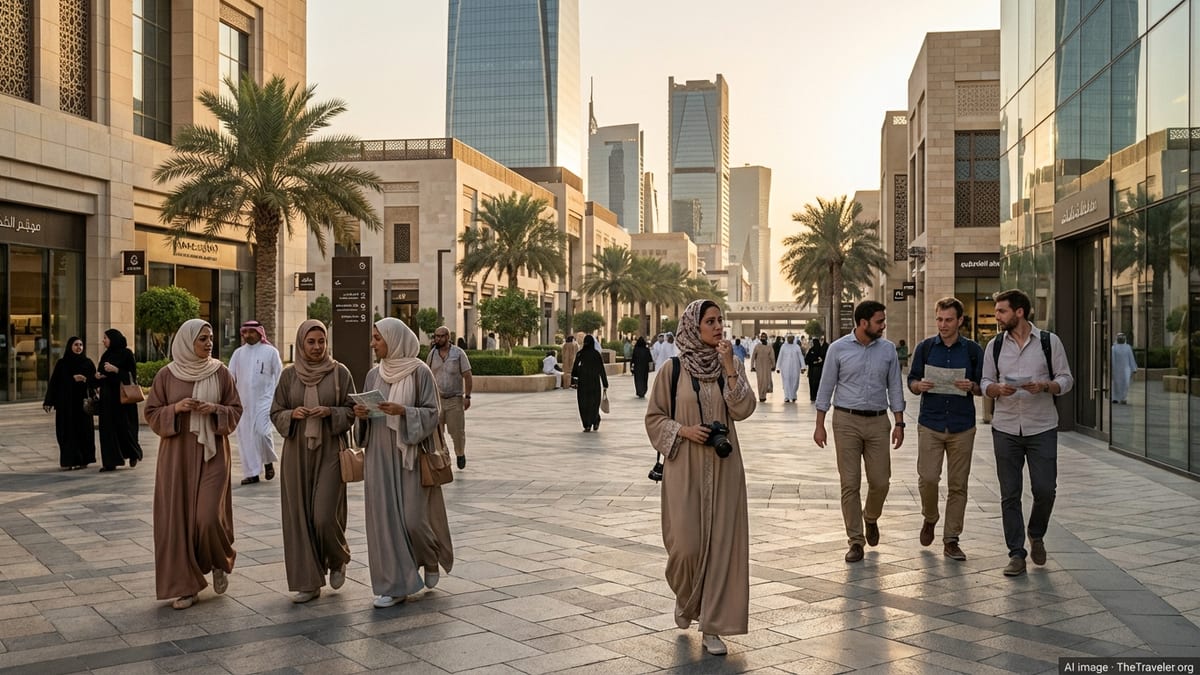
Dress standards in Saudi Arabia have relaxed somewhat in recent years, particularly in major cities and tourist zones, but modesty remains the norm. The safest approach is to avoid tight, transparent, or revealing clothing entirely. For women, that means skipping mini-skirts, short shorts, low-cut tops, and sheer fabrics. Shoulders, chest, and knees should be covered in public. Loose, long trousers or skirts and long-sleeved tops are more likely to blend in and avoid unwanted attention.
Women are no longer legally required to wear an abaya, but many visitors still choose to wear one, especially in more conservative areas or when visiting traditional markets and family-oriented spaces. Men should not wear sleeveless tops or very short shorts in public, and going shirtless outside of private pools or gyms is not acceptable. Clothing with offensive slogans, profane language, or images that might be seen as mocking religion, politics, or local customs should be left at home.
Another mistake is assuming beachwear rules are the same everywhere. Swimwear is usually acceptable at private hotel pools and some resort beaches, but wearing bikinis or very revealing suits on public beaches or in mixed local areas can provoke complaints. On public shores, opt for modest swimwear that covers more of the body, such as a swim dress or longer shorts and a rash guard. When moving between the beach and other public spaces, always cover up fully.
Travelers should also be cautious about treating traditional Saudi garments as costumes. Wearing a thobe or abaya can be fine if done respectfully and in appropriate settings, but using these items as a joke or party outfit is likely to come across as mocking. When in doubt, prioritize neutral, modest clothing in subdued colors. This not only respects local expectations but is also practical in the intense heat and strong sun.
Do Not Ignore Public Behavior Norms and Gender Etiquette
Saudi Arabia places strong emphasis on public decorum, and some behaviors that seem normal elsewhere may be frowned upon or even penalized. Public displays of affection are a prime example. While married couples holding hands may be tolerated in some urban settings, kissing, hugging, or overtly affectionate behavior in public is widely considered inappropriate. To avoid problems, keep romantic gestures private and understated.
Gender mixing is another sensitive area. Although regulations have eased in many places and mixed-gender environments are more common than in the past, remnants of gender segregation still exist. Some restaurants, cafés, and waiting areas maintain family sections and sections for single men. Men should not enter women-only areas such as certain salons or sections clearly marked as reserved for women. When approaching or greeting strangers, it is safer not to initiate physical contact with someone of the opposite sex unless they clearly extend a hand first.
Public conduct in general is expected to be calm and respectful. Shouting, aggressive arguing, or loud confrontations can escalate quickly and may draw in authorities or security staff. Swearing, obscene gestures, and visibly intoxicated behavior are particularly serious. Music played very loudly in public places, especially near mosques or during prayer times, can also attract criticism. Maintaining a measured tone of voice and a composed demeanor will help you avoid misunderstandings.
Finally, be aware of how communal customs influence everyday interactions. Accepting items with the right hand, using polite greetings, and respecting elders are all important. In many settings, the left hand is associated with unclean tasks, so avoid using it to eat from shared dishes or to pass food directly to others. Observing how locals behave and mirroring their level of formality is often the simplest way to remain within the boundaries of what is considered appropriate.
Avoid Alcohol, Drugs, and Restricted Items
One of the most critical rules for travelers is the complete prohibition of recreational drugs and very strict controls on alcohol. Do not attempt to bring alcohol into Saudi Arabia in luggage, duty-free bags, or parcels, and do not expect to find it openly for sale in hotels or restaurants. Possession, consumption, or distribution of alcohol can lead to severe penalties, including fines, imprisonment, and deportation. Even homemade alcohol or substances that appear to be used for brewing can cause serious legal trouble.
Drug laws are even harsher. Possession of illegal narcotics, including small amounts that might be treated more leniently elsewhere, is taken extremely seriously. Penalties can include long prison sentences and, in very serious trafficking cases, capital punishment. Medications that are available over the counter in other countries may require a prescription or be restricted in Saudi Arabia. Travelers should not bring large quantities of medicine in unmarked containers, and it is advisable to carry a doctor’s prescription and original packaging for any regular medication.
Certain other items are also restricted or sensitive. Materials that are considered pornographic, that promote gambling, or that insult religion or public morals can be blocked at customs or confiscated. Clothing, books, or digital content that explicitly mocks or undermines Islamic beliefs is particularly risky. While visitors are usually not inspected at the level of personal devices in routine circumstances, anything discovered during a search that conflicts with local laws could become a problem.
It is also prudent not to attempt to import pork products or visible non-Islamic religious items in large quantities. A personal Bible or small devotional object for private use typically passes without issue, but crates of religious literature intended for distribution will not. Before departure, check your bags for alcohol, pork, explicit material, or politically sensitive items and leave them behind. Taking a conservative approach to what you pack will greatly reduce the risk of difficulties on arrival.
Do Not Disrespect Religious Practices or Holy Places
Islam shapes daily life in Saudi Arabia, and visitors are expected to show consideration for religious practices even if they are not Muslim. One common mistake is ignoring the rhythm of prayer times. Throughout the day, many businesses and services adjust their operations around the call to prayer. Some shops may pause service briefly, and music is often turned down or off. Travelers should not complain loudly about these pauses or insist on immediate service during such periods. Instead, plan errands with the prayer schedule in mind and use breaks as a chance to rest or observe respectfully from a distance.
Non-Muslims are strictly prohibited from entering the holy city of Mecca and certain central areas of Medina. Trying to access these zones without being Muslim can lead to immediate removal or legal penalties. Road signs clearly mark where non-Muslims must turn off or avoid entry. Follow these indications carefully and resist any temptation to “see how far you can get.” There are many other historic and cultural sites open to all visitors across the country.
Inside and around mosques, behavior should be especially considerate. Avoid loud conversations, photography during prayer, or walking directly in front of worshippers who are praying. Dress more conservatively than you would in general public spaces, ensuring arms and legs are fully covered. Women may be asked to cover their hair in some religious settings. Removing shoes before entering prayer halls is standard. If you are unsure about the rules in a particular mosque or religious site, ask a guide or staff member quietly before entering.
Another important point is to avoid any criticism or mockery of religious rituals, symbols, or figures, whether in casual conversation or online. Statements that might be brushed off as jokes elsewhere can be interpreted as blasphemous. Even gestures such as imitating the call to prayer in a comedic way or posing irreverently with religious architecture for photos are best avoided. Taking a posture of curiosity, humility, and respect will help ensure that your encounters with the religious life of the Kingdom are positive and enriching rather than problematic.
Avoid Cultural Insensitivity Around Photography and Social Media
Photography in Saudi Arabia is easier than it used to be, but there are still clear red lines that travelers should not cross. The most important is privacy. Do not photograph people, especially women and children, without explicit permission. This is not just a matter of politeness; unauthorized photos can be viewed as a serious invasion of privacy and may provoke confrontation. When in doubt, put the camera down or use wide shots that do not clearly identify individuals.
It is also forbidden to photograph certain sites, including military facilities, government buildings, border posts, and critical infrastructure such as some airports, security checkpoints, and oil facilities. These areas may be marked with signs, but not always prominently. If security personnel ask you to delete images or stop filming, comply immediately and courteously. Use particular caution when flying drones. Operating a drone without the correct permits can result in confiscation of the device and legal consequences.
On social media, posting content that is seen as insulting to Saudi culture, religion, or institutions can have real-world consequences. Videos that mock traditional dress, make fun of prayer, or show staged behavior that appears to violate public decency rules may be investigated by authorities. Sharing or re-posting offensive content created by others can also be risky. Before posting, ask yourself how a local resident or official might perceive your photo or caption, and err on the side of respect and discretion.
Finally, be cautious about tagging locations that are sensitive, such as private homes, women-only spaces, or workplaces where people have not agreed to appear online. In a society that values privacy, putting someone in the public eye without their consent can damage trust. Focus instead on landscapes, architecture, food, and scenes where people are not easily recognizable. This approach will still allow you to document your journey beautifully while avoiding potential problems.
Do Not Disregard Ramadan and Seasonal Etiquette
If you visit Saudi Arabia during the holy month of Ramadan, usually held once a year following the Islamic lunar calendar, you will encounter a distinctive rhythm of life. During daylight hours, many Muslims fast from food and drink. Non-Muslim visitors are not required to fast, but openly eating, drinking, smoking, or chewing gum in public during the daytime is widely considered insensitive and in some places may be penalized. Instead, consume food and drink in private, in your hotel room, or in designated areas where staff indicate it is acceptable.
Even outside of Ramadan, it is wise not to behave in a way that undermines the dignity of religious observances. Playing loud music near mosques at prayer time, making jokes about fasting, or scheduling loud parties during evening family gatherings can be poorly received. During Ramadan nights, public spaces come alive with families and friends socializing after breaking the fast. Visitors are welcome to join the atmosphere, but should maintain modest behavior and dress even as festivities grow livelier.
Public operating hours can shift significantly during Ramadan and on major religious holidays. Government offices, banks, and some businesses may reduce daytime hours and extend late-night opening to accommodate the fasting schedule. Travelers who fail to anticipate these changes sometimes become frustrated at closures or delays. Instead of complaining, build flexibility into your itinerary, and confirm times for tours, domestic flights, restaurants, and attractions in advance.
Seasonal etiquette also extends to special days such as the two annual Eid holidays, when families prioritize visits and celebrations. Traffic may be heavier, prices for some services may fluctuate, and appointments can be harder to secure. Patience and understanding of the religious significance of these periods will both smooth your logistics and deepen your appreciation of local culture.
Avoid Practical Mistakes That Can Derail Your Trip
Beyond cultural and legal missteps, there are practical errors that travelers to Saudi Arabia should avoid. One of the most significant is neglecting visa and registration requirements. Entry rules can change, and some visas require travelers to register addresses, keep confirmation emails, or carry proof of insurance. Do not assume that previous rules still apply; always check the latest guidance from official sources before departure, and keep digital and paper copies of your visa, accommodation details, and return flight information.
Another easily overlooked point is transportation etiquette and safety. Traffic in major cities can be fast and assertive, and jaywalking across large roads is dangerous as well as sometimes prohibited. Use designated crossings where available and avoid stepping into traffic unexpectedly. When using ride-hailing services or taxis, check the license plate and driver details, sit in the rear seat, and wear your seatbelt. Aggressive gestures toward other drivers, such as honking repeatedly or shouting from the window, are best avoided.
Climate-related mistakes can also cause problems. Saudi Arabia can experience extreme heat, especially in desert regions and during the summer months. Do not underestimate the risk of dehydration and heat exhaustion. Wear light, loose clothing that still meets modesty requirements, apply sunscreen, and carry water. Plan outdoor activities for early morning or late afternoon, and avoid long unshaded walks at midday. Ignoring these precautions may lead to health issues that disrupt your plans.
Finally, do not assume that travel insurance is unnecessary. While Saudi Arabia has modern hospitals and an improving tourist infrastructure, medical treatment, emergency evacuation, or last-minute flight changes can be expensive. A solid insurance policy that covers medical care, trip interruption, and lost luggage provides peace of mind and practical support if things go wrong. In a destination where regulations can feel unfamiliar, having an extra layer of protection is a sensible decision.
FAQ
Q1. Is it true that women must wear an abaya at all times in Saudi Arabia?
Women visitors are no longer legally required to wear an abaya everywhere, but modest clothing that covers shoulders, chest, and knees is strongly recommended, and many women still choose an abaya in conservative areas.
Q2. Can unmarried couples share a hotel room in Saudi Arabia?
Recent practice in many international hotels allows unmarried couples, especially foreign visitors, to share rooms, but public displays of affection remain inappropriate, so couples should behave discreetly outside their room.
Q3. What happens if I bring alcohol into Saudi Arabia in my luggage?
Bringing alcohol into the country is illegal; bottles can be confiscated at the airport and, in more serious cases, travelers may face fines, detention, or deportation, so it is best not to pack any.
Q4. Is it safe to take photos in public places?
General street and landscape photography is usually fine, but you should never photograph people without permission or sensitive sites such as military, security, or key government buildings.
Q5. Can non-Muslims visit Mecca or the central areas of Medina?
Non-Muslims are prohibited from entering Mecca and certain central zones in Medina; signs and checkpoints enforce these restrictions, and attempting to enter can lead to being turned back or penalized.
Q6. Is using a VPN or social media critical of Saudi Arabia risky?
Posting or sharing content that criticizes the government, royal family, or religion can create serious legal issues; visitors should avoid publishing political or sensitive comments while in the Kingdom.
Q7. Do I need to fast during Ramadan as a non-Muslim?
You are not required to fast, but you should avoid eating, drinking, or smoking in public during daylight hours and consume food and drink discreetly in private or designated areas.
Q8. Can I wear shorts in Saudi Arabia as a man?
In some modern areas men in longer, modest shorts may be seen, but full-length trousers are safer, especially in conservative neighborhoods, government offices, and religiously significant sites.
Q9. Is it acceptable to hold hands with my partner in public?
Even if you are married, holding hands can attract attention in some places and kissing or hugging in public is widely frowned upon, so it is better to keep affection private.
Q10. What should I do if I accidentally offend someone or attract police attention?
Stay calm, speak politely, and cooperate fully; apologize if appropriate, show your identification and visa details, and follow any instructions given while avoiding arguments or raised voices.