

More news on this day
Kenyan safari specialist Safarilink has quietly expanded its fleet with a brand-new Cessna Caravan from the United States, a tactical move that could make your next bush flight smoother, more reliable and more widely available across some of East Africa’s most sought-after wildlife destinations.
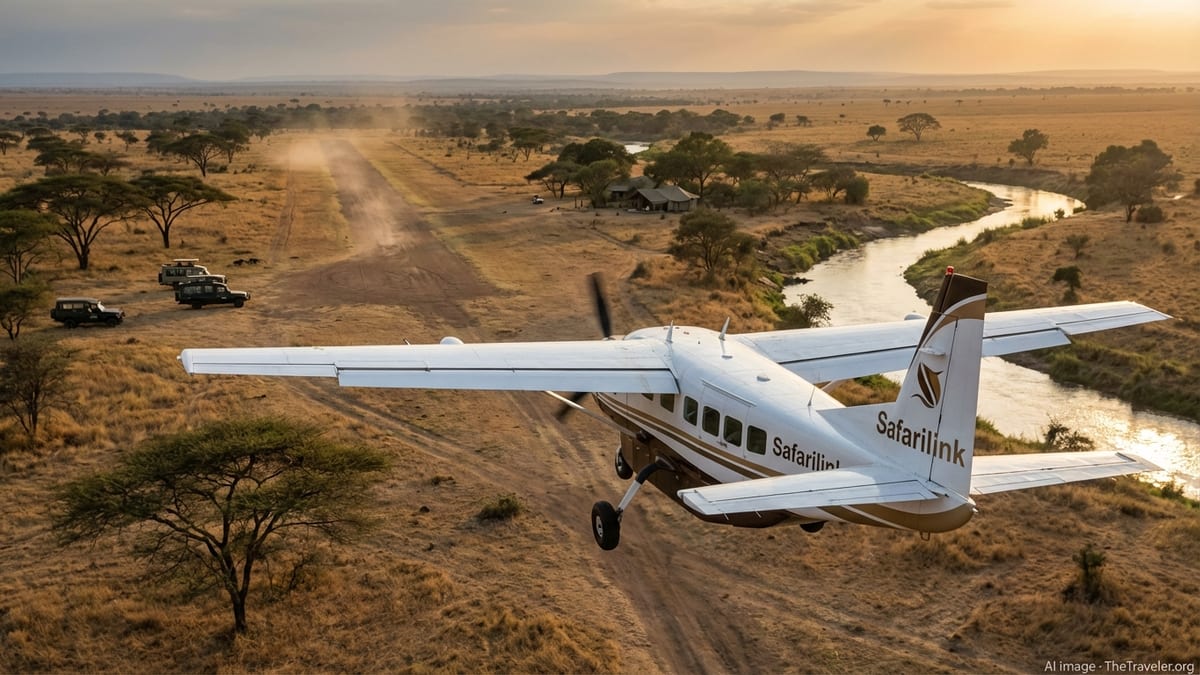
A Strategic New Arrival in Safarilink’s Bush Fleet
Safarilink’s latest fleet addition, a factory-fresh Cessna 208B Caravan that arrived in Nairobi in early March 2025, sounds like a small step in pure numbers. It is one aircraft, joining what is now the airline’s eleventh Caravan alongside several Dash 8 turboprops. Yet for an airline built around thin, seasonal safari routes and short, rugged airstrips, a single new bush-capable aircraft is a major operational lever, one that directly affects availability, schedule reliability and even pricing for travelers booking once-in-a-lifetime trips.
The Caravan, registered 5Y-SLR after its delivery from the Textron facility in Wichita, has been earmarked specifically for Kenya’s “bush” network. That means routes into the Maasai Mara, Samburu, Nanyuki, Tsavo and Naivasha, where dirt or murram runways, short takeoff distances and intense peak-season demand define the business model. By bolstering the workhorse type that underpins this network, Safarilink is effectively adding high-season elasticity to a system that often sells out months in advance.
Unlike larger regional jets or even some bigger turboprops, the Caravan is purpose-built for this kind of flying. High wings for better clearance from wildlife and debris, sturdy landing gear for uneven strips and a proven record in hot-and-high conditions all make it the aircraft of choice for Kenya’s safari corridor. For travelers, that technical detail translates into something simple but powerful: more chances to get the flight you want, on the day your lodge package requires, without awkward overnight stays in Nairobi.
Safarilink executives have framed the acquisition as part of an expansion and resilience drive, aligning with a post-pandemic tourism rebound and renewed international appetite for African safaris. For an operator that now offers 18 or more destinations from its Wilson Airport hub and has recently deepened its partnership with Kenya Airways, securing additional lift on core bush routes is a logical next step.
More Frequencies to the Mara and Beyond
The most immediate impact of Safarilink’s new Caravan will be felt in flight schedules. The airline has said the aircraft will be deployed on high-demand safari routes such as the Maasai Mara, Samburu, Nanyuki, Tsavo West and Naivasha, all classic names on the Kenyan safari circuit. These are also the very routes where seats can be hardest to find in the July to October peak migration season, when international arrivals surge and camps run at or near full occupancy.
Adding another 12-seat aircraft may sound modest compared with the capacity of a larger Dash 8, but it offers flexibility that is critical in the safari niche. Rather than loading more passengers onto fewer departures, the Caravan allows Safarilink to slot additional frequencies into already-busy mornings and afternoons, better matching lodge check-in times and same-day international connections. That could mean an extra early-morning departure to the Mara for travelers landing in Nairobi at dawn, or a later afternoon sector that safely connects with long-haul arrivals and avoids a wasted night in the city.
This matters because the bottleneck in safari travel typically is not the number of beds at a camp but the number of seats into the nearest airstrip on specific days. When a high-season flight is sold out, lodges are often forced to shift itineraries or decline bookings. A single extra Caravan dedicated to these routes pushes back that constraint, enabling more seamless point-to-point planning between Nairobi and remote conservancies. For small groups or families who need all members on the same aircraft, extra frequency also reduces the risk of being split across flights.
In the shoulder and low seasons, when traffic patterns differ, Safarilink can use the new aircraft to introduce new timings, experiment with additional stops or operate ad hoc charters without compromising its core scheduled network. That degree of operational agility is rarely visible in glossy brochures, but it is precisely what determines whether a complex, multi-stop itinerary ultimately works in practice.
Comfort, Safety and the Modern Bush-Flying Experience
Though the Caravan is a familiar sight at bush airstrips across East Africa, a new-production airframe brings incremental improvements that passengers will notice. Fresh interiors, upgraded avionics, quieter cabins and more efficient environmental systems all contribute to a smoother experience in flight. Safarilink’s latest addition leaves Wichita with the manufacturer’s newest cockpit and safety systems, adding layers of situational awareness and redundancy for crews flying in often challenging conditions.
For travelers, that translates into a ride that feels more solid and less fatigued than older aircraft that have spent decades operating on rough fields. Seat cushions still hold their shape, window seals are tight, and cabin materials have not yet been worn soft by years of dust and temperature swings. That makes a difference on a busy safari day when a morning game drive, a flight and an afternoon activity all stack up into one long arc of travel and adventure.
The latest Caravan also supports Safarilink’s ongoing response to heightened scrutiny of aviation safety in and around Nairobi’s airspace after a mid-air collision involving one of its Dash 8s and a training aircraft in March 2024. While investigations into that accident have focused on air traffic procedures and pilot coordination, the airline has simultaneously signaled its commitment to fleet renewal, training and maintenance. A state-of-the-art cockpit environment on the new Caravan is part of that wider effort, adding tools that help crews manage dense traffic around Wilson Airport and complex weather over the Rift Valley.
Even seemingly minor features, such as better insulation and more effective air-conditioning, can enhance comfort for passengers coming straight from dusty airstrips in midday heat. Combined with Safarilink’s practice of giving every passenger a window seat where possible, the net effect is a bush-flying experience that feels premium and reassuring, even when the runway is a narrow strip of red earth fringed by acacia trees.
Why This Matters in a New Era of Safari Connectivity
Safarilink’s fleet move does not exist in a vacuum. In April 2025 the airline deepened its codeshare arrangement with Kenya Airways, allowing international passengers to book through-tickets from long-haul services straight onto Safarilink-operated safaris. That expanded partnership now covers a wider set of airstrips in the Maasai Mara and key gateways such as Amboseli, Nanyuki and Samburu, effectively knitting together intercontinental travel and last-mile bush access.
A new Caravan feeding this network is therefore more than a capacity bump. It supports Kenya Airways’ promise of seamless safari connections by reducing the risk of tight or missed links between Jomo Kenyatta International Airport and Nairobi’s Wilson Airport, where Safarilink is based. When an operator has more fleet depth, it can recover faster from weather disruptions, last-minute airstrip closures or technical issues, all of which are part of the reality of bush flying.
For travelers, this dovetails with a broader shift in how African safaris are being sold and experienced. Rather than piecing together separate domestic tickets, hotel nights and transfers, more guests are now buying integrated journeys that include international flights, Nairobi stopovers and internal sectors under a single booking reference. That model depends on a high degree of reliability on the domestic side. By investing in modern turboprops and adding aircraft to its caravan fleet, Safarilink is positioning itself as a dependable final link in a long chain that may start in New York, London or Dubai.
The increased coordination between Kenya’s flag carrier and its leading safari specialist also raises the bar for competing regional operators, including AirKenya and Fly ALS, which serve many of the same airstrips. In that competitive context, a newer fleet can become a differentiator, especially for tour operators and high-end camps that prize both reliability and guest perception when selecting preferred carriers.
Operational Resilience in a Volatile Tourism Market
A single new aircraft may not sound like a bulwark against global shocks, but for a niche carrier like Safarilink, fleet resilience is directly tied to its ability to weather turbulence in the tourism cycle. The airline, which grounded much of its fleet during the pandemic as international arrivals collapsed, has since rebuilt its schedule around a strong rebound in safari bookings. Adding another Caravan from the factory gives it more breathing room in the face of sudden maintenance events or seasonal fluctuations.
In practical terms, extra fleet depth allows Safarilink to rotate aircraft more aggressively through heavy maintenance checks without slashing capacity on key routes. That, in turn, reduces the need for disruptive last-minute consolidation of flights or changes in timings that can ripple through guests’ carefully planned itineraries. For tour operators, the greater the confidence that flights will run broadly as advertised, the easier it is to sell complex multi-day safaris that command premium pricing.
The Caravan’s relatively low operating costs, especially on short hops between Nairobi and nearby reserves, also help Safarilink manage margins in an environment where fuel prices and foreign exchange rates are unpredictable. A modern, efficient turboprop with strong parts support from the manufacturer is less likely to become a cost or reliability burden, and more likely to remain in productive service for years. That underpins not only current schedules but the airline’s future capacity to open new routes or add seasonal services where emerging lodges and conservancies create demand.
For travelers, this resilience manifests as stability. The new aircraft makes it slightly less likely that a bush flight will be rescheduled at inconvenient hours, that a last seat will disappear just as a lodge confirms availability, or that a sudden aircraft downtime will derail a trip’s tight choreography.
What It Could Mean for Fares and Booking Strategies
Whenever capacity increases on a set of routes, the question for travelers is simple: will prices fall or at least stop rising so quickly. In Kenya’s tightly balanced safari market, the answer is more nuanced. The additional Caravan gives Safarilink more seats to sell on popular sectors, which could ease some of the sharpest price spikes in peak migration months, especially on departures that were previously chronically overbooked.
However, the airline is also facing its own cost pressures, from aircraft acquisition and financing to training, maintenance and rising regulatory requirements. That means travelers should not necessarily expect a broad-based drop in fares. Instead, the benefit is more likely to appear in the form of better availability at published prices, fewer compulsory unsold higher fare buckets, and the possibility of more promotional fares in shoulder seasons when the new aircraft’s capacity can be used more flexibly.
Travel planners may find that the added capacity changes optimal booking behavior at the margins. For complex itineraries that involve multiple domestic legs or a combination of safari and coast, slightly later booking windows could be more feasible than they were in past years, though high season in the Maasai Mara is still likely to reward those who secure seats months in advance. For couples or small groups hoping to travel on specific dates, the new Caravan improves the chances of aligning lodge availability with air seats without having to compromise on timing.
Another subtle impact lies in charter pricing. With an extra aircraft available, Safarilink may have greater scope to offer bespoke charters for larger families or groups, especially in low season, without undermining its scheduled services. That could open the door to more private flights directly linking remote airstrips, shortening transfer times and reshaping how certain high-end safaris are designed.
How to Maximize the Benefits on Your Next Safari
For prospective safari-goers, Safarilink’s fleet expansion is a reminder that the airborne portion of a trip deserves as much attention as camp selection or seasonal wildlife patterns. Travelers booking for late 2025 and 2026 can expect to see slightly more choice in departure times from Nairobi’s Wilson Airport to the main parks, particularly if they are flexible by an hour or two in either direction.
Working closely with a tour operator or lodge that has up-to-date visibility on Safarilink’s schedules will remain crucial. The additional aircraft gives the airline more flexibility to tweak timings and add sectors close to departure dates, which can play in your favor if your agent knows when to ask for alternatives. Guests who build a few hours of margin into their arrival and departure days, especially when connecting with intercontinental flights, will be best placed to take advantage of any extra sectors operated by the new Caravan.
For travelers with specific preferences, such as minimizing time in Nairobi or maximizing game drive hours on arrival and departure days, the improved frequency and reliability can be used to fine-tune itineraries. An early flight into the Mara might now connect more comfortably with a late-morning game drive, while a slightly later return sector could allow an extra excursion before heading back to the capital.
Ultimately, the addition of a new Cessna Caravan to Safarilink’s fleet is a behind-the-scenes development that will nonetheless shape the on-the-ground reality of safari travel. More seats, fresher hardware and a tighter integration with Kenya’s wider aviation network all point in one direction: a safari experience that is easier to plan, smoother in execution and better aligned with the rising expectations of global travelers heading for East Africa’s wild spaces.