

More news on this day
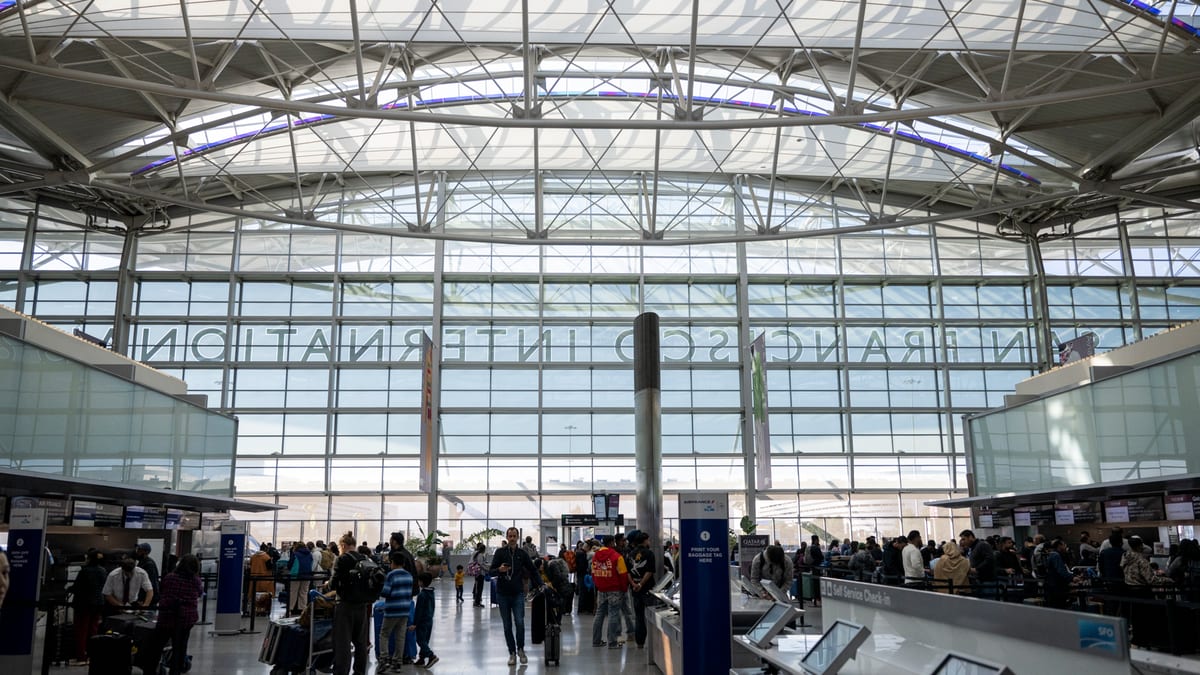
Travelers passing through San Francisco International Airport in the coming months are facing a new reality, as a major runway repaving project combines with tighter federal landing rules that are already reducing the number of flights allowed to arrive each hour.
Get the latest news straight to your inbox!
Runway 1R Closure Cuts Capacity Through Early October
San Francisco International Airport has begun a six-month closure of Runway 1R/19L for a full repaving and airfield upgrade program, a project that airport planning documents indicate started on March 30, 2026 and is scheduled to run until early October. The runway, which sits closest to Highway 101, is one of the airport’s four primary landing and departure surfaces and plays a key role in managing peak-hour traffic.
Publicly available information from the airport describes the work as a comprehensive rehabilitation that includes resurfacing the pavement and modernizing lighting and safety systems. During the construction window, most arrivals and departures are being funneled to the longer west-facing runways 28 Left and 28 Right, concentrating activity on fewer strips of concrete at one of the country’s busiest hubs.
Airport projections cited in regional coverage have suggested that the runway project alone was initially expected to produce modest disruption, with fewer than 10 percent of flights experiencing delays tied directly to the closure and most of those waits averaging under half an hour. Those estimates, however, were made before a separate federal decision sharply reduced how many planes can land at SFO in a typical hour.
The repaving schedule means travelers booked through San Francisco between now and at least October 2, 2026 are flying during a period when the airfield is operating with less flexibility than usual. Any additional strain, from marine layer fog to afternoon thunderstorms, has less margin to be absorbed without cascading delays.
FAA Limits Parallel Landings, Reducing Arrivals Per Hour
Compounding the construction work, the Federal Aviation Administration has implemented new rules that eliminate SFO’s long-standing practice of handling side-by-side landings on its closely spaced parallel runways in many conditions. National coverage from outlets including the Associated Press and the Washington Post reports that the change, introduced at the end of March 2026, cuts the airport’s arrival rate from about 54 flights per hour to roughly 36.
The adjustment reflects concerns about the combination of tightly spaced runways and congested Bay Area airspace. According to published coverage, regulators have determined that the previous operating pattern, which often saw two aircraft touching down nearly simultaneously on parallel surfaces, should be curtailed in favor of wider spacing between arrivals, particularly while major construction is underway.
The result is that fewer planes can land in a given time window, even before factoring in weather. Airlines can respond by slightly stretching schedules, padding block times or shifting some flights to off-peak periods, but many itineraries were already planned months in advance. Passengers arriving during busy morning and evening banks are therefore more likely to experience holding patterns in the air or gate delays on the ground as traffic backs up.
Estimates cited in regional news reports indicate that the combined impact of the new arrival cap and the runway closure could mean roughly one in four inbound flights faces a delay of at least 30 minutes during the height of the construction period. That represents a significant step up from the airport’s earlier projections based on the construction project alone.
Terminal and Security Projects Add Friction on the Ground
While most of the headlines focus on airfield capacity, SFO is also in the middle of a multiyear series of terminal upgrades that can lengthen the time it takes to navigate the airport itself. The final phase of the $2.5 billion Harvey Milk Terminal 1 redevelopment opened in 2024, but work continues in other areas, including a roof and facade project at the Senator Dianne Feinstein International Terminal that is scheduled to run through early 2026.
These projects have prompted periodic changes to pedestrian routes, boarding gate assignments and the airside walkways connecting terminals. Past updates have included temporary closures of portions of the AirTrain and longer walks between certain domestic concourses and lounges, as construction walls and detours shift from month to month.
Security screening remains another pressure point. Publicly available information shows that SFO contracts with a private security provider instead of relying solely on federal officers, a setup that some travelers say keeps lines moving quickly at off-peak times. However, local media and traveler accounts indicate that early morning and late evening banks can still see long queues, especially when construction narrows checkpoint areas or when airlines consolidate flights into specific time blocks.
For passengers, the combination of evolving terminal layouts, occasional lane closures and heavier banks of delayed arrivals means that a tight connection that once felt comfortable on paper can now be risky. Even if an aircraft reaches the gate only 20 or 30 minutes behind schedule, a security bottleneck or long hike between concourses can turn that minor delay into a missed flight.
Who Is Most Likely to Be Affected
The operational squeeze is not expected to fall evenly across all travelers. According to regional transportation reporting, the risk of disruption is highest for passengers arriving at SFO during peak morning hours, when low coastal clouds often creep over the airport, and during evening banks, when transcontinental and transpacific traffic converges on the same runway system.
Bay Area residents using SFO as their home airport may feel the impact in the form of more frequent departure delays and tighter turnaround times for returning aircraft. Airlines that rely on San Francisco as a gateway, including large hub carriers with extensive domestic and international networks, face a particular challenge in reconnecting inbound passengers to onward flights when the arrival rate is capped.
Travelers making short connections, especially those under one hour, are among the most vulnerable. Published guidance from local outlets advises building in extra time between flights, avoiding the last flight of the day when possible and considering earlier departures on days with weather in the forecast. International passengers whose itineraries involve customs, baggage recheck and another security screening at SFO are also more exposed to missed onward segments if a long-haul flight is held in a ground stop or arrival queue.
Those heading to smaller regional destinations, often served only a few times per day, may find that a single missed connection leads to an overnight stay. In contrast, travelers headed to major hubs with frequent service may have more options to be rebooked on the same day, although they still risk losing preferred seats or arriving hours later than originally planned.
How Travelers Can Plan Around the New Constraints
Given the scale and duration of the changes, SFO’s delays are less a temporary hiccup than a medium-term operating reality. Consumer travel guides and local reporting suggest several practical steps to reduce the risk of serious disruption, starting with choosing earlier flights whenever possible, particularly for departures that must connect to international services or important events.
Passengers are also being encouraged to leave more time on the ground before flights. For originating travelers, that means arriving at the airport at least two hours before domestic departures and three hours before international ones, with additional padding on busy summer weekends or holiday periods. For those connecting through SFO, booking longer layovers than usual can provide a buffer if an inbound flight is held in a ground delay program prompted by low clouds or congestion.
Monitoring flight status closely in the days and hours before departure has taken on new importance. Airlines may adjust schedules, swap aircraft types or proactively rebook customers as the reduced arrival rate and runway closure ripple through their operations. Many carriers now offer fee-free same-day changes on certain fares, providing a way to move to an earlier or less crowded flight when weather or traffic forecasts point to trouble.
Finally, travelers with flexibility may want to consider alternate Bay Area airports during the most intense phases of the project. Oakland and San José do not face the same combination of runway construction and new federal landing restrictions, and while they lack some of SFO’s long-haul options, they can provide useful alternatives for domestic trips or West Coast connections while San Francisco works through its latest round of airfield and terminal upgrades.