

More news on this day
A niche but provocative aviation term, “sky jail,” is circulating among Southwest Airlines travelers as social media posts spotlight how the carrier can restrain disruptive passengers in flight, raising new questions about security, comfort and transparency on board.
Get the latest news straight to your inbox!
How the “Sky Jail” Idea Took Off
The phrase “sky jail” is not an official airline or regulatory term, but a social media label that has gained traction as travelers trade stories about how airlines, including Southwest, handle unruly passengers. Viral clips and anecdotes often show confrontations midair or on the tarmac, followed by images of travelers being confined to a specific seat, moved to the rear of the aircraft or restrained using industry-standard devices.
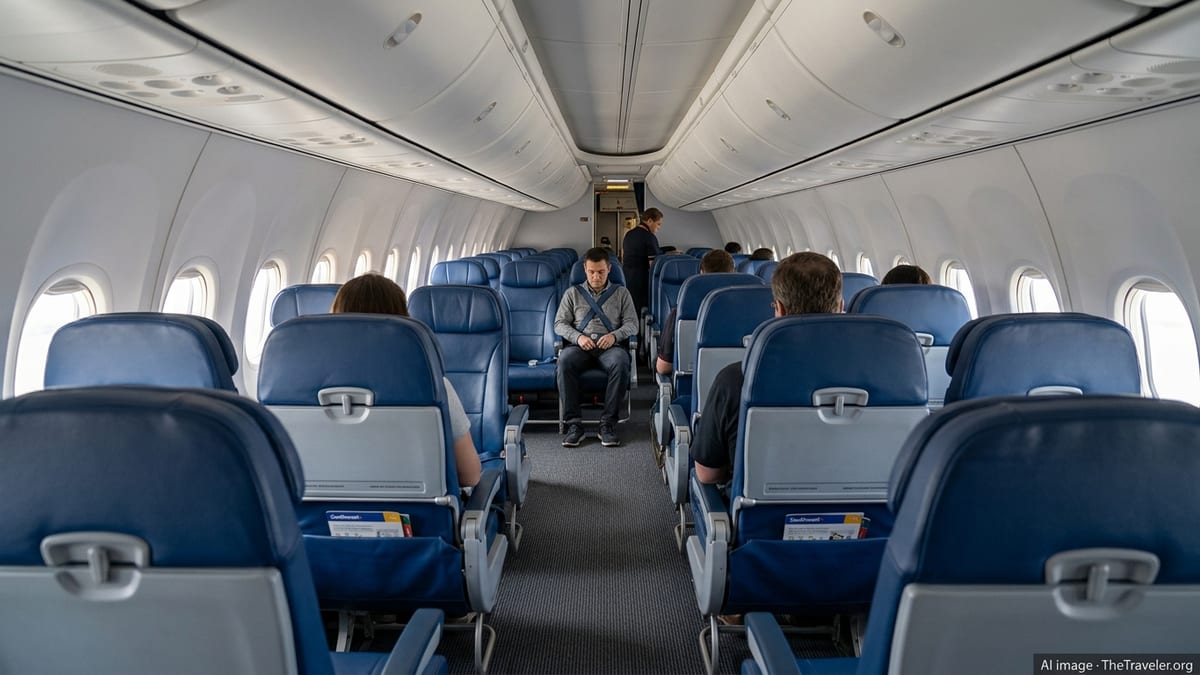
In this context, Southwest’s approach to disruptive behavior is being reinterpreted through a sensational lens. Commenters frequently describe a designated area at the back of the cabin, or a tightly monitored seat, as a kind of informal detention space where a passenger may be kept under close observation until landing. This is what many have begun calling “sky jail,” even though it is simply the practical application of long-standing safety procedures.
The heightened focus coincides with a broader wave of scrutiny directed at Southwest in early 2026, as the carrier rolls out sweeping changes to seating, boarding and customer-of-size policies. In an atmosphere where many travelers already feel that rules are tightening, the idea of a “sky jail” has quickly captured public imagination.
What Security Rules Actually Allow In Flight
Behind the “sky jail” nickname is a legal and regulatory framework that predates the current debate. Publicly available federal guidance describes how airlines and cabin crews are allowed to respond when a passenger threatens safety, interferes with crew duties or becomes violent. These responses can include reseating a person, isolating them from other travelers and, in more serious cases, using approved restraint devices such as flex cuffs.
Industry and regulatory documents explain that passenger seats themselves can function as secure locations when an individual is buckled in, sometimes with additional restraints, while nearby rows are cleared where possible. Aircraft layouts used by Southwest incorporate standard seating and galley areas that can be used to separate an unruly person from the rest of the cabin, but they do not include any built-in holding cells or locked compartments for passengers.
Security briefings and training materials also emphasize proportionality. Flight attendants are expected to de-escalate verbally whenever possible before resorting to physical measures. Only when a person’s behavior is considered a genuine safety risk are more restrictive steps taken. The resulting scene, however, can look dramatic to bystanders and to viewers of short online clips, which helps fuel the impression that there is a literal airborne jail on board.
Southwest’s Changing Cabin Policies Add to the Spotlight
Southwest’s handling of disruptive passengers is not new, but it is being examined at the same time the airline is overhauling how travelers sit and move around the cabin. Assigned seating, which took effect for flights departing on or after January 27, 2026, replaced the carrier’s long-standing open seating process. Reports indicate that the shift has created confusion about seat numbers, boarding order and the ability to relocate once on board.
At the same time, Southwest has introduced stricter rules for plus-size travelers who encroach on neighboring seats, along with new fare structures tied to specific seat types. Public coverage describes a move away from more flexible, informal arrangements toward a cabin environment where movement is more controlled and seat selections are more rigidly enforced.
When passengers already feel they have less freedom to change seats or spread out, any instance of someone being told to remain in a particular location for safety reasons can appear more punitive. Online commentary increasingly groups these different developments together, portraying them as part of a single trend in which the airline is becoming more rule-bound and, in some eyes, more carceral in feel.
How “Sky Jail” Might Work in Practice
Accounts shared in public forums and news coverage suggest that a typical “sky jail” scenario on Southwest involves a disruptive passenger being moved, or kept, in a specific seat, often toward the rear of the aircraft, while nearby seats are kept empty when possible. Cabin crew may use seat belts, additional straps or disposable restraints to limit movement, and may request other travelers to relocate to create distance.
In some instances, the person in question may have their access to carry-on bags restricted, and interactions with other passengers are minimized. Crew members may position themselves nearby, or make frequent checks, until the aircraft lands and local law enforcement or airport security can meet the flight at the gate. To fellow travelers, the combination of physical confinement, observation and eventual handoff to ground personnel resembles a temporary detention space, even though it is functionally just another passenger seat configured for safety.
Importantly, there is no indication in public documentation that Southwest has introduced dedicated “segregation seats” or structural modifications solely for this purpose. Instead, the airline appears to be applying the same general tools available to carriers across the industry: reseating, in-cabin isolation using ordinary rows, and, where necessary, standard restraint devices that comply with aviation safety rules.
Why Travelers Are Uneasy About the Trend
The “sky jail” discussion taps into wider passenger anxieties about transparency, fairness and dignity on board. Travelers express concern that decisions about who is labeled disruptive, who is moved and who is restrained may be influenced by subjective judgments, misunderstandings or biases. Some fear that language barriers, mental health issues or disabilities might be misinterpreted as noncompliance, leading to outcomes that feel punitive rather than protective.
Others note that social media videos rarely capture the full lead-up to an incident, and that short clips can amplify outrage without context. This dynamic contributes to a polarized reaction: some viewers focus on the risks of overreach and humiliation, while others emphasize the safety needs of crew and fellow passengers faced with truly threatening behavior.
For Southwest, the timing is delicate. The airline is already adjusting to criticism over new seating and size-related policies, which many customers view as less customer-friendly than earlier practices. Against that backdrop, any image or report suggesting passengers are being confined to a “sky jail” seat can quickly gain traction and further erode goodwill among travelers weighing their options for domestic flights.