

I arrived in the United Kingdom with a suitcase full of raincoats, royal clichés and film-set expectations. What I found instead was a country that felt both instantly familiar and quietly surprising. The biggest shocks were not the landmarks or the history, but the small habits, unspoken rules and everyday conveniences that shaped every journey, meal and interaction.
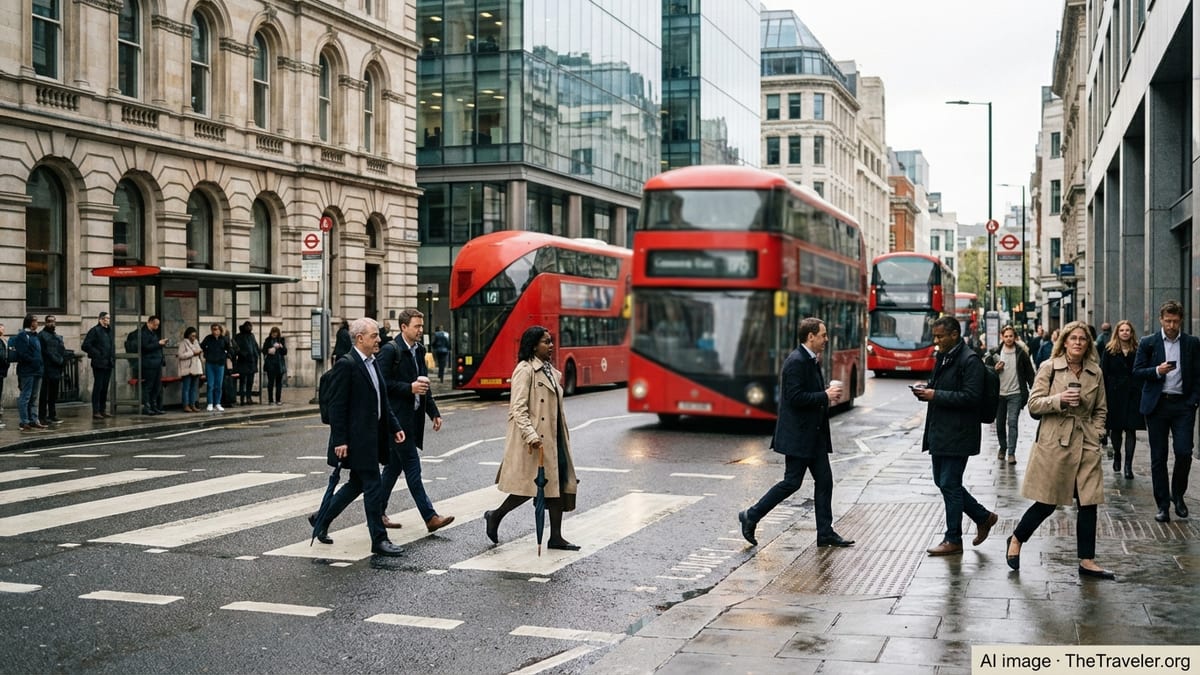
The Reality of British Weather and Seasons
The reputation of the United Kingdom as a place of constant rain is only half the story. What surprised me more than the showers was how quickly the weather changed and how much daylight shifted with the seasons. In a single afternoon, I watched the sky swing from sunshine to drizzle and back again, all while locals carried on in light jackets, barely glancing up.
Summer days felt especially long, with evenings that stayed bright well after what I considered a reasonable hour for sunset. In June and July, it is common in much of England and Scotland for the light to linger late into the night, reshaping how people plan outdoor time, socialising and travel between cities. In winter, the opposite is true, and darkness arrives early, which can be disorienting if you are visiting from lower latitudes.
The rain itself was rarely the heavy, dramatic downpour I expected. More often it arrived as a fine mist or light shower that passed quickly. Locals seemed to plan around it with easy practicality: waterproof jackets, layers and comfortable shoes instead of large umbrellas. I learned that packing versatile clothing mattered more than bringing one heavy coat.
Perhaps most surprising was how willing people were to occupy outdoor spaces in almost any conditions. Pub gardens, coastal paths and urban parks were busy during cool, breezy days that many visitors might consider unsuitable. The attitude seemed to be that if the sky was not pouring, it was good enough to be outside.
Cashless Convenience and Everyday Practicalities
I expected to change currency frequently and carry a wallet stuffed with notes and coins. Instead, I discovered that the United Kingdom has become one of the easiest places in Europe to live almost entirely cash-free. Contactless payments were accepted in most places I visited, from national train services and buses to independent coffee shops and many market stalls.
Public transport in major cities, especially London, felt surprisingly simple once I realised that a contactless bank card or mobile wallet could replace paper tickets for most journeys. Buses, the Underground and many suburban trains accepted tap-in and tap-out payments, with daily caps that automatically limited how much I spent. This made short stays far more flexible, especially when plans changed at the last minute.
At the same time, I was glad to learn that cash still had a place, especially in small towns and some traditional pubs or village shops. Keeping a modest amount of local currency covered those moments when card machines were down or when local customs still leaned on coins. The mix of high digital convenience with lingering pockets of cash culture gave the trip an unexpectedly balanced rhythm.
Another practical surprise was how widely free tap water was offered and how normal it was to carry a reusable bottle. Staff in restaurants and cafes were usually happy to refill bottles, and tap water quality is generally high. For a visitor, that simple detail reduced both costs and plastic waste without any real effort.
Public Transport, Queues and Quiet Etiquette
Before visiting, I imagined British trains as romantic relics of the steam era and London transport as a complex puzzle. What I found was a system that, while occasionally crowded or delayed, was far more integrated and intuitive than I expected, underpinned by a strong culture of unspoken rules.
On the Underground and in major city stations, queues formed naturally and consistently. People waited in neat lines for buses, ticket counters and even escalators, where standing on the right and walking on the left was not just a guideline but a social expectation. Ignoring this convention attracted quick, silent disapproval rather than confrontation.
The relative quiet of public transport was another revelation. Even during busy periods, conversation was generally low and private phone calls were kept brief. Trains that might have been loud elsewhere were filled instead with people reading, using headphones or simply looking out of the window. Speaking loudly, especially on mobile phones, felt out of place.
National rail services connected cities and regions more seamlessly than I had imagined, with frequent departures between major hubs. Booking in advance usually meant better fares, while day-of tickets could be significantly higher. When disruptions occurred, staff tended to communicate clearly, and fellow passengers were often ready with advice or reassurance, an understated kindness that contrasted with their otherwise reserved manner.
Pubs, Dining and the Subtle Art of British Hospitality
Walking into my first traditional pub, I expected table service and a bill brought discreetly at the end of the evening. Instead, I stood for several minutes before realising that almost everyone was ordering and paying at the bar. In many pubs, you find a seat, note your table number and then order food and drinks directly from the counter, paying on the spot rather than at the end.
Tipping was another area where expectations and reality diverged. While leaving something in sit-down restaurants is common, the amounts are modest compared with strong tipping cultures. A service charge may already be added to the bill, and if not, around ten to twelve percent is typical for good service. In pubs where you order drinks at the bar, tipping is less common, and staff do not expect a gratuity each time you purchase a round.
What struck me most, though, was how hospitable these spaces felt once I understood the unwritten rules. Staff could appear reserved at first, but a second visit or a simple, polite conversation often unlocked warmer interactions, recommendations and bits of local history. Pub interiors ranged from centuries-old timber structures to bright, modern spaces, yet nearly all of them felt like extensions of the community rather than just commercial venues.
Outside the pub, restaurant culture carried its own quiet surprises. Self-service counters in some cafes and casual eateries meant that waiting for someone to come to the table could lead to long, unintentional delays. Menus frequently highlighted allergens, a reflection of strict regulations that many visitors find reassuring. These details, small on their own, added up to a feeling that hospitality was built on efficiency and respect rather than formality.
Conversation, Politeness and the British Sense of Personal Space
Many visitors arrive expecting constant dry humour and quick banter. While wit certainly exists, what surprised me more were the subtler habits of conversation and politeness that shape daily social life. People said “sorry” in situations where no apology was required, used “please” and “thank you” generously and often relied on understatement where others might be more direct.
Small talk in shops and public places tended to be brief and practical, often anchored in the weather, transport or a shared inconvenience. Long, animated conversations with strangers were rare unless there was a clear reason, such as asking for directions or discussing a local event. When those conversations did unfold, they often revealed dry humour and a depth of perspective that contradicted any first impression of reserve.
Personal space was clearly valued. On pavements, people generally kept to one side, and on trains or buses they avoided sitting right next to someone if other seats were free. Loudness in confined spaces felt unusual, and lowering one’s voice was an instinctive act of courtesy rather than shyness.
What impressed me most was how consistently these social norms appeared across regions. From London to smaller cities and rural areas, the language of politeness remained remarkably similar, even as accents and local expressions changed. Once I understood those norms, interactions felt smoother, and I began to notice the warmth hidden beneath the surface reserve.
Free Culture, Museums and the Weight of History
I knew the United Kingdom was rich in history, but I did not expect how accessible that history would feel on an average day. Many of the most prominent national museums and galleries in cities like London, Edinburgh and Cardiff did not charge for general admission to their permanent collections, relying instead on suggested donations, memberships and paid temporary exhibitions.
This open-door approach meant that dropping into a world-class collection for an hour between other plans felt normal rather than extravagant. On rainy afternoons, visitors and locals alike slipped into grand halls filled with sculpture, paintings and archaeological finds without stopping at a ticket counter. The experience was less about consuming culture in a single intensive visit and more about weaving it into everyday life.
Beyond the museums, historical layers appeared almost everywhere. Roman ruins sat near modern shopping streets, medieval cathedrals towered over busy roads, and industrial-age infrastructure still shaped the layout of many cities. Yet these sights rarely felt like preserved set pieces. They were integrated into working neighbourhoods, frequented by commuters, students and families alongside tourists.
One of the more surprising aspects of this historical abundance was how calmly it was presented. Interpretation panels were informative but not overly dramatic, and guided tours often balanced pride in local heritage with a willingness to acknowledge complex or difficult chapters of the past. The result felt more like an ongoing conversation with history than a polished, one-sided story.
Beyond London: Landscapes, Regional Identities and Everyday Life
Many first-time visitors focus their entire trip on London, and I almost did the same. What surprised me when I travelled beyond the capital was how quickly the character of the country shifted, not only in scenery but in pace of life and local identity. A few hours on a train brought me from dense city streets to open coastline, rolling hills or compact historic towns that felt worlds apart from the capital.
Regional differences in accent, vocabulary and cultural reference were striking. People in northern England, Scotland, Wales and different parts of the English countryside often had a strong sense of local pride, whether rooted in industrial heritage, maritime history, language or landscape. These variations did not undermine a broader sense of being part of the same country, but they did challenge the idea that one city could represent the whole.
Outside the largest urban centres, the pace of daily life felt more measured. Shops often closed earlier in the evening and had shorter hours on Sundays, reflecting a different balance between work, leisure and family time than in many large metropolitan areas. Cafes and independent businesses played an important role in local communities, and conversations with staff and regulars tended to flow more easily than in the busiest city districts.
The landscapes themselves provided some of the trip’s quietest surprises. Coastal paths in places like Cornwall, rugged highlands and moorlands, lowland forests and gentle river valleys all offered walking routes that felt accessible without needing technical gear. Public footpaths and rights of way made it possible to cross farmland and estates that would be off-limits in many countries, bringing a sense of shared connection to the land.
The Takeaway
Visiting the United Kingdom challenged many of the assumptions I brought with me. I expected formality and ceremony and instead found a daily life shaped by practicality, politeness and a strong respect for personal space. I imagined constant rain and grey skies and discovered shifting light, quick showers and a population that made the most of outdoor spaces in almost any weather.
What stayed with me most were the small, repeated details: the quiet of a crowded train carriage, the ease of tapping a card for nearly every purchase, the lack of pressure around tipping, the way history sat matter-of-factly alongside modern life. These details rarely dominate travel brochures, but they shape how it feels to move through a place hour by hour.
For anyone planning a trip, the real surprises of the United Kingdom are not limited to iconic landmarks or royal landmarks. They live in the queue at a bus stop, the conversation at a pub table, the decision to step into a free museum for half an hour between appointments. Embracing those subtleties is what turns a visit into an understanding.
FAQ
Q1. Do I need cash in the United Kingdom, or can I rely on cards?
Most visitors can rely on contactless cards or mobile payments for daily expenses, especially in cities, but carrying a small amount of cash is still useful in some villages, markets and older pubs.
Q2. Is tipping expected in restaurants and pubs?
Tipping in the United Kingdom is more modest than in strong tipping cultures. In sit-down restaurants, around ten to twelve percent is common if service is not already included, while tipping in pubs for drinks at the bar is not usually expected.
Q3. How strict is queue etiquette, really?
Queue etiquette is taken seriously. People usually form orderly lines for buses, counters and even escalators, and cutting in is considered quite rude even if no one says anything directly.
Q4. Will I need to rent a car to explore beyond London?
Many popular regions are reachable by train or coach, and local buses or taxis can cover shorter distances. Renting a car is helpful for very rural areas, but it is not essential for every itinerary.
Q5. Is the weather as rainy as people say?
The weather is changeable, with frequent light showers rather than constant heavy rain. Packing layers and a light waterproof jacket is usually more practical than relying on a single heavy coat.
Q6. Are museums and galleries really free to enter?
Many major national museums and galleries offer free entry to their permanent collections, especially in larger cities, though special exhibitions may require a paid ticket or timed reservation.
Q7. How early do shops and restaurants close outside major cities?
In smaller towns, many shops close by early evening and have shorter Sunday hours. Restaurants vary, but booking ahead is wise, especially on weekends or during holiday periods.
Q8. Is public transport easy to use for first-time visitors?
Public transport can feel busy but is generally well signposted, with clear maps and announcements. Using contactless payments and journey-planning apps makes navigation easier for new visitors.
Q9. Are British people really as reserved as their reputation suggests?
Many people are reserved in public spaces and value personal space and quiet, but they are often helpful and friendly when approached politely, especially if you ask for directions or local recommendations.
Q10. What is the biggest cultural adjustment for many visitors?
Common adjustments include getting used to understated communication, modest tipping, strict queue etiquette and the quieter atmosphere on public transport compared with some other countries.