

More news on this day
As the Centers for Disease Control and Prevention escalates its global polio travel notice to Level 2, cruise passengers are facing fresh questions about vaccine protection, changing itineraries and what this heightened alert really means once they step aboard.
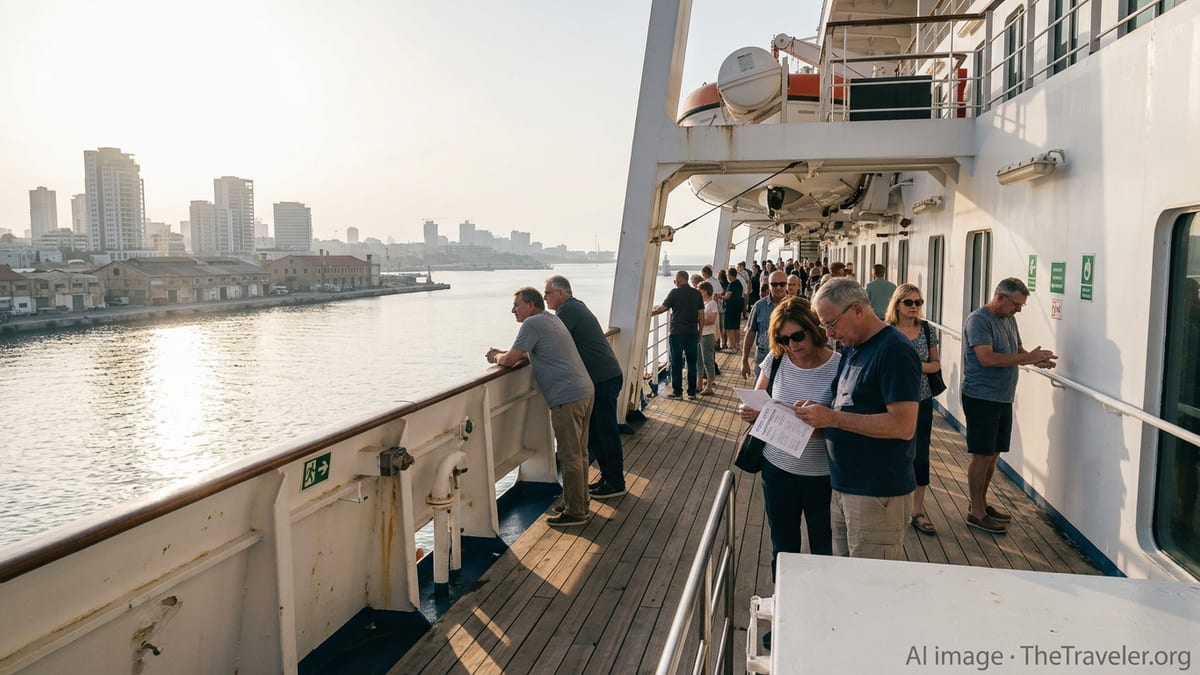
A Global Polio Alert Meets a Booming Cruise Market
The CDC’s current Level 2 “Practice Enhanced Precautions” notice for global polio comes as cruise lines continue to expand sailings across regions where poliovirus still circulates. While the virus was eliminated from North and South America in the 1990s, health officials warn that pockets of transmission persist in parts of Africa, the Middle East and Asia, and that vaccine-derived strains have sparked outbreaks in several countries in recent years.
The updated advisory, which now highlights 32 countries with circulating poliovirus, does not tell travelers to cancel trips. Instead, it signals that the baseline risk has risen enough that all international travelers, including cruise passengers, should make sure their polio vaccines are fully up to date before departure. For adults who completed childhood immunization, that typically means considering a single, lifetime booster.
For the cruise sector, the timing is significant. Lines are deploying more ships to once-niche itineraries in the eastern Mediterranean, West Africa, the Indian Ocean and parts of Southeast Asia, expanding passenger exposure to ports in or near countries listed under the CDC notice. Public health experts say that makes pre-travel vaccination and basic hygiene on board more than just a formality.
Ports themselves may not always be the source of risk. Health authorities note that the virus often circulates silently in under-vaccinated communities, where it can be present in sewage and spread via contaminated water or poor hand hygiene long before paralysis appears in any single case. For travelers, the main concern is preventing infection in the first place and avoiding any role in transporting the virus to areas where it has been eliminated.
What the CDC Is Advising Before You Sail
The CDC’s message to prospective travelers is straightforward: before any international trip, verify your polio vaccination status and, if needed, get protected. Children should follow the standard U.S. schedule of inactivated polio vaccine, while adults who never completed a full series are urged to do so. Those who finished their childhood vaccines can receive a one-time booster if they are heading to areas with ongoing poliovirus circulation.
For cruise travelers, that often means planning several weeks ahead of embarkation. Although polio vaccines can be given on a more rapid schedule, clinicians generally recommend allowing at least a few weeks for the immune system to respond before potential exposure. Travel medicine clinics and many major pharmacy chains now routinely review polio status alongside more familiar pre-cruise vaccines such as hepatitis A, typhoid and seasonal influenza.
The advisory also intersects with a patchwork of national rules that may apply to specific ports. Some countries that have experienced recent polio outbreaks can require proof of recent vaccination for long-term visitors or residents when they leave, a measure aimed at preventing exportation of the virus. While short-stay cruise passengers are often exempt, policies can change on short notice, and experts say it is prudent to carry a record of recent immunization in case border officials request documentation.
Travel doctors note that many adults are surprised to learn their polio protection may date back several decades. In a routine consultation, they say, it is common to find cruisers in their 50s, 60s and 70s who have not thought about the vaccine since childhood. The new CDC alert is prompting more of those travelers to ask whether a booster makes sense given their age, medical history and itineraries.
Onboard Reality: How Cruise Lines Are Responding
Major cruise brands have not introduced polio-specific health protocols on ships sailing from U.S. ports, and lines are not currently requiring proof of polio vaccination for boarding. Instead, they continue to rely on a broader infection-prevention playbook refined during and after the COVID-19 pandemic, focusing on hygiene, sanitation and early detection of illness among passengers and crew.
Industry medical officers say they are closely tracking CDC and World Health Organization updates, particularly for itineraries that include ports in countries identified with circulating poliovirus. While the virus is primarily spread via the fecal-oral route and is not easily transmitted through casual social contact, onboard public health teams emphasize handwashing, safe food handling and robust wastewater treatment as routine safeguards.
Some cruise lines have strengthened pre-cruise health questionnaires and onboard messaging as the alert has drawn attention. Passengers may now see more prominent reminders to wash hands after using restrooms and before dining, or to seek immediate medical attention if they experience fever, sore throat, gastrointestinal symptoms or new weakness in the limbs during or shortly after a voyage, especially following visits to higher-risk regions.
Medical facilities on larger ships are equipped to perform initial assessments and coordinate with shore-side hospitals and public health authorities if a serious infectious disease is suspected. Although polio remains an extremely rare diagnosis among travelers, clinicians aboard say the global notice serves as a reminder to include it, however unlikely, in the differential diagnosis for unexplained acute flaccid paralysis or similar neurological symptoms.
What Passengers Can Do to Reduce Their Risk
Health experts stress that for most cruise passengers, the single most important step is to ensure vaccination is fully up to date before boarding. Unlike some other travel-related illnesses, polio is largely preventable with a complete vaccine course, and the CDC notes that the inactivated polio vaccine used in the United States has an excellent safety profile for both children and adults.
Beyond vaccines, the same commonsense measures that help prevent gastrointestinal bugs and other infections at sea also reduce the odds of coming into contact with poliovirus. Regular, thorough handwashing with soap and water, particularly after using the restroom and before eating, is critical. Travelers are urged to be especially careful with food and water in ports where sanitation standards may vary, opting for bottled or treated water and freshly cooked, piping-hot meals when in doubt.
Parents traveling with young children may want to pay extra attention to playgrounds, splash pads and other areas where kids are likely to have close contact with one another and with shared surfaces. Pediatric infectious disease specialists say these environments are not inherently unsafe, but they are settings where rigorous hand hygiene and supervision can make a meaningful difference.
Finally, passengers who have underlying medical conditions, are pregnant or are traveling with infants should consider a pre-trip consultation with a travel medicine specialist. These experts can review not only polio but the full spectrum of health considerations for a given cruise itinerary, from routine vaccines to mosquito-borne illnesses and region-specific outbreaks.
Reading the Fine Print on Future Itineraries
With health authorities emphasizing that the Level 2 polio notice is not a call to halt travel, analysts expect cruise lines to continue offering and marketing itineraries that touch higher-risk regions. However, the advisory could influence how companies communicate with guests and how they plan future deployments if certain countries see a sustained rise in cases.
Some travel agents report that clients are already asking more questions about which ports fall under the CDC polio notice and how easy it would be to stay on board during calls in those locations. Cruise lines generally allow passengers to remain on the ship while in port, but experts caution that skipping shore excursions is not a substitute for vaccination, since exposure can theoretically occur in transit hubs before or after a voyage.
In the near term, specialists expect more explicit health language in pre-cruise documentation, with reminders about polio alongside guidance on measles, COVID-19 and other vaccine-preventable diseases. The advisory may also prompt closer coordination between cruise medical teams and port authorities in countries working to suppress outbreaks, particularly if any local rules around proof of vaccination for certain categories of visitors are tightened.
For travelers eyeing new itineraries, the practical takeaway is to factor health planning into the booking process, not as an afterthought once final documents arrive. As the CDC’s global polio warning underscores, the return of widespread cruising and the persistence of a once-dreaded disease now intersect in ways that reward informed, early preparation.