

More news on this day
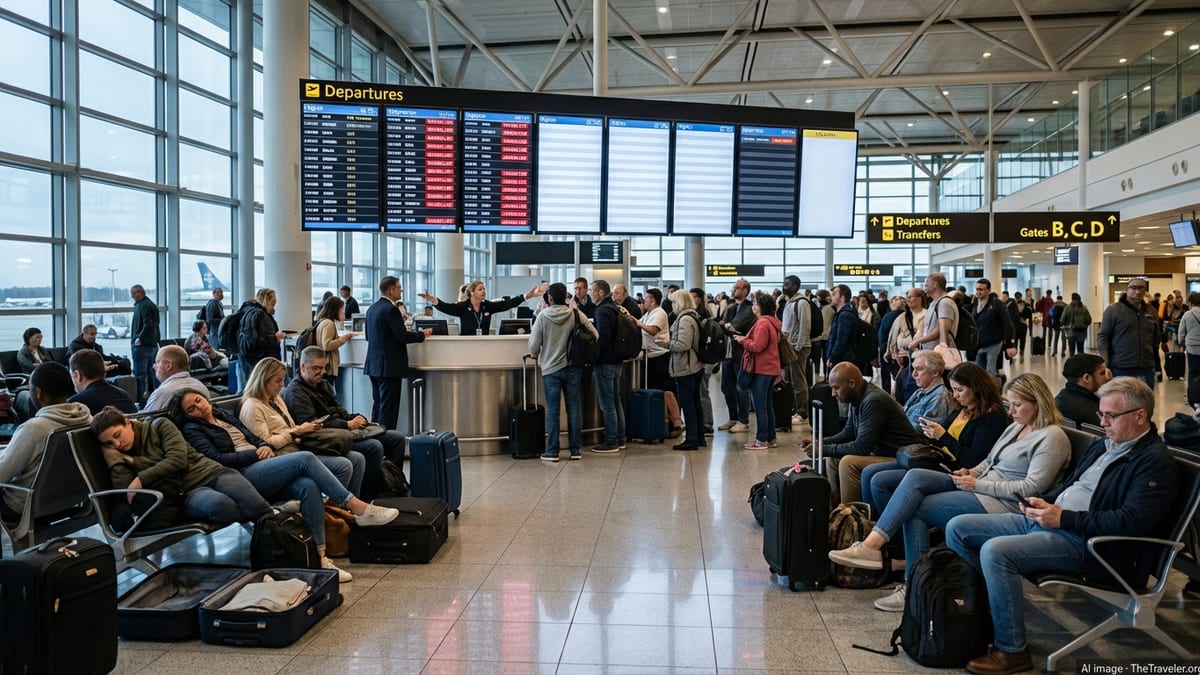
From conflict zones in the Middle East to security incidents in Texas, unexpected airspace closures are once again disrupting global flight schedules and leaving passengers scrambling for alternatives.
Get the latest news straight to your inbox!
Why airspace closes and how fast things can change
Airspace closures are typically triggered by safety or security concerns, ranging from regional conflict and missile activity to unidentified drones or sensitive military operations. Updated guidance from global aviation bodies encourages regulators to restrict or reroute traffic when there is credible risk to civilian aircraft, including in conflict zones where missiles or other weapons may be in use.
Recent events highlight how quickly these decisions can reshape travel. Since late February 2026, widespread restrictions across parts of the Middle East have cut flights in the region by almost 60 percent, forcing airlines to cancel some services and send others on lengthy detours. Intelligence firms tracking schedules report sharp spikes in flight times and operating costs as carriers avoid closed corridors.
In the United States, sudden federal security measures in February 2026 briefly shut down low-altitude airspace around El Paso, effectively closing a key airport without prior public warning. Local coverage showed long lines at ticket counters and rental car desks as passengers tried to rebook or continue journeys by road while the closest major hub, in Albuquerque, sits several hours away by car.
Elsewhere, drone sightings and temporary flight restrictions have periodically paused operations at major European airports, sometimes for hours at a time. Whatever the trigger, these closures are generally implemented through official aviation notices and can appear or change with very little warning, which is why travelers often learn of them only after reaching the airport or boarding a flight.
What to check first if your flight is caught up
When airspace closures disrupt a route, the first confirmed information usually appears through airline and airport channels rather than general news reports. Publicly available operational data shows that carriers often respond by placing rolling updates in their mobile apps and on airport departure boards as rerouting decisions are made.
Passengers are typically advised to start by checking the airline’s app or website for their specific booking, as this is where options such as rebooking or requesting a refund are most clearly set out. Many airlines also issue separate travel advisories during major disruptions, outlining waivers on change fees or fare differences for trips touching affected regions or hubs.
Airport social media feeds and information pages can help clarify whether the issue is a full airspace shutdown, a temporary pause, or a reduction in capacity such as flow control restrictions. During recent government shutdown–related staffing shortages in the United States, for example, flight limits were introduced at selected airports even though the surrounding airspace technically remained open, leading to delays and cancellations rather than outright closures.
Travel data providers have noted that on heavily disrupted days, schedules may be adjusted several times as airlines secure new routings around the restricted area. That makes repeated checks essential; an itinerary that appears canceled early in the day may later be reinstated with a different routing or connection.
Rerouting, refunds and what you can realistically expect
Airlines facing a sudden airspace closure generally pursue three main strategies: reroute flights along longer paths, divert aircraft to alternate airports, or cancel departures entirely. Industry analysis of recent Middle East disruptions shows carriers extending flight times by more than an hour on some long-haul routes to avoid restricted zones, while others have temporarily suspended operations to certain hubs.
For passengers, the immediate question is usually whether the airline must offer a new itinerary or a refund. In most regions, publicly available conditions of carriage state that when a flight is canceled or significantly changed for safety or security reasons, customers can either accept alternative transport at the earliest opportunity or receive their money back for the unused segments. Some carriers have added flexibility, allowing voluntary changes even when flights still operate but are expected to be heavily delayed.
Cash compensation is more complex, especially under European rules. The long-standing EU261 regulation, and recent discussions about updating it, distinguish between disruptions the airline can control and so-called extraordinary circumstances. Published guidance and legal commentary generally classify airspace closures linked to war, political instability or security incidents as extraordinary, meaning fixed-sum compensation for delays or cancellations often does not apply, even though rerouting or refunds usually still do.
Travel insurance can fill part of the gap, but coverage is highly policy-specific. Consumer-focused advisories note that standard policies may exclude disruptions caused by war or government orders unless travelers purchased special add-ons such as “political evacuation” or “war risk” coverage. Passengers are encouraged to review policy wording carefully before assuming hotel costs, missed tours or alternative transport will be reimbursed.
Passenger rights and practical steps in different regions
Rights frameworks vary sharply by jurisdiction, which can matter when a disruption involves overflight rather than takeoff or landing in an affected country. Under European rules, protections apply when departing from an EU airport or flying to the EU on an EU-based carrier, even if the airspace closure itself occurs over a third country. In North America and many parts of Asia, rights are more heavily defined by airline contracts and local consumer law than by a single unified regulation.
Policy debates in Europe through 2024 and 2025 show a trend toward adjusting compensation thresholds while emphasizing clearer information obligations. Draft texts and parliamentary summaries refer to proposals that would require airlines to automatically inform passengers of their rights in the event of long delays or cancellations, alongside clarifying when extraordinary circumstances shield carriers from cash payouts.
In practice, advisors who track passenger claims recommend a consistent sequence of actions. First, secure written confirmation from the airline or through its app that a flight was canceled or heavily delayed, including the stated reason if available. Second, keep receipts for meals, accommodation and alternative transport arranged during the disruption. Third, submit a claim directly to the airline before turning to intermediaries or legal channels, as many straightforward cases are resolved at this stage.
In countries that lack formal compensation schemes, consumer agencies still encourage travelers to document their experience carefully and to highlight any inconsistencies between what was promised at booking and what was delivered. Public pressure and reputational concerns have, in some recent cases, led airlines to extend gestures of goodwill beyond what regulations strictly require, especially during highly publicized disruptions.
Planning ahead as disruptions become more frequent
Academic research into national airspace performance indicates that extreme disruption days, once rare, are appearing more often in post-pandemic travel patterns. Analysts link this to a combination of geopolitical instability, climate-related extreme weather and operational fragilities, including staffing constraints and aging infrastructure.
Travel strategists point to several measures that can reduce the personal impact of an airspace closure even if they cannot prevent it. Booking nonstop flights where possible limits the risk of missed connections when one sector is rerouted or delayed. Choosing longer connection times and avoiding the last flight of the day on critical legs can also provide a buffer when schedules begin to slip.
There is also renewed interest in building redundancy into itineraries through flexible fares, refundable hotel bookings and payment methods that offer strong trip interruption benefits. Some credit card issuers have enhanced travel protection packages in response to recent global disruptions, but terms vary widely, so travelers need to confirm coverage details before relying on them.
Ultimately, airspace closures are designed to protect safety in volatile conditions, and most are lifted once risk levels are reassessed. For travelers, the most effective response combines real-time information from airline and airport channels with a clear understanding of rights, realistic expectations about compensation, and itinerary choices that leave room to adapt when skies close with little warning.