

Arkansas might be known as the Natural State, but its culinary personality is every bit as memorable as its mountains and rivers. Here, food is rooted in small towns, church potlucks and roadside diners, shaped by Delta farmland, Ozark forests and generations of home cooks. Whether you are road tripping across the state or planning a weekend in Little Rock, knowing what to eat in Arkansas will give you a deeper sense of place than any guidebook alone. These are the dishes that locals crave, visitors remember and menus proudly label as Arkansas originals.
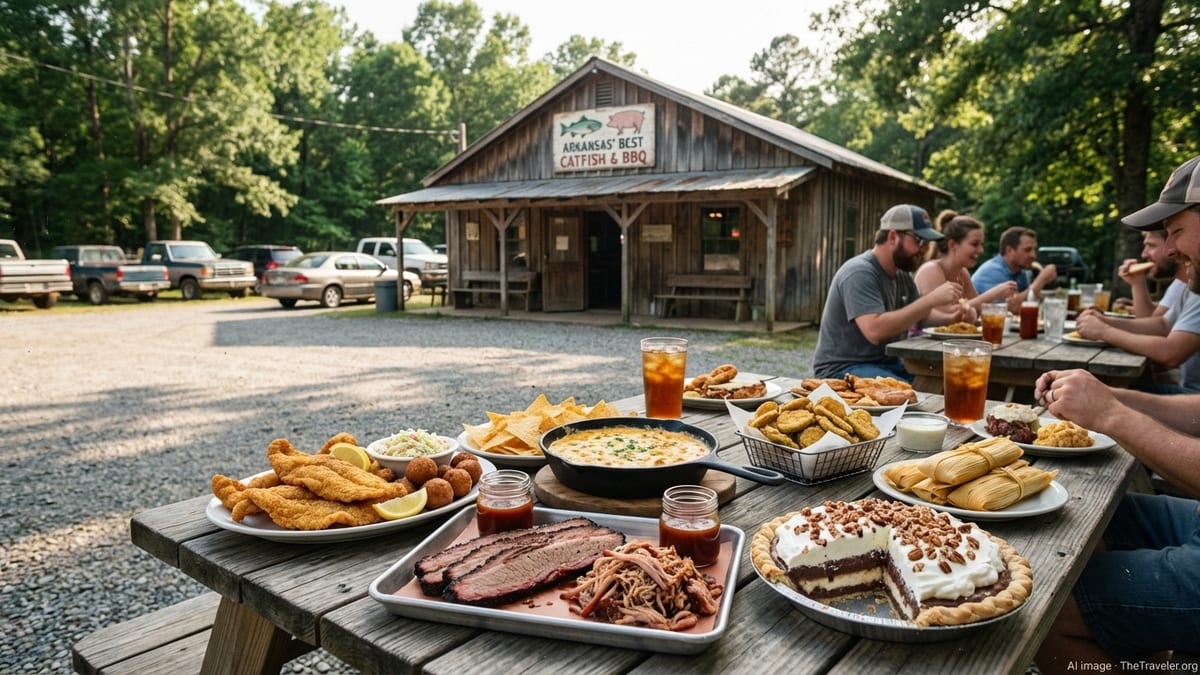
Fried Catfish and Hushpuppies: A Taste of Arkansas Waters
If there is one plate that captures everyday Arkansas comfort food, it is fried catfish with hushpuppies. Fed by rivers, lakes and reservoirs, the state has long relied on freshwater fish as a practical source of protein. Over time, that necessity became a point of pride, and catfish dinners are now fixtures at neighborhood cafes, community fundraisers and family gatherings. Order it once and you understand why so many Arkansans simply call it “getting fish.”
Traditional Arkansas catfish is usually cornmeal crusted rather than heavily battered. The fillets are dredged in seasoned cornmeal, sometimes with a little flour, salt, pepper and paprika, then fried until the outside is deep golden and crisp while the flesh stays moist and flaky. The best places tend to use fresh or never frozen fish, which gives the meat a clean, mild flavor that pairs well with a squeeze of lemon or a dash of hot sauce.
No catfish plate is complete without hushpuppies. These small balls or oblong fritters are made from cornmeal batter mixed with onion and buttermilk, dropped into hot oil until they puff and brown. Their crunchy exterior and tender interior make them ideal for dragging through tartar sauce, remoulade or even a smear of catfish juices left on the plate. Coleslaw, fries and pickled green tomatoes are typical supporting players that round out the meal.
You will find good catfish across Arkansas, from rustic riverfront restaurants to urban fish houses and food trucks. The experience is usually casual and convivial: paper-lined baskets, plastic cups of sweet tea and the satisfying sound of fryers working steadily in the background. For many travelers, lingering over catfish and hushpuppies is the moment Arkansas starts to feel like home.
Arkansas Barbecue: Smoke, Pork and Regional Nuance
Barbecue styles in the United States are usually defined by big-name regions, but Arkansas has its own quiet traditions that reward anyone willing to explore beyond interstate exits. Arkansas barbecue tends to be a bridge between neighboring states, drawing influences from Memphis, Texas and the Deep South while developing its own local specialties. What emerges is an approachable, unfussy barbecue culture where the focus is on smoke, not ceremony.
Pork shoulder and pork ribs are staples at many Arkansas smokehouses, especially in the eastern Delta region, where hickory-smoked pork butts are chopped or pulled and served on soft white bread with a thin, peppery, tomato-based sauce. In places like Marianna and Blytheville, pitmasters work with simple recipes and long-standing techniques, slow smoking whole shoulders in brick or cinder-block pits until the meat nearly shreds under its own weight. The sauces here are often vinegary and lightly sweet, designed to complement rather than smother the meat.
Elsewhere in the state, particularly in southern timber country and northwest Arkansas, beef brisket has become a star. Inspired in part by Texas methods, briskets are rubbed with salt and pepper or simple spice blends, then smoked low and slow over oak or hickory until they develop a dark bark and a tender pink interior. Some modern barbecue joints in the Fayetteville and Bentonville area have gained attention for brisket that rivals offerings across the state line, showing how Arkansas barbecue continues to evolve without abandoning its roots.
Sides at Arkansas barbecue spots tend to be classic and hearty: slaw, beans, potato salad, white bread or rolls. Many places serve what locals simply call a “pig sandwich,” a chopped pork sandwich finished with slaw inside the bun. Whether you seek out historic diners that have been smoking meat for generations or newer smokehouses experimenting with regional mashups, trying Arkansas barbecue is essential to understanding how the state interprets the Southern love of smoke and fire.
Cheese Dip and Fried Pickles: Arkansas Originals
Few foods inspire more state pride in Arkansas than cheese dip. While queso is familiar across the Southwest and beyond, Arkansans will quickly tell you that their style of cheese dip is distinct and, according to many local historians, born here. Stories generally trace the dish back to North Little Rock in the 1930s, where a restaurateur is said to have first paired a silky, spiced cheese sauce with tortilla chips, starting a tradition that would spread across the state and eventually much of the country.
Arkansas cheese dip is typically smooth and pourable rather than thick or stringy. It is commonly based on processed or melting cheeses blended with milk or cream, chili powder, cumin and sometimes green chiles or jalapeños. The result is a creamy, gently spicy dip that clings well to chips and can just as easily be spooned over rice, enchiladas, fries or burgers. Local festivals and contests celebrate subtle differences in flavor and texture, and many residents have a favorite version tied to a particular Mexican restaurant or neighborhood bar and grill.
Fried pickles are another snack that Arkansas proudly claims as its own. Most origin stories point to a former drive-in restaurant in the small town of Atkins, where thinly sliced dill pickles were dredged in seasoned batter and dropped into the fryer as a creative side dish. What started as a novelty soon became a phenomenon, and fried pickles now appear on menus throughout the South and far beyond.
In Arkansas, you will see fried pickles served as chips or spears, breaded or battered, but almost always paired with ranch dressing or a tangy comeback-style sauce. The appeal is in the contrast: a salty, crunchy crust giving way to the sharp tang of the pickle inside. They make ideal bar food, ballgame snacks or appetizers to share before a plate of barbecue. If you see both cheese dip and fried pickles on the same menu, you are probably in the right place.
From Chocolate Gravy to Delta Tamales: Regional Comforts
Not all important Arkansas dishes are savory. In the Ozark and north-central parts of the state, chocolate gravy with biscuits is one of the most beloved morning indulgences. Despite the name, chocolate gravy has more in common with a simple cocoa pudding than with meat drippings. Home cooks traditionally made it by simmering cocoa powder, sugar, milk or water and a bit of flour or cornstarch until the mixture thickened to a pourable sauce, then ladling it over hot, flaky biscuits for breakfast or brunch.
The origins of chocolate gravy are hard to pin down, but many accounts tie it to mountain communities in Arkansas and neighboring states where families stretched pantry staples into special-occasion treats. Today, you can find it at select diners and cafés that hold fast to local traditions, sometimes offered alongside more familiar sausage gravy. The combination of warm biscuits and slightly bittersweet chocolate sauce may sound surprising, yet it makes perfect sense after the first bite, especially with a cup of strong coffee.
On the opposite side of the state, in the Arkansas Delta along the Mississippi River, hot tamales have become a signature street and roadside food. Influenced by Mexican and African American culinary traditions, Delta tamales are usually smaller and spicier than many Mexican restaurant versions. They are often made with cornmeal-rich dough wrapped around a heavily seasoned beef or pork filling, then wrapped in corn husks and simmered or steamed until tender.
In small Delta towns, tamales are sold by the dozen, packed tightly and served with hot sauce or crackers. They are the kind of food you might buy from a roadside stand, a gas station counter or a hole-in-the-wall eatery recommended by locals. Eating Delta tamales in Arkansas connects you to a broader Mississippi River tamale trail, but each town adds its own twists in spice level, texture and serving style. Together with chocolate gravy in the Ozarks, they show how Arkansas eats shift subtly as you move from hills to bottomlands.
Rice, Ducks and the Delta Table
Drive through the flat fields of eastern Arkansas and you quickly see why rice plays such a big role in the local diet. The Grand Prairie around the city of Stuttgart is planted in rice, soybeans and other row crops, and the region proudly calls itself a capital of both rice production and duck hunting. That combination shapes how people eat, particularly during fall and winter when hunting season and harvest overlap.
Rice appears in everyday meals in simple and satisfying ways. Many home cooks prefer rice as a side instead of potatoes, piling it under brown gravy, smothered pork chops or stewed vegetables. Casseroles that combine rice with chicken or shrimp and cheese are staples at church suppers and family reunions. In areas where duck hunting is part of seasonal life, duck and rice dishes or gumbo-style stews often make use of game birds that have been cleaned and stored in home freezers.
Restaurants in east and southeast Arkansas increasingly highlight local rice in their menus, from Southern-style plate lunches to more modern interpretations that pair Arkansas-grown grains with vegetables and regional meats. Even when a dish does not announce its origin, there is a good chance the rice on your plate was grown within a relatively short drive. Paying attention to those quiet details is another way to appreciate the state’s agricultural backbone while you eat.
For travelers, taking time to explore small-town cafes in the Delta region reveals how rice quietly ties together many local favorites, from smothered dishes of the day to simple sides that soak up gravies and sauces. Look for daily specials on chalkboards and listen for locals ordering by shorthand. Often, what sounds like an ordinary plate turns out to be a deeply rooted Arkansas meal built on crops from nearby fields.
Desserts of the Natural State: Possum Pie and Beyond
Arkansas has a sweet tooth, and no dessert captures that better than possum pie. Despite the name, there is no game meat in sight. The pie gets its playful title from the idea of “playing possum,” hiding its true nature under a blanket of whipped cream. Slice into it and you reveal multiple layers: typically a nutty pecan shortbread or cookie-like crust, a tangy cream cheese filling and a rich chocolate pudding or custard layer beneath the topping.
The appeal of possum pie is as much about texture as taste. The crust provides a firm, slightly sandy base, the cream cheese contributes a gentle tang, and the chocolate layer adds sweetness and depth. Topped with mounds of whipped cream and sometimes a garnish of chopped nuts or chocolate shavings, it feels simultaneously nostalgic and indulgent. You will spot it at bakeries, diners and family restaurants around the state, especially at places that lean into old-fashioned Southern desserts.
Possum pie shares the stage with other Arkansas sweets. Fried pies, often apple, peach or chocolate, are easy to find at gas stations, small-town bakeries and country restaurants. These hand pies, sometimes baked but often fried, are ideal for eating on the go and remain a common impulse purchase at the register. Another regional favorite in north-central Arkansas is the chocolate roll, a pastry that wraps a chocolate filling in dough that is then baked or fried, resulting in a treat that tastes something like a cross between a doughnut and a pie.
Many of these desserts began as home recipes passed down through families and only later found their way into commercial kitchens. When you order a slice of pie or a paper bag of fried pies in Arkansas, you are often tasting a sweet perfected at farm tables and potlucks long before it ever reached a printed menu. Leaving room for dessert is not optional here; it is part of understanding the state’s culinary story.
How and Where to Eat Like a Local in Arkansas
Knowing what to eat in Arkansas is only half the experience. The other half is understanding how locals like to enjoy these foods. One of the best approaches is to plan your meals around small towns and neighborhoods instead of only high-profile restaurants. Seek out cafes that open early for breakfast, fish houses on backroads, barbecue joints that sometimes sell out by midday and bakeries that post handwritten pie lists.
Timing matters. If you are chasing barbecue, aim for early lunch, especially in older establishments where pitmasters smoke a limited amount of meat each day. For catfish, weekends often bring all-you-can-eat specials or community fish fries that raise money for local causes. Breakfast spots in the Ozarks are your best bet for chocolate gravy and biscuits, while Delta tamales are most easily found in the afternoon and evening when roadside stands and small eateries turn up their steamers.
Do not be shy about asking locals what you should order. Many Arkansas dishes are tied to specific preparations at particular places: a certain cheese dip at one Tex-Mex institution, a renowned pig sandwich at an unassuming barbecue stand, a possum pie that routinely sells out by midafternoon. Hotel clerks, gas station attendants and coffee shop baristas are often enthusiastic guides to nearby food traditions and will usually steer you toward whatever their own families eat.
Above all, leave room in your itinerary for flexibility. The most memorable Arkansas meals rarely happen on strict schedules. They appear when you spot a fried pie sign in a gas station window, hear about catfish on a riverboat or notice a handwritten note promising hot tamales in a town you never meant to visit. Letting those moments shape your route is the surest way to eat like an Arkansan, even on a short trip.
The Takeaway
Eating in Arkansas is an invitation to slow down and pay attention to the details on your plate. Fried catfish and hushpuppies show how the state turns its waterways into comfort food, while barbecue smokehouses reveal a patchwork style that borrows from neighboring regions and still feels distinctly local. Cheese dip and fried pickles demonstrate how modest ideas can become beloved traditions, and chocolate gravy or Delta tamales highlight the state’s regional diversity from hills to Delta.
Desserts like possum pie, fried pies and chocolate rolls underline how deeply family recipes shape what ends up on Arkansas menus. The rice fields of the Grand Prairie quietly support many of these dishes, even when the grain is just a supporting side. Together, these foods sketch a portrait of a place where resourcefulness, hospitality and a sense of fun coexist comfortably at the table.
Whether you are planning a dedicated food road trip or simply adding a few memorable meals to a broader Arkansas itinerary, using these dishes as a compass will lead you into cafes, diners, fish houses and bakeries that locals genuinely love. Order what the regulars are having, ask about the stories behind the names and do not rush the experience. In Arkansas, the journey between bites is part of the feast.
FAQ
Q1. What food is Arkansas most famous for?
Arkansas is widely associated with fried catfish and hushpuppies, cheese dip, possum pie, regional barbecue and, in the Delta, hot tamales and rice-based comfort dishes.
Q2. Where can I try authentic Arkansas cheese dip?
You will find authentic Arkansas-style cheese dip at many Mexican and Tex-Mex restaurants, sports bars and casual grills across the state, often listed simply as cheese dip on the appetizer menu.
Q3. Does possum pie really contain possum?
No. Possum pie is a layered dessert with a nutty crust, cream cheese and chocolate fillings and whipped cream on top, named for the way it “plays possum” by hiding its layers.
Q4. How is Arkansas barbecue different from other styles?
Arkansas barbecue often blends influences from Memphis, Texas and the Deep South, featuring hickory-smoked pork and beef with thin, peppery tomato-based sauces rather than very sweet or very thick glazes.
Q5. What are Delta tamales, and where are they found?
Delta tamales are small, highly seasoned tamales often made with cornmeal-rich dough and spiced meat, common in eastern Arkansas towns along the Mississippi River and sold at diners and roadside stands.
Q6. Is chocolate gravy a dessert or a breakfast dish?
Chocolate gravy is most often served at breakfast or brunch, poured warm over fresh biscuits, though some people enjoy it as a simple dessert later in the day.
Q7. Are fried pickles really from Arkansas?
Many local accounts credit an Arkansas drive-in with popularizing fried pickles, and the snack remains closely associated with the state, even though versions now appear on menus nationwide.
Q8. What role does rice play in Arkansas cuisine?
Because eastern Arkansas is a major rice-growing region, the grain shows up in casseroles, plate lunches, gumbos and simple side dishes that quietly anchor many everyday meals.
Q9. Can I find vegetarian options in traditional Arkansas cooking?
Yes. While many classic dishes feature meat, you can often order vegetable plates, fried green tomatoes, salads, rice and bean dishes and desserts like fried pies and possum pie without meat.
Q10. When is the best time of year to explore Arkansas food traditions?
Arkansas food culture is active year-round, but fall and spring are especially rewarding, with mild weather, festivals, fish fries and, in the Delta, a strong overlap between harvest and hunting seasons.