

In Georgia, food is more than comfort; it is how families remember their past, how communities gather, and how visitors are welcomed to the South. From Atlanta’s bustling soul food cafeterias to the seafood shacks and historic towns along the coast, traditional dishes tell stories of Native American roots, African and Gullah Geechee influences, and generations of Southern cooks. If you are wondering what to eat on a trip through the Peach State, these are the classic Georgia plates that will introduce you to the state’s enduring culinary traditions.
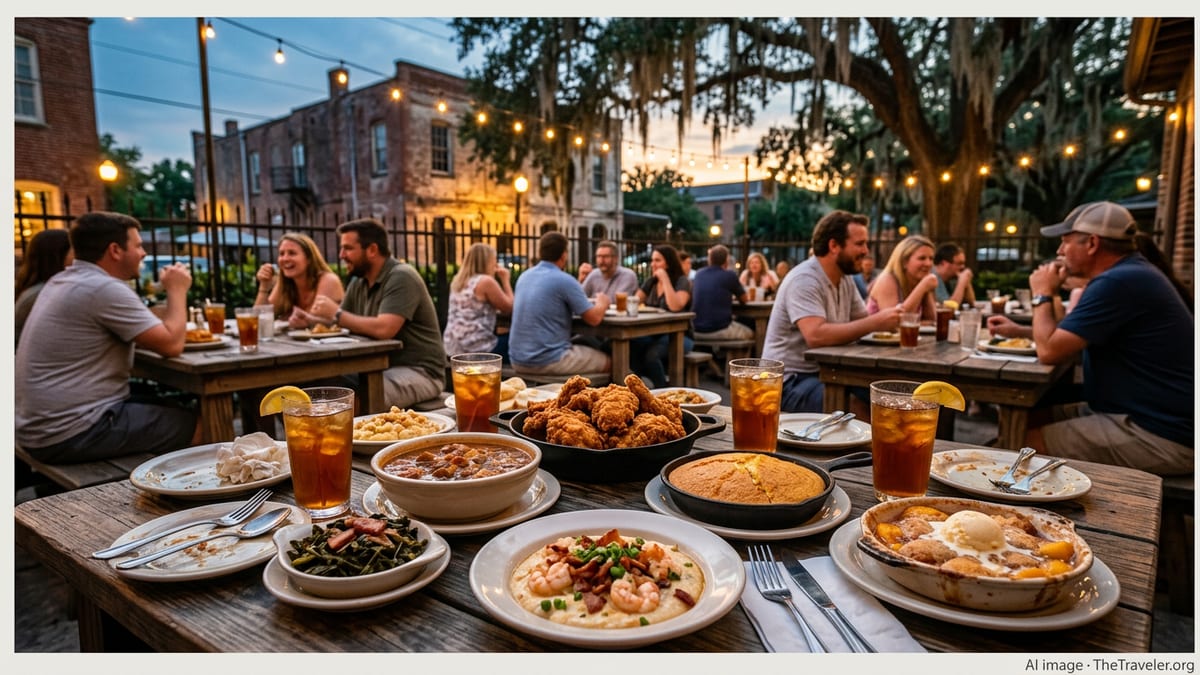
Brunswick Stew and Cornbread: Georgia’s Signature Pairing
If there is one dish that announces you have arrived in Georgia, it is Brunswick stew. This tomato-based stew, packed with slow-cooked meat and vegetables, is closely associated with the coastal city of Brunswick, where a historic iron pot in Mary Ross Waterfront Park commemorates a legendary batch cooked on nearby St. Simons Island in 1898. Today the exact origin is still debated with Virginia, but in Georgia the stew is embraced as a point of local pride and a symbol of community gatherings.
Modern versions of Brunswick stew are hearty and smoky, usually featuring shredded chicken, pork, or a mix of both, simmered with tomatoes, lima or butter beans, corn, and peas. The texture is deliberately thick, often cooked long enough that a spoon can nearly stand upright in the pot. You will see it at small-town barbecues, church fundraisers, and roadside smokehouses, where it is ladled into paper bowls or served in generous mugs alongside pulled pork and ribs.
No bowl of Brunswick stew in Georgia feels complete without cornbread, which the state recognizes alongside the stew as an official emblem of its foodways. Cornbread in Georgia appears in many forms, from cast-iron skillet wedges with crisp edges to softer, cake-like squares. Some cooks favor a faint sweetness, while others keep their cornbread savory and crumbly for sopping up stew or potlikker. Wherever you try it, this pairing is a reliable introduction to the flavors of traditional Georgia cooking.
Travelers exploring barbecue restaurants and small-town diners should look for Brunswick stew and cornbread as a staple combination on menus. Ordering both is an easy way to join a long-running local conversation about which stew is best, how thick it should be, and whether cornbread ought to be sweet or not, a debate that can spark friendly discussion at almost any table.
Fried Chicken, Meat-and-Three Plates, and Soul Food Classics
In cities and small towns alike, Georgia’s most familiar comfort food is fried chicken. In Atlanta, long-running soul food institutions specialize in crispy, well-seasoned pieces that balance a shattering crust with juicy meat inside. Recipes usually start with a buttermilk or brined soak, followed by a spiced flour dredge and a careful fry that yields golden, craggy skin. Whether you bite into a breast, thigh, or wing, the seasoning reflects a house style passed down through the kitchen rather than written in a formal recipe.
Fried chicken is rarely served alone. Across Georgia, many restaurants offer what locals call a meat-and-three: you choose one main protein and three side dishes, often with bread included. Typical combinations might match fried chicken or smothered pork chops with slow-cooked collard greens, macaroni and cheese, candied yams, black-eyed peas, or buttery rice. A square of cornbread or a biscuit rounds out the plate. This format lets visitors sample several regional flavors in a single meal and mirrors the way many Georgia families eat on Sundays and holidays.
Beyond fried chicken, Georgia’s soul food menus commonly feature fried or baked catfish, turkey wings, oxtails, and country-style steak, each supported by the same roster of comforting sides. The vegetables are seldom plain; collards are simmered with smoked meat, green beans cooked low and slow, and cabbage softens in a seasoned broth. Eating at a soul food cafe in Atlanta, Augusta, Macon, or Albany is as much about atmosphere as flavor, with crowded lunch lines, conversation between tables, and staff who address regulars by name.
Visitors who want to understand everyday Georgia cooking should prioritize a stop at a meat-and-three restaurant or cafeteria. Ask the staff which dish they are proudest of that day, and do not hesitate to choose unfamiliar sides. In this setting, the best introduction to the state’s food culture is often whatever is coming out of the kitchen hottest and most in demand with locals.
Coastal Georgia and Lowcountry Traditions: Shrimp, Grits, and Rice
Along Georgia’s coast, from Savannah south through the Golden Isles, the food shifts toward Lowcountry traditions shaped by tidal marshes, seafood-rich estuaries, and the influence of Gullah Geechee communities. Here, shrimp and grits is a defining dish. It often begins with creamy stone-ground grits cooked slowly with butter and sometimes cheese, then crowned with fresh local shrimp sautéed in a savory pan sauce scented with garlic, spices, and occasionally smoky bacon or sausage. The combination highlights both humble pantry staples and the coast’s wild-caught seafood.
Grits themselves are central to Georgia cooking beyond the coast. Made by simmering ground corn until tender, they are a breakfast standard served with eggs and bacon in inland towns, and a flexible base for seafood in coastal restaurants. Some chefs in Atlanta and Savannah now treat grits as a canvas for creative presentations, but at heart they remain a simple staple that reflects the state’s agricultural heritage and long relationship with corn.
Rice dishes also tell a story of coastal Georgia’s history. Charleston red rice, widely found along the coasts of Georgia and South Carolina, cooks white rice with tomatoes, onions, and often smoked sausage or bacon, yielding grains tinted red and deeply flavored. The dish has roots that trace back to West African cooking traditions brought by enslaved people, particularly the Gullah Geechee communities who adapted rice cultivation to the region’s tidal landscape. Today, you are likely to see red rice paired with fried seafood, roasted chicken, or pork chops on coastal menus.
Seafood boils are another highlight of coastal Georgia. Often called Lowcountry boils, these communal meals typically combine shrimp, sausage, corn on the cob, and small potatoes in a single pot scented with spice blends. Served drained on platters or directly on paper-covered tables, the boil is more experience than plated presentation, and it showcases how coastal Georgians like to gather around fresh catch and simple ingredients. For travelers, joining a shrimp and crab boil or ordering shrimp and grits by the marsh is one of the most memorable ways to taste this part of the state.
Vegetable Sides, Field Peas, and the Importance of Potlikker
While meats often steal the spotlight, some of Georgia’s most beloved flavors appear in the side dishes. Collard greens, turnip greens, mustard greens, and mixed “mess of greens” plates are essential, especially in winter and at holiday tables. Cooks simmer these sturdy leaves for hours with smoked turkey, ham hocks, or bacon, seasoning them with onion, vinegar, and spices. The resulting broth at the bottom of the pot, known as potlikker, is prized for its concentrated flavor and nutrients. Many Georgians pour potlikker over cornbread or rice, or simply sip it from a bowl.
Field peas and beans are another cornerstone of Georgia’s traditional vegetable plates. Black-eyed peas, crowder peas, butter beans, and speckled peas are simmered gently until tender, sometimes with a piece of salt pork or smoked meat. In the height of summer, farmers’ markets across the state overflow with fresh peas, and local cooks rush to put them on the table while they are in season. These legumes often appear alongside sliced fresh tomatoes, cucumbers in vinegar, and quick-cooked okra when the weather is hot.
Okra itself occupies a special place in Georgia cooking, particularly in the form of stewed okra and tomatoes or lightly battered fried okra. Introduced from Africa, the vegetable thrives in Southern heat and soil. In many Georgia kitchens, sliced okra is tossed with cornmeal before frying to create bite-sized, crisp nuggets that accompany larger main dishes. Stewed preparations, often combined with tomatoes and onions, make a silky, comforting side that pairs well with rice and grilled meats.
For visitors, ordering a “vegetable plate” at a Georgia diner or meat-and-three spot is a worthy meal, not an afterthought. A typical plate might feature collards, field peas, macaroni and cheese, fried okra, and cornbread, each cooked with as much care and personality as the main course. Experiencing how locals treat vegetables and legumes reveals an important dimension of Southern food that goes far beyond the stereotype of meat-heavy meals.
Biscuits, Breakfast Traditions, and Sweet Southern Treats
Morning in Georgia often begins with a biscuit. These tender, flaky rounds of dough rely on soft wheat flour, cold fat, and a quick hand in the kitchen. In Atlanta and across the state, you will find biscuits split and filled with sausage patties, fried chicken, country ham, or scrambled eggs and cheese, wrapped in paper for commuters or served on plates in country diners. A well-made biscuit is a point of pride; locals swap opinions on which restaurant does them best or whose grandmother’s recipe sets the standard.
Breakfast plates in Georgia often include grits alongside eggs, bacon or sausage, and sometimes fried apples or hash browns. In more rural areas, country ham and red-eye gravy, made from pan drippings and coffee, still appears on some menus. Many travelers are introduced to Southern food traditions at the breakfast table, where they can try staples like biscuits with sawmill gravy, buttered toast with cane syrup, and bowls of hot grits finished with butter or cheese.
On the sweet side, classic desserts round out Georgia’s traditional meals. Peach cobbler, especially in summer when local peaches are in season, layers spiced fruit under biscuit-like dough or pastry. Pecan pie, built on Georgia-grown nuts, is a staple at holiday gatherings and appears on dessert lists in barbecue joints and white-tablecloth restaurants alike. Banana pudding, often made with vanilla wafers and whipped topping or meringue, is another enduring favorite, served chilled in glass dishes or scooped from large pans at church suppers.
Travelers with a sweet tooth should leave room at the end of a meal for at least one of these desserts, or plan a stop at a bakery or roadside stand during peach season. Tasting cobbler made with fresh Georgia peaches or a slice of warm pecan pie with ice cream offers a fitting conclusion to a day spent exploring the state’s savory specialties.
Roadside Eats, Small-Town Diners, and How to Order Like a Local
Beyond cities and coastal resorts, Georgia’s culinary personality thrives in small-town diners, roadside stands, and family-run cafes. Roadside fruit stands in summer sell baskets of peaches, watermelons, and boiled peanuts, the latter being a beloved snack of green (immature) peanuts simmered in salty water until tender. Boiled peanuts are especially common along rural highways and near gas stations, and trying them warm from the pot is almost a rite of passage for visitors driving across the state.
In small-town diners, daily specials usually reflect what is abundant and affordable, from chicken and dumplings to meatloaf with mashed potatoes. If you see a chalkboard listing a “meat and two” or “meat and three,” it signals hearty plates with your choice of sides, plus bread and often iced tea. Sweet tea, brewed strong and served cold with plenty of sugar, is the default in much of Georgia; if you prefer unsweetened tea, you may need to request it specifically.
Ordering like a local in Georgia often means embracing daily specials and asking a few questions. Servers are usually happy to share which dishes are homemade, which vegetables are fresh rather than canned, and what dessert is most popular that day. It can also mean accepting that portions may be generous and pacing yourself accordingly. Splitting plates, sharing sides, and planning ahead for leftovers are all accepted strategies among locals who dine out frequently.
For visitors exploring by car, the best food often appears in unexpected places: a gas station known for its fried chicken, a highway barbecue stand famous for its Brunswick stew, or a modest cafe that draws a lunch crowd from nearby farms or factories. Taking time to stop, look at who is eating there, and try what they are having can turn a routine travel day into a memorable culinary discovery.
The Takeaway
Eating your way through Georgia connects you to a living history of the American South. In a single day you might share a plate of shrimp and grits overlooking the marshes, eat fried chicken and collard greens in a city cafe, and end with peach cobbler or pecan pie baked from local fruit and nuts. Each of these dishes carries stories of Indigenous agriculture, African and Gullah Geechee traditions, European techniques, and generations of home cooks who shaped what appears on the table today.
For travelers, the most rewarding approach is to stay curious and flexible. Seek out Brunswick stew and cornbread at a roadside barbecue, explore meat-and-three cafeterias in cities and small towns, and make time for coastal seafood when your route reaches the ocean. Ask questions, listen to local recommendations, and remember that in Georgia, hospitality often begins with an invitation to sit down and eat. Through these meals, you will experience more than regional flavors; you will get a glimpse into the daily life, memories, and values of the people who call the Peach State home.
FAQ
Q1. What is the number one traditional dish to try in Georgia?
The most iconic traditional combination is Brunswick stew with cornbread, especially in and around the coastal city of Brunswick and at barbecue restaurants statewide.
Q2. Where can I find authentic soul food in Georgia?
Look for long-established soul food cafes and meat-and-three restaurants in cities like Atlanta, Augusta, Macon, and Albany, as well as small-town diners popular with locals at lunchtime.
Q3. Is shrimp and grits considered a traditional Georgia dish?
Yes. Shrimp and grits is a classic Lowcountry dish with deep roots along the Georgia and South Carolina coasts, especially in coastal communities and the Golden Isles.
Q4. What are typical side dishes served with fried chicken in Georgia?
Common sides include collard greens, macaroni and cheese, candied yams, green beans, black-eyed peas, fried okra, rice, and a piece of cornbread or a biscuit.
Q5. When is the best time of year to taste Georgia peaches and peach cobbler?
Peach season in Georgia typically runs from late spring through much of the summer, when roadside stands and restaurants are most likely to feature fresh peach cobbler.
Q6. Are there good options for vegetarians in traditional Georgia cooking?
Yes. Many meat-and-three restaurants offer vegetable plates featuring sides like collards, field peas, fried okra, macaroni and cheese, potatoes, and cornbread, though some vegetables may be cooked with meat for seasoning.
Q7. What is potlikker, and how is it used?
Potlikker is the flavorful broth left in the pot after cooking greens. Georgians often pour it over cornbread or rice, or sip it on its own for its rich, smoky taste.
Q8. Is it necessary to tip in Georgia restaurants?
Yes. Tipping is standard in Georgia, with diners usually leaving around 15 to 20 percent of the pre-tax bill for table service, depending on service quality.
Q9. What should I know about ordering sweet tea in Georgia?
Sweet tea is the default iced tea in much of Georgia, brewed strong and heavily sweetened. If you prefer unsweetened tea, specify “unsweet tea” when you order.
Q10. How can I find the best local places to eat traditional dishes?
Ask hotel staff, shop owners, or tour guides where they eat, look for restaurants busy with locals, and check daily specials boards for regional favorites like Brunswick stew, fried chicken, and seasonal vegetables.