

Illinois is a state you can taste long before you have crossed all its miles of prairie, lakefront, and city grid. From Chicago’s big-shouldered deep-dish pizza and dripping Italian beef sandwiches to Springfield’s legendary horseshoe and the pork tenderloin sandwiches of small river towns, eating your way across Illinois is a journey into working-class history, immigrant traditions, and modern Midwestern creativity. Whether you are planning a weekend in Chicago or a road trip downstate, these are the essential flavors to put on your plate.
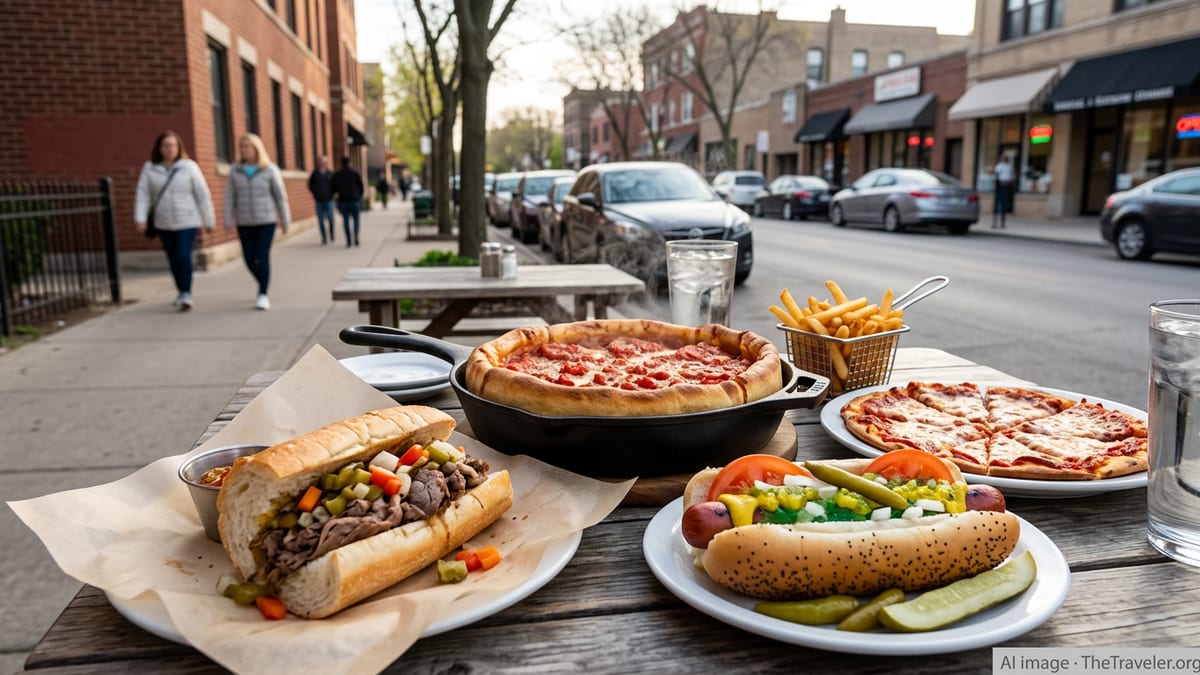
Deep-Dish Pizza: Chicago’s Famous Pie
Few foods are as closely linked to Illinois as Chicago-style deep-dish pizza. Developed in the mid twentieth century and popularized by well known pizzerias in the city, deep-dish takes the familiar elements of pizza and reimagines them in a pan that looks more like it should hold a pie than a thin crust. A high, buttery crust forms the walls of the pizza, which is filled with thick layers of mozzarella cheese and toppings, then finished with a chunky, seasoned tomato sauce on top. The result is rich, knife-and-fork food designed for lingering meals rather than quick slices on a street corner.
Deep-dish is also a window into Chicago’s immigrant past. Italian American restaurateurs built a style that suited Midwestern appetites and the hearty expectations of a working city. Today, chains that originated in Chicago specialize in deep-dish and stuffed pizza, sending par-baked pies around the country and giving travelers familiar names to seek out when they land. In the city, expect to wait for your meal, since a deep-dish pizza can take 30 minutes or more to bake. Most dining rooms encourage you to settle in with a salad, local beer, or soft drink while you watch the pies emerge from the ovens.
For visitors, the key is to plan deep-dish as a full meal, not a quick snack between museums. One slice can be as filling as two or three pieces of thin crust, so ordering conservatively is wise. Many pizzerias offer individual pans or allow you to split a signature deep-dish with the table. If you are road-tripping beyond Chicago, you will still find deep-dish on menus across Illinois, from college towns to highway exits, a sign of how thoroughly this style has become part of the state’s identity.
Italian Beef: A Chicago Classic With Immigrant Roots
The Italian beef sandwich is another defining taste of Illinois, especially in and around Chicago. It traces its origins to Italian immigrant communities near the old Union Stock Yards in the early twentieth century, where resourceful home cooks stretched inexpensive cuts of beef by slow roasting them with garlic and spices, slicing the meat thin, and soaking it in a savory jus. That technique became the backbone of the sandwich now seen as one of Chicago’s signature street foods, served in standing-room-only counters, drive-ins, and neighborhood joints.
A classic Italian beef starts with rolls that can withstand heat and moisture, typically sturdy Italian or French bread. Slices of beef, cooked until tender and deeply seasoned, are piled high and dipped or “baptized” in the cooking juices, depending on how wet a customer wants the sandwich. Toppings are simple but crucial. Many locals choose spicy giardiniera, a chopped pickle of peppers and vegetables in oil, while others prefer sweet green bell peppers sautéed until soft. Diners quickly learn the house language: “hot” for giardiniera, “sweet” for sautéed peppers, and “combo” for a layer of Italian sausage tucked under the beef.
Today, Italian beef is served far beyond the original stockyard neighborhoods. Family-owned stands that opened in the mid twentieth century remain local institutions, and several chains built on the sandwich have expanded throughout the Chicago area and into other states. Food halls, stadium concession stands, and even museum cafes in Illinois now feature Italian beef alongside hot dogs and pizza, an indication of how this once humble creation has become a statewide ambassador. For travelers, it is a chance to taste a dish that grew directly out of the city’s labor history and immigrant ingenuity.
Ordering Italian beef in Illinois is also about embracing a bit of controlled chaos. A fully dipped sandwich can be messy, the jus soaking into the bread and pooling on the wrapper. Many locals will tell you to lean forward, keep your elbows on the counter, and accept that this is not a white-shirt meal. That slightly unpolished, practical approach is part of the sandwich’s appeal and a reflection of the city that created it.
Chicago-Style Hot Dogs, Sausage, and Encased-Meat Culture
Alongside deep-dish pizza and Italian beef, Chicago-style hot dogs anchor the canon of Illinois food. A classic Chicago dog typically features an all-beef frank on a steamed poppy seed bun, topped with yellow mustard, bright green relish, chopped white onions, tomato wedges, sport peppers, a pickle spear, and a shake of celery salt. Ketchup is notably absent, the subject of both jokes and sincere declarations at hot dog stands. This “dragged through the garden” style reflects the influence of Central and Eastern European sausage makers combined with a Midwestern love of abundant toppings.
Across the Chicago region and throughout northern Illinois, hot dog stands and drive-ins have evolved into multipurpose comfort-food counters. Menus often list not only dogs, but also Italian beef, Polish sausage, burgers, gyros, pizza puffs, and fries. Institutions that have operated for decades are woven into neighborhood routines, serving construction crews at lunch and families after youth sports games. National brands that produce the franks and sausages prominently celebrate their Chicago roots, and some have even created halls of fame to honor long-standing stands and beef shops that serve their products.
Encased meats in Illinois extend beyond the classic hot dog. The Maxwell Street Polish, a sausage grilled or griddled and served with grilled onions and mustard, is a favorite among Chicagoans, especially those who remember the street markets where it rose to prominence. Italian sausage sandwiches, often paired with giardiniera or sweet peppers, are another staple, as are “combo” sandwiches that stack sausage under Italian beef for those who cannot choose between the two. Visitors who focus only on deep-dish miss this everyday side of Illinois food culture, where a simple sausage on a bun can carry just as much local pride.
For travelers seeking a taste of this culture, it pays to explore beyond downtown Chicago. Suburban main roads, small towns near commuter rail lines, and older strip malls often hide long-running hot dog and beef stands. The experience is as much about the atmosphere as the food: hand-lettered menu boards, open kitchens, and a steady stream of regulars placing orders in a shorthand that outsiders quickly learn by ear.
Beyond Deep-Dish: Tavern-Style Pizza and Regional Pies
While deep-dish captures headlines, many Illinois residents reach for another style on a regular weeknight: tavern-style pizza. This thin, crisp pizza is typically baked on a flat pan or directly on the oven deck, with a crackery crust that runs right to the edge of the pan. Instead of wedges, it is cut into small squares, sometimes called “party cut,” making it easy to share around a bar table or living room. Sausage, green peppers, mushrooms, and onions are common toppings, and in many neighborhoods, families have long-running allegiances to specific tavern-style pizzerias.
In practice, tavern-style might be the most widely eaten pizza in Illinois. It suits gatherings where diners graze over time rather than sit down for a single heavy slice. It also reflects the state’s bar culture, where early pizzerias often operated out of taverns and relied on simple ovens to turn out food that would keep patrons lingering over another round. Visitors who only sample deep-dish miss this everyday pizza that locals order for birthdays, late-night snacks, and casual Friday dinners.
Regional variations appear as you travel away from Chicago. In central Illinois, some pizzerias are known for wafer-thin crusts with a distinct crunch, a style that sometimes comes with sweet-leaning tomato sauce. College towns along the interstates often have local chains that blend tavern-style with their own flourishes: extra cheese, distinctive sausage blends, or house seasoning sprinkled over the top after baking. In river towns along the Mississippi and Ohio, pizza menus share space with barbecue and catfish, a reminder that Illinois sits at a crossroads of culinary traditions.
For visitors, ordering pizza in Illinois is an opportunity to compare these styles side by side. One night might be reserved for a classic deep-dish experience in Chicago, while another is devoted to a neighborhood tavern-style pie in a smaller city. By asking locals what they actually eat on a regular basis, you will likely be directed to thin, square-cut pizzas that seldom appear in tourist brochures but quietly define the state’s palate.
Springfield’s Horseshoe and Downstate Comfort Foods
South of Chicago, the Illinois capital of Springfield has its own claim to fame in the form of the horseshoe sandwich. Created in Springfield in the first half of the twentieth century, the horseshoe is an open-faced dish that starts with thick slices of toasted bread topped with meat, usually hamburger patties, though the original version used ham. A generous mound of French fries is piled on top, and the entire plate is smothered in a rich cheese sauce. A smaller version, the “ponyshoe,” offers a more manageable portion for diners who still have sightseeing to do afterward.
The horseshoe reflects the state’s love of hearty, diner-style fare, especially in central Illinois. Restaurants throughout Springfield feature it on their menus, often with variations that swap in chicken, pork tenderloin, or even breakfast ingredients. Local tourism materials frequently highlight the horseshoe as a must-try regional dish, and many residents have strong opinions about which cafe or pub serves the best version. For travelers, it is best approached with an empty stomach and the understanding that this is a fork-and-knife, comfort-food experience.
Elsewhere in downstate Illinois, you will encounter other regional specialties. Breaded pork tenderloin sandwiches, which resemble a schnitzel on a bun, are common at small-town diners and drive-ins. The tenderloin cutlet is pounded thin, breaded, fried until crisp, and often extends far beyond the edges of the bun. In farming communities, it is a natural fit, turning a local staple into a portable meal. Maid-rite style loose meat sandwiches, essentially seasoned crumbled beef on a bun, appear in a handful of central Illinois locations, echoing a style popular across parts of the Midwest.
Barbecue also gains ground as you travel toward southern Illinois. Roadside stands and simple restaurants serve pork steaks, rib tips, pulled pork, and smoked chicken, often accompanied by regional sides such as slaw, baked beans, and potato salad. The further south you go, the more the menu reflects influences from neighboring states, especially Missouri and Kentucky. For travelers willing to diverge from the interstate for a few miles, these independent spots provide a distinctly different taste of Illinois from what you will find along Chicago’s lakefront.
Sweet Treats and Snacks: Popcorn, Ice Cream, and More
Illinois’ savory dishes often grab the spotlight, but the state has a robust sweet tooth and snacking culture as well. In Chicago, caramel and cheese popcorn tossed together into a single sweet-salty mix has become a recognizable treat, available from long-running popcorn shops and shipped around the country as a taste of the city. On hot summer days, Italian ice from neighborhood stands draws long lines, and colorful soft drinks with nostalgic branding remain part of the city’s culinary backdrop.
Classic ice cream parlors and custard stands dot suburban and small-town Illinois, some operating as seasonal walk-up windows and others as year-round family destinations. In Chicago, layered ice cream cakes and technicolor cones have long been associated with celebratory outings, while bakeries in ethnic neighborhoods supply everything from Polish paczki to Mexican pan dulce. Many of these sweets arrived with immigrant communities that settled across the state and maintained their baking traditions.
Desserts also appear on the menus of restaurants best known for pizza and beef. It is common to find slices of cheesecake, tiramisu, chocolate cake, or simple soft-serve ice cream listed alongside Italian beef and hot dogs. Some Chicago-based brands known for cheesecake or brownies emphasize their city roots when they ship nationally, reminding customers that Illinois’ food story includes indulgent finales as well as main courses. Travelers who leave room for dessert can use these treats as a relaxed way to linger in a neighborhood after a big meal.
Snack culture extends into the savory realm as well. Potato chips seasoned with regional flavors, small bags of cheese curds, and fried appetizers like mozzarella sticks and onion rings show up at many independent bars and drive-ins. Together, they form the supporting cast to Illinois’ star dishes, the sort of casual bites that locals often take for granted but visitors remember when they think back on a favorite afternoon in a neighborhood bar or roadside stand.
How to Eat Like a Local in Illinois
Understanding what to eat in Illinois is only half the equation. The other half is understanding how locals approach these meals. In Chicago, deep-dish pizza is often reserved for special occasions or for entertaining out-of-town guests, while thin tavern-style pies and takeout from neighborhood beef stands do the weeknight heavy lifting. Residents might grab a Chicago-style dog or Polish sausage for a quick lunch, but they are just as likely to stop by the same stand for Italian ice or a burger later in the week. Regulars at these places often have their orders down to a few clipped phrases, evidence of long familiarity with the menu.
Downstate, diners and drive-ins act as social anchors as much as restaurants. Families gather around horseshoes, pork tenderloin sandwiches, and baskets of fries while catching up on local news. In smaller communities, the same restaurant may serve as a breakfast spot, lunch counter, and Friday night meeting place. Menus can be surprisingly broad, reflecting the need to offer pizza, burgers, fried chicken, and a few salads under one roof. Visitors who take the time to eat where locals do, rather than defaulting to chain restaurants along the highway, often come away with a better feel for Illinois life.
For travelers, a few practical habits help. First, plan at least one sit-down deep-dish meal in Chicago and build time into your day for the long baking time. Second, seek out an Italian beef stand where you can watch the sandwiches being assembled and learn the vocabulary of “hot,” “sweet,” and “dipped.” Third, ask residents where they would send a friend for a tavern-style pizza or a horseshoe, and follow their lead even if it means a short drive from the main tourist areas. Finally, be open to snacks and desserts that appear in display cases and on sandwich boards; some of Illinois’ most memorable flavors are not listed in guidebooks at all.
Illinois cuisine may be rooted in working-class dishes and immigrant ingenuity, but it continues to evolve. Newer restaurants experiment with vegetarian takes on Italian beef, lighter cheese sauces for horseshoes, and updated versions of classic desserts, all while acknowledging the originals that inspired them. Tasting the state today means encountering both tradition and adaptation on the same plate.
The Takeaway
From the towering walls of a deep-dish pizza in Chicago to the overflowing horseshoe plates of Springfield, Illinois offers a food culture shaped by industry, immigration, and Midwestern appetite. Italian beef sandwiches carry the legacy of stockyard workers and frugal home cooks, while Chicago-style hot dogs and sausages reflect a century of street-corner ingenuity. Tavern-style pizza, pork tenderloin sandwiches, popcorn mixes, and neighborhood sweets round out a picture that reaches well beyond a single famous dish.
To eat well in Illinois is to appreciate both the iconic and the everyday. It means planning a deep-dish outing, but also ducking into family-run stands, diners, and taverns where regulars know the staff by name. It means respecting local rituals, from the absence of ketchup on hot dogs to the messy joy of a fully dipped beef sandwich. Above all, it means recognizing that these foods tell the story of a state built by people who needed hearty, affordable meals and turned that necessity into lasting culinary traditions.
Whether you are here for a long Chicago city break or a road trip that winds through small towns and farm country, make time to sit down with a slice, a sandwich, or a generously loaded plate. In Illinois, the food is not just fuel for the journey. It is the journey.
FAQ
Q1. Is deep-dish pizza what locals in Illinois eat most often?
Many Illinois residents enjoy deep-dish for special occasions or with visitors, but they more commonly order thin, tavern-style pizza for everyday meals.
Q2. How should I order an Italian beef sandwich like a local?
Specify how juicy you want it and your toppings. For example, you might say “beef, hot, dipped” for giardiniera and a fully soaked roll.
Q3. Can I find authentic Chicago-style hot dogs outside Chicago?
Yes. Many suburbs and northern Illinois towns have long-running hot dog stands, and some downstate cities feature Chicago-style dogs on broader menus.
Q4. What is the difference between deep-dish and stuffed pizza?
Deep-dish has cheese and toppings layered inside a tall crust with sauce on top, while stuffed pizza adds an extra thin dough layer over the filling before the sauce.
Q5. Where can I try a horseshoe sandwich in Illinois?
The horseshoe is most closely associated with Springfield, where many diners, pubs, and cafes serve their own versions, often listed prominently on the menu.
Q6. Are there vegetarian options for Italian beef or Chicago classics?
Many modern spots now offer plant-based sausages, meatless “beef” fillings, and vegetable-focused deep-dish or tavern-style pizzas to accommodate vegetarian diners.
Q7. Is it considered rude to ask for ketchup on a Chicago-style hot dog?
Locals strongly prefer their classic dog without ketchup, and some stands refuse to serve it that way, but visitors are unlikely to offend anyone by asking politely.
Q8. Do I need reservations for popular deep-dish pizzerias in Chicago?
Reservations are advisable at busy times, especially weekends and evenings, since baking deep-dish takes longer and dining rooms can fill quickly.
Q9. What time of day do locals usually eat Italian beef or hot dogs?
Italian beef and hot dogs are common for lunch and casual dinners, though many stands stay open late to serve evening crowds and post-game customers.
Q10. Can I bring Illinois specialties home as gifts or souvenirs?
Several Chicago-based companies ship deep-dish pizza, Italian beef kits, popcorn, and desserts, and some local shops sell packaged items suitable for travel.