

Iowa’s food story is written in pork, corn, and sweets that show up at church basements, small-town cafes, and county fairgrounds. Travelers may come for rolling fields and big-sky drives, but they often remember the state for its overhanging pork tenderloin sandwiches, just-picked sweet corn, and nostalgic desserts that taste like someone’s grandma is still in the kitchen. Eating your way across Iowa is less about chasing reservations and more about pulling up a chair at local institutions where the menu reflects the surrounding fields.
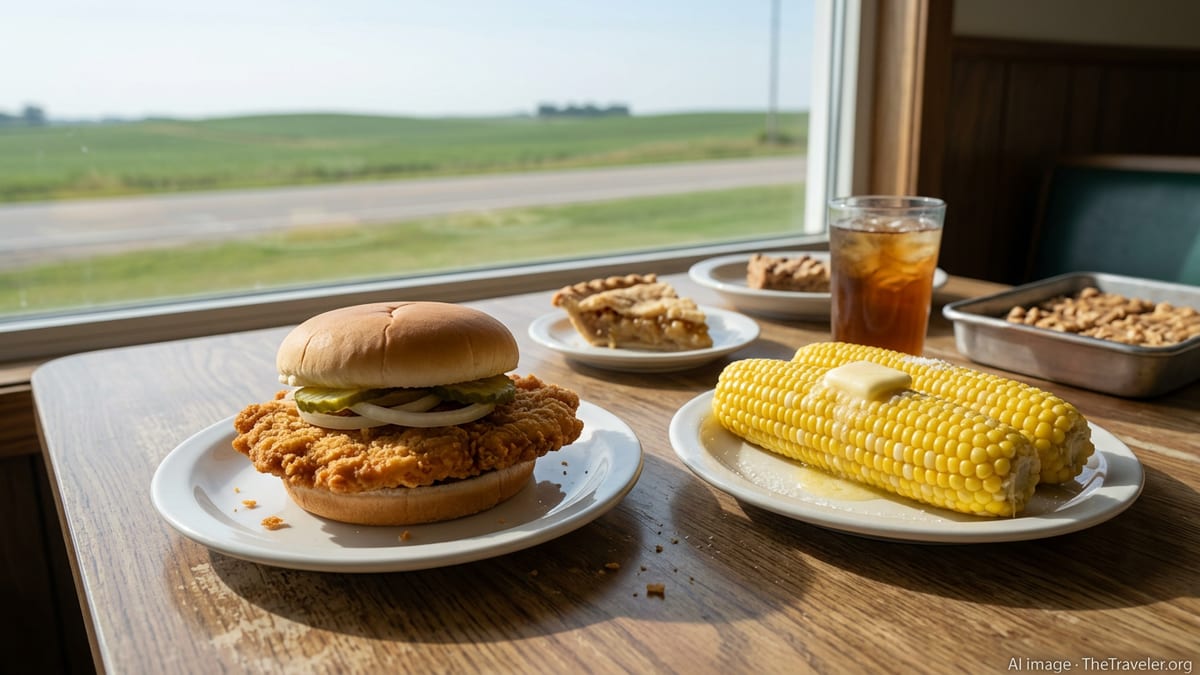
Iowa on a Plate: Pork, Corn, and Comfort
Drive almost any highway in Iowa and the landscape quickly explains the menu. The state consistently ranks among the country’s leaders in both pork and corn production, and that agricultural muscle becomes visible on every small-town cafe chalkboard. Locals treat pork tenderloin sandwiches, sweet corn, loose-meat burgers, and pies as essential food groups rather than passing specialties.
This is unfussy, generous food shaped by farm schedules and community events rather than trends. Portions tend to be large, seasoning leans comforting instead of experimental, and recipes are often handed down through families or shared at potlucks. Travelers who embrace that straightforward spirit will find that Iowa’s signature dishes offer a window into how the state works, eats, and celebrates.
In recent years, regional tourism campaigns and producer groups have formalized that identity with food trails and friendly competitions. The Iowa Pork Producers Association, for example, runs an annual contest to name the state’s best breaded pork tenderloin sandwich, while local festivals spotlight sweet corn at the height of summer. These efforts make it easier than ever for visitors to taste the classics in their natural habitat, from Main Street taverns to roadside farm stands.
At the heart of it all are three pillars: the breaded pork tenderloin sandwich that practically engulfs its bun, peak-season sweet corn eaten hours after harvest, and an array of local desserts that feel pulled from a church cookbook. Understanding where and how to eat each one is the key to experiencing Iowa like a local.
Pork Tenderloin Sandwiches: The State’s Unofficial Icon
The breaded pork tenderloin sandwich is the dish most closely associated with Iowa in the minds of many travelers. While neighboring Indiana often claims credit for inventing the sandwich, Iowans have arguably turned it into a full-fledged culture, complete with road trips, social media debates, and annual awards to determine who does it best. The basic idea is simple: a boneless pork loin cutlet is pounded thin, breaded, deep-fried until crisp, and served on a bun with classic toppings such as pickles, onion, mustard, or mayonnaise.
Part of the visual drama comes from the size. In many Iowa cafes, the tenderloin will fan out past the bun on all sides, creating a comical-looking disk of crunchy pork with a small round of bread in the center. Locals have strong opinions about how thin the meat should be, how coarse the breading is, and whether the sandwich should showcase the pork or the crust. Many Iowa versions focus on a moderate thickness that preserves juiciness while still delivering the shattering crunch that devotees expect.
Quality tenderloins usually start with fresh, local pork, a nod to Iowa’s role as a national leader in hog production. The cutlet is trimmed, sometimes marinated in buttermilk, then dredged in a seasoned mixture that might include flour, cracker crumbs, or cornmeal. From there it goes straight into hot oil, emerging a rich golden color with frilled, crispy edges that become the best bites of the sandwich. Most spots keep toppings simple, letting the pork carry the flavor rather than burying it under sauces.
For visitors, the pork tenderloin sandwich doubles as a geographic scavenger hunt. Statewide competitions and food trails highlight standout versions in small towns and regional hubs, often in places that otherwise would fly under a traveler’s radar. Ordering one is more than a meal choice; it is a way of tapping into Iowa’s pride in its pork industry and the mom-and-pop restaurants that depend on it.
How and Where to Eat a Tenderloin Like a Local
Approaching an Iowa pork tenderloin sandwich for the first time can feel like a minor engineering challenge. The cutlet often outgrows its bun, which means you will see locals tackling it in a few different ways. Some fold the overhanging edges back onto the bun to create a thicker stack of meat, while others nibble around the perimeter before committing to a traditional sandwich bite. There is no single correct method, but there is a shared understanding that eating a tenderloin should be a leisurely, messy affair.
Condiments tend to be handled with a light touch. A swipe of yellow mustard, a few dill pickle chips, raw onions, and maybe a slice of tomato or leaf of lettuce are the standard. Many small-town cafes resist the urge to build elaborate versions, arguing that too many toppings turn the focus away from the pork. Crispy crinkle-cut fries, coleslaw, or potato salad are common sidekicks, and iced tea or a local beer rounds out the plate for those who want the full Midwestern experience.
Travelers who want to dive deeper can follow organized trails that map out standout tenderloin stops across the state. These routes often highlight family-owned diners, taverns, and drive-ins that have been breading and frying cutlets for decades. Winning or placing in the statewide tenderloin contest can transform a modest cafe into a minor pilgrimage site, with weekend travelers willing to drive hours for a plate. Even without following a formal trail, a simple rule of thumb works well: if a small-town menu devotes prime space to its tenderloin, it is usually worth ordering.
Timing also matters. Tenderloin sandwiches are available year-round, but many restaurants see peak demand around football season and during events like county fairs, local festivals, or the Iowa State Fair in August. Travelers visiting then will find tenderloins served in everything from air-conditioned dining rooms to bustling concession stands, creating countless opportunities to compare styles and decide which version deserves personal “best in state” status.
Sweet Corn: Iowa’s Taste of High Summer
If pork is Iowa’s year-round anchor, sweet corn is its seasonal love affair. When summer arrives and the fields hit their stride, roadside stands pop up along rural highways and in town parking lots, stacked with ears picked that morning. Many Iowans mark the year by the first truly good ear of sweet corn, which typically appears in July and continues into August, depending on weather and region.
The appeal lies in freshness as much as flavor. At its best, Iowa sweet corn is crisp yet tender, with kernels that burst rather than mush. Locals often insist on cooking it the day it is picked, pointing out that sweetness declines the longer an ear sits. That urgency shapes the whole experience. It is common for families to buy large bags of corn, cook more than they can eat at once, and then freeze the extra kernels to carry a bit of summer through the winter months.
Preparation is intentionally simple. Home cooks typically boil or steam the ears for just a few minutes, then serve them slathered with butter and a sprinkle of salt. Some prefer to grill the corn in its husk, charring the outer leaves until they peel back to reveal smoky, tender kernels. County fairs and local festivals add their own twists, from giant kettles of boiling corn to ears rolled in seasoned butter at concession stands. What remains constant is the emphasis on letting the natural sweetness take the lead.
Visitors chasing peak sweet corn should aim for a mid to late summer trip and keep an eye out for handwritten signs advertising fresh corn in small towns or at farmers markets. Grocery stores also carry local ears during the season, but the most memorable experiences often happen when you buy directly from a grower standing beside a pickup truck piled high with burlap sacks and plastic-tied bundles.
Beyond the Cob: Corn in Every Corner of the Menu
While sweet corn in its husk is the seasonal star, corn in general is deeply woven into Iowa’s food culture. Field corn, which covers much of the countryside, feeds the state’s hogs and fuels a major ethanol industry, shaping everything from pork production to the price of gas. On the plate, that connection shows up in subtle ways, from cornmeal breadings on fried foods to gravies and casseroles thickened with corn-based ingredients.
Some home kitchens and diners incorporate sweet corn into chowders, casseroles, and skillet dishes that appear at potlucks and church suppers. Creamed corn, corn pudding, and corn-laced cornbread can share table space with meats and salads during summer gatherings. In late summer and early fall, cooks who have frozen kernels from peak season might stir them into soups or fold them into savory bakes, extending the taste of July well into the school year.
Corn also helps define the fair food scene. At large events, including the Iowa State Fair in August, vendors serve corn dogs, fritters, and other cornmeal-battered snacks alongside pork chops on sticks and other hearty fare. While not every dish screams “Iowa corn” by name, many of them rely on the state’s grain harvest in some form, whether as cornmeal, oil, or feed that raised the animals.
For travelers, understanding corn’s role in the local economy adds context to the simple act of biting into a grilled ear or eating a breaded tenderloin. Each plate reflects a wider agricultural system in which cornfields, hog barns, and processing plants all support the meals appearing on small-town tables and city restaurant menus.
Local Desserts: Pies, Bars, and Church Basement Classics
After a plate of fried pork or a feast of sweet corn, dessert in Iowa often arrives in generous, old-fashioned style. Pies remain a cornerstone of the state’s sweet tradition, with flavors shifting through the seasons. Early summer might feature strawberry and rhubarb, mid-summer brings blueberry and mixed berry, and fall leans toward apple and pumpkin. Many cafes keep a rotating pie case near the counter, where thick wedges rest under glass domes until the next customer claims them.
Beyond fruit pies, Iowa has nurtured its own regional specialties. Sour cream raisin pie, for example, appears on menus and in community cookbooks across the state. The custard-like filling balances tangy dairy with warm spices and plump raisins, often topped with a layer of whipped cream or meringue. It is a nostalgic flavor that may surprise travelers expecting only standard diner options, and it serves as a reminder of the state’s strong farm and baking traditions.
Bar desserts are another Iowa hallmark. Scotcheroos, a beloved Midwestern treat, are especially popular at potlucks, bake sales, and school events. Built on a base of crispy rice cereal mixed with a peanut butter and sugar syrup, then topped with a glossy blend of melted chocolate and butterscotch chips, they require no baking and travel well in pans. Other pan bars, from oatmeal fudge to layered cookie bars, often appear on dessert tables beside plates of cookies and slices of cake.
Many of these sweets trace their popularity to church functions, 4-H gatherings, and family reunions, where recipes were traded and perfected over time. Travelers willing to seek out small-town cafes, local bakeries, or community fundraisers are likely to encounter desserts that seldom make national lists but linger in memory long after an Iowa road trip ends.
Dessert Destinations: Where to Find Iowa’s Sweet Side
While you can encounter excellent desserts almost anywhere food is served in Iowa, certain settings are especially rewarding for visitors. Classic small-town cafes often double as dessert showcases, with chalkboards advertising daily pies and servers who can recite the fillings from memory. In many communities, these spots serve as informal gathering places where farmers, teachers, and retirees meet over coffee and a shared slice of something sweet.
County fairs and the Iowa State Fair add another layer to the dessert landscape. Alongside funnel cakes and corn dogs, you will find stands selling pie slices, homemade ice cream, and occasionally more elaborate creations that change from year to year. Some church groups and community organizations run their own food stands during these events, serving recipes that rarely appear in restaurants but remain central to local traditions.
Bakeries and independent coffee shops across the state have also embraced Iowa-flavored nostalgia, offering updated versions of classic bars and pies. You might find a modern bakery showcasing scotcheroos next to artisan pastries or tucking sour cream raisin pie beside more contemporary flavors. This blending of old and new reflects a broader trend in Iowa dining, where chefs and bakers acknowledge the state’s heritage dishes while giving them fresh attention.
For travelers, the best strategy is often simple: when you enter a cafe or bakery, ask what dessert they are proudest of that day. Whether it is a crumble-topped fruit pie made with locally grown berries or a tray of still-warm bars cooling in the back, you will likely end up tasting a sweet snapshot of the community.
Planning Your Iowa Food Journey
Arranging a trip around Iowa’s signature foods is less about securing reservations and more about timing, curiosity, and flexibility. Pork tenderloin sandwiches are available year-round, but planning routes through smaller towns at lunchtime or early dinner increases the chances of finding family-owned spots where the fryer runs steadily and the tenderloins never sit long. Many such places keep limited hours or close on Sundays and Mondays, so checking schedules before you drive can save disappointment.
Sweet corn is far more seasonal. For travelers determined to experience corn at its peak, a visit between mid-July and mid-August offers the best odds of finding just-picked ears at farm stands and markets. During this stretch, even grocery stores often stack local corn near the entrance, sometimes with hand-lettered signs indicating the farm it came from. If you are staying with friends or renting a kitchen-equipped place, buying a dozen ears and cooking them the same day becomes one of the simplest, most memorable meals of an Iowa summer.
Desserts thread through the calendar. Pies rotate with whatever fruit is in season, bar desserts appear at school events and bake sales throughout the year, and holiday periods bring an uptick in cookies and special-occasion sweets. Travelers visiting during the Iowa State Fair in August or during local town festivals will likely find temporary dessert stands run by churches or civic groups, each with its own specialties. These events offer a chance to taste recipes that have circulated through communities for generations.
Transportation also shapes your eating options. While larger cities such as Des Moines, Cedar Rapids, and Iowa City have growing restaurant scenes that put creative spins on local ingredients, many of the classic tenderloins, sweet corn stands, and old-fashioned desserts live in small towns and rural areas. Renting a car and embracing back roads makes it easier to pull over for an intriguing cafe sign or a roadside table piled with corn, turning the journey itself into an ongoing tasting tour.
The Takeaway
Iowa’s defining foods do not depend on spectacle or novelty. Instead, they rely on solid local ingredients, repetition over time, and a deep connection between what grows in the surrounding fields and what appears on the plate. The towering pork tenderloin sandwich, the ear of sweet corn dripping butter in the high heat of summer, and the slice of pie or square of scotcheroo shared over coffee each tell part of that story.
For travelers, eating in Iowa is an invitation to slow down and appreciate everyday rituals. You might find yourself comparing tenderloins at different cafes, timing a road trip to hit sweet corn season, or planning a detour for a bakery that still uses recipes pulled from weathered church cookbooks. Along the way, conversations with servers, farmers, and fellow diners will fill in the details that no menu can fully capture.
Whether you are crossing the state on the interstate or meandering along county roads, let hunger guide you into the cafes, stands, and fairgrounds where Iowans gather. Order the pork tenderloin, add a side of local sweet corn when it is in season, and save room for dessert. Those simple choices add up to a portrait of Iowa that lingers long after the last bite.
FAQ
Q1. What exactly is an Iowa pork tenderloin sandwich?
A pork tenderloin sandwich in Iowa features a boneless pork loin cutlet that is pounded thin, breaded, deep-fried, and served on a bun with simple toppings such as pickles, onions, and mustard.
Q2. How is an Iowa pork tenderloin different from versions in other states?
Iowa versions often aim for a balance between crunch and juiciness, with a moderately thin cutlet and a lighter breading that showcases the flavor of the pork rather than just the crust.
Q3. When is the best time to visit Iowa for sweet corn?
The peak sweet corn season typically runs from mid-July through much of August, depending on weather. During this window, you will find fresh local corn at roadside stands and farmers markets.
Q4. How should I order a pork tenderloin sandwich like a local?
Most locals keep it simple, adding mustard, pickles, onion, and maybe lettuce or tomato. Many people also accept that the meat will hang over the bun and eat the edges with a fork or by hand.
Q5. Are Iowa’s signature foods easy to find in cities, or do I need to visit small towns?
Both offer good options, but many classic tenderloins, sweet corn stands, and nostalgic desserts are found in small-town cafes, rural diners, and roadside spots, so having a car expands your choices.
Q6. What desserts should I look for in Iowa besides pie?
In addition to fruit and custard pies, keep an eye out for bar desserts such as scotcheroos, oatmeal or fudge bars, and other pan-baked treats common at potlucks and bake sales.
Q7. Can I find good Iowa sweet corn outside the peak summer season?
Fresh, local ears are limited to summer, but many Iowans freeze kernels from peak season. Some restaurants and home cooks use that frozen corn in soups and casseroles later in the year.
Q8. Is the pork tenderloin sandwich available year-round?
Yes. Unlike sweet corn, pork tenderloin sandwiches appear on menus throughout the year, though demand often rises during sports seasons, fairs, and local festivals.
Q9. Are there vegetarian or lighter options connected to Iowa’s food traditions?
While pork and corn dominate, many restaurants offer salads, vegetable sides, and meatless dishes. During sweet corn season, a simple meal of corn on the cob, salads, and local produce is common.
Q10. How can I plan a food-focused road trip around Iowa?
Pick a region, map out small towns with well-known cafes or diners, travel during sweet corn season if possible, and leave room in your schedule to stop at unexpected roadside stands and bakeries.