

Saudi Arabia’s food scene is as vast and varied as its deserts and mountains. From slow-cooked lamb in the southern highlands to fragrant rice dishes on the Red Sea coast, eating in the Kingdom is an invitation into people’s homes, histories, and hospitality. Whether you are visiting Riyadh’s sleek boulevards, Jeddah’s lantern-lit alleys, or small desert towns along the way, knowing what to order helps you taste more than just good flavors. It lets you experience how Saudis gather, celebrate, and welcome guests around the table.
Understanding Saudi Cuisine and How People Eat
Saudi cuisine reflects the country’s geography and trading history. In the central Najd region, food is hearty and wheat-based, built for life in an arid interior. On the coasts, fish, rice, and spices reveal long ties with Indian Ocean trade routes. Southern highlands such as Asir rely on mountain agriculture and traditional pit ovens, while the north draws on Bedouin traditions and Levantine influences. Across regions, you will find a shared love of rice, slow-cooked meats, flatbreads, and aromatic spices.
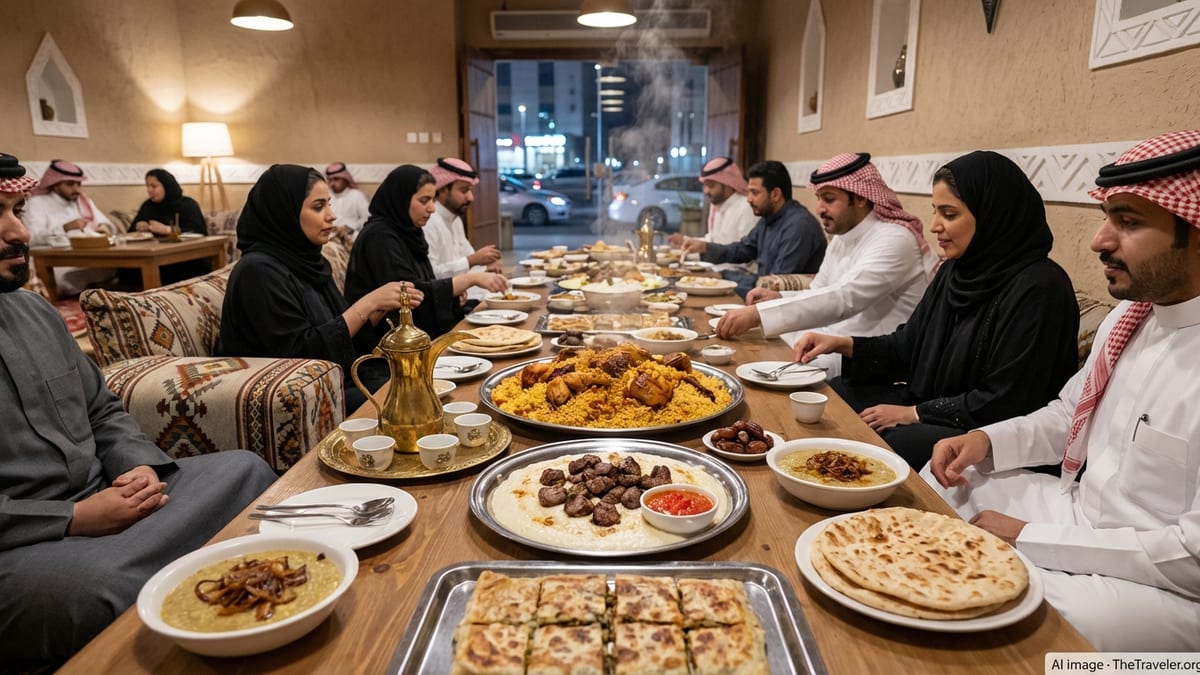
Meals are often communal. Many traditional dishes arrive on large shared platters placed in the center of a low table or mat. Diners may sit on cushions and eat with the right hand, shaping small bites of rice and meat together. In cities you will also find plenty of restaurants with tables and cutlery, but the spirit of sharing remains strong. If you are invited to a Saudi home, expect generous portions and repeated offers of second and third helpings.
Seasonality and religion shape what is eaten and when. During Ramadan, evenings come alive with dishes prepared specifically to break the fast, like nourishing wheat porridges and stuffed pancakes. On Eid holidays and family occasions, large rice and meat feasts dominate the menu. Weekends might revolve around slow-cooked lamb in the south or grilled fish in coastal cities. Understanding these rhythms helps you plan what to look for during your visit.
For travelers, the key is to arrive hungry and curious. Many of the most satisfying meals are found in small, family-run eateries or busy neighborhood joints with handwritten menus. If you are unsure what to order, ask staff for the “traditional” or “local” specialty. Saudis are often delighted to see visitors interested in their food culture and will point you toward regional favorites with pride.
Iconic Rice Feasts: Kabsa, Mandi, and Saleeg
If there is one dish you will see again and again in Saudi Arabia, it is kabsa. Often described as a national favorite, kabsa is a fragrant mixed rice dish prepared with basmati rice, meat such as chicken, lamb, goat, or occasionally fish, and a signature blend of spices. The rice absorbs flavors from the meat as it cooks, seasoned with cardamom, black lime, cinnamon, bay leaves, and other warm spices. The result is a platter of tender meat sitting on a bed of spiced, fluffy rice, usually garnished with toasted nuts and sometimes raisins.
Mandi is a close cousin to kabsa, with roots in Bedouin cooking. It also combines rice and meat, but the meat is traditionally slow-cooked in a underground clay or stone oven, allowing smoke and steam to infuse both meat and grains. In many Saudi cities, you will see restaurants advertising themselves as “mandi houses,” serving enormous communal platters where the lamb or chicken is so tender it falls away from the bone with minimal effort.
On the western side of the country, especially in the Hejaz region around Taif and the holy cities, you are likely to encounter saleeg. This dish resembles a creamy, white rice porridge, cooked slowly in broth and milk until it becomes soft and velvety. It is typically served with roasted chicken or meat laid on top and accompanied by a bright, spicy tomato sauce known locally as duggus or daggus. Slightly richer and more dairy-forward than kabsa, saleeg is especially popular in cooler weather and during family gatherings.
For travelers, these rice dishes are often the easiest entry point into Saudi cuisine. They are filling, widely available, and adaptable to different preferences, from milder spicing to more robust flavors. Ask which meat is freshest that day, and if you are dining with a group, share one large platter in the traditional style. It is not only practical but also a relaxed way to connect with local customs.
Najdi Comfort Food: Jareesh, Matazeez, and Margaouq
In the central Najd region, dishes built around wheat and slow-cooked stews provide deep comfort, particularly in winter and during Ramadan nights. One of the most beloved is jareesh, a porridge-like dish made from crushed wheat simmered with yogurt or milk, onions, and sometimes meat or tomatoes. The long cooking time breaks the grains down into a creamy, slightly tangy base that is then topped with caramelized onions and clarified butter. It is hearty without being heavy and showcases how simple grains can be transformed into a celebratory meal.
Matazeez is another Najdi favorite that will appeal to anyone who loves dumplings or pasta. Thin pieces of wheat dough are cut into small discs or squares and cooked directly in a bubbling stew of meat, vegetables, and tomato-based broth. As the dough simmers, it thickens the sauce and absorbs the stew’s flavor, creating a dish that feels like a cross between pasta and pot roast. Common vegetables include pumpkin, zucchini, eggplant, carrots, and potatoes, all perfumed with spices such as cumin, cinnamon, black lime, and mixed spice blends.
Closely related is margaouq, a dish in which discs of wheat dough are simmered in a similar meat and vegetable stew until they soften and become almost noodle-like. Both matazeez and margaouq are traditionally served in large shallow bowls for sharing. They are especially popular home-style dishes, but travelers can find them in traditional restaurants in Riyadh and other central cities if they seek out Najdi cuisine.
Sampling these dishes provides insight into the older agricultural life of the plateau, when wheat, barley, and hardy vegetables formed the basis of the diet. Compared to lighter coastal fare, Najdi comfort food is robust and deeply satisfying, ideal after a day exploring desert landscapes or museums in Riyadh.
Southern Specialties: Haneeth, Arika, and Mountain Flavors
Travel south to the highland regions such as Asir and Jazan and you will encounter an entirely different set of traditional flavors. The most famous is haneeth, a dish built around lamb or goat seasoned with spices and slow-cooked in a covered pit or specialized oven lined with hot stones. The meat is cooked for hours over gentle heat, which melts the fat and yields a smoky aroma and incredibly tender texture. It is usually served atop rice, with the cooking juices poured over for extra flavor.
In addition to pit-cooked meat, southern Saudi Arabia is known for wheat-based dishes like arika. This dish combines whole wheat flour or bread with ghee and honey, sometimes enriched further with dates. The mixture is kneaded or mashed together until it becomes a dense, nourishing paste, then served warm. Originally developed as a high-energy food for those working or traveling in harsh conditions, arika remains a beloved traditional breakfast or evening treat in many southern households.
The southern regions also make use of stone pots and clay ovens for slow-cooking meat and stews. In coastal Jazan, for example, local specialties include meat cooked in stone vessels that retain heat for a long time, while inland communities rely on grains, honey, and dairy from mountain farms. Herbs and chiles are more prominent than in some other parts of the country, adding freshness and heat to otherwise rich dishes.
Visitors to these regions often remark on the contrast between cool, green mountain scenery and the hearty, smoky flavors on the table. If you have the chance to visit smaller towns around Abha or Jazan, ask for local, traditional restaurants rather than generic international chains. You will likely be rewarded with haneeth served on rice, thick wheat dishes drizzled with honey, and perhaps a chance to watch meat being lowered into or lifted from a traditional pit oven.
Hejaz and Eastern Coast: From Mutabbaq to Seafood and Red Rice
On the Red Sea coast, especially in Jeddah and other Hijazi cities, the food reflects centuries of trade and pilgrimage. Perhaps the most famous street snack here is mutabbaq, a thin, pan-fried stuffed pancake whose name comes from the Arabic word for “folded.” Cook vendors stretch a very thin dough, fill it with a mixture of minced meat, eggs, leeks, and green onions, then fold it into a square and fry it until crisp. You can also find sweet versions with banana and cheese. Freshly cooked and cut into small squares, mutabbaq is a favorite evening snack, especially during Ramadan.
Hejaz is also the home of saleeg, the creamy rice dish introduced earlier, and a variety of seafood dishes drawing on the Red Sea’s abundant fish. In markets near the water, restaurants often allow you to choose your fish and how you would like it prepared, from grilled with simple spices to fried and served over seasoned rice. Spices show influences from the wider Indian Ocean region, including cloves, cardamom, and black pepper, reflecting long-standing trade connections.
Across the country in the Eastern Province, cuisine turns again toward the sea but with a different personality. Rice dishes may use a distinctive local red rice from the oasis region, giving a deeper color and nutty taste. Coastal towns serve grilled or spiced fish alongside rice cooked with caramelized onions and warming spices. You might encounter sayadiyah, in which fish and onions are cooked together with rice until the grains turn brown and deeply flavored.
For travelers, the takeaway is that Saudi Arabia’s coasts are excellent places for seafood and lively street snacks. In Jeddah’s historic districts, look for small stalls where locals queue up for mutabbaq in the evening, and follow their lead when ordering. On both coasts, avoid overfocusing on hotel buffets and make time for neighborhood restaurants that specialize in one or two dishes. That is where you are most likely to taste the region at its best.
Breakfast Traditions, Breads, and Everyday Street Food
Breakfast in Saudi Arabia can be remarkably simple or surprisingly elaborate, depending on where you are and who you are with. A typical local start to the day might involve tameez, a large, slightly chewy flatbread baked by slapping the dough onto the walls of a hot clay oven. Fresh from the oven, it is often eaten with honey, cream, or cheese, or paired with ful medames: slow-cooked fava beans mashed with olive oil, lemon, and spices. Tearing pieces of bread to scoop up the beans is the classic way to enjoy this combination.
Other breads you may encounter include khubz, a round flatbread used at nearly every meal, and thinner breads baked over domed metal griddles. In some neighborhoods you might see long queues forming at small bakeries early in the morning as people pick up fresh bread for the household. For travelers, these bakeries are an inexpensive and atmospheric way to grab breakfast; a couple of breads and a bowl of beans or lentils can feed more than one person.
Street food extends beyond breakfast. Mutabbaq is the most iconic example, but you will also find shawarma stands carving thin slices of spiced meat from vertical rotisseries, falafel shops frying chickpea fritters to order, and juice bars offering fresh fruit blends. In some regions, vendors sell simple fried breads, samosas, or stuffed pastries around prayer times or late into the night, particularly during festive seasons.
If you are unsure where to start, look for busy places where families and groups of friends are gathering. High turnover usually means fresher bread and fillings. Do not hesitate to ask staff what is most popular that day, and if you have dietary restrictions, explain them clearly. Many everyday dishes are naturally friendly to those avoiding certain ingredients, especially if you focus on beans, breads, grilled meats, and fresh salads.
Sweets, Dates, and the Saudi Coffee Ritual
No journey through Saudi food is complete without exploring its sweets and the ritual around coffee. Dates sit at the center of this world. The Kingdom is one of the world’s largest producers of dates, and markets display dozens of varieties, from soft and caramel-like to firm and chewy. Dates are a traditional way to break the fast during Ramadan and a standard offering to guests at any time of year. They are often served plain, but you might also find them stuffed with nuts or paired with ghee or tahini.
Alongside dates, you may encounter traditional sweets like maqshush, small buckwheat or wheat cakes drizzled with honey, sugar, and ghee, sometimes described as a national dessert. Other favorites include kleija, a spiced cookie commonly associated with central regions, and rich bread-based desserts that combine crumbled flatbread with bananas, cream, cheese, or honey. Many of these sweets began as ways to ensure no bread went to waste and have evolved into beloved treats for gatherings.
All of these pair naturally with Saudi coffee, known as qahwa or gahwa. Unlike darker roasts found elsewhere, Saudi coffee is made from lightly roasted Arabica beans, which give it a pale, golden color. It is gently spiced with cardamom and sometimes cloves or saffron, creating a fragrant, slightly bitter drink served in small handleless cups. A traditional brass or steel pot with a long spout, called a dallah, is used for brewing and pouring.
Coffee service in Saudi Arabia is highly ritualized. Traditionally, the youngest male host serves elders and guests first, standing while pouring as a sign of respect. Guests accept the cup with the right hand and sip slowly. When they have had enough, a small shake of the cup when handing it back signals that no refill is needed. This exchange can continue for several rounds and is less about caffeine than about hospitality. As a visitor, accepting at least one cup and trying a date or two alongside is a simple and appreciated way to participate in local culture.
Practical Tips for Eating in Saudi Arabia
Saudi Arabia is modernizing rapidly, and its food scene includes everything from high-end international restaurants to family-run canteens and roadside stalls. For most travelers, traditional food is easiest to find in local, mid-range restaurants rather than in hotel dining rooms. In cities, menus are often bilingual in Arabic and English, but in smaller towns you may rely more on photos or recommendations from staff.
Portions tend to be generous, especially for rice and meat dishes designed for sharing. If you are dining alone or as a couple, ask whether there is a “half portion” or smaller platter available. Otherwise, leftover rice can often be packed to take away. Eating with the right hand is customary when using bread or fingers, though using cutlery is widely accepted, especially in mixed or international settings. Dress codes vary from casual in many restaurants to more formal in upscale venues; modest clothing is generally appreciated.
Religious and cultural norms shape when and how restaurants operate. During Ramadan, many places close during daylight hours and open before sunset, staying busy late into the night. Eating or drinking in public during fasting hours is restricted, so plan accordingly. Alcohol is not served, but you will find a wide range of juices, coffee drinks, and non-alcoholic cocktails. If you have dietary restrictions, such as needing vegetarian or gluten-free options, you may need to ask more questions, but it is increasingly common for larger restaurants to accommodate special requests.
Finally, remember that food is a primary language of hospitality in Saudi Arabia. You might be offered extra dishes, fruit, or sweets even after you are full. It is acceptable to politely decline, but taking at least a small portion is often seen as a gesture of appreciation. By showing interest and openness, you are likely to find that meals become some of the most memorable parts of your time in the Kingdom.
FAQ
Q1. What is the national dish of Saudi Arabia?
Kabsa is widely regarded as a national favorite in Saudi Arabia, although some regions also proudly promote local specialties like saleeg or jareesh as emblematic dishes.
Q2. Is Saudi food very spicy?
Saudi dishes are usually aromatic rather than extremely hot. Spices like cardamom, cinnamon, and black lime are common, while strong chile heat is often served on the side as sauces or condiments.
Q3. Can I find vegetarian options in traditional Saudi cuisine?
Yes, especially in the form of breads, bean dishes such as ful medames, salads, and some rice or vegetable stews. However, many classic dishes center on meat, so it helps to ask specifically for vegetarian choices.
Q4. What should I try for a typical Saudi breakfast?
A classic local breakfast might include tameez flatbread with honey or cheese, ful medames (fava beans), and tea or light coffee. This combination is filling, affordable, and widely available.
Q5. How is Saudi coffee different from other types of Arabic coffee?
Saudi qahwa uses lightly roasted beans that result in a pale, golden brew, flavored with cardamom and sometimes saffron or cloves, and traditionally served in small handleless cups with dates.
Q6. Is it acceptable to eat with my hands in Saudi Arabia?
Yes, eating with the right hand is traditional for many dishes, especially when sharing large platters of rice or using bread as a scoop. In most restaurants, cutlery is also provided and acceptable to use.
Q7. Are there specific dishes I should look for during Ramadan?
During Ramadan, you will often see jareesh, wheat-based stews, soups, dates, and mutabbaq on menus at sunset and late-night meals, as they provide comfort and energy after fasting.
Q8. What is a good budget-friendly meal for travelers?
A filling and inexpensive option is to visit a neighborhood bakery for tameez or other fresh bread and pair it with ful medames or lentil dishes, which are both satisfying and widely available.
Q9. How important are dates in Saudi food culture?
Dates are central to Saudi hospitality and daily life, served to guests, used to break the Ramadan fast, and enjoyed as snacks or in desserts throughout the year.
Q10. Do restaurants in Saudi Arabia serve alcohol?
No, alcohol is not served in restaurants or public venues in Saudi Arabia. Instead, expect a wide selection of juices, coffee, tea, and non-alcoholic mixed drinks.