

The Netherlands may be better known for windmills and canals than for its cuisine, but Dutch food is quietly satisfying, rooted in farming traditions, the North Sea, and a long history of trade. For visitors, eating like a local means discovering humble dishes that have warmed generations of Dutch families, snacking your way through markets and brown cafes, and learning why the simplest bread lunch can feel like a cultural experience. This guide walks you through the traditional Dutch foods every visitor should try, where you are likely to find them, and how locals actually enjoy them today.
Understanding Dutch Food Culture
To understand what to eat in the Netherlands, it helps to know how and when the Dutch typically eat. Breakfast and lunch are usually light and centered around bread, with toppings such as cheese, cold cuts, peanut butter, or sweet sprinkles known as hagelslag. Eating out for breakfast is still less common than in many other European countries, though cafes in larger cities now increasingly offer it for visitors and younger locals.
Dinner is traditionally the heartiest meal of the day and often revolves around potatoes, seasonal vegetables, and meat or fish. Classic one-plate dishes like stamppot, where mashed potatoes are mixed with vegetables, developed from a culture of practicality and cold winters rather than culinary showmanship. Even as Dutch cities embrace global food trends, these straightforward, filling dishes remain the backbone of home cooking.
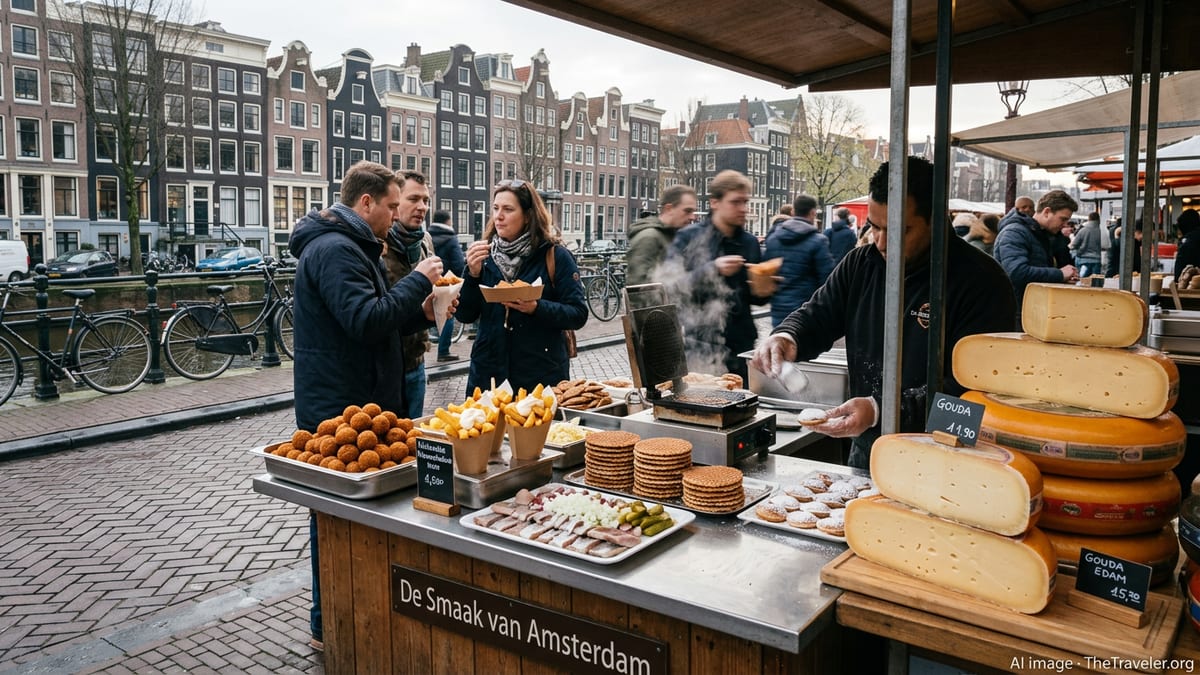
Snacking is a major part of everyday life. From train stations to bar terraces, you will see deep-fried snacks, fish stalls, and pastry counters offering quick bites at almost any hour. Many beloved Dutch foods are not full sit-down meals at all but snacks enjoyed with a beer, between errands, or on the go. As a visitor, you will experience Dutch food culture most vividly by grazing: a herring here, a stroopwafel there, and a portion of fries shared in the street.
Regional differences add another layer to the food story. Coastal provinces are known for seafood, the north for spiced cakes and biscuits, Limburg for fruit pies, and Brabant for sausage rolls. Even if you stay mostly in Amsterdam, Rotterdam, or Utrecht, you will come across specialties from across the country in markets, bakeries, and cafes.
Street Food Classics and Snack Bar Favorites
If you spend any time in Dutch cities, you will quickly meet the country’s deep-fried soul. The most iconic bar snack is bitterballen, small, breaded spheres filled with a thick, savory ragout made from beef or veal. They are served piping hot with mustard, often appearing on a shared platter when friends sit down for a drink. For many locals, biting into that crunchy shell and molten interior with a sip of beer is the taste of an evening terrace.
Closely related is the kroket, a cylindrical croquette with a similar ragout filling. You will find it at snack bars, in cafes, and even from coin-operated heated vending walls at some fast-food chains. Visitors often try a broodje kroket, a kroket tucked into a soft white roll with mustard, which is a very typical quick lunch for office workers and students.
Another unmistakably Dutch snack is the frikandel, a skinless, finely ground meat sausage that is deep-fried and usually served with mayonnaise, curry ketchup, and chopped onions in a combination known as “speciaal.” It is not elegant, but it is one of the most popular fast foods in the country and a true taste of everyday Dutch life. Many locals grow up eating these snacks at sports clubs and local cafetarias, which makes them as much about nostalgia as flavor.
When it comes to fries, the Netherlands takes Belgian-style chips and makes them its own. Thick-cut fries, or patat, are served in paper cones or trays with an array of sauces, the most classic being mayonnaise. You might also encounter combinations such as patat speciaal, topped with mayonnaise, curry ketchup, and onions, or patat oorlog, adding satay-style peanut sauce. Fries are a common late-night street food, but they are also perfectly acceptable as a mid-afternoon treat between sightseeing stops.
Fish and Seafood: From Raw Herring to Kibbeling
The Netherlands has a long coastline and a fishing tradition that shows up in everyday food. The most famous example is Hollandse Nieuwe haring, lightly cured raw herring. Traditionally, locals hold the fish by the tail, tilt back their heads, and take bites, though many visitors prefer it cut into pieces on a plate. It is typically served with chopped raw onions and sometimes pickles. You will find herring stands in cities and seaside towns, particularly in late spring and early summer when the new season’s catch arrives.
For a gentler introduction to Dutch seafood, try kibbeling. These are bite-sized pieces of white fish, often cod, dipped in a seasoned batter and deep-fried until crisp. They are served with garlic sauce or tartar-style dips and are easy to eat as you stroll. Fish stalls at markets or in harbor areas are the best places to try them, and they are especially popular on weekends when families are out shopping.
Smoked fish also has a place in the Dutch repertoire. Smoked eel, or gerookte paling, is a traditional delicacy, particularly along lakes and rivers where eel fishing used to be widespread. Today eel is more of a special-occasion or enthusiast’s choice due to environmental concerns and price, but you may still see it on menus, in fish shops, and at some markets. Smoked mackerel and herring appear more frequently and make flavorful sandwiches or simple plates with bread.
Along the North Sea coast, mussels and other shellfish feature prominently when in season. Mussels cooked in white wine or simple broths are especially associated with the southwest of the country, and many restaurants in coastal towns serve them with fries. While these dishes are also common in neighboring Belgium, enjoying them in a Dutch seaside setting fits perfectly with a maritime-focused trip.
Hearty Winter Dishes and Home-Style Comfort Food
Few things feel more Dutch than coming in from a damp winter day to a plate of stamppot. This classic comfort dish consists of mashed potatoes mixed with vegetables such as kale, sauerkraut, endive, or carrots and onions. It is usually served with a ring of smoked sausage, known as rookworst, and sometimes a pool of gravy in the middle. Stamppot is simple, heavy, and deeply tied to the country’s agrarian past, making it a must-try if you visit in the colder months.
Another winter favorite is erwtensoep, also known as snert, a thick pea soup made from split peas cooked down with pork, vegetables, and often smoked sausage. True snert is so dense that, in local lore, a spoon should almost stand upright in the bowl. It is commonly eaten with slices of rye bread and bacon or cheese. You will see it on menus in traditional cafes, skating venues in cold winters, and seasonal stands at markets.
Many traditional Dutch dinners follow the pattern of aardappels, groente, vlees, or potatoes, vegetables, and meat. Boiled or mashed potatoes are paired with seasonal vegetables and a piece of meat such as stewed beef, meatballs, or a pork chop, sometimes with a light gravy. While this style of eating may not be dramatically different from neighboring countries, it defines what many Dutch people mean when they talk about a “normal” home-cooked meal.
Regional comfort foods also contribute to the picture. In the southern province of Limburg, vlaai, a shallow fruit pie with a yeasted crust, often follows a hearty lunch or afternoon coffee. In Brabant, sausage rolls called worstenbroodjes, consisting of spiced meat wrapped in soft dough and baked golden, are traditionally eaten at celebrations but are now common snacks at bakeries and cafes. Tasting these dishes helps you see how local traditions vary within this relatively small country.
Sweet Treats, Patisserie, and Market Indulgences
No exploration of Dutch food is complete without dessert and pastries. Perhaps the best-known Dutch sweet is the stroopwafel, two thin, round waffles sandwiched with a layer of caramel-like syrup. Originating in the city of Gouda, stroopwafels are sold everywhere from supermarkets to open-air markets, where you can sometimes buy them hot off the press. Many people rest a stroopwafel over a cup of hot coffee or tea to soften the syrup slightly before eating.
Another beloved treat is poffertjes, mini yeasted pancakes that are soft, airy, and usually served in generous portions. They are cooked in a special pan with shallow indentations and are typically topped with a pat of butter and a blizzard of powdered sugar. You will often find poffertjes at fairs, markets, and dedicated pancake houses, especially in family-oriented destinations. Eating them outside at a market stall, with powdered sugar on your fingers, is one of the most charming food experiences you can have in the Netherlands.
The Dutch also have a fondness for festive sweets. Oliebollen, deep-fried dough balls sometimes studded with raisins or currants, are closely associated with New Year’s Eve but can appear at winter markets earlier in the season. Brightly iced tompouce, a rectangular pastry made of puff pastry layers and yellow custard with a pink or orange glaze, is an enduring bakery classic and a familiar sight in supermarket pastry cases. Eating one neatly is almost impossible, and many locals jokingly debate the best technique.
In the north, you may encounter ontbijtkoek, a dense, spiced breakfast cake sliced and eaten with a smear of butter, and speculaas, crisp spiced biscuits that appear especially around the Sinterklaas holiday in early December. These treats reflect the country’s long history with the spice trade, and their flavors of cinnamon, cloves, and nutmeg are unmistakably Dutch to many locals.
Bread, Cheese, and Everyday Dutch Meals
Although visitors often focus on the dramatic snacks and sweets, everyday Dutch eating is built on bread and cheese. A typical breakfast might consist of slices of bread with butter and toppings such as cheese, jam, peanut butter, or chocolate sprinkles. Hagelslag, the sprinkles in question, come in various forms, including milk chocolate, dark chocolate, and anise-flavored varieties. For many Dutch people, a slice of bread with hagelslag is a nostalgic taste of childhood and an entirely normal way to start the day.
Lunch often repeats the bread theme. Many office workers and students bring or buy simple cheese sandwiches, sometimes accompanied by a glass of milk or buttermilk. While this may sound unremarkable, it offers a window into a national preference for practicality and routine over long midday meals. As a visitor, trying a straightforward broodje kaas in a small cafe or bakery is a chance to experience this slice of daily life, especially outside the most touristy neighborhoods.
Dutch cheese itself deserves special attention. Varieties of Gouda and Edam dominate supermarket shelves, with options ranging from young and mild to aged and intensely nutty. Specialty cheese shops and market stalls showcase regional cheeses, flavored varieties with herbs or spices, and farmhouse cheeses produced on a smaller scale. Ordering a kaasplankje, a cheese board served with mustard and pickles, is a relaxed way to sample different styles along with a beer or glass of wine.
Hot dishes also punctuate everyday meals. Pancake restaurants, known as pannenkoekenhuizen, serve large, thin pancakes that can be topped with everything from bacon and cheese to apples and raisins. These pancakes are often eaten for lunch or a casual dinner rather than breakfast. Many families also enjoy simple oven dishes, pastas, and international foods, reflecting the multicultural reality of modern Dutch dining, but traditional bread-and-cheese staples remain firmly in place.
Indonesian Influence and the Dutch Rijsttafel
While not originally Dutch, Indonesian food occupies a special place in the culinary landscape of the Netherlands due to historical ties with Indonesia. Over time, dishes such as satay with peanut sauce, fried rice, and spicy sambals have become so integrated into everyday eating that many residents consider them an essential part of national cuisine. You will find Indonesian restaurants and takeaway spots in most cities, often serving both traditional dishes and Dutch adaptations.
The most distinctive expression of this influence is the rijsttafel, which translates to “rice table.” This elaborate meal consists of many small dishes, often including different curries, vegetables, sambals, satay skewers, and fried snacks, all served with rice. It was developed during colonial times and is far more common in the Netherlands than in Indonesia today. For visitors, sharing a rijsttafel is not only a rich culinary experience but also a way to understand how Dutch and Indonesian histories remain intertwined.
Smaller Indonesian-inspired dishes also surface in fast food and bar snacks. At many Dutch snack bars you will see satay skewers, nasi or bami balls made from fried rice or noodles, and loempia spring rolls alongside kroketten and bitterballen. Peanut sauce is a standard condiment for fries and grilled meats, and its smoky, slightly sweet flavor has become part of the mainstream Dutch palate. This blending of cuisines is a defining feature of contemporary Dutch food culture.
As you explore Indonesian food in the Netherlands, it is worth remembering that much of what you encounter has been adapted to local tastes over decades. Some restaurants focus on authenticity and regional Indonesian styles, while others lean into the hybrid, Dutch-Indonesian tradition. Either way, trying these dishes is essential for anyone who wants a full picture of what people actually eat in modern Dutch cities.
The Takeaway
Eating in the Netherlands is not about dazzling presentation or complex techniques. It is about straightforward flavors, seasonal practicality, and the pleasure of small rituals. From biting into your first bitterbal on a noisy terrace to sharing a plate of raw herring at a market stall, many of the country’s most memorable foods are informal and inexpensive.
To get the most out of your culinary visit, think in terms of moments rather than formal meals. Have a cheese sandwich and coffee at a simple cafe, order a cone of fries with mayonnaise when your feet are tired, and linger over poffertjes or a stroopwafel at a weekend market. Seek out a hearty stamppot or pea soup in winter, and leave room in your itinerary for an evening of Indonesian rijsttafel or satay.
Regional specialties such as Limburg vlaai, Brabant sausage rolls, Frisian biscuits, or Zeeland pastries reveal how diverse Dutch food becomes once you leave the main tourist centers. As you travel, ask locals which snacks or sweets their province is proud of and follow their advice to small bakeries, cafes, and market stalls. These modest places are where Dutch food culture feels most alive.
In the end, what to eat in the Netherlands comes down to embracing the ordinary. The foods that locals love most are often the ones they barely think about: bread with cheese, chocolate sprinkles, a croquette in a soft roll, thick pea soup on a cold night. For a visitor willing to look beyond stereotypes, these simple dishes offer a surprisingly rich, comforting, and memorable taste of the country.
FAQ
Q1. What traditional Dutch dish should I try first if I have limited time?
The most accessible starting point is bitterballen, the deep-fried ragout balls served with mustard in almost every bar, followed by a classic cone of fries with mayonnaise.
Q2. Is raw herring in the Netherlands really safe to eat?
Yes. Hollandse Nieuwe herring is carefully cleaned and lightly cured under regulated conditions, and fish stalls typically have high turnover, so it is considered safe for most visitors.
Q3. Where can I find the best stroopwafels?
Freshly baked stroopwafels at street markets or dedicated stalls generally have the best texture and flavor, but good versions are also sold in many bakeries and supermarkets.
Q4. Are traditional Dutch foods suitable for vegetarians?
Some are, especially dishes like pannenkoeken with cheese or apple, poffertjes, stroopwafels, speculaas biscuits, and many cheeses, but classic snacks and winter dishes often contain meat.
Q5. What is the difference between poffertjes and regular Dutch pancakes?
Poffertjes are small, fluffy mini pancakes made with yeast and served in portions of many pieces, while regular Dutch pancakes are large and thin, often eaten as a full lunch or dinner.
Q6. When is the best time of year to try stamppot and erwtensoep?
These hearty dishes are most common in the colder months, typically from late autumn through winter, when cafes and traditional restaurants add them to their seasonal menus.
Q7. Do Dutch people really eat chocolate sprinkles on bread?
Yes. Bread with butter and chocolate sprinkles, called hagelslag, is a very common breakfast or lunch item and a nostalgic favorite for many Dutch adults and children.
Q8. How should I order an authentic Indonesian rijsttafel?
Look for Indonesian or Dutch-Indonesian restaurants and choose a rijsttafel menu for two or more people, which will bring a large selection of small dishes to share with rice.
Q9. Are Dutch cheeses worth seeking out beyond Gouda and Edam?
Absolutely. Specialty shops and markets offer aged farmhouse cheeses, regional varieties, and herb-flavored options that show how complex Dutch cheese can be.
Q10. Can I experience traditional Dutch food on a budget?
Yes. Many typical dishes such as fries, kroketten, haring, poffertjes, and simple bread lunches are inexpensive, and sampling them at markets and snack bars is a very budget-friendly way to eat.