

California is less a single place and more a patchwork of microcultures stretched along 800 miles of Pacific coastline. Before you book your trip, it helps to understand not only what to see, but how people live, think, and interact here. From laid back beaches and high-octane tech hubs to deep-rooted Latino and Asian communities and a strong environmental ethos, California’s culture is diverse, informal, and full of nuance. Knowing a few basics will make your visit smoother and your encounters with locals more rewarding.
California’s Big Picture: Diversity, Identity, and Myth
California is one of the most diverse societies in the United States, both demographically and culturally. The state is often described as a majority minority place, with large Hispanic and Latino communities, the biggest Asian American population of any state, and significant Black, Indigenous, and Middle Eastern communities. Spanish is widely spoken, especially in Southern California and the Central Valley, and you will see bilingual signs, menus, and announcements in many cities. This diversity is not just a statistic; it shapes the food, music, holidays, and everyday life that visitors encounter.
At the same time, California carries an outsized symbolic weight in global culture. Hollywood, Silicon Valley, surf culture, wine country, and wellness trends all project powerful images of the state to the world. Some of those images are rooted in reality, and some are exaggerated. Visitors often arrive expecting a land of constant sunshine, casual glamour, and overnight success. Locals are used to these stereotypes and may joke about them, but they also know that the real California is more complex, including rural farming regions, post-industrial towns, and working-class neighborhoods alongside the affluent enclaves that appear on screen.
Californians tend to embrace an ethos of reinvention. People move here from across the United States and around the world in search of opportunity, creative freedom, and a different lifestyle. That spirit helps explain the state’s focus on innovation, personal expression, and openness to new ideas. It also means residents are often accustomed to meeting newcomers and visitors, which usually makes them approachable when you ask for help or recommendations.
The West Coast image of informality and flexibility also influences social norms. Compared with many East Coast cities or some European capitals, California generally feels more relaxed about dress codes, small talk, and formality. This does not mean that people are not ambitious or that work culture is easygoing; in fact, the tech and entertainment worlds can be extremely competitive. Rather, the surface tone of everyday interactions is casual, even when the stakes are high.
NorCal, SoCal, and Everything In Between
One of the key things to know before you visit is that Northern California and Southern California often feel like different states. Locals casually refer to these regions as NorCal and SoCal, and there is a friendly rivalry between them. Northern California is anchored by the San Francisco Bay Area, with its tech-driven economy, steep hills, cool foggy summers, and a strong culture of political activism and environmentalism. Southern California stretches from Los Angeles down to San Diego, defined by more consistent sunshine, long beaches, the entertainment industry, and a deeply ingrained car culture.
In Northern California, especially in the Bay Area, you will notice a strong influence from the tech sector, universities, and longstanding counterculture movements. Dress codes lean toward practical and understated, even in high-income spaces. People may appear reserved at first but often enjoy engaged conversation about ideas, politics, or local issues. Outdoor activities like hiking, cycling, and surfing are popular, and there is a widespread appreciation for local food, wine, and coffee culture.
Southern California has a lighter, sunnier energy, both literally and figuratively. Here the influence of Hollywood, music, and surf culture is more visible. You are more likely to encounter people in athleisure or beachwear, even in urban settings, and conversations about creative projects, auditions, or content creation are common. Despite the stereotype of superficiality, many Southern Californians are serious about their crafts, whether in film, fashion, food, or fitness. The creative hustle is part of everyday life in Los Angeles and its surrounding communities.
Between these two poles lie Central Coast towns, agricultural valleys, mountain communities, and desert cities, each with their own rhythm. Small coastal towns may feel more traditional and tight-knit, while Central Valley cities reflect the culture of farm workers, many of whom are from Mexican and Central American backgrounds. In these areas, visitors should be prepared for a slower pace, stronger emphasis on family and community, and less of the trend-driven atmosphere that characterizes urban centers.
Everyday Etiquette, Manners, and Social Norms
On the surface, Californian etiquette is informal and friendly. Casual greetings like “Hi” or “How’s it going?” are standard with strangers and service staff. Smiling at people, making brief eye contact, and saying “thank you” are expected. Most people use first names quickly, and titles such as Mr. or Ms. are rare outside of formal business, schools, or official settings. This easygoing style can surprise visitors from places where formality is the norm, but it is simply how people signal approachability.
Personal space is important. Californians generally stand at an arm’s length during conversation with people they do not know well. Hugging is common among friends, and in some circles among people who have just met at a social gathering, but only once there is clear mutual comfort. If in doubt, a handshake or simple verbal greeting is enough. Physical contact should never be assumed, particularly in professional settings or with service staff.
Time expectations can vary by context. For social gatherings, arriving a few minutes after the stated time is normal, particularly in big cities where traffic and parking are unpredictable. For meetings, tours, restaurant reservations, and ticketed events, punctuality does matter. If you are going to be late for a reservation or guided experience, it is courteous to call ahead. In general, people appreciate concise communication and a quick message if plans change.
Tipping is woven into service culture. In restaurants with table service, 15 to 20 percent of the pre-tax bill is standard when service is adequate or better. Bartenders, rideshare drivers, hotel housekeepers, hairstylists, and other service workers also commonly receive tips, often a few dollars or a similar percentage of the total cost. Some higher-end restaurants now include a service charge, in which case additional tipping is optional; if you are unsure, you can ask the staff how the charge works without embarrassment.
Language, Slang, and How People Communicate
English is the dominant language across California, but it exists alongside many others. Spanish is particularly prevalent, and you will hear it in neighborhoods, on public transit, and in shops across the state. In parts of Los Angeles, San Diego, and the Central Valley, Spanish may be the primary language in everyday commerce. Major cities also have large communities speaking Chinese dialects, Vietnamese, Korean, Tagalog, Hindi, and many other languages. As a visitor, knowing a few polite phrases in Spanish, such as “por favor” and “gracias,” will be appreciated, especially in Latino-owned businesses.
California has its own informal speech patterns and slang, influenced by surfing, skateboarding, hip hop, and tech. In Southern California, words like “dude,” “stoked,” or “chill” are common among some groups, and describing traffic by freeway numbers, such as “the 405” or “the 10,” is standard. In Northern California, expressions like “hella” for “very” appear in casual conversation, particularly among younger speakers. While you do not need to adopt this slang yourself, recognizing it can help you follow local chatter and avoid confusion.
Communication style often leans toward direct but polite. Many Californians appreciate straightforward requests and clear boundaries, framed respectfully. For example, saying “I am so sorry, I have to head out soon” is perfectly acceptable if you need to leave early. Small talk about work, hobbies, travel, food, or local events is common. Politics can be a sensitive topic, even in politically active regions, so it is usually wise to gauge the situation before diving into controversial issues.
In multicultural neighborhoods, you may see people seamlessly code-switching between languages or dialects. This fluidity is normal and reflects California’s layered identities. Visitors sometimes mistake it for exclusion, but in most cases it is simply the way families and peers naturally communicate. If you are curious about a particular term or phrase, you can ask in a light, respectful way, and many locals will be happy to explain.
Food, Wellness, and the Outdoor Lifestyle
Food is one of the easiest ways to experience California culture. The state’s agricultural strength and diverse population combine to create a culinary landscape that ranges from taco trucks and dim sum parlors to plant-based cafes and Michelin-starred restaurants. Mexican food, in particular, is integral to everyday eating, whether in the form of street tacos, burritos, or regional specialties like carne asada fries and California-style burritos in the south. Asian cuisines from Chinese, Japanese, and Korean to Vietnamese, Thai, and Filipino are widespread, especially in Los Angeles, the Bay Area, and parts of Orange and San Diego counties.
There is also a strong emphasis on fresh, local, and seasonal ingredients. Farmers markets are popular weekend rituals in many towns, selling organic produce, artisanal breads, and small-batch products. Menus frequently highlight where ingredients are sourced, and dietary preferences such as vegetarian, vegan, gluten-free, or dairy-free are routinely accommodated. You can expect many cafes and restaurants to have plant-based options as a given rather than an exception.
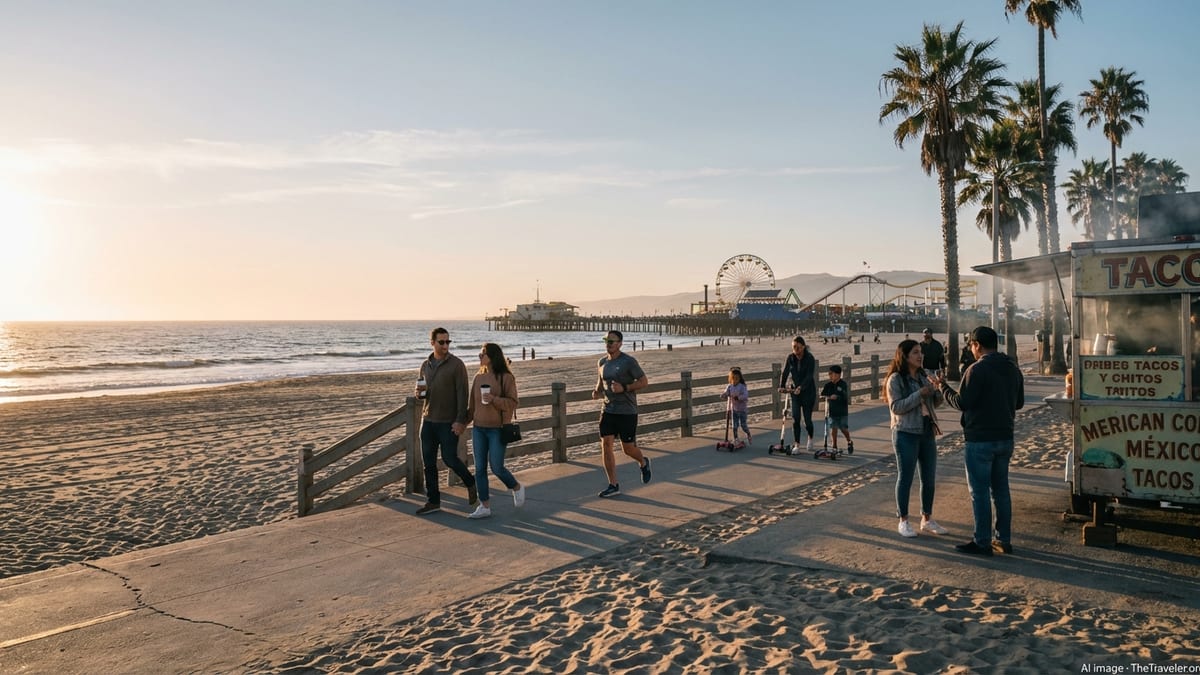
Wellness and fitness occupy a visible place in California life. You will see people jogging along waterfront paths, heading to yoga classes, hiking coastal or mountain trails, or lining up at juice bars after spin classes. The pursuit of health can range from simple outdoor exercise to more experimental practices like sound baths or specialized retreats. While not everyone participates in these trends, the broader culture values an active lifestyle and an interest in mental and physical well-being.
The climate and geography encourage outdoor living. From surfing in Southern California and skiing in the Sierra Nevada to camping in desert parks, outdoor recreation is part of how many residents spend weekends and holidays. Visitors who join in should prepare with proper gear, hydration, and respect for local safety guidelines, since conditions can change quickly, especially in mountains and deserts. Protecting nature is taken seriously, so packing out your trash, staying on marked trails, and following fire restrictions are expected behaviors.
Driving, Public Spaces, and Environmental Awareness
Transportation habits reveal a lot about California culture. In most regions, the car remains king. Freeways and multilane roads knit together vast metropolitan areas, and conversations often revolve around traffic patterns and commute times. In Southern California, it is common to plan social outings around which freeways you are willing to tackle at a given hour. Ride-hailing services are widely used in cities, but in many suburbs and rural areas you may still need a rental car to get around efficiently.
That said, several California cities, including San Francisco, Oakland, Los Angeles, and San Diego, have expanding public transit networks. Light rail, subways, buses, and commuter trains can be practical options, particularly along major corridors, but service may not be as frequent or seamless as in some European or Asian cities. Walking is very pleasant in compact neighborhoods such as San Francisco’s older districts or central Los Angeles enclaves like Downtown and parts of Hollywood, but many areas remain built around driving.
Environmental awareness is embedded in everyday life. Recycling bins are common in homes, businesses, and public spaces, and many cities encourage or require composting of food waste. Plastic bag bans or fees, refillable water bottles, and concern about drought and wildfire risk are part of daily conversation. Visitors are expected to follow local rules on water use, including limitations on outdoor watering or encouragement to take shorter showers, especially during dry years. These habits reflect both environmental values and the practical realities of a changing climate.
Public spaces tend to be informal but governed by a strong live and let live attitude. You are likely to see a wide range of street performances, protests, religious outreach, and informal vendors in urban areas. Respecting others’ space, keeping noise levels reasonable late at night in residential areas, and following posted park and beach rules will generally keep interactions smooth. Californians are accustomed to sharing public areas with people from many backgrounds and are typically tolerant, provided that others act safely and respectfully.
Tech, Entertainment, and Creative Ambition
California’s global influence owes a great deal to its tech and entertainment industries. Silicon Valley and the broader Bay Area are still shorthand for technological innovation, with major companies and startups shaping everything from social media and artificial intelligence to electric vehicles. This ecosystem draws ambitious engineers, designers, and entrepreneurs from around the world. As a visitor, you might notice a high density of laptops in cafes, co-working spaces in unlikely buildings, and conversations that slip easily into product ideas or funding rounds.
In Los Angeles and its surroundings, the entertainment industry has a similar gravitational pull. Film studios, streaming platforms, music labels, and advertising agencies employ large numbers of people, and many more work in adjacent creative fields. It is common to meet servers, drivers, or retail staff who are also actors, writers, musicians, or visual artists. This dual life is part of the local fabric, and people may be quite open about their creative ambitions, even in casual small talk.
Both tech and entertainment cultures reward networking and self-promotion, which can feel unfamiliar to visitors from more reserved backgrounds. Sharing your projects or interests is not necessarily seen as bragging; it is often interpreted as enthusiasm and openness to collaboration. That said, it is wise to remain modest and curious, asking others about their work rather than dominating the conversation. Many locals enjoy discussing ideas and will respond warmly if you show genuine interest.
For travelers, these creative sectors shape what is available to experience, from cutting-edge art galleries and immersive installations to tech museums and startup events open to the public. Keeping an eye out for local festivals, film screenings, talks, or neighborhood art walks can provide a window into the creative energy that helps define California beyond its postcard images.
Social Issues, Safety, and Being a Respectful Visitor
Like any complex society, California faces significant social challenges. Housing affordability is a major concern in cities like San Francisco, Los Angeles, and San Diego, and the visibility of homelessness has increased in many areas. Visitors will encounter tents, encampments, and people living on the street in some neighborhoods and near transit hubs. While this can be confronting, locals generally understand it as a symptom of systemic issues rather than individual failure, and public debates about solutions are ongoing.
As a traveler, the basic rule is to treat unhoused people with the same respect you would give anyone else. Avoid staring, keep a reasonable distance for everyone’s comfort, and do not photograph individuals without consent. If you feel moved to help, consider donating to established local organizations rather than giving cash directly, unless you are comfortable doing so. Cities have varying regulations about encampments and public behavior, and enforcement can change, so it is sensible to follow local advice from residents or hotel staff about areas to avoid late at night.
California is generally safe for tourists, but standard big-city precautions apply. Keep valuables out of sight, be cautious with bags in crowded areas, lock vehicles, and avoid leaving luggage visible in parked cars. Petty theft can occur in busy districts and parking areas near popular viewpoints or trailheads. Traveling in small groups at night, staying in well-lit areas, and trusting your instincts are simple but effective practices.
Respecting local norms also involves being mindful of how you talk about the state. Complaining loudly about traffic, homelessness, or prices in front of locals can come across as dismissive of problems they navigate daily. Honest observations are fine, but pairing them with curiosity and empathy will usually prompt more thoughtful conversations and insights. Many Californians are proud of their home and are happy to share perspectives if you approach sensitive topics with care.
The Takeaway
Preparing for a trip to California means more than plotting scenic drives and booking attractions. The state’s culture is shaped by extraordinary diversity, powerful industries, and a long tradition of reinvention. From the cool, tech-driven neighborhoods of Northern California to the sunlit, entertainment-fueled boulevards of the south, each region offers its own mix of history, ambition, and everyday rituals.
Understanding a few basics about etiquette, language, food, transportation, and social realities will help you move through this landscape with confidence and respect. You will be better equipped to decode local slang, navigate tipping and personal space, appreciate the central role of outdoor life, and engage thoughtfully with complex issues such as housing and the environment. In return, you are likely to find Californians open, creative, and eager to share the places they love.
If you arrive ready to listen, to try new things, and to look beyond the familiar Hollywood and Silicon Valley narratives, California will reward you with experiences that feel specific rather than generic. You will leave not just with photos of beaches and bridges, but with a richer sense of how people actually live on this stretch of the Pacific coast, and why so many continue to be drawn to it.
FAQ
Q1. Is California really as relaxed as people say?
California feels informal in dress and conversation, but many people work long hours in demanding fields. The relaxed vibe often sits on top of serious ambition.
Q2. Do I need to speak Spanish to travel comfortably in California?
No, you can get by with English everywhere, but basic Spanish phrases are useful and appreciated, especially in Latino neighborhoods and small businesses.
Q3. How should I dress so I do not stand out as a tourist?
Casual, practical clothing works almost everywhere. Jeans, sneakers, layers for changing temperatures, and a light jacket are more common than formal outfits.
Q4. Is public transportation good enough that I can skip renting a car?
In central San Francisco and parts of Los Angeles or San Diego, you can rely on public transit and rideshares, but many regions still function best with a car.
Q5. What is the tipping etiquette in California?
In restaurants with table service, 15 to 20 percent is typical. Tipping is also customary for bartenders, rideshare drivers, hotel staff, and personal services.
Q6. Are Californians open to talking with strangers?
Often yes, especially in social settings, at bars, or on tours. Brief friendly chat is normal, but most people also value personal space and time.
Q7. Is it safe to walk around at night in major cities?
Many areas are safe with normal precautions, but safety varies by neighborhood. Ask locals or hotel staff about places to avoid after dark.
Q8. How do locals feel about tourists driving on scenic routes and in cities?
Most accept tourism as part of life, but appreciate careful driving, respect for speed limits, and not blocking traffic for photos or sudden turns.
Q9. What cultural mistakes should I avoid?
Avoid insensitive jokes about homelessness or immigration, respect environmental rules, and do not assume everyone works in tech or entertainment.
Q10. How can I experience authentic California culture in a short trip?
Combine a neighborhood walk, a local market or food truck meal, time outdoors, and a community event or gallery visit to see everyday life up close.