

Pennsylvania can feel like several states in one. From skyscrapers and steel heritage to Amish farms, forested mountains, and small college towns, the Keystone State offers first-time visitors a surprising amount of variety in a relatively compact area. Knowing a few essentials before you go will help you plan realistic routes, pack for the right weather, and make the most of both big-name sights and quieter corners.
Getting Oriented: The Lay of the Land
Pennsylvania sits in the Mid-Atlantic and straddles several regions of the United States. To the east, the state blends into the greater New York and New Jersey metropolitan corridor, with Philadelphia as its major anchor. The central belt is largely rural, with rolling farmland and small towns. Western Pennsylvania is dominated by Pittsburgh and the remnants of coal and steel country, surrounded by green hills and rivers. For a first-time visitor, it is helpful to think in terms of these three broad zones rather than trying to see the entire state at once.
Distances can be deceptive. It takes roughly five to six hours to drive from Philadelphia in the southeast to Erie on the Lake Erie shore, and four to five hours from Philadelphia to Pittsburgh in the southwest, depending on traffic. Many visitors underestimate drive times because roads often pass through mountains and river valleys that can slow travel, particularly in bad weather. When planning an itinerary, it is usually best to focus on one or two regions rather than attempting to cross the state repeatedly.
The two main urban gateways are Philadelphia International Airport and Pittsburgh International Airport, which handle most long-haul flights, along with smaller airports such as Harrisburg and Lehigh Valley for regional connections. Amtrak trains link Philadelphia, Harrisburg, and Pittsburgh, and also connect Philadelphia to New York City and Washington, D.C. Intercity buses operate between major cities and college towns, but service in rural areas is more limited, so renting a car often makes sense if you plan to explore beyond the big cities.
Topographically, Pennsylvania is more rugged than many first-time visitors expect. The Appalachian Mountains cut across the state, creating ridges, valleys, and plateaus that are beautiful for hiking and autumn foliage but can make winter travel challenging. The landscape shifts from relatively flat coastal plain near Philadelphia to folded mountains in the center and more rolling hills in the west. This varied terrain is part of the state’s appeal but is also a key reason to pay attention to weather forecasts year-round.
Weather, Seasons, and When to Visit
Pennsylvania experiences four distinct seasons, and conditions can change quickly with elevation and region. Summers are generally warm and humid, especially in cities like Philadelphia, where daytime highs commonly reach the upper 80s Fahrenheit and occasionally climb higher. Western and northern areas are often a few degrees cooler, but humidity still makes it feel warm, especially in July and August. Air conditioning is common in hotels and public buildings, but older historic properties and some rural accommodations may be less consistently cooled.
Autumn is one of the most popular times to visit, especially from late September through late October. Cooler temperatures, typically in the 50s to 70s Fahrenheit, and colorful foliage in the Pocono Mountains, Laurel Highlands, and central Pennsylvania draw visitors for scenic drives and hikes. Leaf color timing varies by elevation and latitude, but higher and more northern areas usually change earlier while lowland areas around Philadelphia peak later. Expect popular outdoor areas to be busy on sunny weekends, and plan lodging reservations ahead during peak foliage weeks.
Winters can be cold and snowy, especially in northern and higher-elevation regions. Snowfall varies widely: lake-effect bands can bring frequent snow to Erie and the northwest, while interior mountains see regular snow and ice. Even in Philadelphia and Pittsburgh, occasional winter storms can disrupt travel with heavy snow, freezing rain, or mixed precipitation. Road crews are experienced with winter conditions, but visitors should still allow extra time, carry warm layers, and avoid unnecessary driving during active storms when possible.
Spring weather can be changeable, bringing everything from chilly rain to early heat waves between March and May. Early spring may still feel wintry in the mountains, while late May can already feel summery in the southeast. For first-time visitors who want milder temperatures without summer crowds, late April to early June and September to mid-October are often the most comfortable windows. Whenever you visit, packing layers, a waterproof jacket, and sturdy footwear will make it easier to adapt to Pennsylvania’s variable conditions.
Regional Highlights You Should Not Miss
Most first-time visitors anchor their trip in Philadelphia or Pittsburgh, then add side excursions. Philadelphia is the state’s largest city and one of the most historically significant places in the United States. Independence Hall and the Liberty Bell sit at the heart of the compact historic district, while nearby museums showcase art, science, and American history. Neighborhoods such as Old City, Fishtown, and South Philadelphia offer nightlife, restaurants, and a close-up look at the city’s rowhouse architecture and diverse communities.
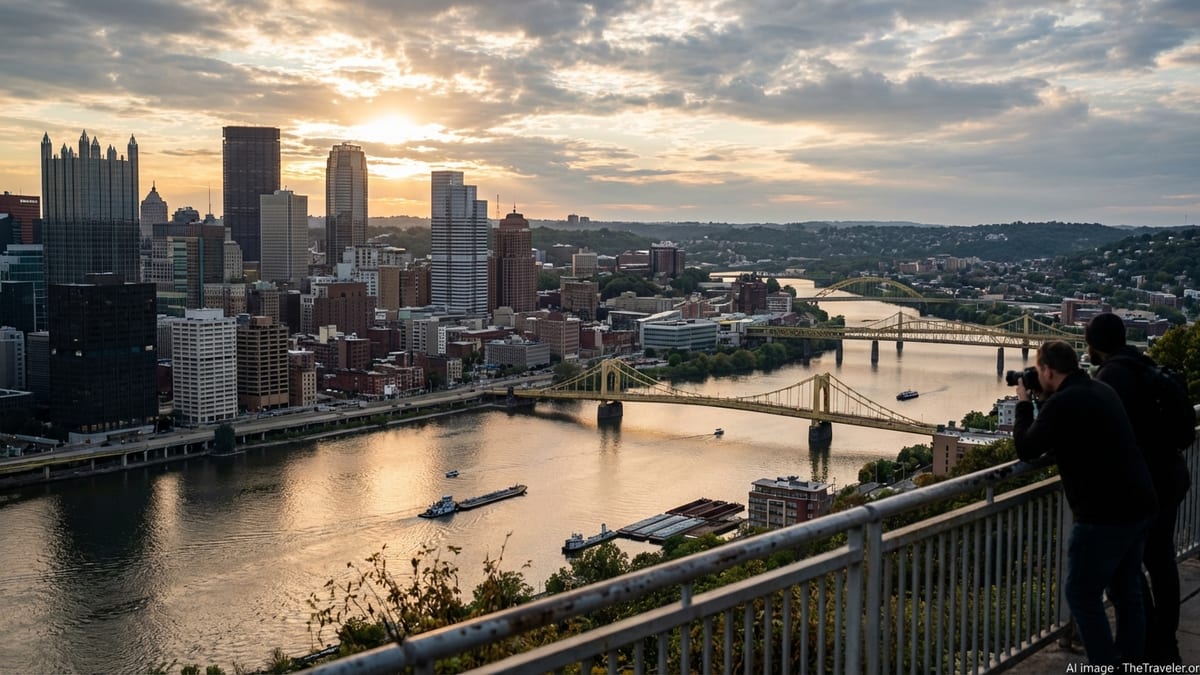
Pittsburgh, set at the confluence of three rivers and surrounded by steep hills, has transformed from a steel powerhouse into a city known for technology, education, and culture. Its skyline and bridges are best appreciated from overlooks like Mount Washington, reached by historic inclines. The city is home to major sports teams, notable museums, and neighborhoods that range from polished riverfront districts to streets lined with classic brick houses. The terrain makes Pittsburgh feel smaller and more intimate than its population suggests, with views that surprise many first-time visitors.
Beyond the two major cities, Pennsylvania’s smaller destinations offer a very different atmosphere. In Lancaster County and other parts of Pennsylvania Dutch Country, visitors encounter Amish and Mennonite communities who maintain traditional lifestyles, including horse-drawn buggies and limited use of modern technology. Nearby small towns mix farmers markets, covered bridges, and family attractions. Respectful behavior is important here: avoid photographing people without permission and be cautious when driving around buggies and farm vehicles.
Nature and architecture enthusiasts are drawn to the Laurel Highlands in western Pennsylvania, where rolling hills, state parks, and Frank Lloyd Wright’s Fallingwater combine outdoor recreation with world-renowned design. In the northeast, the Pocono Mountains have long served as a retreat for hiking, skiing, and lakeside relaxation. To the north, the city of Erie and Presque Isle State Park offer sandy beaches along Lake Erie in summer and birdwatching opportunities during migration seasons. Each region requires some driving, so factor in realistic travel times when building a first-time itinerary.
Culture, Food, and Local Etiquette
Pennsylvania’s culture reflects its long history and diverse immigrant influences. English, German, Irish, Italian, African American, Eastern European, and more recent arrivals from Asia and Latin America have shaped local traditions. In Philadelphia and Pittsburgh, you will encounter a typical American big-city mix of cultures and viewpoints, with a strong regional pride and attachment to sports teams. Smaller towns often have deep local roots and close-knit communities that welcome visitors who are courteous and patient.
Food is a memorable part of many first-time visits. Philadelphia is known for cheesesteaks, soft pretzels, and Italian-American bakery traditions, while Pittsburgh has a reputation for hearty sandwiches and dishes that reflect its Eastern European and working-class heritage. Across the state, diners, family-owned restaurants, and seasonal farm stands serve comfort food and regional specialties. In rural areas and small towns, opening hours can be limited, especially on Sundays, so check current hours and have a backup plan for meals.
In Pennsylvania Dutch Country, visitors often seek out Amish-style cooking, baked goods, and markets. While these are widely available, it is important to remember that Amish and Mennonite communities are not tourist attractions but real communities with their own rules and customs. Avoid entering private property without permission, do not use flash photography around horses at night, and be cautious around farm equipment on rural roads. A modest dress style and low-key behavior will generally be appreciated in more traditional areas.
In both urban and rural settings, tipping and service norms are similar to the rest of the United States. Restaurant servers customarily receive a gratuity based on the total bill, and tipping hotel housekeepers, rideshare drivers, and guides is also common. When interacting with locals, a straightforward and polite manner goes far. Pennsylvanians may seem reserved at first, but many are happy to offer directions, recommendations, or a brief conversation about their hometown when approached respectfully.
Getting Around: Driving, Transit, and Small-Town Logistics
Outside of the core city centers, Pennsylvania is largely a car-oriented state. Many scenic areas, historic sites, and state parks are not easily reached by public transit. Renting a car gives you the most flexibility for exploring beyond Philadelphia and Pittsburgh, and it is often the only practical option for visiting rural regions. Major highways cross the state, including the Pennsylvania Turnpike, which charges tolls. Electronic tolling is increasingly common, so check how your rental car company handles toll charges before you drive.
Driving conditions vary with season and terrain. In winter, snow and ice are regular features in much of the state, especially on mountain passes and rural roads. Even when major highways are treated and plowed quickly, side roads can remain slick. In autumn, falling leaves can make surfaces slippery when wet. In rural areas, be prepared to share the road with farm equipment and, in Amish areas, horse-drawn buggies that move significantly slower than car traffic. Passing only when it is clearly safe is essential.
Within Philadelphia, you can largely rely on public transportation and walking. The city’s core historic and cultural sights are clustered in and around Center City, with regional rail, buses, and subways providing links to outlying districts and suburbs. Parking in central Philadelphia can be expensive and limited, so many visitors choose to park once and use transit or taxis during their stay. Pittsburgh’s compact center is also walkable, with buses and light rail providing coverage to many neighborhoods, though hills and bridges can make travel feel less straightforward than in a grid-planned city.
In small towns and rural areas, local bus systems are usually sparse, aimed at residents’ commuting needs rather than visitors. Many attractions, including some covered bridges, waterfalls, and trailheads, may not have detailed signage or large parking lots. It helps to research directions and parking in advance, keep a full tank of fuel in less populated regions, and carry paper maps or offline navigation as a backup in areas where mobile reception can be inconsistent.
Key Sights and Practical Visiting Tips
Independence Hall and the Liberty Bell in Philadelphia are often at the top of first-time visitors’ lists. The main sites form part of Independence National Historical Park, where security screening and timed entry tickets are used to manage crowds. Tickets to Independence Hall are inexpensive but typically must be reserved for specific time slots for most of the year, with some exceptions in the winter months when demand is lower. Plan to arrive early for your scheduled time to clear security and allow extra time if you also want to visit the West Wing exhibits and surrounding buildings.
The Liberty Bell Center, which houses the iconic cracked bell, does not usually require tickets, but visitors should be prepared for security checks and potential lines at busy times. Crowds tend to be lighter early in the day and on weekdays outside of major holidays and school vacation periods. Comfortable walking shoes are important, as you will likely spend several hours on your feet moving between historic buildings and museum exhibits in and around Independence Mall.
In western Pennsylvania, Frank Lloyd Wright’s Fallingwater is a highlight for architecture and design enthusiasts. The house is situated in a wooded setting over a waterfall and preserved as a museum. Tours are offered in timed, guided formats and must be purchased in advance, with daily capacity limits to protect the site. Because tickets can sell out during peak seasons and weekends, it is wise to book ahead once your travel dates are set. The grounds include sloping gravel paths and natural terrain, so sturdy footwear and weather-appropriate layers are recommended.
Across the state, Pennsylvania’s many state parks and natural areas provide opportunities for hiking, boating, fishing, and winter sports. Trail difficulty ranges from gentle paths suitable for families to more strenuous climbs along rocky ridges. Cell service may be limited on some trails, so carry water, snacks, and basic safety gear. In all seasons, respect posted rules about parking, fires, and wildlife, and check the latest conditions, including any flood or fire advisories, before heading into more remote areas.
Safety, Laws, and Traveler Practicalities
Overall, Pennsylvania is a relatively safe destination for visitors who follow basic precautions. As in any large city, parts of Philadelphia and Pittsburgh experience higher crime rates than others, but the main tourist corridors and cultural districts are heavily visited and generally well policed. Standard urban safety practices apply: keep valuables out of sight, stay aware of your surroundings, and favor well-lit streets and busy transit stops at night. In rural areas, the main risks tend to be road conditions and weather rather than crime.
Driving laws are broadly similar to those in neighboring states. Seat belts are required for drivers and front-seat passengers, and child safety seat rules apply based on age and size. Using a handheld mobile phone while driving is restricted, and driving under the influence of alcohol or drugs is aggressively enforced. In winter, it is prudent to carry a basic emergency kit in your vehicle, including warm clothing, a small shovel, and a flashlight, especially if you will be traveling after dark or in areas that can see heavy snow and ice.
Health care access is good in cities and larger towns, which have hospitals and urgent care clinics. In remote areas, facilities may be farther apart, so carrying any necessary medications and a small first-aid kit is sensible. Tap water is generally safe to drink in most places, and food safety standards are comparable to elsewhere in the United States. Travel insurance that covers medical care and trip disruptions can be worthwhile, especially if you are visiting during winter or early spring, when storms are more likely to affect flights and road travel.
From a documentation standpoint, domestic visitors from within the United States can travel freely with standard identification, while international visitors must carry valid passports and any required visas. Major credit cards are widely accepted, though carrying some cash can be useful in very small businesses, farmers markets, or rural diners that may have card minimums. Mobile payment options are increasingly common in the cities, especially around university districts and newer restaurants.
The Takeaway
For a first-time visitor, Pennsylvania offers an accessible cross-section of American history, city life, and outdoor landscapes within a single state. Planning is essential because distance, terrain, and weather can turn an ambitious itinerary into a rushed one. Deciding whether you are more interested in historic Philadelphia, reinvented Pittsburgh, traditional rural communities, or mountain scenery will help you prioritize and avoid trying to do too much in one trip.
Being prepared for seasonal conditions, understanding that renting a car opens up far more of the state, and approaching local communities with respect will go a long way toward a smooth experience. Whether you are standing where the Declaration of Independence was debated, gazing up at a cantilevered house in the woods, or watching the sun set over a lake, Pennsylvania rewards visitors who take the time to look beyond the obvious and explore its varied corners.
FAQ
Q1. When is the best time of year to visit Pennsylvania for the first time?
Many visitors prefer late April to early June or September to mid-October, when temperatures are milder, foliage can be impressive, and summer humidity or winter storms are less likely.
Q2. Do I need a car to get around Pennsylvania?
You can explore central Philadelphia or downtown Pittsburgh without a car, but a rental car is very helpful for visiting small towns, state parks, and rural regions.
Q3. Is Pennsylvania safe for solo travelers?
Yes, with normal precautions. Tourist areas in Philadelphia and Pittsburgh are generally safe, and rural regions tend to have low crime. Stay aware, especially at night and in unfamiliar neighborhoods.
Q4. How many days should I plan for a first visit?
Four to seven days is a comfortable range for a first trip, allowing time for either one major city plus nearby side trips or a focused regional road trip without constant rushing.
Q5. What should I pack for Pennsylvania’s changeable weather?
Layered clothing, a waterproof jacket, comfortable walking shoes, and weather-appropriate accessories such as hats and gloves in winter help you adapt to shifting conditions across regions.
Q6. Are major attractions like Independence Hall and Fallingwater open year-round?
Independence Hall and nearby historic sites operate most of the year with some holiday closures. Fallingwater runs on a defined tour season and typically reduces or pauses tours in the coldest months.
Q7. Can I visit Amish communities, and are there any etiquette rules?
You can visit towns and businesses in Amish areas, but you should avoid trespassing on private property, ask before photographing people, and drive slowly and carefully around horse-drawn buggies.
Q8. What are some popular foods to try in Pennsylvania?
Cheesesteaks and soft pretzels in Philadelphia, hearty sandwiches and pierogi in Pittsburgh, and Amish-style baked goods and farm-fresh dishes in rural Dutch Country are all local favorites.
Q9. How bad is winter driving in Pennsylvania?
Conditions range from manageable to difficult depending on storms and terrain. Main highways are treated, but snow and ice on mountain passes and rural roads can be challenging, so allow extra time and avoid unneeded trips during severe weather.
Q10. Are credit cards widely accepted, or should I carry cash?
Credit cards are widely accepted in cities and larger towns, but carrying some cash is useful for small shops, markets, tolls, and rural businesses that may have minimums or prefer cash payments.