

Japan is one of the world’s most rewarding destinations, blending deep tradition with cutting-edge modernity. For visitors, that mix can also be a source of confusion. Behaviors that feel ordinary at home, from talking on a train to handling cash, may send a very different message in Japan. Understanding a few core cultural principles and the latest expectations around tourism will help you move more confidently, avoid missteps, and connect more meaningfully with the people and places you encounter.
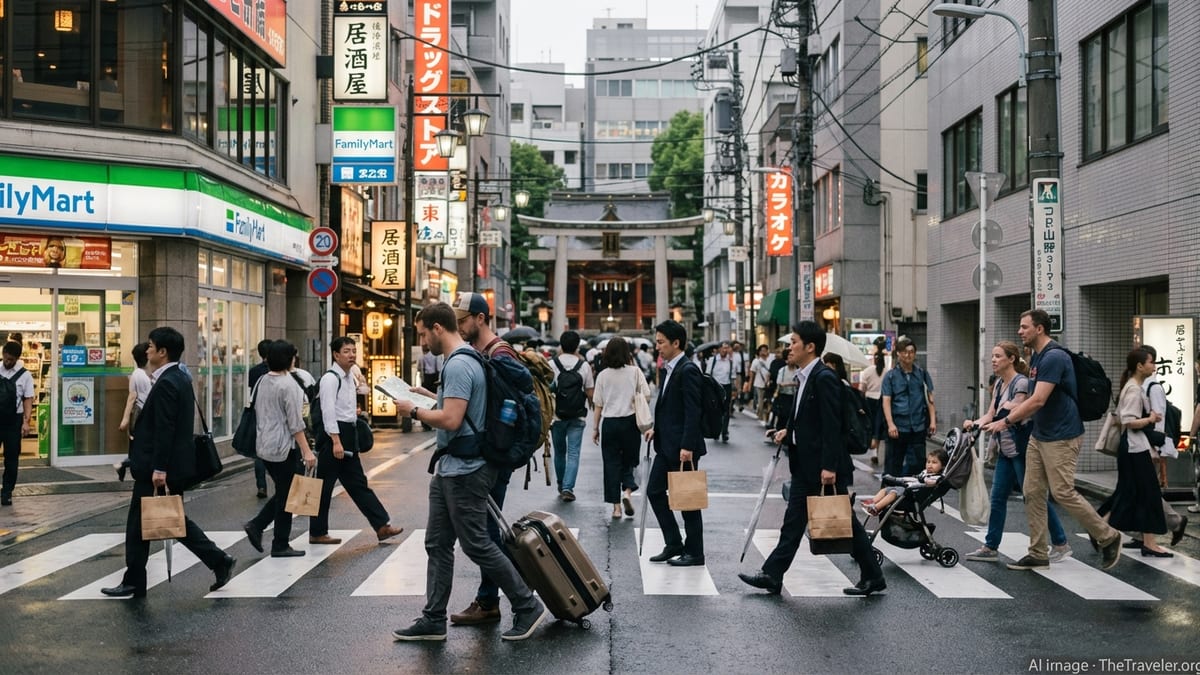
Understanding the Mindset: Harmony, Respect, and Consideration
Much of Japanese behavior in public spaces is guided by the idea of maintaining social harmony and showing consideration for others. You will often hear the word “meiwaku,” which loosely means causing trouble or inconvenience to people around you. Many of the unspoken rules that surprise visitors are really about avoiding meiwaku: keeping noise down, lining up neatly, and moving with awareness in crowded streets or train stations. If you keep this principle in mind, many etiquette questions answer themselves.
Respect for hierarchy and age also plays a central role. In everyday interactions this shows up subtly: people giving up seats for older passengers, careful language used with strangers, and a tendency to avoid confrontation in public. As a visitor, you are not expected to master the nuances of polite Japanese speech, but you will be appreciated if you show patience, avoid raising your voice, and react calmly when things do not go as planned.
Another important value is modesty. Boasting, overly expressive behavior, or loud public affection can feel uncomfortable to many Japanese people. This does not mean you must suppress your personality, only that you should be sensitive to context. Reading the room, mirroring the general atmosphere, and quietly observing how locals behave in a given situation will help you adapt smoothly.
Finally, Japanese culture tends to prioritize the group over the individual in public settings. The idea is to move in a way that keeps things orderly for everybody. This explains the unspoken choreography you will see at busy train stations, in queues, and even on escalators. Joining that flow, rather than disrupting it, will make your travels both smoother and more enjoyable.
Everyday Etiquette: Trains, Streets, and Shared Spaces
One of the first cultural differences tourists encounter is the expectation of quiet in public transport. Trains, buses, and subways are typically calm, even during rush hour. Locals avoid phone calls, keep conversations low, and use headphones so that sound does not leak out. Many commuters use the time to rest or read. Talking loudly, playing music on speakers, or taking long phone calls in a packed carriage will stand out immediately and can feel inconsiderate to those around you.
Orderliness is equally important. In stations you will usually find clear lines marked on the platform where passengers queue to board trains. People form lines without pushing and wait for others to get off before they step on. Cutting in line or blocking doors is considered rude, even in crowded situations. On escalators, people typically stand on one side and leave the other side for those who wish to walk. The side you stand on can vary by region, so it is best to observe what locals do and follow their lead.
Out on the streets, you may notice how clean Japanese cities are despite relatively few public trash cans. The unwritten rule is to hold onto your rubbish until you find a bin at a convenience store, station, or your accommodation. Littering is strongly frowned upon, and leaving rubbish by a temple gate or in a residential lane will be noticed. Trash is often sorted by category, so when you do find a bin, check the labels for burnable waste, plastics, cans, and bottles.
Eating while walking is another point that surprises many visitors. In most neighborhoods, especially outside festival settings, it is considered better manners to eat where you bought the food or step to the side and finish it before moving on. The idea is to avoid spills in public spaces and to show respect for the food itself. If you buy a snack from a stall, look for a small standing area, bench, or designated eating spot nearby and enjoy it there instead of walking through crowds while eating.
Temples, Shrines, and Sacred Sites
Temples and shrines are among Japan’s most beautiful places, but they are also living religious sites, not just scenic backdrops. Visitors are welcome, yet there is a clear expectation of respectful behavior. Speak softly, avoid running or shouting, and follow any posted signs about where you can and cannot go. In recent years, some shrines and districts have introduced new restrictions or even banned tourist access to certain alleys and courtyards after repeated problems with harassment, trespassing, and disruptive photography. When you see signs indicating a restricted area, treat them seriously.
Before entering many shrine grounds you will pass under a torii gate. Locals often bow slightly before crossing under the gate and try not to walk exactly in the center, which is traditionally considered the path of the deities. At Buddhist temples you may encounter incense burners or purification fountains. While you are not required to participate in rituals, if you choose to, watch how locals do it first and follow their example without rushing. Keep your movements calm and leave space for others.
Photography requires special care. Increasing visitor numbers have led to new rules around cameras in some sacred or residential areas. Tripods, drones, and professional-style setups are often prohibited. Even where photography is allowed, avoid blocking walkways, stepping into prayer areas just for a shot, or aiming lenses directly into private homes near famous viewpoints. If staff or signs ask you not to photograph a certain statue, room, or ceremony, put your camera down and simply experience the moment.
A final point is that these sites are often embedded in ordinary neighborhoods. Residents may live just a few meters away from a famous building or view. Cutting across private gardens, leaning against closed doors, or peering into windows in search of the perfect angle has caused significant tension in some destinations. Keeping a clear mental line between public and private space, and erring on the side of caution, will help preserve goodwill between visitors and local communities.
Dining, Drinking, and Tipping in Japan
Japanese dining culture combines informal warmth with precise manners. In most restaurants you will be greeted on arrival and either shown to a seat or invited to choose one. Waiting to be guided is usually the safest choice, especially in smaller establishments. Many venues provide a wet towel at the beginning of the meal; this is for cleaning your hands rather than wiping your face or the table. Slurping noodles is widely acceptable and even seen as a sign that you are enjoying the dish, but speaking loudly, lingering for a long time after finishing when there is a queue, or rearranging furniture without asking can be considered inconsiderate.
Tipping is generally not part of everyday life. Staff are paid with the expectation that service is already included in the price, and leaving cash on the table can be confusing or even awkward. At some higher end experiences, such as private guides or traditional entertainment, a discretionary gratuity may be quietly appreciated, but it should be handled with care. If you do tip in such settings, place cash in a small envelope rather than handing loose bills, and accompany it with a polite bow.
Payment etiquette also has its own rhythm. When you pay at restaurants, shops, or taxis, you will often find a small tray by the register. Instead of passing money directly from hand to hand, place your cash or card on the tray. Staff will do the same when returning change or receipts. This avoids fumbling contact and is considered more orderly. Japan remains a relatively cash-friendly society, especially in rural areas and small family-run businesses, so carrying some yen in addition to cards is wise.
When sharing drinks, especially in more traditional or social settings, you may notice people pouring for each other rather than refilling their own glasses. It is polite to keep an eye on your companions’ glasses and offer a refill, and they will often do the same for you. If you prefer not to drink alcohol, a simple explanation and a soft drink in your glass is generally accepted. What matters most is participating in the sense of togetherness rather than how much you consume.
Home, Footwear, and Bathing Customs
Removing shoes is one of the clearest markers of Japanese culture, and it extends beyond private homes. Anytime you see a raised floor, a step up from the entrance, or a row of shoes neatly lined up, assume that footwear should be taken off. This is common in traditional inns, some restaurants, temple lodgings, and even small clinics. Indoor slippers are often provided, and there may be different slippers just for the restroom. Stepping into a tatami room with shoes or even standard slippers is a major faux pas, so pay close attention to the transition points between surfaces.
If you are invited into someone’s home, bring a small gift such as sweets or regional snacks from where you have traveled. Present it with both hands and a few simple words of thanks. Inside the home, follow your host’s lead on where to sit, when to start eating, and how to use shared spaces. Speaking softly, handling objects carefully, and offering to help with simple tasks like clearing dishes will all be noticed as signs of respect.
Visiting an onsen or public bath can be a highlight of a trip, but it comes with its own etiquette. Bathing areas are usually separated by gender, and swimsuits are not worn unless signs clearly indicate mixed or family baths that require them. Before getting into any tub, you must wash thoroughly at the shower stations, rinsing away all soap and shampoo. The shared tub is for soaking in clean water, not for washing. A small towel can be used for modesty outside the water, but it should not be dipped into the bath; many people fold it and place it on their head.
Tattoos require special attention. Historically linked with organized crime, visible body art can still lead to refusal at certain hot springs, pools, and gyms. Attitudes are slowly softening, particularly at facilities that commonly host tourists, but there is no universal rule. Some venues welcome tattooed guests, others allow entry if tattoos are fully covered with patches or sleeves, and some maintain outright bans. If you have prominent tattoos, checking policies in advance and choosing more flexible establishments will spare you an awkward interaction at reception.
Shopping, Money, and New Tourism Rules
Shopping in Japan ranges from tiny neighborhood shops to ultra-modern department stores, and each type of business carries subtle expectations. Staff are usually attentive but not intrusive. A simple greeting when you enter and a nod or quiet “thank you” when leaving, even if you did not buy anything, fits local norms. Handling goods gently, returning items to where you found them, and avoiding opening sealed packaging unless invited are all part of showing respect for the merchandise and the people who manage it.
In recent years, Japan has begun to adjust tourism-related rules to respond to growing visitor numbers and protect heritage sites. These changes include tighter controls at certain shrines and scenic areas that were experiencing overcrowding and disruptive behavior, as well as evolving rules on photography, access hours, and guided group sizes. Some popular districts have introduced new signage in multiple languages, asking visitors not to enter residential backstreets, to keep noise low at night, and to respect the privacy of residents.
Tax free shopping rules are also being reworked. Traditionally, foreign visitors could have the consumption tax removed at the point of sale by showing their passports in designated shops. Authorities are gradually shifting toward systems where shoppers pay tax at the register and then request refunds at departure points, with stricter documentation and checks. The intention is to curb misuse while still supporting genuine travelers, so you should expect more emphasis on receipts, passport scans, and keeping purchased goods in original packaging until you leave the country.
At the same time, some destinations have introduced or increased local taxes and fees to fund maintenance and crowd management. Accommodation taxes in major cities help support infrastructure, and specific resort or heritage areas may charge small entry or usage fees. These are usually added automatically to your bill and explained at check in or ticket counters. While such measures reflect pressures from rising tourism, they also signal a broader commitment to making tourism more sustainable for both visitors and residents.
Connecting With Locals: Language, Body Language, and Digital Etiquette
Language barriers worry many first time visitors, but even a few simple Japanese phrases can transform interactions. Words like “sumimasen” for excuse me or getting someone’s attention, “arigatou gozaimasu” for thank you, and “onegaishimasu” when asking for something politely go a long way. Locals do not expect perfect pronunciation and will often respond warmly to any genuine effort. If someone does not understand English, smiling, slowing down, and using basic gestures or pointing to maps and signs can usually bridge the gap.
Body language matters as well. Bowing is the traditional greeting, ranging from a small nod of the head to a deeper bow in formal settings. As a tourist, a light bow combined with a few polite words is entirely acceptable. Handshakes are increasingly common in international business contexts, but in everyday life people may feel more comfortable with a little space. Strong hugs, back slaps, or very close talking in first meetings can feel overwhelming. Matching the distance and gestures of the person you are speaking with is a good instinct.
Public displays of affection are generally more subdued than in many Western countries. Holding hands is common among younger couples, but long embraces, kissing, or very flirtatious behavior in trains, shrines, and family restaurants can make others uncomfortable. Similarly, photographing strangers without asking, especially children or people in traditional dress, is best avoided. If you would like a photo with someone, ask first with a smile and accept a polite refusal gracefully.
Digital etiquette is a newer but increasingly important aspect of cultural respect. Using phones on speaker in quiet spaces, filming others without consent, or livestreaming in crowds can be disruptive. Some neighborhoods and attractions have begun posting notices that discourage selfie sticks in tight streets, request that visitors avoid blocking doorways while checking maps, and remind people not to stare at screens while walking. Treating your phone as a private tool rather than a public broadcasting device will help you fit in more comfortably.
The Takeaway
Traveling in Japan can feel wonderfully smooth once you tune into the rhythms of local life. From quiet trains and ordered queues to shoe free interiors and serene bathhouses, many daily habits are woven around the themes of consideration, cleanliness, and respect. The country is also adjusting to record visitor numbers, introducing new rules to protect historic districts and everyday neighborhoods from the strain of overtourism. As a guest, the way you move through these spaces contributes directly to that ongoing balance.
You do not need to master every nuance of etiquette before you land. If you approach each situation with curiosity, watch what locals do, and prioritize not causing inconvenience to others, you will already be aligned with core cultural expectations. A few words of Japanese, a willingness to follow posted signs, and a thoughtful approach to photography, noise, and personal space will carry you far. In return, you are likely to encounter kindness, efficiency, and a rich cultural tapestry that rewards repeat visits.
FAQ
Q1. Do I really need to be completely silent on Japanese trains?
Absolute silence is not required, but voices are kept low and phone calls are discouraged. Soft conversation is fine if you match the quiet level of people around you.
Q2. Is it rude to eat while walking in Japan?
In many areas it is considered poor manners to eat while walking, especially in busy streets. It is better to step aside or use designated eating areas.
Q3. How important is it to remove my shoes indoors?
Removing shoes is very important wherever it is expected, including homes, some restaurants, traditional inns, and certain temple buildings. When in doubt, look for signs or ask.
Q4. Should I tip in Japanese restaurants or taxis?
Tipping is generally not expected and can sometimes cause confusion. Service charges are often built into prices, so a sincere thank you is usually enough.
Q5. Can I visit any shrine or temple freely as a tourist?
Most shrines and temples welcome visitors, but some areas or times may be restricted. Always follow posted signs, respect barriers, and keep your voice low on the grounds.
Q6. What should I know about tattoos and hot springs?
Some hot springs and public baths still restrict visible tattoos. Others allow them or permit coverups. Check policies in advance to avoid being turned away.
Q7. Is it okay to take photos of people in kimono or traditional dress?
Always ask before taking close photos of individuals. Many people will agree if asked politely, but photographing strangers without permission can feel intrusive.
Q8. How much Japanese language do I need to know?
You can travel with only English and gestures, but learning a few basic phrases for greeting, thanking, and apologizing makes interactions smoother and more pleasant.
Q9. What is the best way to show respect if I make a mistake?
If you slip up, a simple apology, a small bow, and a quick effort to correct your behavior are usually enough. Most people are understanding toward visitors.
Q10. Are there new rules for tourists I should be aware of?
Yes, some popular areas have added signs, access limits, or new fees to manage crowds and protect neighborhoods. Reading notices and following staff guidance is essential.