

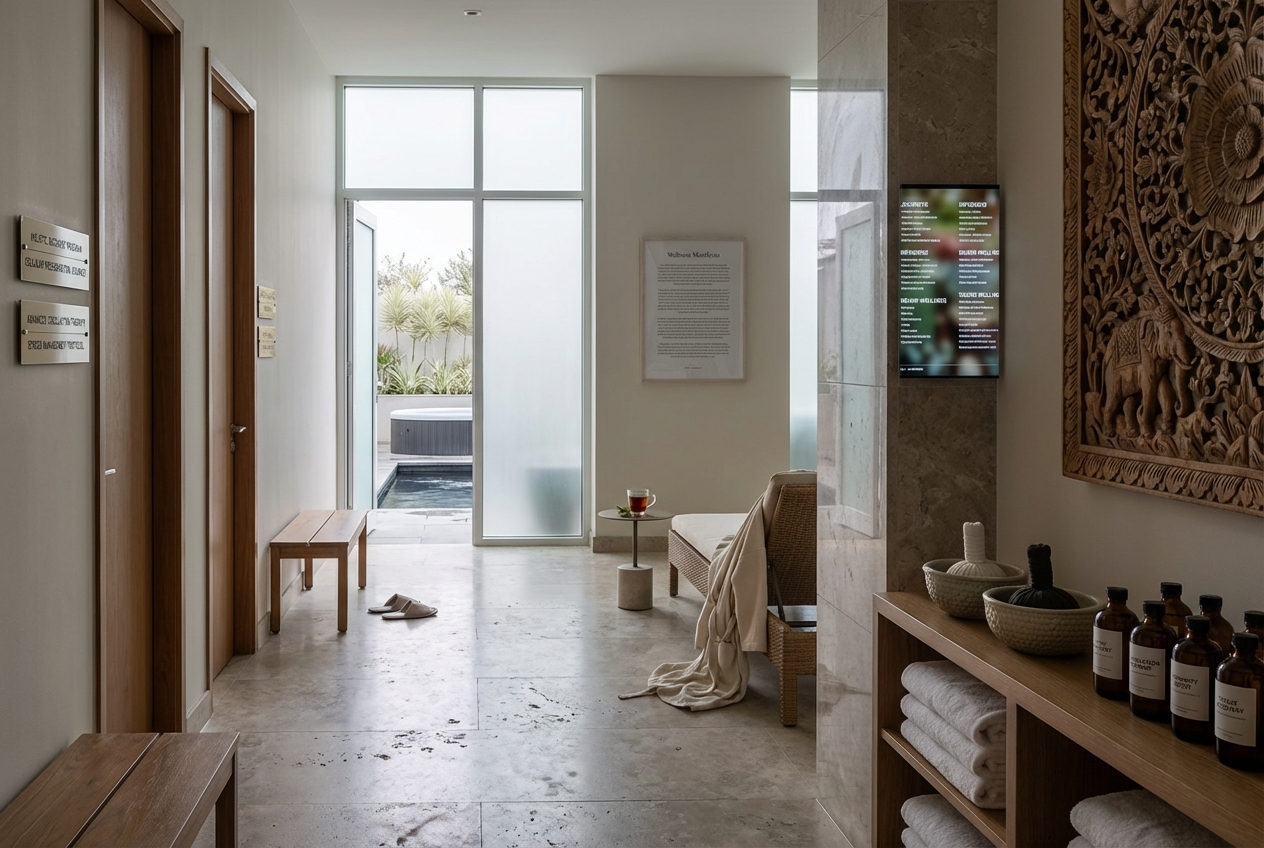
There is a particular kind of traveler who now checks into a resort not just looking for a good bed and a decent breakfast, but for a complete reset. The plan sounds simple enough: a few massages, a quiet pool, maybe a steam room, and a sense of having done something good for body and mind.
Yet more of these travelers are discovering that what used to feel like a gentle spa interlude has turned into something far more elaborate, curated, and at times disorienting.
In many full service hotels, wellness is no longer a side offering hidden in the basement. It has moved to the center of the brand story, reshaping how stays are marketed and experienced.
Guests encounter menus of therapies that read like small encyclopedias, multi hour “journeys,” and language that blurs the line between holiday and personal transformation. The result is a kind of spa travel that appears designed for this moment, but does not always feel straightforward once you are inside it.
One global spa brand rooted in Thai traditions offers a useful lens on what is happening. It operates across beachfront resorts, urban towers, and island retreats, carrying a promise of holistic healing wherever its name appears.
Over time, its identity has evolved from simple massages and facials into a complex ecosystem of rituals, workshops, and body work that spans several regions and guest profiles.
What feels unstable for many travelers is the gap between the familiar image of a spa and the depth of programming that now surrounds it. A guest who expects a quiet hour on a massage table walks into a world of breathwork, energy balancing, hot and cold immersion, and multi day renewal paths with layered names and narratives. The shift is not necessarily negative, but it redefines what a “spa visit” even is, and whether a traveler is meant to dabble or commit.
This same brand, like several of its peers, has woven modern wellness science into its long standing emphasis on traditional Thai healing. Guests see references to circulation, immunity support, and recovery alongside herbal poultices and oil compresses.
There are offerings that resemble integrative health clinics and others that feel closer to temple rituals, often sitting beside each other on the same menu. For many, the unexpected mix creates both intrigue and uncertainty.
Travelers are often caught off guard by how medical some of these experiences can seem. Where they expected scented oils and dim lighting, they now encounter terms linked to cellular rejuvenation, targeted muscle recovery, and intensive detoxification.
Cold plunge circuits, deep tissue combinations, and structured breath practices are presented as accessible to almost anyone, even though they may demand more physical and emotional engagement than a casual guest anticipated.
The branding around these spaces tends to frame all of this as a seamless, nurturing journey. Language leans toward harmony, restoration, and gentle transformation, suggesting that the various treatments will fit together like pieces of a thoughtfully arranged puzzle.
Wellness is described as holistic, immersive, and easy to integrate into a broader stay, with the suggestion that expert hands have already sorted out what works best for different needs.
On the ground, the experience can feel more fragmented. A traveler might find a deeply traditional herbal ritual tucked between high tech therapies and trend driven add ons. Staff are usually keen to explain each element, but the sheer number of options can leave visitors improvising their own path with limited context.
Instead of drifting effortlessly from one treatment to the next, many end up stitching together sessions based on available time slots and what sounds appealing in the moment.
There is also a growing tension between the promise of individualized care and the realities of operating across multiple locations. The same brand might promote a unified philosophy, yet the feel of a treatment can vary noticeably between a city hotel, a beach resort, and an island property.
The core rituals often carry similar names, but local staff interpretations, space constraints, and guest expectations subtly reshape them, sometimes leaving frequent visitors unsure of what exactly “signature” still means.
Recognition within the wellness world feeds into this dynamic. As spa brands accumulate awards and accolades, their positioning shifts from quiet sanctuary to benchmark of regional prestige.
For travelers, this can raise expectations to a level where every session is assumed to be exceptional, every room a sanctuary, every therapist an expert in multiple modalities. When the reality turns out to be closer to a standard hotel spa with a more ambitious menu, the contrast feels sharper precisely because the branding speaks of transformation.
Another pattern is the extension of spa thinking into the entire stay. At some properties linked with this brand, wellness now shows up in pillow menus, sleep rituals, in room stretching gear, and activities that spill onto beaches and rooftops.
The spa becomes less of a destination and more of an organizing idea for the whole trip. Yet this can create a quiet friction for guests who arrived primarily for leisure or work, and suddenly find themselves in a setting that assumes they are there to optimize their bodies.
Families, groups, and solo travelers experience this shift differently. Some locations within the same portfolio now feature playful interpretations of wellness designed for children, while others emphasize couples rituals or silent, adult oriented spaces.
The underlying brand name is consistent, but the atmosphere can move from lighthearted and social to hushed and introspective with little warning across properties. Travelers who associate the name with one kind of experience may not be prepared for the version they meet in another region.
All of this is playing out against a broader backdrop in which wellness has become both a personal aspiration and a commercial category. The spa brand in question seems to embody that tension.
It carries the heritage of Thai healing, the expectations of modern hospitality, and the demands of a global audience that now reads “wellness” into every part of a stay. Prices, durations, and intensity levels often reflect this expanded ambition, while marketing materials continue to emphasize softness and ease.
For travelers, the uncertainty lies not in whether the treatments are pleasant or beneficial, but in what role they are supposed to play in a trip. Is a visit to this kind of spa an indulgent add on, a central reason to choose a particular hotel, or an entry point into a much deeper long term wellness journey It can be all of those things, and that ambiguity shapes how people remember their stay.
As more hotel brands take cues from this model, the line between spa, clinic, and retreat is becoming steadily less clear. Guests move through spaces scented with lemongrass and soundtracked by gentle music, while engaging with concepts that borrow from medicine, psychology, and spiritual practice. The experience still promises rest, but it also asks for interpretation.
In the end, travelers find themselves in a world where a simple massage voucher can open the door to something far more layered than anticipated. The spa visit that once felt like a defined, time boxed escape now sits inside a broader, shifting landscape of wellness language and expectations.
That unsettled edge, quieter than any disruption and harder to measure than any delay, is quietly reshaping how people feel about checking in for care under a familiar, well regarded name.