

I went to McMinnville with high expectations shaped by breathless praise from food magazines and wine blogs calling it the heart of Oregon wine country. I pictured an endlessly charming main street, world-class Pinot Noir around every corner, and a countryside straight out of a postcard.
What I found was more complicated: a town that is genuinely warm, delicious, and walkable, but also occasionally overpriced, surprisingly sleepy at odd hours, and not always as polished as the marketing makes it sound. Here is what I honestly loved most about McMinnville, what let me down, and what I would do differently if I went back.
First Impressions of a Small Town With Big Hype
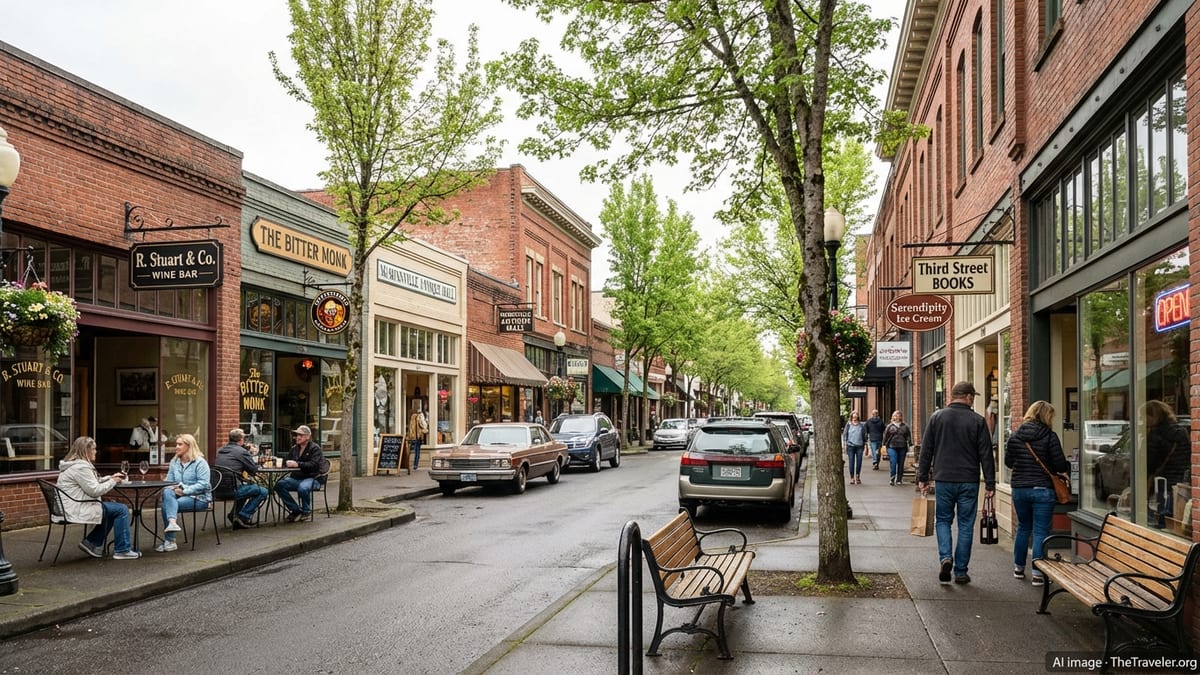
Driving into McMinnville, I immediately felt the shift from highway to hometown. The landscape softened into rolling vineyards and farm fields, and the town itself appeared almost all at once, compact and low-slung. I had read that the population hovers in the low thirty thousands, and it felt that way: big enough to have a real downtown, small enough that you recognize faces after a day. My first walk down Third Street, the historic main drag, was genuinely charming. Trees arched over brick storefronts and old neon signs, and there was that subtle buzz you only get in places where locals and visitors are actually sharing the same space.
At the same time, my expectations were probably a little too high. I had imagined something more polished, like a mini-Healdsburg or a bite-sized European wine town. Instead, McMinnville felt like exactly what it is: a working Oregon town that happens to sit in the middle of a serious wine region. There are lovely details, but also a few tired facades, empty storefronts, and the occasional whiff of industrial life on the edges. That contrast grew on me over a few days, but in the first hour it felt slightly jarring compared to the glossy photos I had seen.
Still, what struck me right away was how walkable and human-scaled the core of town is. I parked once and rarely needed my car for the rest of the day. Third Street, a few blocks in each direction, and some side streets supplied most of what I wanted: coffee, tasting rooms, restaurants, and people-watching benches. The pace was unhurried, even on a weekend, which I loved. If you are coming from a big city, prepare to downshift both your schedule and your expectations about how fast things happen here.
I arrived on an evening when there was no major festival or event in town, and that timing shaped my first impression. Without the UFO Festival crowds or a wine celebration filling the streets, McMinnville felt calm and almost reserved. I had to lean in a little to find the energy people rave about, but once I did, it came mostly from one place: Third Street.
Third Street: Oregon’s “Favorite Main Street,” With Caveats
Third Street was easily the part of McMinnville I loved most. Over a couple of days I wandered it at different times: early morning with a coffee, lazy afternoon between tastings, and late at night when the bars were thinning out. The layout is simple, six or so compact blocks of restaurants, boutiques, cafes, and tasting rooms. The street trees and brick details do a lot of atmospheric heavy lifting, and when the light hits right in late afternoon it honestly looks like a movie set in the best possible way.
The food and drink offerings on Third Street live up to much of the hype. I ducked into places that leaned hard into farm-to-table menus, others that were casual and pubby, and several wine tasting rooms that represented different corners of the Willamette Valley. The wine culture here feels integrated, not just an add-on for tourists. I overheard winemakers having post-shift glasses of their neighbors’ wines, servers casually recommending other tasting rooms up the street, and locals giving nuanced opinions about vintages. It did not feel snobby, just quietly confident.
That said, Third Street is not perfect. Prices have crept up with the town’s reputation, and more than once I caught myself doing a double take at menu prices that would not be out of place in Portland or even larger cities. A couple of meals were excellent and worth every dollar, but one or two felt ordinary for what I paid. On busy evenings, reservations are almost mandatory at the more buzzed-about spots. I watched several walk-ins turned away or saddled with long waits, which can be frustrating if you came expecting a casual, no-planning-needed small-town weekend.
Another caveat: the rhythm of the street changes sharply with seasons and events. In summer, and especially when MacFresco-style outdoor dining setups are in full swing, Third Street feels lively and connected. Off-season or on a rainy weekday, some storefronts go dark early and the street empties faster than I expected. If you come hoping for constant buzz, you may find the quiet evenings a bit too quiet, especially if you are staying right downtown and relying on street life for entertainment.
Wine Country Without the Pretension (Mostly)
McMinnville’s positioning as a wine town is not an exaggeration. It sits in the Willamette Valley, surrounded by vineyards and wineries that are especially known for Pinot Noir and other cool-climate grapes. What I appreciated most was that I could get a genuine sense of the region without ever leaving town. Tasting rooms along and near Third Street pour wines from nearby hills and subregions, and many staff members clearly know the growers and vineyards personally. It gave my glass of Pinot some real context.
I liked that the tasting rooms varied in personality. Some were sleek and modern, with minimalist interiors and carefully curated playlists. Others were cozy and slightly scruffy, more like someone’s well-loved living room with wine racks. A few offered non-wine extras like game nights or small bites. I never felt pressured to buy or join a club, which is a common irritation in other wine regions. In McMinnville, the pitch was there, but it was usually gentle and respectful.
The main downside was price creep. Tasting fees have edged up, and even in town they can add up quickly, especially if you are visiting several places in a day. On one afternoon I realized I had effectively spent what could have been a full restaurant meal just on tasting flights. Also, some of the most acclaimed winery experiences are still out in the surrounding countryside. Without a car or a designated driver, you are limited to the in-town options, which are solid but not always mind-blowing.
If you are new to wine, McMinnville is a forgiving place to learn. Staff are generally patient and happy to explain styles and regions without condescension. If you are already deeply into wine, you might wish for a bit more depth or access to library vintages and rarer bottles in certain tasting rooms. I found the sweet spot was coming with genuine curiosity but not obsessing over collecting the rarest possible pours. Enjoying what was in front of me, along with the conversations, made the experience feel grounded instead of performative.
Evergreen Aviation & Space Museum: Ambitious, Impressive, A Bit Overwhelming
The Evergreen Aviation & Space Museum, just outside town, is probably McMinnville’s most famous attraction beyond wine and food. It is home to the enormous Spruce Goose, the wooden flying boat built by Howard Hughes, and an array of other historic aircraft and space-related exhibits. I went partly out of curiosity and partly because it kept popping up in every description of McMinnville. I am not an aviation buff, so I wondered if it would hold my interest.
In person, the Spruce Goose is staggering. Photos do not prepare you for the scale of that plane looming over you inside a cavernous glass-walled hangar. The way it dominates the space feels almost theatrical, and it might be the single most impressive artifact in town. The museum buildings themselves are striking from the outside, with long glass facades and a clean, almost cathedral-like interior volume filled with aircraft at different heights around you.
I appreciated the breadth of the collection, from vintage planes to an SR-71-style black reconnaissance aircraft and missile exhibits. For families and anyone with an interest in flight, this could easily be a full-day stop. However, my experience was mixed. Admission felt relatively expensive once I factored in the time I realistically wanted to spend there. Some exhibits were incredibly detailed and well explained, while others felt a bit dated or text-heavy. After a couple of hours, my attention started to drift, and the constant hum of audio displays made the space feel noisy.
If I went back, I would plan my museum visit more strategically. I would pick a few key sections I truly care about and give them my full attention instead of trying to take in everything. I would also time my visit for earlier in the day to avoid feeling rushed before closing. As it was, I left impressed but mentally worn out, and I slightly resented how much of my limited McMinnville time it had consumed.
Nature, Parks, and the Edges of Town
One of the quieter delights of McMinnville is how quickly you can get from town into a more rural or natural setting. Within the city, parks like Joe Dancer and Discovery Meadows offer green space, sports fields, and walking paths. I spent a relaxed morning wandering through parkland along the river and watching kids play at a splash pad, and it was a nice reset after the more structured wine and museum activities.
On the outskirts, the landscape opens up into forests, hills, and small county park sites. Places like Erratic Rock State Natural Site, a short drive away, offer an easy hike up to views over the Yamhill Valley and a chance to see a massive glacial erratic boulder resting on a hilltop. I appreciated this kind of light, accessible outdoor time: no technical gear needed, just a pair of walking shoes and a willingness to get a little muddy if it has rained recently.
The downside is that information about these little outdoor gems can be inconsistent. Some trailheads are not well signed, and online descriptions sometimes gloss over how steep or exposed a path might be. I ended up at one spot that felt more like an unmarked pullout than a proper trail, and I hesitated before committing because I was not entirely sure I was in the right place. If you are not comfortable navigating lightly marked areas, you might stick to better-known parks and viewpoints or go with local advice.
Overall, though, I liked that McMinnville is not just tasting rooms and restaurants. Having the option to step away from consumption and walk under trees or look out over fields made the experience feel more balanced. Just do not expect grand, national-park-level scenery right outside town. This is a landscape of subtlety: low hills, vineyards on gentle slopes, and farm fields stretching to the horizon.
Where McMinnville Falls Short: Practical Frustrations
For all the things I loved about McMinnville, a few practical realities kept me from fully romanticizing the town. The first was cost. Lodging in or near the most attractive part of downtown is not cheap, especially on weekends or during festival seasons. Boutique hotels and stylish inns often charge rates that feel more like a much larger city. There are motels and chain hotels further out, but those come with the tradeoff of less walkability and less atmosphere.
Dining prices are another factor. While the quality of ingredients is generally high and many places highlight local producers, it is easy to underestimate how quickly your food budget can balloon here. One evening, between cocktails, shared plates, and a main course, I spent more than I had intended for what was ultimately a very good but not truly extraordinary meal. Tax and tip, plus tasting room fees earlier that day, made it one of the more expensive weekends I have spent in a town of this size.
Another frustration was limited late-night options. After about 9 or 10 p.m., especially outside of peak summer, choices narrow dramatically. Some nights I wanted one more place to sit with a glass of wine or dessert, but several spots were already closed or winding down. This can be charming if you are an early-to-bed type, but if you prefer a later evening scene, McMinnville may feel abruptly quiet.
Parking was a mixed experience. Most of the time I had no problem finding street parking, but on a busier evening downtown, circling for a space took longer than I expected for a town of this size. There is no sprawling parking infrastructure, which is part of why the streets still feel human-scale, but it does mean a little patience is required during popular times.
Events, Festivals, and the Weird Side of Town
McMinnville has a quirky claim to fame: its long-running UFO Festival, tied to historic photographs and stories of a mid-20th-century UFO sighting in the area. I was not in town for the event itself, but its presence is felt year-round through occasional themed merchandise, stories from locals, and references around Hotel Oregon, which helps anchor the festival. I like when a town embraces something a little weird, and in McMinnville that playful streak keeps the otherwise polished wine-and-food vibe from taking itself too seriously.
I did, however, trip over the flip side of McMinnville’s event calendar. If you visit during a big festival, air show, or wine celebration, expect crowds and higher prices. Lodging can be booked out months in advance for certain weekends. Traffic around the municipal airport area can snarl during events. During quieter weeks, the streets can feel almost too calm, with fewer spontaneous things happening. I happened to land on an in-between weekend, which gave me plenty of space but limited the buzz.
In conversations with locals, I heard mixed feelings about some events that have come and gone over the years. There is a sense of transition, with older traditions fading and new ones rising. As a visitor, I could feel that in the calendar: some event brochures still referenced festivals that have scaled down or ended, and a few websites were out of date. If you are planning a trip around a specific event, double-check dates and current details rather than relying on old articles or word-of-mouth.
Even so, I liked knowing that this town is not stuck in amber. You can feel people experimenting with new ideas, from seasonal outdoor dining programs to pop-ups and collaborative promotions among small businesses. Some are huge hits, some are still finding their footing, but the overall effect is that McMinnville feels alive rather than static.
If I Went Again: What I Would Do Differently
Looking back, I would plan my McMinnville trip a little more intentionally. First, I would visit in late spring or early fall. Summer has its appeal, but it also brings higher prices, more crowds, and occasionally uncomfortable heat on the exposed sidewalks. Shoulder seasons still offer patio weather and vineyard views, but with a bit more breathing room.
I would also give myself more structure for wine tasting. On this trip, I drifted from one tasting room to another without much of a plan, which was fun but inefficient. Next time, I would pick two or three places per day that represent different parts of the region or different styles, then leave space between them to walk, hydrate, and eat something substantial. I would also budget more realistically for tasting fees and build that into my trip planning instead of treating them as incidental expenses.
On the food front, I would mix one or two splurge dinners with more casual meals. McMinnville has solid bakeries, cafes, and low-key spots that can balance out the high-end restaurants. Packing a few snacks or grabbing something from a market for one lunch would also soften the financial blow. I would still indulge, but I would do it with more awareness rather than being surprised by the final tally.
Finally, I would carve out half a day specifically for nearby nature. On this trip, I fit in a few short walks almost by accident. Next time, I would pick a particular park or viewpoint, check conditions, and go early with coffee in hand to watch the valley wake up. That quiet, misty, early-morning side of McMinnville’s surroundings is something I only glimpsed, and I suspect it is one of the area’s true highlights.
The Takeaway: Who McMinnville Is Really For
After a few days in McMinnville, my initial expectations had softened into something more nuanced and, honestly, more affectionate. The town may not be the flawless wine-country fantasy some marketing suggests, but it is also not trying to be a theme park. It is a real Oregon town with a strong food and wine culture, an ambitious museum, a quirky UFO streak, and a community that seems genuinely proud of where they live.
If you are looking for a loud nightlife scene or bargain prices, McMinnville will probably disappoint you. This is not a budget destination, and after about 10 p.m. the sidewalks can feel pretty empty. If you need constant stimulation or big-city variety, you might feel restless after a day or two. The museum can be overwhelming, some prices feel inflated, and a few experiences did not quite match the elevated expectations I brought with me.
But if what you want is walkable streets, serious but unpretentious wine, thoughtful food rooted in local farms, and the option to dip into both aviation history and vineyard views, McMinnville is worth your time. It shines for couples, small groups of friends, and solo travelers who like to wander, taste, and talk. It is also a good fit for families who can balance museum time with parks and kid-friendly eateries, as long as they are prepared for the costs.
In the end, what I loved most about McMinnville was not any single restaurant or glass of Pinot, but the cumulative experience: the way Third Street glows in the late-day light, the friendly conversations in tasting rooms, the quiet streets after dark, and the feeling of being in a town that is still defining itself. I would go back, with a better plan and a clearer budget, and I would recommend it to anyone who appreciates that kind of layered, imperfect, but deeply satisfying small-town experience.
FAQ
Q1. Is McMinnville worth visiting if I am not a big wine drinker?
Yes. While wine is a major draw, I found plenty to enjoy without focusing on it: good food, a walkable historic main street, the Evergreen Aviation & Space Museum, parks, and low-key small-town wandering. You will see wine references everywhere, but you do not need to be a serious wine drinker to have a satisfying trip.
Q2. How many days should I spend in McMinnville?
I think two to three days is ideal. That gave me enough time to explore Third Street at a relaxed pace, visit a few tasting rooms, spend several hours at the aviation museum, and fit in some nearby nature without feeling rushed. One day felt too short; more than three days would have required more day trips into the surrounding valley to keep things fresh.
Q3. Do I need a car while staying in McMinnville?
For the downtown core, I did not need a car at all; I walked almost everywhere. However, having a car made it much easier to reach the Evergreen museum, out-of-town wineries, and nearby parks. If you only plan to stay downtown, you could manage without one, but for a fuller experience of the area I would recommend having a vehicle.
Q4. Is McMinnville family-friendly?
Yes, with some caveats. Kids will likely enjoy the aviation and space exhibits and the city parks, and many restaurants are casual enough for families. The main tradeoff is that much of the town’s appeal revolves around wine and leisurely dining, which may not hold every child’s interest for long. I would bring kids if I could balance adult activities with dedicated park or museum time for them.
Q5. When is the best time of year to visit McMinnville?
For me, late spring and early fall strike the best balance. The weather is usually pleasant for walking and outdoor dining, vineyards are attractive, and the town feels active without peak-summer crowds and pricing. Winter can be quiet and rainy, while mid-summer can be hot and more expensive, especially during major events.
Q6. How expensive is McMinnville compared to other small towns?
I found McMinnville more expensive than many towns of similar size, largely because of its food and wine reputation. Lodging near downtown, tasting fees, and higher-end meals can add up quickly. It felt closer to small-city pricing than typical rural-Oregon pricing. With some planning and a mix of splurge and casual choices, though, it can still be managed on a moderate budget.
Q7. Is downtown McMinnville walkable and safe?
Yes. The downtown core, especially around Third Street, is compact and very walkable, with good sidewalks and frequent crosswalks. I felt comfortable walking around during the day and in the evening. Like anywhere, I used basic common sense at night, but overall the atmosphere was relaxed and felt safe.
Q8. Will I be bored if I do not plan a lot in advance?
I did not feel bored, but I did notice that having at least a loose plan made my time more rewarding. There is enough to fill a couple of days just by wandering, but without some intention you might miss excellent restaurants or tasting rooms and end up with so-so experiences. I would recommend at least researching a few places you definitely want to try and checking event calendars before you arrive.
Q9. How crowded does McMinnville get during festivals?
During major festivals and events, especially the UFO Festival and air show weekends, the town can feel significantly more crowded. Lodging books up, restaurant waits lengthen, and parking gets tighter. If you enjoy that energy, it can be fun, but if you prefer a calmer experience, I would avoid those specific dates or book well in advance and set expectations for higher prices and more crowds.
Q10. Would I return to McMinnville, and what would I change next time?
Yes, I would return. Next time, I would visit in shoulder season, plan a more focused tasting route, reserve one or two standout dinners in advance, and dedicate half a day specifically to a nearby hike or viewpoint. I would also set a clearer budget for tastings and meals so I could relax and enjoy the town without being surprised by how quickly costs add up.