

More news on this day
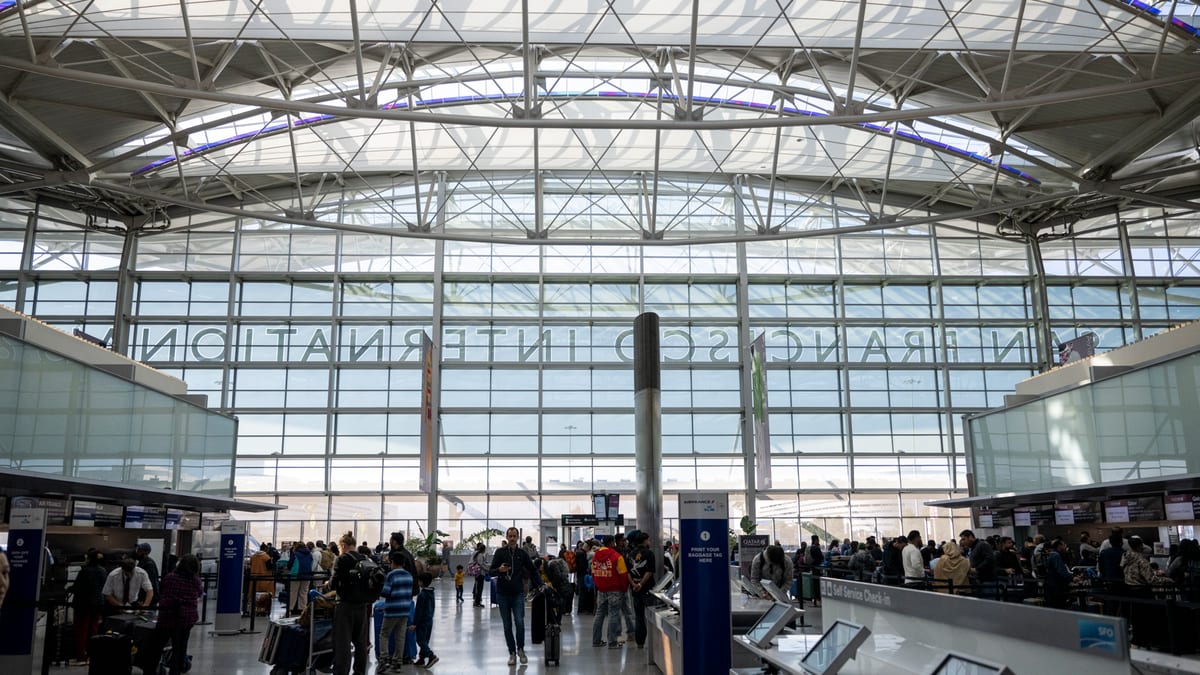
San Francisco International Airport is entering a period of unusual disruption in 2026, as major runway rehabilitation and new federal landing rules combine to tighten capacity and increase the risk of flight delays.
Get the latest news straight to your inbox!
Runway 1R Closure Is Reshaping SFO’s Airfield
The most immediate change for travelers is the extended closure of Runway 1R, one of SFO’s north–south runways. Publicly available project documents indicate that the runway is shut from March 30 to October 2, 2026, for a large-scale resurfacing and taxiway upgrade valued at roughly 180 million dollars. The work includes new pavement, updated lighting and reconfigured taxiways intended to improve safety and efficiency once the runway reopens.
During the construction window, all takeoffs and landings are being concentrated on the remaining runways, especially the longer 28 Left and 28 Right pair that handles most departures and arrivals in normal west-flow operations. Reports describe this as a common but constrained configuration that leaves less room to absorb schedule spikes, late inbound aircraft or unscheduled maintenance events.
Airport planning materials describe this project as part of a broader capital improvement program designed to modernize SFO’s airfield for decades to come. While the long-term goal is smoother and more resilient operations, the short-term effect for passengers is a busier, more tightly choreographed runway system where minor disruptions can ripple more quickly into knock-on delays.
Runway 1L, which parallels the construction zone, is also being used differently during the project. Rather than supporting regular takeoffs and landings, it is functioning primarily as an additional taxiway to keep aircraft moving on the ground. That configuration is meant to reduce bottlenecks near the work area but further limits the number of arrival and departure paths available at any given moment.
FAA Arrival Caps and Parallel Landing Limits
In addition to the physical closure, a federal rule change is altering how many flights can land at SFO each hour. According to recent coverage of the Federal Aviation Administration’s decision, the agency has reduced the airport’s arrival rate from about 54 planes per hour to roughly 36, citing the combination of runway construction and the complexity of SFO’s closely spaced parallel runways.
The new approach limits the practice of simultaneous side by side landings on parallel runways that are separated by only a few hundred feet. Aviation-focused reporting notes that SFO’s layout and crowded Bay Area airspace make these paired approaches more challenging to manage under certain traffic and weather conditions, especially when one of the north–south runways is closed for work.
With fewer arrival slots available, airlines have less flexibility to recover when early flights run late. Even if individual flights are not canceled, the tighter FAA cap can cause inbound aircraft to be placed in holding patterns or assigned longer sequencing times before landing. For passengers, that can show up as extended time in the air, missed connections or later-than-expected gate arrivals.
Airport and airline statements referenced in recent news reports suggest that the combined effect of the construction and arrival cap could push delay rates higher than initial estimates. Earlier projections around the runway project alone pointed to roughly 10 to 15 percent of flights experiencing delays, but the additional federal restrictions are now expected to increase the share of affected arrivals and extend typical delay durations to 30 minutes or more in some cases.
When Delays Are Most Likely to Hit
Travelers are unlikely to see the same level of disruption at all hours of the day. Information shared by the airport and summarized in public coverage indicates that the greatest strain on the system is expected during the morning and evening peaks, particularly around the midmorning bank of departures and again in the late evening when many transcontinental and international flights converge.
During these peaks, heavily used routes to major hubs such as Los Angeles, Seattle, Denver and Chicago may face tighter departure sequencing as controllers meter takeoffs and landings to fit the reduced capacity. Shorter regional hops, which are often used as feeders into long-haul services, can be especially vulnerable because a small delay on a first leg can cascade into missed or compressed connection windows.
Weather remains a major variable. SFO is known for low clouds and shifting winds, and reports indicate that those conditions could amplify the impact of the new rules. When clouds are low or winds require a change of runway configuration, arrival rates often fall even further, leaving airlines with fewer tools to recover from earlier disruptions.
Published analysis of the runway plan suggests that, on clear-weather days with well-spaced schedules, many flights will still operate close to on time. The risk increases on days with a combination of heavy demand, late inbound aircraft and marginal weather, when the reduced arrival cap and runway closure leave less margin for error.
Terminal, Train and Ground Access Changes Around SFO
While the runway work is the most visible change affecting flight times, travelers are also navigating a shifting ground and terminal environment. The multi-year redevelopment of Harvey Milk Terminal 1 formally reached its final phase in 2024, with airlines such as Alaska consolidating operations there. That consolidation means that some passengers are now using different check in halls, security checkpoints and boarding areas than on past trips, which can affect how much time is needed to move through the airport.
Elsewhere on the airfield, renovation work tied to Terminal 3 has temporarily closed one of the AirTrain stations that previously served parts of United’s operation, according to project timelines. The driverless AirTrain system continues to connect terminals, parking garages and the rental car center, but some riders may find that their preferred station is offline, requiring a slightly longer ride or walk between the platform and their gate.
Regional rail access is also in flux. Bay Area Rapid Transit has adjusted its schedule and infrastructure over the past several years to support installation of a modern train control system and new fare equipment. Service plans show that SFO continues to have direct BART access, though some late evening trips involve shuttle patterns or transfers at Millbrae. Travelers who rely on BART to reach early morning or late night flights may want to confirm departure times in advance to avoid tight connections.
At the curb, new mobility options are emerging alongside traditional taxis, app based rides and hotel shuttles. Local coverage notes that autonomous vehicle operator Waymo has begun a phased rollout of robotaxis serving the airport area under a pilot permit, adding another layer of choice for certain travelers. As with any new service, early adopters may wish to budget extra time in case of unfamiliar pickup points or demand surges.
How Passengers Can Navigate a More Constrained SFO
For individual travelers, the operational details translate into a simple reality: SFO is operating closer to its limits through at least early October 2026, and trips that once felt predictable may now require more buffer time. Airlines and travel experts quoted in recent coverage broadly recommend arriving earlier than usual, especially for international flights and during known peak periods.
Passengers with tight connections at SFO face particular risk while the arrival cap is in place. A 35 or 40 minute domestic connection that might have been workable under normal conditions can become more fragile in a schedule where inbound flights are more frequently 20 or 30 minutes behind. Travelers booking new itineraries may want to select longer connection windows or opt for nonstop flights when possible, even if that means a slightly higher fare.
Monitoring tools have become more important as well. Many airlines and third party apps now show real time projections for departure and arrival times, gate changes and baggage delays. With the runway project and FAA restrictions in the background, those updates can shift quickly throughout the day, so checking them repeatedly in the 24 hours before departure can help avoid surprises.
Publicly available planning documents emphasize that the runway rehabilitation and associated airspace changes are intended to yield a more efficient SFO in the long run, with upgraded pavement, lighting and taxiway geometry designed to reduce delays in future years. For now, however, travelers passing through the Bay Area’s busiest airport should be prepared for a summer and early fall travel season in which even routine operations are more susceptible to delay.