

Standing on a bluff above Lake Michigan, watching wind-driven waves erase and redraw the shoreline, I realized this was more than a beach trip. Traveling around one Great Lake, I began to understand all of them: their shifting moods, fragile coastlines, and the communities learning to live with a body of water that behaves more like an inland sea than a placid lake. Visiting Lake Michigan became my classroom for Great Lakes travel, reshaping how I plan, move, and pay attention around the world’s largest freshwater system.
Meeting Lake Michigan On Its Own Terms
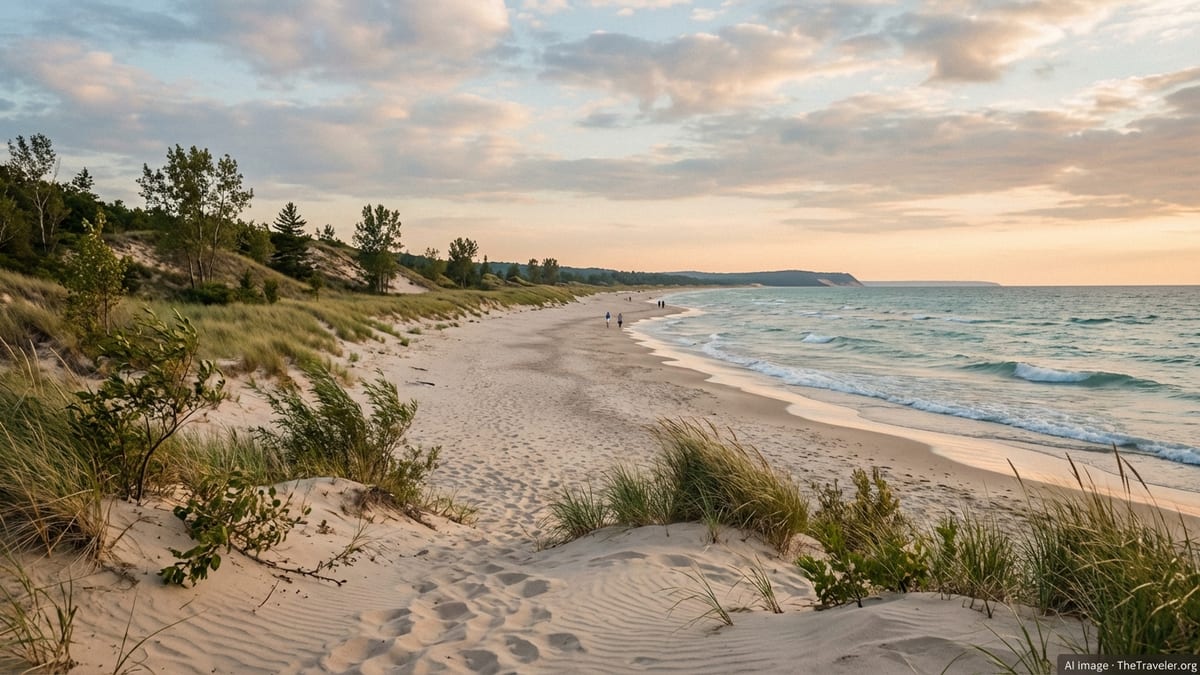
My first real encounter with Lake Michigan was not in peak-season sunshine but under a sky the color of brushed steel. The water was restless, the wind sharp, and sand lifted in thin veils across the beach. It looked and felt like an ocean, until a local reminded me that what I was seeing was freshwater, part of the largest surface freshwater system on Earth. That simple fact changed the way I saw the horizon. These were not just vacation beaches. They were an essential piece of a global freshwater reserve, shaped by wind, climate, and decisions made far from the shoreline.
Walking the beach near Warren Dunes State Park in southwest Michigan, where dunes rise more than 200 feet above the lake, I realized that Great Lakes travel begins with humility. The dunes are always in motion. Trails shift, access points come and go, and the lake itself sometimes advances, sometimes recedes. In recent years, Lake Michigan’s water level has swung from record highs that flooded shorelines to below the long-term average, exposing more beach but also revealing fresh erosion scars and unstable bluffs. Those fluctuations underscored how dynamic this coastline really is, and how wise travelers plan with change in mind.
That first stormy afternoon became my baseline. From then on, every calm morning and glassy bay felt like a temporary truce rather than a guarantee. It was my first lesson: on the Great Lakes, conditions are never static, and respectful travel means accepting the water’s volatility instead of assuming predictable, vacation-friendly weather.
Learning To Read A Freshwater Coastline
Lake Michigan’s eastern shore might look like a simple strip of sand and dunes from a distance, but traveling it taught me how layered and fragile this edge really is. State parks such as Warren Dunes and Saugatuck Dunes protect thousands of acres of forested dunes, wetlands, and beaches, creating buffers between human development and the lake. Trails do not always run straight to the water. Instead, they wind through backdunes and old-growth pockets, a quiet reminder that this landscape is more than a backdrop for sunset photos.
Hiking through Saugatuck Dunes State Park, where a short walk from the parking lot turns into a longer, sandy approach to the water, I started to notice details I had once ignored. The way dune grass threads its roots into the sand to hold it in place. The fencing and designated paths that keep hikers from unintentionally carving new scars into the dunes. Interpretive signs describing how each footprint can encourage erosion in a system already under pressure from fluctuating lake levels and powerful storms. The more I saw, the more clear it became that Great Lakes travel is as much about staying on the trail as it is about finding the perfect view.
That perspective carried over to towns that have invested heavily in protecting their waterfronts. Along parts of the Illinois and Michigan shorelines, communities have poured money into erosion control and beach restoration, building breakwaters and reinforcing vulnerable stretches where the lake had advanced rapidly during high-water years. Seeing fresh rock structures and reconstructed beaches beside older photos of lost shoreline hammered home that these coasts are being actively defended and reshaped. As a traveler, it made me cautious about where I walked, anchored, or set up a beach blanket, and more aware that each “natural” view was often the product of planning, engineering, and ongoing maintenance.
Planning Around Seasons, Moods, And Crowds
One of the most surprising lessons Lake Michigan taught me was how sharply the rhythm of Great Lakes travel changes by season. In July and August, lakeside cities like Chicago and Milwaukee treat the lakefront as a long front porch. Paths fill with runners and cyclists, small boats pepper the harbors, and festivals crowd the calendars, especially in Milwaukee, which leans into its “City of Festivals” identity along its Lake Michigan shoreline. By late October, however, many waterfront concessions are shuttered, docks are pulled, and even popular state park campgrounds grow quiet as temperatures drop and the lake begins to express its harsher side.
Understanding those shifts became essential for planning. In summer, it meant securing campsite reservations months ahead at destination parks around Lake Michigan, from Illinois Beach to Ludington, where demand for lakefront camping and cabin stays often exceeds supply. It also meant learning to navigate busy harbors and popular beaches at off-peak times of day: dawn walks on nearly empty sand, late evening swims after families drifted back to town. In shoulder seasons, it involved verifying opening dates, trail conditions, and even ferry schedules, as some services along the Lake Michigan Circle Tour route operate on limited or weather-dependent timetables.
The lake’s moods also became part of my calendar. Calm, clear days were ideal for paddleboarding, swimming, or simply wading along shallow sandbars that stretch far from shore in some areas. Windy days, on the other hand, were for hiking ridge trails, seeking sheltered inland lakes, or exploring downtown districts in coastal towns. On autumn trips, I packed layers and accepted that rain, fog, or sudden cold fronts were part of the experience rather than disruptions to be outrun. Over time, I began planning not just for where to go on the Great Lakes, but how each season would shape what those places felt like.
Seeing The Great Lakes As A Connected Travel Route
Before this trip, I thought of the Great Lakes as five separate destinations on a map. Driving segments of the Lake Michigan Circle Tour, and reading about the broader network of scenic routes that trace the Great Lakes and the St. Lawrence River, shifted my sense of scale. Around Lake Michigan alone, a driver can roughly circle the lake using a combination of state highways and local roads that keep the water in view surprisingly often. Signs mark the route, but what you notice most is how the lake threads through very different landscapes: the industrial legacy, beaches, and urban skylines near Chicago and Gary; the resort towns, vineyards, and orchards of western Michigan; the quieter sand spits and working ports of Wisconsin and Michigan’s northern counties.
That feeling of connection grows once you realize that freight ships, ferries, and an increasing number of small cruise vessels move through this same system, linking Lake Michigan to the other Great Lakes and ultimately to the Atlantic. Cruise lines have been adding more Great Lakes itineraries in recent seasons, and ports around the region have prepared for an influx of visitors. On shore, travelers are also discovering that they can piece together their own informal “cruise” by combining road trips, regional flights, ferries, and even bike routes along waterfront trails.
For me, that meant treating Lake Michigan not as an endpoint, but as a starting point for understanding how to move across the Great Lakes region thoughtfully. I learned to slow down and build buffer days into my itinerary for weather delays. I began to seek out local visitor centers, tribal cultural institutions, and small-town museums, each of which told a piece of the broader story of water, commerce, and environmental recovery across the basin. The lake stopped being a backdrop and became a transit corridor, a source of identity, and a shared responsibility stretching from state to state and across the border into Canada.
Balancing Recreation With Respect For A Working Lake
On a warm afternoon in Ludington State Park, I watched kids slide down a dune on pieces of cardboard, paddlers drift along the Big Sable River, and hikers queue for photos near a lighthouse that has guided ships since the nineteenth century. The scene felt quintessentially recreational. Yet just offshore, freighters moved along Lake Michigan’s shipping lanes, part of a commercial system that carries raw materials and goods between ports. Like the other Great Lakes, Lake Michigan is both playground and workplace, and that dual identity shapes responsible travel here.
Understanding the lake as a working waterway added nuance to simple experiences. That scenic lighthouse view also represented decades of maritime history and ongoing navigation needs. Those freighters shared space with fishing boats and sailboats that depend on accurate forecasts and marked channels. Even the car ferries that cross Lake Michigan, linking ports like Ludington and Manitowoc, are more than nostalgic icons. They are real transportation links, their schedules shaped by lake conditions and broader transportation demands. Recognizing that complexity changed how I framed my own presence along the shore.
It also made me more attentive to local conversations about environmental cleanup, invasive species, and waterfront revitalization. State and provincial agencies around the Great Lakes regularly publish reports on water quality, habitat restoration, and shoreline resilience. Reading summaries of those efforts while standing at a freshly restored beach or renovated harbor made the connection tangible. As a visitor, I began seeking out outfitters and tour operators who talked about stewardship as naturally as they discussed weather or gear, and I noticed that many coastal communities now promote responsible travel as part of their pitch, encouraging everything from reusable water bottles to support for local conservation initiatives.
Safety, Scale, And The Myth Of The “Just A Lake” Mindset
Perhaps the most important lesson Lake Michigan taught me is that the Great Lakes are not to be underestimated. Their size, depth, and wind patterns can create conditions more reminiscent of coastal seas than inland lakes. Local search and rescue crews, park rangers, and emergency managers speak openly about the dangers of rip currents, cold water shock early and late in the season, and rapidly changing weather. Storms can build quickly, with waves large enough to challenge even experienced boaters. Thinking of the Great Lakes as “just lakes” can lead visitors to misjudge risk, particularly if they are more familiar with small inland lakes or sheltered bays.
On Lake Michigan, safety starts with respecting that scale. That means checking marine forecasts rather than only general weather apps before going out on the water, wearing life jackets on small craft, and understanding that water temperatures can remain cold even on warm days. On hiking trails that run along high bluffs or dunes, it means heeding closure signs that appear after erosion events, and resisting the temptation to climb unstable slopes for a better photo. Around harbors and piers, it involves paying attention to warning flags and railings, especially in storm conditions when waves can sweep across concrete structures and make them hazardous.
As I traveled, I noticed that states around the Great Lakes have invested heavily in safety messaging and infrastructure. Many beaches now display clear flag systems to indicate swimming conditions, while marinas and launch sites post guidance about life jackets, weather, and navigation. Michigan’s strong overall camping safety ranking and robust park system reflect a broader culture of outdoor awareness. As a visitor, I came to see these not as restrictions but as an invitation to engage with the lakes more fully and more confidently, armed with information rather than assumptions.
Traveling More Lightly On A Freshwater Giant
Spending time along Lake Michigan also shifted how I think about my environmental footprint as a traveler. Around the Great Lakes, conversations about climate, shoreline erosion, and water quality are not abstract. They are visible in the form of relocated buildings, redesigned marinas, and stretches of beach that look very different than they did a decade ago. Shoreline communities talk about both the economic importance of tourism and the need to manage it carefully so that increased visitation does not accelerate damage to the very landscapes that draw people here.
That awareness encouraged me to make practical changes. I chose campgrounds and lodging that emphasized low-impact operations where possible, and shortened some driving legs in favor of staying longer in one place. I packed a refillable water bottle, mindful that drawing water from a system like the Great Lakes carries responsibilities as well as convenience. On the trails, I stayed off fragile foredunes and stuck to established paths through backdune forests and wetlands. In towns, I sought out local restaurants, outfitters, and guides whose livelihoods are directly tied to the health of the lake, reinforcing the link between visitor spending and community-led stewardship.
It also made me think differently about how I share Great Lakes destinations with others. Instead of posting only dramatic dune overlooks or quiet beach scenes, I began including context: photos of restored wetlands, interpretive signs about invasive species, and notes about why certain areas are seasonally closed for nesting birds or vegetation recovery. The more I learned, the more I understood that traveling lightly on the Great Lakes means not only reducing physical impact, but also helping to spread a more accurate, balanced story about these places.
The Takeaway
By the time I completed a loose loop around Lake Michigan, what had started as a simple lakeside escape had turned into a new framework for Great Lakes travel. I left with a deeper sense of how one lake connects to the entire basin, and how each beach day, harbor walk, or scenic overlook exists in a web of environmental, economic, and cultural relationships. I learned to read the coastline more carefully, to plan around seasons and storms, to balance recreation with respect for a working waterway, and to travel in ways that both enjoy and protect the freshwater that defines this region.
Most of all, Lake Michigan taught me to approach the Great Lakes with the same seriousness and curiosity I might bring to an unfamiliar country. These are not anonymous blue shapes on a map, nor simply backdrops for vacations. They are living, changing, essential bodies of water that reward anyone willing to slow down, listen to local knowledge, and adapt. For travelers, that mindset transforms a trip from a checklist of viewpoints into a long conversation with the lakes themselves, one that continues long after the sand has been shaken from shoes and the last sunset has faded from view.
FAQ
Q1. Is Lake Michigan really comparable to an ocean for travelers?
Lake Michigan is freshwater, but its size, waves, and weather patterns can feel very similar to the ocean, especially in wind and storms, so it deserves the same respect.
Q2. When is the best time of year to visit Lake Michigan for a first trip?
Late June through early September usually offers the warmest water, most open services, and frequent calm days, though it is also the busiest season along the shore.
Q3. How many days should I plan for a road trip around Lake Michigan?
A full loop can be done in about a week, but 10 to 14 days allows more time for state parks, small towns, and weather-related changes to your plans.
Q4. Are the Lake Michigan beaches safe for swimming?
Many beaches are excellent for swimming, but you should always check local flags and forecasts, watch for rip current advisories, and be mindful of cold water early and late in the season.
Q5. Do I need special gear for hiking the Lake Michigan dunes?
You do not need technical equipment, but sturdy footwear, plenty of water, sun protection, and a willingness to walk on soft sand are important, especially on hot or windy days.
Q6. Can I visit the other Great Lakes easily from Lake Michigan?
Yes, Lake Michigan connects by road, air, and water routes to the broader Great Lakes region, but reaching lakes like Superior or Ontario usually requires additional driving days or flights.
Q7. How do I travel more sustainably around Lake Michigan?
Choose locally owned lodging and guides, stay on marked trails, reduce driving by spending extra nights in one area, and follow local guidance on protecting dunes and shorelines.
Q8. Are there Great Lakes cruises that include Lake Michigan?
Several small-ship cruise lines operate seasonal itineraries that visit Lake Michigan ports along with other Great Lakes, offering a way to sample multiple destinations by water.
Q9. Is camping a good option for exploring the Lake Michigan coast?
Camping is one of the most popular ways to experience the shoreline, but reputable campgrounds and state parks often book up early, so advance reservations are strongly recommended.
Q10. What surprised travelers most when they first visit Lake Michigan?
Many people are struck by the scale of the lake, the clarity of the water, and how quickly conditions can change, from calm, shallow sandbars to powerful waves and fast-moving storms.