

On paper, Victoria, British Columbia looks like a dream. Every photo seems to show a fairytale harbor framed by hanging flower baskets, old-world architecture and endlessly blue skies.
When I finally went, I carried all those postcard images with me. What I found was a city that is charming and human in ways the marketing does not quite capture, and also flawed and occasionally frustrating in ways the brochures never mention.
This is what visiting Victoria actually felt like for me, beyond the carefully curated images.
Arriving in Victoria: Pretty First Impressions, Messy Edges
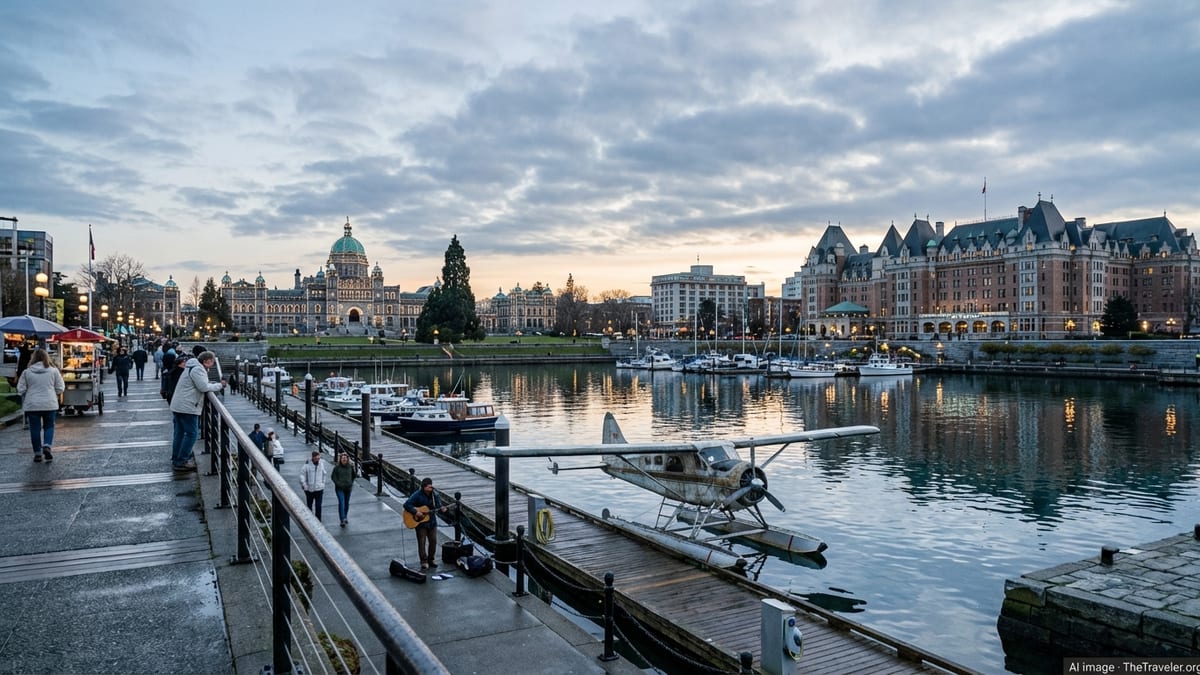
My first glimpse of Victoria from the water really did look like the postcards. The Inner Harbour sat framed by the domed Parliament Buildings and the grand old hotel everyone photographs, seaplanes buzzing in and out like slow motion dragonflies. From a distance, the city is all silhouettes and charm.
Up close, the story became more complicated. The ferry terminal process was efficient enough, but the cost to get there by sea or air felt steep compared with other regional trips I have taken. Even shoulder season prices for ferries and seaplanes add up quickly, especially if you are traveling with a companion or a family.
Walking from the harbor into downtown, I felt an almost theme park level of tidiness. The streets around the Inner Harbour are impeccably maintained, flower baskets are everywhere in season, and there is a steady flow of visitors, many from cruise ships that can bring thousands of people at a time.
The effect is undeniably pretty, but also a bit staged. If you stay only in this compact waterfront core, it can feel like you are visiting a polished, carefully controlled version of the city instead of the place people actually live in.
As I moved a few blocks away from the water, the vibe shifted from “storybook port” to “small working city.” Older low-rise buildings, buses, office workers on breaks and students with backpacks filled the streets. It was not ugly or unsafe, simply more ordinary than the tourist marketing suggests.
For me, that contrast between the famous harbor view and the everyday streets behind it was one of my first reminders that Victoria is not just a postcard destination. It is a real city with traffic backups, construction noise and grocery store runs like anywhere else.
Weather vs Expectations: The Myth of Perpetual Sunshine
I knew intellectually that Victoria has a mild, maritime climate and a lot of gray days, but the imagery of endless summer flowers and bright light had clearly seeped into my expectations. In reality, my visit involved a lot more clouds and chill than I had naively pictured. On paper the temperatures were not extreme at all, but the damp air made it feel colder than the number suggested. Wind off the water can cut through lighter layers, and I saw plenty of people who had clearly underestimated how quickly the temperature drops in the evening.
Rain was not constant, but it was always a possibility in the back of my mind. I learned quickly that Victoria rewards flexible planning and layered clothing. On one day I started in a light jacket and sunglasses, ended up pulling a hood tight against a sudden shower by late afternoon and returned to my room feeling chilled despite the moderate temperature. The upside was that the rain kept some of the crowds down in the middle of the day and added a soft, reflective quality to the streets and harbor. Puddles on the waterfront captured shimmering reflections of the parliament lights that felt more atmospheric than any sunny photo I had seen beforehand.
If you come expecting a static summer postcard, you may be disappointed. What I actually experienced was a city that feels more like the Pacific Northwest than a British garden fantasy. The sky is often layered with clouds, and the light shifts from moment to moment. I found that once I let go of the fantasy of perfect weather, I appreciated the moody harbor, misty tree lines and the sense that Victoria is a place where people embrace wool, rain shells and cozy interiors for a reason.
Downtown Charm, Cruise Crowds and the “Museum of Itself” Effect
Downtown Victoria, especially around Government Street and the Inner Harbour, is where the city leans into its idea of itself. There are heritage buildings, souvenir shops, pubs with dark wood interiors and tea rooms that play up the British connection. At its best, this part of town feels like a walkable, human-scale district with enough character to justify the hype. At its worst, it can feel like a “museum of itself,” curated for visitors more than for locals.
The timing of my visit lined up with heavy cruise traffic, and I felt that immediately. At certain hours the sidewalks near the harbor swelled with people moving in loose packs, sometimes five or six across, stopping unpredictably for photos. It was not unmanageable, but it did make spontaneous wandering less relaxed. There were moments when I found myself quietly irritated, weaving through clusters of people consulting maps on their phones while I tried to cross a street or step into a shop.
Outside those peak windows, downtown relaxed into something I liked much more. Early mornings felt almost sleepy, with locals grabbing coffee and dog walkers hugging the waterfront paths. In the evenings, once the day-trippers and many cruise passengers had gone back to their ships or hotels, the streets settled into a quieter rhythm. Pubs and small restaurants filled with a mix of locals and visitors, and the city felt less like a stage set and more like a place people genuinely inhabit.
What surprised me most was how quickly the vibe shifted just a few blocks away from the tourism-heavy core. Move north or east and you find more ordinary businesses, residential streets and small parks. If you are willing to walk a little further, it is easy to escape the crowds without leaving the city center entirely. For me, that was essential. Without those escapes, downtown Victoria might have felt too curated and cruise-driven to really enjoy.
Gardens, Nature and the Cost of All That Beauty
Victoria’s reputation as a city of gardens is well deserved, but that beauty comes with both practical and financial costs that the postcard images gloss over. The flagship garden attraction outside the city is objectively stunning: manicured lawns, themed sections, dramatic seasonal plantings and a sense of meticulous care. When I arrived, the colors and composition genuinely impressed me. It felt like walking through a living painting, with every turn revealing another carefully designed vista.
The tradeoff is that you share that experience with a lot of other people, especially in peak bloom and when multiple cruise ships are in port. At times I found myself in a slow-moving river of visitors flowing along narrow paths, stopping at the same viewpoints and queuing for the same photo spots. It was beautiful, but it did not feel particularly peaceful. If you imagine having these gardens mostly to yourself, you may be disappointed.
Admission prices for major garden attractions and transportation to reach them also added up quickly. Between entrance fees and shuttle or bus tickets, I paid more than I expected for what is essentially an extended stroll, even if it is a spectacular one. I could justify it as a one-time experience, but I left feeling that this part of Victoria leans heavily on a captive audience: people who have already come all this way and are unlikely to skip the headline sights.
Within the city, smaller public gardens and parks felt more relaxed and, in many ways, more rewarding. Neighborhood green spaces, coastal trails and even tree-lined residential streets offered glimpses of Victoria’s plant life without the price tag or the crowds. I found that balancing one or two big-ticket garden visits with unstructured wandering in local parks gave me a more grounded sense of why this city is so associated with flowers and greenery.
The Waterfront: Seaplanes, Seals and the Quiet Moments Between
The Inner Harbour is Victoria’s visual centerpiece, but what stuck with me was less the grand sweep of it and more the small, sometimes contradictory details. There were moments of genuine magic: a seaplane lifting off as the setting sun glanced off the water, street musicians playing on the causeway while kids leaned over the railings to look for harbor seals, the parliament building lights flickering on at dusk. In those pockets of time, Victoria felt romantic and almost improbably picturesque.
Those moments are interspersed with things that do not show up in the glossy shots. The constant drone of seaplanes taking off and landing can be charming at first, then tiring if you spend long stretches near the water. The harbor is an active transportation hub, so there are service vehicles, tour buses idling, and the inevitable lineups for popular attractions. On certain mornings, I noticed the slight smell of fuel and the practical reality that a busy working harbor carries noise and exhaust as well as charm.
One of my favorite experiences was simply walking along the waterfront at off-peak times. Early morning runs along the harbor path felt calm, with mist hanging low over the water and only a few joggers and dog walkers sharing the route. Late at night, once the day traffic had died down, the harbor transformed into a quieter, more reflective space. If you plan your timing carefully, you can have stretches of that iconic view largely to yourself, but it requires some intention.
Overall, the waterfront delivered on its promise visually, but it did not feel like a tranquil retreat. It is a busy, layered place that blends tourism, transportation and civic identity. If you come expecting a quiet coastal village, you may find the constant hum of seaplanes, ferries and crowds surprising. If you come expecting an active harbor with beautiful edges, you will probably be impressed.
Food, Prices and the Reality of a Popular Island City
Before I visited, I had heard mixed things about Victoria’s food scene: some people raved about the cafes, breweries and seafood, while others complained about tourist pricing and underwhelming meals. My own experience fell squarely in the middle. I had some excellent coffee, enjoyed a couple of standout meals and also ate food that felt standard at best for prices that made me raise an eyebrow.
Eating near the harbor and the main tourist streets was consistently expensive. Some of that is understandable given location and high operating costs, but there were times when I felt I was paying more for the view and the address than for what was on the plate. A few menus leaned heavily on safe, crowd-pleasing staples without much creativity. Service was generally friendly but could be stretched thin when cruise passengers poured into town at the same time as hotel guests and locals.
When I stepped a bit farther from the most photographed blocks, the food improved noticeably. Smaller neighborhood spots and less obviously touristy streets offered better value and more personality. I found local bakeries, casual spots with fresh seafood and pubs pouring regional beer where the atmosphere felt relaxed and prices more in line with what I was actually eating. It was a reminder that Victoria is more than its harbor, and that you have to be willing to walk or bus a little to find the places where locals actually spend time.
Overall, I would not put Victoria in the same culinary league as a major food destination, but I would not call it disappointing either. The city rewards a bit of research and curiosity. If you treat downtown waterfront restaurants as occasional splurges for the view rather than everyday options, and you are willing to explore away from the core, you can eat very well here without feeling like you are constantly overpaying.
Neighborhoods, Day Trips and Seeing Past the Postcard
One of the best ways I found to get beyond the postcard image was to spend time in Victoria’s neighborhoods and on its edges. Residential areas close to downtown were walkable and pleasant, with older homes, tree-lined streets and small local businesses tucked into corners. I liked watching the rhythm of daily life: parents walking kids to school, cyclists commuting, people queuing outside popular brunch spots on weekends. It grounded the city for me in a way that no harbor view could.
Exploring on foot and by bus also made clear that Victoria’s public transportation and infrastructure are not perfect. Buses were generally reliable but not especially frequent outside core routes and peak times. Travel times could feel long for relatively short distances when traffic and transfers were involved. If you do not have a car and want to explore beyond the central neighborhoods, you need to build in more time and patience than the tight itineraries in travel guides might suggest.
Day trips to nearby beaches, hiking areas and small coastal communities offered some of the most rewarding experiences of my stay. The coastline is rugged and beautiful, with rocky shores, tall trees and a sense of being at the edge of something much bigger. These outings reminded me that one of Victoria’s main strengths is not just the city itself, but its position as a hub for exploring southern Vancouver Island. The catch is that getting to many of these spots comfortably and efficiently is much easier with a car, and that adds another layer of cost.
Spending time outside the core also highlighted some of the real-world issues Victoria faces, from housing pressures to visible homelessness. Those realities exist alongside the postcard images and should be acknowledged. I did not feel unsafe, but I did feel that the city’s polished marketing sometimes erases the more complicated aspects of life here. As a visitor, I tried to hold both truths at once: Victoria is beautiful and welcoming in many ways, and it is also a place grappling with affordability, growth and social challenges like many other cities.
The Takeaway: Who Victoria Is Really For
By the end of my trip, my mental image of Victoria had shifted from a static postcard to something more layered and honest. The harbor really is gorgeous, but it is busy and loud. The gardens are breathtaking, but they are expensive and often crowded. Downtown is charming in places and feels like a tourist stage in others. The weather can be soft and golden or stubbornly gray and damp, sometimes in the same afternoon. This is not a flawless coastal fantasy, but a real city that happens to have a remarkably pretty front porch.
Would I go back? Yes, but I would plan differently. I would avoid peak summer cruise periods if possible, aim for late spring or early fall when crowds and prices ease slightly, and base myself a bit away from the most touristy streets while still staying walkable to the harbor. I would budget more realistically for transportation and a couple of big-ticket attractions, then deliberately seek out free or low-cost experiences like coastal walks, neighborhood explorations and time in smaller parks.
I think Victoria is especially worth it if you value walkable urban areas, enjoy maritime atmospheres, and appreciate mild climates even when they are moody. It suits travelers who like slow exploration more than those chasing big-city nightlife or adrenaline-heavy activities. If you are content with early evenings, cozy pubs, harbor walks and the occasional splurge on a special garden or tea experience, you will likely leave satisfied.
If your expectations are anchored in the postcard fantasy of constant sunshine, quiet streets and empty flower-lined paths, you might feel let down. Adjusting those expectations was key for me. Once I accepted Victoria as a living, breathing city with both beauty and flaws, my experience became far richer. In the end, it is the imperfect mix of harbor lights, drizzle, friendly conversations and unexpected quiet side streets that stayed with me long after I left.
FAQ
Q1. Is Victoria, BC worth visiting if I only have one day?
If you have just one day, Victoria is still worth it, especially if you focus on the Inner Harbour, downtown and one key attraction like a major garden or museum. You will barely scratch the surface, but you will get a real feel for the city’s setting and character.
Q2. When is the best time of year to visit Victoria to avoid crowds?
I found late spring and early fall to be the best compromise, with fewer cruise passengers and slightly lower prices than peak summer, while still offering relatively mild weather and decent daylight.
Q3. Do I need a car in Victoria?
You do not need a car to enjoy the downtown core and nearby neighborhoods, which are very walkable, but having one makes it much easier to explore beaches, hiking trails and outlying areas without relying on slower bus connections.
Q4. Is Victoria really as expensive as people say?
For me, accommodations, ferry or flight costs and some central restaurants felt pricey, especially in busy seasons, but I was able to soften the impact by booking early, staying slightly outside the core and eating more often at casual or neighborhood spots.
Q5. How many days should I spend in Victoria?
After going once, I would recommend at least two full days to see the main harbor area and one or two major attractions, and three to four days if you want to add day trips or slower neighborhood exploration.
Q6. Is Victoria a good destination for kids?
Yes, as long as your kids enjoy outdoor walks, parks, simple harbor activities and perhaps a garden or museum; there is not a huge amount of high-energy entertainment, so very active kids may need extra planning.
Q7. What surprised me most about visiting Victoria?
The biggest surprises were how changeable and cool the weather felt, how busy the harbor area became when cruise ships were in port, and how quickly the city felt more authentic once I wandered just a few blocks away from the main tourist streets.
Q8. Is the famous garden outside the city really worth the cost and time?
For me it was worth doing once, because it is genuinely beautiful, but I would time my visit carefully to avoid peak midday crowds and would not repeat it every trip given the cost.
Q9. Can I enjoy Victoria on a budget?
It is possible, but you have to be intentional: travel outside peak season, use public transit where you can, choose simpler accommodations, and focus on free experiences like waterfront walks, neighborhood wandering and public parks rather than stacking multiple paid attractions.
Q10. Would I recommend Victoria to someone who dislikes rain and cooler weather?
If you strongly prefer hot, dry, sunny climates, Victoria may not be your ideal match; you might still like it for a short stay, but you should come prepared for gray skies, drizzle and cooler evenings even in seasons that look summery in the postcards.