

British culture can feel at once familiar and surprisingly different to visitors. You may recognise the language, brands and place names long before you land, yet many social codes are unspoken and rarely explained. Understanding a few essentials about how people communicate, socialise and see themselves will make your time in the United Kingdom far smoother, and often far more rewarding.
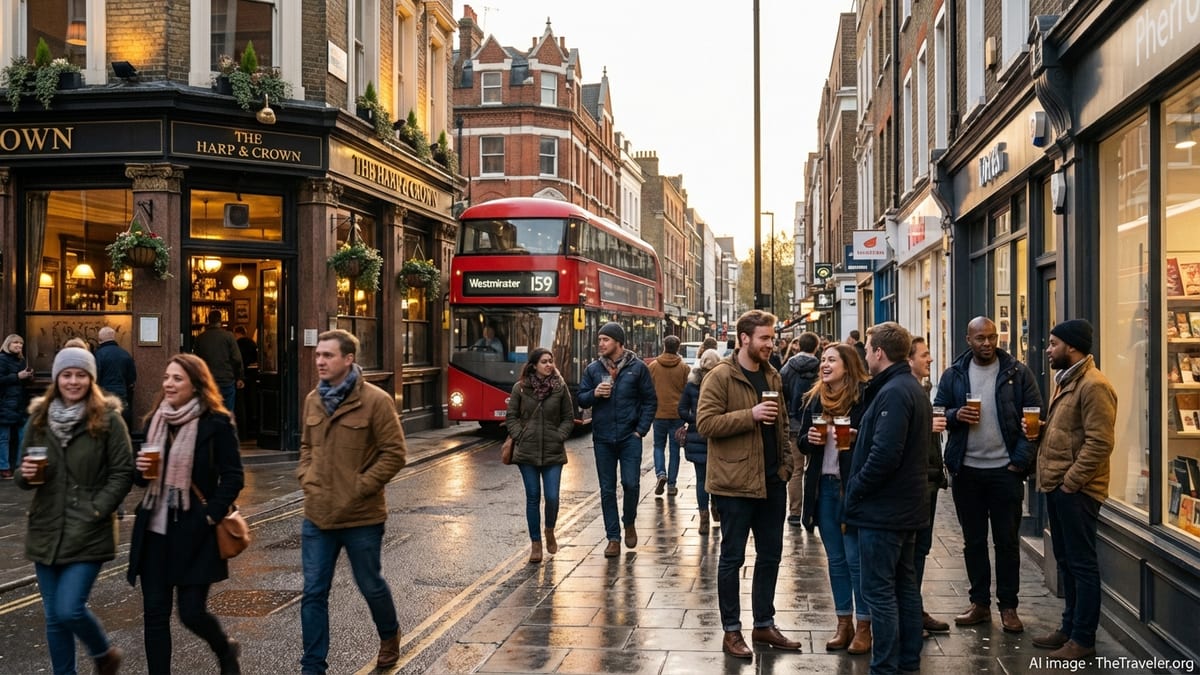
The Bigger Picture: A Modern, Diverse Britain
For many visitors, the word “British” still conjures images of afternoon tea, red buses and stately homes. Those icons exist, but they sit inside a much more complex and fast-changing society. Contemporary Britain is urban, suburban and rural; nostalgic and forward-looking; traditional in some rituals yet highly individual in day-to-day life. London in particular has become one of the most diverse cities in Europe, with residents from hundreds of national backgrounds and no single ethnic group in an overall majority. That mix has shaped everything from food and music to slang and street fashion.
Visitors should think of British culture less as a single, uniform experience and more as a patchwork of regional and community identities. Scottish, Welsh, English and Northern Irish cultures have distinct histories, politics and traditions. Within England, accents, class backgrounds and local pride can differ sharply between, for example, Liverpool, Newcastle, Manchester and Bristol. In London alone you may hear traditional Cockney, the newer Multicultural London English used by many younger people, and a host of other varieties of English spoken side by side on a single bus.
That diversity does not mean “anything goes,” however. There is still a broadly shared sense of how to behave in public, how to queue, how loudly to speak, and how to treat strangers. Much of what visitors experience as “Britishness” today lies not in old-fashioned imagery but in these common habits and expectations that help very different people share small spaces with relatively little friction.
Everyday Politeness, understatement and the “Sorry” habit
Politeness remains a central social value in Britain, but it is expressed more through restraint than grand gestures. You will hear “please,” “thank you,” and especially “sorry” many times a day. The word “sorry” is used not just for real regret but as a kind of social lubricant: people say it when passing in front of you, when they did nothing wrong, or even when they themselves have been bumped. Joining in with these small courtesies helps interactions go more smoothly, whether you are buying a coffee or asking for directions.
British communication often relies on understatement and indirectness. Rather than saying something is terrible, a Brit might call it “not ideal” or “a bit of a nightmare.” “Quite good” can mean genuinely good, barely acceptable, or politely negative, depending on tone and context. When someone says something is “interesting,” they may be gently signalling doubt or disagreement. Visitors from cultures that value very direct speech sometimes interpret these phrases literally and miss the subtext, so it helps to listen to intonation and watch facial expressions as much as the words themselves.
Criticism and disagreement are usually softened rather than delivered head-on, particularly in professional and formal settings. You might hear phrases such as “I am not sure that would work” or “I wonder if we could try another approach” instead of blunt refusals. In social situations, an overly forceful or confrontational tone can make others uncomfortable, even if your intention is simply to express enthusiasm. If in doubt, a slightly lower volume and a little more hedging will rarely cause offence.
Humour, self‑deprecation and the famous “stiff upper lip”
Humour plays an outsized role in British life, and understanding its common forms will help you decode many interactions. Irony, sarcasm and self-deprecation are especially prized. People often make themselves the butt of the joke, downplaying success or competence rather than boasting about them. Saying “I made a complete mess of that” may be mostly humorous, not a serious confession. Likewise, complaining jokingly about the weather, trains or minor inconveniences is almost a national sport and can be a way of bonding with strangers.
The stereotype of the “stiff upper lip” refers to dealing with difficulty by controlling visible emotion. While modern Britain is more open about feelings than it once was, there is still a cultural preference for not making a scene. In public settings, overt displays of anger, loud arguments or dramatic reactions are sometimes seen as awkward or childish. Many Brits would rather make a dry joke in a tense moment than voice strong feelings directly. This can puzzle visitors who expect sympathy to be shown very openly. Often, the gentle humour is itself a form of care.
At the same time, humour can be sharp and is sometimes used to test boundaries. Friendly teasing among colleagues or friends is common, but it usually rests on mutual familiarity and consent. As a visitor, it is safer to be modest in your use of irony until you understand the local dynamics. Laughing along with a joke at your own expense is often appreciated more than trying to top it with an even harsher comment about someone else. When in doubt, remember that timing and tone matter at least as much as the words.
Personal space, queues and public behaviour
Shared public space is where many visitors feel the distinctiveness of British culture most keenly. Queuing is perhaps the classic example. Whether at a bus stop, in a shop or at a museum entrance, forming an orderly line is both practical and a moral expectation. Cutting in is likely to provoke quiet irritation, raised eyebrows or a pointed “Excuse me, there is a queue.” Joining the back without fuss, even if the system seems overly patient, will earn you silent approval.
Personal space also matters. On trains and buses, people usually avoid unnecessary physical contact and are cautious about making noise. Speaking on a phone loudly, playing music without headphones or spreading belongings across several seats can be seen as inconsiderate. On busy commuter services you may hear little more than the rustle of newspapers and the tapping of phones. Outside big sporting events or nights out, public singing or shouting is relatively rare and will stand out.
At the same time, there are moments when the rules relax. A football match, summer music festival or local street party can involve chanting, laughing and loud conversation. Even then, there are boundaries around aggression, harassment and unwanted physical contact. Britain has, in recent years, become more aware of issues such as public safety at night and respect in crowded spaces, and visitors are expected to take those concerns seriously. As a general guide, if you are not sure whether something is appropriate, imagine doing it in a quiet library and adjust only slightly upwards.
Pubs, drinking culture and unspoken rules
The pub remains one of the most distinctive social institutions in Britain. Pubs are not just places to drink alcohol but community living rooms where families eat Sunday lunch, friends watch sport and colleagues decompress after work. For visitors, they offer a window into local life, but there are a few conventions worth learning. In most pubs you order and pay for drinks at the bar rather than waiting for table service. There may be food service at the bar as well, or you might order at the bar and then be given a number for your table.
For groups, the custom of buying drinks in “rounds” is important. Instead of each person paying separately for every drink, one person will buy for everyone in the group this time, and someone else will volunteer for the next round. It is considered poor form to accept drinks from others without ever offering to stand a round yourself. If you are unsure, you can ask, “Are we doing rounds?” or simply say, “Let me get this one.” In very casual situations, especially among younger people, individuals might still pay for themselves, but the spirit of reciprocity remains.
Pub etiquette also extends to how you approach the bar. In a traditional setting, there may not be a formal line. Instead, staff notice who arrived in what order and serve people roughly in turn. Waving money or calling out is frowned upon; catching the bartender’s eye and a small nod is usually enough. Tipping bar staff for simple drinks has historically not been expected, although the growing use of card machines that offer percentage tip options has introduced new habits. If you wish to show appreciation, you can sometimes say, “And one for yourself,” which invites the server to add the cost of a drink for them to your bill, but this is entirely optional.
Finally, remember that many pubs serve alcohol alongside soft drinks, coffee and food, and families with children are often welcome during daytime hours. You are not obliged to drink alcohol to enjoy the atmosphere. However, public drunkenness, especially if it becomes disruptive, is increasingly discouraged. Towns and cities have by-laws, and police and door staff can refuse entry or service. Enjoying the social side of the pub while remaining aware of your limits is very much in line with contemporary British expectations.
Food, drink and tipping customs
British cuisine has changed dramatically in recent decades. Traditional dishes such as fish and chips, roast dinners and pies still have a place, especially in pubs and at home, but restaurant culture is now highly international. Indian, Pakistani, Caribbean, Turkish, East Asian and many other culinary traditions have become part of everyday life in cities and towns. It is perfectly normal for a British family to eat pasta one night, a curry the next and a Sunday roast at the weekend. Visitors should not be surprised to find excellent Middle Eastern bakeries in suburban streets or West African food stalls at local markets.
Meal times and habits may differ from what you are used to. Lunch can be light and quick, often a sandwich or salad eaten at a desk, while dinner is the main hot meal for many households. In pubs and casual restaurants, counter service is common: you order and pay at the till, then food is brought to your table. In sit-down restaurants with table service, it is typical to be seated by staff, order at the table and ask for the bill when you are ready. Splitting the bill among friends is common, sometimes equally and sometimes itemised, but it is polite to avoid prolonged haggling over small differences.
Tipping practices in Britain differ from those in countries where tips form a large part of service workers’ income. A discretionary service charge, often around a modest percentage of the bill, is now frequently added automatically in restaurants, especially in cities. When it is included, most locals do not tip on top unless service was exceptional. If no charge appears, leaving a similar modest percentage for good service at a sit-down restaurant is customary. In bars, pubs and for simple counter service, tipping is usually not expected at all.
For taxis, rounding up the fare or adding a small extra amount is appreciated but not compulsory. Hotel porters and housekeeping might receive a small cash tip, though practices vary between travellers. Guides, drivers on organised tours and personal services such as hairdressers may receive a modest gratuity if you are pleased with their work. The key point is that in Britain, tipping is used to recognise good service rather than to replace wages. If you politely ask a local whether tipping is expected in a particular situation, they will usually be happy to explain.
Identity, class and regional differences
To understand British culture, it helps to know that questions of identity and class remain sensitive, even if they are not always discussed openly. Accents, vocabulary, schooling and even hobbies can carry subtle signals about someone’s background. At the same time, modern Britain is less rigidly class-bound than in the past, and it is not especially polite to probe strangers about their social position, income or political opinions. Visitors are generally safer asking about local history, sports teams or favourite places to visit than about what school someone attended or how they voted.
Regional pride can be strong. Many people from Scotland, Wales and Northern Ireland consider themselves Scottish, Welsh or Northern Irish first and British second, and political debates around national identity continue. Even within England, someone from Cornwall may feel very different from someone from Yorkshire or the Midlands. Jokes about stereotypes between regions are common among locals but can sound offensive when made by outsiders. As a visitor, it is wiser to show curiosity and respect than to join in teasing that you may only half understand.
Religion and politics are present but often kept private in casual conversation, particularly with new acquaintances. Strongly expressing views on contentious issues such as Brexit, the monarchy or independence movements can quickly make things awkward unless you know your audience well. Many Brits prefer to keep such discussions good-natured, shifting back to safer ground like sport, television or travel if tensions rise. Observing this restraint and being willing to change the subject can help you navigate social situations smoothly.
Digital life, work patterns and current social change
Like most of Europe, Britain has seen rapid changes in work, technology and daily rhythms. Flexible and remote working are now firmly established in many sectors, which means city centres can feel quieter on some weekdays than visitors expect, while suburban cafés and co-working spaces are lively. Digital payments are widespread: many small businesses, cafés and pubs operate almost entirely cashless, accepting cards and phone payments instead. It is still useful to carry a little cash, especially in rural areas and at small markets, but you are unlikely to need large amounts.
Social media and messaging apps shape how friends and families stay in touch, but there remains a strong value placed on in-person gatherings, whether in pubs, parks or homes. Weekend routines might include a walk in the countryside, a visit to a local market or a trip to a football match. Public discussion often touches on housing costs, transport, the National Health Service and the pace of change in cities. Visitors will notice signs of these debates in newspaper headlines and conversations, but are not expected to have detailed opinions.
Britain is also in the midst of ongoing conversations about equality and inclusion. Issues around race, gender, sexuality and disability are taken increasingly seriously in law and in public discourse. You will see more visible efforts to accommodate different needs, from step-free access at stations to gender-neutral facilities in some venues. Language is evolving quickly, and while not everyone agrees on every change, there is a broad expectation that people should try to be respectful. If you are unsure how to address someone or refer to a group, asking politely is better than assuming.
The Takeaway
Visitors arriving in Britain today encounter a society that blends the familiar with the unexpected. You may recognise the skyline of London or the sound of English from films and television, yet discover that real-life interactions depend on subtler codes: an instinct for queuing, a fondness for understatement, a belief in fairness and an often dry sense of humour. These habits allow millions of people from very different backgrounds to share crowded trains, busy pubs and city pavements with reasonable harmony.
For travellers, a little cultural awareness goes a long way. Speaking slightly more softly, remembering to say “please,” “thank you” and “sorry,” joining queues without complaint and approaching sensitive topics with curiosity rather than certainty will all help you fit in. At the same time, bringing your own perspective and questions is welcome; many Brits are genuinely interested in how their country appears from the outside.
Above all, British culture is not a museum piece. It is changing year by year, shaped by new arrivals, new technologies and new ideas. If you come prepared to observe, listen and adapt, you will find that the unwritten rules become easier to read, and that everyday moments in cafés, on buses and in local pubs can become some of the most memorable parts of your journey.
FAQ
Q1. Do I need to tip everywhere in the UK?
In most situations you do not. A modest tip in sit-down restaurants and for good taxi service is common, but in pubs, basic cafés and for simple counter service, tipping is usually not expected.
Q2. Is British people’s politeness genuine or just a habit?
It is both social habit and genuine consideration. Polite language helps keep public life calm, but many people also see it as a basic form of respect for strangers.
Q3. How direct can I be when talking to British people?
You can be honest, but it is wise to soften strong opinions with gentle wording and to avoid very confrontational tones, especially when you first meet someone.
Q4. Is it acceptable not to drink alcohol in a pub?
Yes. Many people visit pubs for food, soft drinks or coffee, and staff are used to customers who do not drink alcohol for personal, religious or health reasons.
Q5. How should I handle conversations about politics or the royal family?
Approach such topics cautiously, listen more than you speak at first, and be ready to change the subject if the mood becomes tense or people seem uncomfortable.
Q6. Are British cities safe at night for visitors?
Major cities have busy nightlife areas and active public transport, but, as in any large city, you should stay aware of your surroundings and avoid obviously risky situations.
Q7. Will people understand my accent if English is not my first language?
Probably yes. Britain is used to a wide variety of accents. Speaking clearly and not too fast is more important than sounding “British,” and most people will make an effort to understand.
Q8. Is it rude to ask someone where they are originally from?
It can be sensitive, especially for people who were born and raised in the UK. If you are genuinely curious, asking about their local area or neighbourhood is usually safer.
Q9. What should I know about visiting someone’s home?
Arriving roughly on time, bringing a small gift such as flowers or chocolates and offering to help clear up are all appreciated. Waiting to be shown where to sit is also common.
Q10. How casual is dress in everyday British life?
Dress is generally quite relaxed, especially in cities, but very informal clothing in smart restaurants, theatres or some workplaces may stand out, so checking the expected level is sensible.