

More news on this day
Destination weddings are shifting from big group getaways to tightly curated, travel-forward celebrations, as couples balance budgets, sustainability and immersive experiences for their guests.
Get the latest news straight to your inbox!
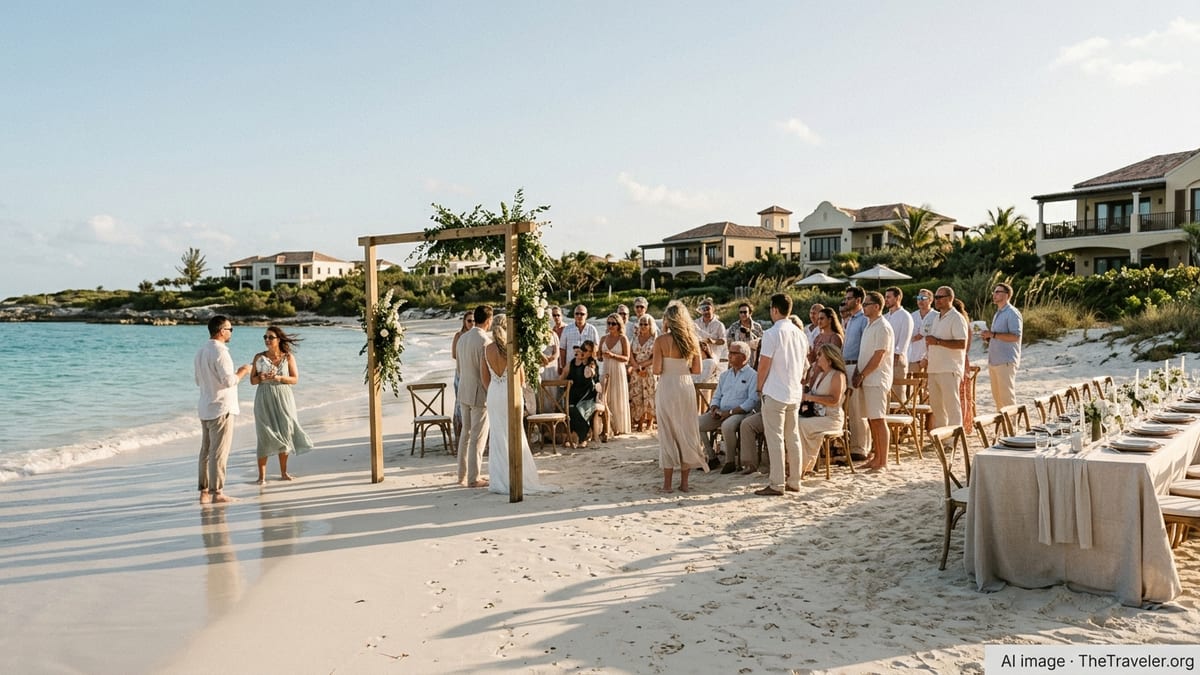
From Big Guest Lists to Micro-Elopements Abroad
Recent industry data indicates that destination weddings still represent a significant share of US couples marrying away from home, but the format is changing. Studies cited in trade coverage show that while classic resort celebrations continue, micro-elopements and small-scale gatherings have grown sharply for 2025 and 2026 bookings, sometimes outpacing traditional destination headcounts.
Micro-elopements, often defined as 10 guests or fewer and a streamlined reception or no reception at all, are increasingly being folded into destination plans. Reports from wedding planning platforms suggest these intimate events are attracting couples who want to prioritize location, photography and a multi-day travel experience rather than large catering bills and complex logistics.
Travel forums and vendor reports point to a growing number of couples reserving villas, small countryside estates or boutique hotels overseas and inviting only a handful of family and friends. This shift is not eliminating conventional destination weddings, but it is widening the spectrum, with everything from cliffside elopements in Europe to courtyard ceremonies in Latin America booked months rather than years in advance.
Vendors note that this smaller scale can change spending patterns. Budgets that once went toward feeding 150 guests are being redirected into private excursions, extended stays or one-of-a-kind venues, blurring the line between a wedding and a private group trip.
Greener Celebrations and Lower-Impact Travel
Environmental impact is becoming a central consideration for couples choosing to marry abroad. Sustainability-focused reports released in late 2025 and early 2026 highlight that a growing share of destination couples now look for venues and suppliers that offer eco-friendly options such as zero-waste decor, locally sourced menus and renewable-energy facilities.
Wedding industry analyses describe “green weddings” moving into the mainstream, especially for outdoor and travel-heavy celebrations. Venues that promote native landscaping, reusable or rented decor, and reduced single-use plastics report stronger interest, while planning guides emphasize carbon-conscious choices like consolidated group transfers and encouraging guests to extend their trip instead of flying in and out for a single weekend.
Advisers in sustainability-focused wedding features note that even couples committed to a far-flung location are asking more questions about local sourcing and waste. Buffets are giving way to plated seasonal menus, imported flowers are being replaced with regional blooms, and some resort groups have begun packaging carbon-offset contributions or charitable components into wedding offers for 2025 and 2026.
These shifts are aligned with broader survey findings from major wedding media brands, which show younger couples increasingly prioritizing eco-conscious details across their celebrations. For destination weddings, that trend is expressed most clearly in how and where guests travel, and how the event footprint is managed on site.
The Destination Map Widens Beyond Classic Hotspots
Planners and travel advisers report that traditional destination staples such as the Caribbean, Mexico and parts of Italy remain popular, but availability pressures and rising costs are pushing couples to widen their search. Discussions among vendors and travelers in early 2026 describe sought-after locales like Lake Como and certain Mexican beach towns as saturated, with prime 2026 and even 2027 dates already heavily booked.
In response, couples are looking toward emerging regions and secondary cities that offer strong air links and upscale infrastructure without the crowds. Recent promotional materials and press releases from tourism and venue operators point to places such as Switzerland, less-publicized Mediterranean islands, and smaller European wine regions promoting tailored wedding packages and immersive stays to attract this demand.
Travel forums show couples comparing lesser-known coastal areas, countryside estates and mountain resorts that can host 50 to 80 guests while providing a sense of privacy and local culture. These destinations often combine flexible buyout options with activities such as hiking, wine tasting or lake outings, turning the wedding into a shared holiday for the entire group.
The resulting landscape is more fragmented and more global. Rather than concentrating heavily in a handful of high-profile resort corridors, destination bookings for 2026 appear to be spreading out, helped by social media visibility and targeted campaigns by national and regional tourism boards.
Hybrid Travel Experiences and Longer Stays
According to wedding and travel coverage, another clear development is the blending of destination weddings with extended vacations for both couples and guests. Many resorts and tour operators now promote multi-day itineraries wrapped around the ceremony, with welcome events, local excursions and relaxed post-wedding gatherings replacing the traditional one-day schedule.
This approach aligns with a wider travel trend toward “curated experiences,” flagged in hospitality and luxury travel reports. For higher-spend couples, that can mean private yacht charters, guided city walks with local historians or chef-led market tours built into the wedding week. For mid-range budgets, group beach days, wine tastings or cultural workshops are taking the place of elaborate ballroom receptions.
Vendors also report more frequent “wedding plus mini-moon” patterns, in which couples stay on at the destination for several days after guests leave, or pair the event with onward travel to a nearby country. This staggered timing allows them to take advantage of long-haul flights and time off work, a practical concern that has become more prominent in post-pandemic travel planning.
Some planning guides suggest that these extended itineraries are changing how couples think about value. Instead of focusing solely on per-person reception costs, they weigh the overall experience across several days, from welcome drinks to farewell brunch, and consider what kind of trip they are creating for their closest circle.
Tech, Timing and Planning Realities for 2026 Couples
Technology continues to support destination planning, but in more grounded ways than the early experiments with fully virtual ceremonies. Current trends highlighted in wedding media show couples relying on group messaging apps, cloud-based planning tools and livestreams for guests who cannot travel, while still centering the in-person experience.
At the same time, planning timelines are tightening in some markets and stretching in others. Travel forums dedicated to destination weddings are filled with discussions of 2026 and 2027 dates, with couples in high-demand regions sometimes booking resort venues 18 to 24 months ahead, while those organizing micro-elopements find greater flexibility with shorter notice.
Publicly available information from venue groups and tour operators suggests that package-based resorts remain attractive for their predictability, particularly for couples organizing travel for dozens of guests. Yet independent properties, small estates and city venues are gaining ground with travelers drawn to customization and a more local feel, even if that means coordinating separate vendors.
Taken together, these patterns indicate that the next wave of destination weddings will be defined less by a single location or look, and more by a mindset. Smaller gatherings, greener choices and layered travel experiences are converging, turning the traditional “wedding abroad” into a flexible framework that couples are reshaping to fit their priorities.