

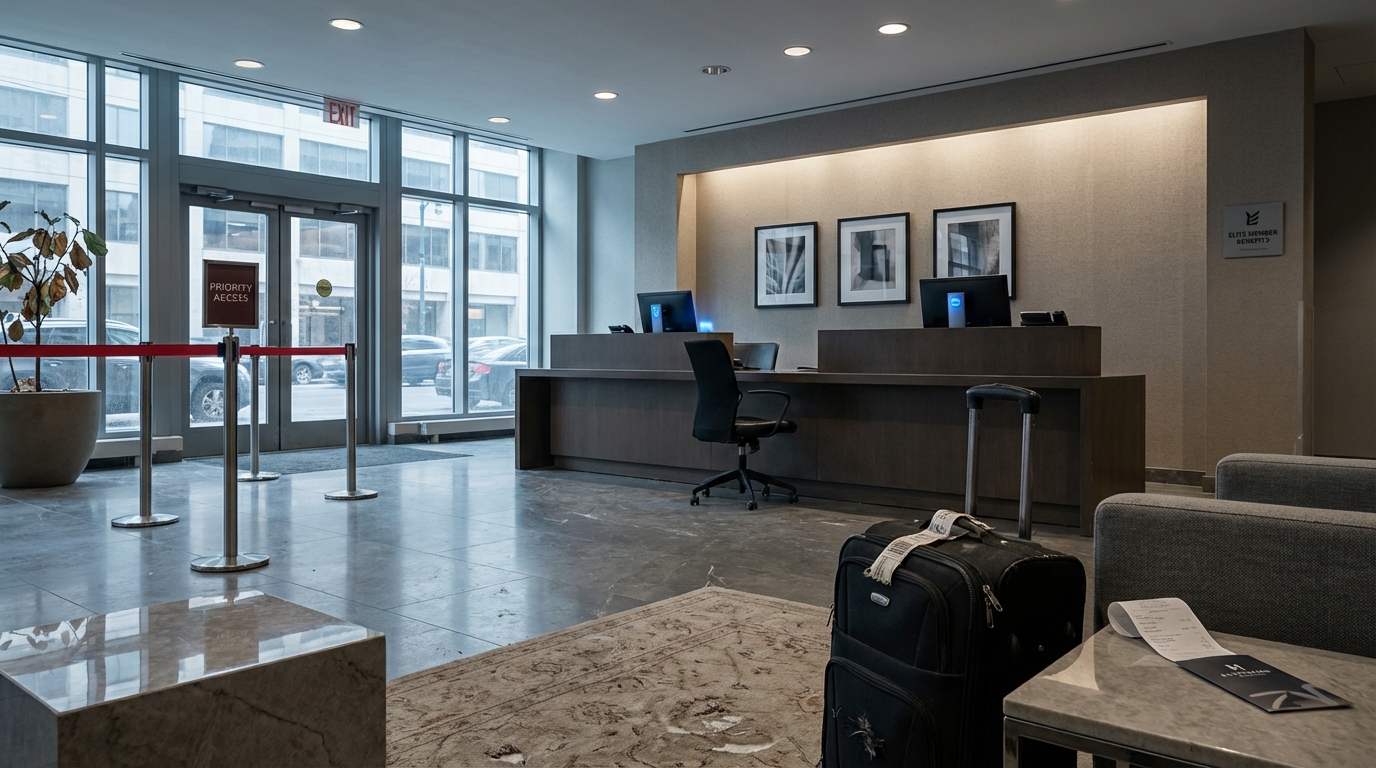
The loyal guest steps up to the front desk already rehearsing the lines. They mention the years of membership, the tier color printed on the app, the nights spent in identical rooms.
It used to feel like a kind of backstage pass. Now the response is just a polite nod, a quick glance at the screen, and the same standard script every other guest hears.
In many hotels, especially large chains, this has quietly become a familiar scene. Travelers arrive with expectations shaped by status charts and marketing language, only to find that the people actually running the property treat those expectations as optional. The program still exists in the background, but in the lobby it feels increasingly theoretical.
Across many brands, a pattern has emerged in which status promises are clearly written yet loosely enforced. Tier levels keep multiplying, benefit descriptions keep expanding, and the visual language of loyalty becomes more elaborate.
At the same time, individual properties appear to enjoy wide latitude in how much they honor, minimize, or creatively interpret those promises on any given stay.
Travelers who grew up with the idea that loyalty unlocks special treatment are finding that the ground has shifted. The familiar story was that loyalty points buy something like a soft form of recognition, a sense of being noticed.
The more nights someone stayed, the more that recognition seemed guaranteed. Now even frequent guests describe walking into a hotel feeling like any upgrade, amenity, or gesture is once again a matter of luck.
Part of the disconnect lies in how loyalty is framed from the top versus how it lands at the front desk. At the corporate level, status is often packaged as a mutual relationship built over time, almost a partnership between brand and traveler.
On property, especially in busy urban or resort locations, it can look more like a balancing act between occupancy targets, staffing constraints, group blocks, and revenue goals.
Managers in some properties appear increasingly blunt about this reality. Internally, status guests are just one category among many competing priorities. A room that could go to a paying upgrade, a group contract, or a walk in is now constantly revalued against the symbolic importance of keeping an elite member happy. In some hotels, that calculus seems to favor immediate revenue rather than long term loyalty.
This is where many travelers sense an unspoken tension. Status systems invite guests to think of themselves as part of an inner circle, but the culture of some properties treats that mindset as slightly naive or even entitled.
Behind the desk, staff may privately roll their eyes at what they view as exaggerated demands from guests who lead with their tier color. The elite guest sees themselves as an invested partner. Certain managers see them as one more expectation to manage.
The result is a widening gap between how loyalty feels from the outside and how it is perceived on the inside. Some frequent travelers arrive believing their history with the brand grants them unofficial ambassador status.
Yet in many lobbies, the person checking them in is focused on whether housekeeping is behind, how many late checkouts were granted, and whether there are enough clean rooms for incoming groups.
In this environment, elite benefits seem to function less as firm guarantees and more as negotiation starting points. Late checkout becomes “subject to availability” with a notably strict reading of “availability.”
Suite upgrades are framed as technically honored if a slightly larger room is assigned, even when higher categories sit empty. Lounge access can be inconsistently enforced, depending not on status alone but on how crowded the space feels that day.
Travelers describe a kind of emotional whiplash that comes from this inconsistency. On one stay, a property leans into the loyalty narrative, greeting a member by name, layering on small extras, and making the guest feel exactly as valued as the marketing suggests.
On the next, sometimes in the same city and same brand family, every request tied to status is met with tight smiles and references to “policy.” Over time, the pattern erodes trust in the system itself.
There is also a cultural shift around how status is perceived among other guests. Where high tiers once carried a quiet mystique, they are increasingly seen as common.
Lounge spaces fill with people juggling similar colored cards, and priority lines feel almost as long as regular ones. The psychological advantage of being part of a smaller group fades, yet the expectations that came with that identity linger.
Some hotel staff, faced with a steady stream of elite arrivals, appear to mentally group them together as a single demanding bloc. Stories circulate internally about guests who argue relentlessly over room types, breakfast inclusions, and check out times. Over time, these stories shape attitudes.
The idea of the “gross” elite traveler, who treats status like minor royalty, begins to overshadow quieter examples of loyal guests who simply hoped for a smoother stay.
Travelers sense this in micro interactions. A request that once felt welcome now seems to land as an imposition. A question about benefits is handled with clipped, formulaic answers.
The same language that promised recognition is echoed back like a script designed to close down conversation rather than open it. Loyalty still matters in the abstract, but in the moment it can feel like an inconvenience to the people enforcing it.
This shifting dynamic affects how travelers read every interaction. Check in no longer feels like a basic formality. It becomes a small test of how the property views the entire idea of loyalty.
Is status treated as a meaningful part of the relationship, or as a technical detail reluctantly acknowledged only when raised? Many guests arrive braced for disappointment, then feel almost surprised when a property fully leans into the published benefits.
None of this means loyalty programs are disappearing. Instead, their meaning is being quietly renegotiated at the counter, one eye contact and room assignment at a time.
The language remains grand, the digital badges shine brighter than ever, but the lived experience has grown more uneven. For travelers who built long habits around the promise of consistent recognition, that gap between theory and practice is becoming the new landscape to navigate.
In the end, what stands out is not a single confrontation or policy, but a pattern of subtle frictions. Status has not vanished, it has simply lost some of its predictability.
The lobby has become a place where stories about loyalty and power collide with the daily pressures of running a property. For anyone who travels often enough to hold a colored tier, that quiet shift changes how every check in feels, even before a word is spoken.