

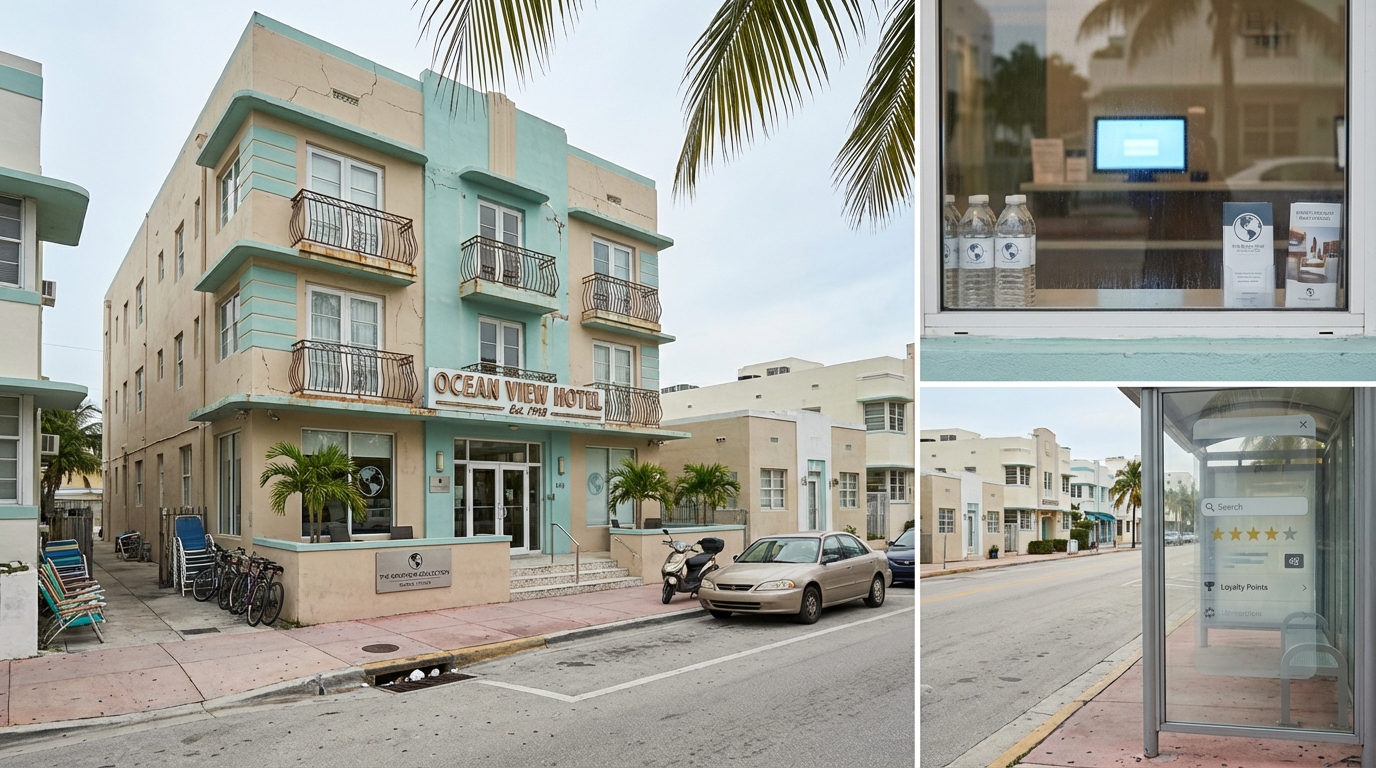
The moment feels familiar enough. A traveler scrolls through hotel options for a Miami Beach stay, expecting the usual divide between efficient chains and one-off design hotels.
Yet what appears on the screen now is something in between, an independent-feeling property suddenly framed inside a global loyalty badge.
For many regular visitors to South Beach, that shift lands with a small jolt. A place that once read as a neighborhood original now appears under a polished collection name, complete with carefully worded lifestyle language. The building looks the same in the photos, but it sits in a different mental category.
This is becoming a defining feature of travel in well-loved beach districts. Guests keep stumbling on hotels that feel handcrafted and local, only to discover that they are now part of a curated group sponsored by a large company.
The label promises elevated individuality, yet it also signals a tighter link into points programs, distribution systems, and global branding.
What feels unstable for travelers is not the building or the block but the identity of the stay. A hotel that once carried the straightforward aura of a neighborhood fixture now speaks the language of “portfolio,” “collection,” and “sense of place.”
The experience is marketed as both singular and standardized, suggesting a delicate balancing act that can be difficult to decode from a booking page.
Travelers are often caught off guard because the façade, lobby, and design references still whisper of another era. Art Deco lines, terrazzo details, and compact, courtyard-style layouts suggest a simple seaside escape.
Yet the fine print describes a tightly choreographed lifestyle concept, complete with branded bath amenities, structured wellness moments, and loyalty-point calculations folded into the choice of room type.
Many guests arrive expecting a small, slightly unpredictable independent hotel and instead encounter a place tuned to corporate performance metrics. The surprise is not necessarily unpleasant, but it creates friction between the memory of how these neighborhoods once felt and the reality of how they are now packaged and sold.
Large hospitality companies tend to frame this pattern as a win for both sides. The story usually emphasizes how distinctive properties retain their soul while gaining the benefits of far-reaching marketing, revenue systems, and a shared guest base. These narratives dwell on words like “iconic,” “landmark,” and “authentic,” suggesting that the affiliation is a gentle layer placed over a preexisting character.
In the same breath, there is a focus on the scale behind the scenes. References to millions of loyalty members, global networks, and distribution reach make it clear that the hotel is no longer just a building at a corner of Miami Beach, but a node in a vast commercial web.
Owners are reassured that they can stay independent while accessing those pipelines, a promise that quietly shapes what guests see and do on the property.
On the ground, travelers experience this duality in small moments. The staff may still greet guests like locals, remembering returning faces and sharing neighborhood suggestions in a casual, unhurried way.
Yet check-in can be dominated by loyalty tiers, upgrade logic, and scripted offers, as if a beachside inn has learned to speak in the cadence of a frequent flyer program.
The hotel’s amenities reflect the same tension. Pool terraces, bicycles, and complimentary beach chairs feel like classic South Beach touches, rooted in a slower era of coastal travel.
But they are also carefully photographed, formatted, and slotted into a broader promise that must align with other collection properties in different cities and climates, narrowing the range of acceptable quirkiness.
Even the atmosphere in the rooms tells this story. The herringbone floors and period-inspired details are arranged to signal history, while the linens, coffee machines, and amenity brands announce a standardized layer of luxury.
The result is polished and comfortable, yet it can leave guests wondering whether they are staying in a one-of-a-kind retreat or a replicable template dressed in Miami colors.
In booking behavior, this blending has consequences. Some travelers choose a place like this precisely because they can earn or redeem points at a beach hotel that does not look like a typical roadside chain.
Others discover the affiliation only at the final step of the reservation and feel that their search for something truly local has been gently redirected into a loyalty ecosystem they did not intend to join.
For repeat visitors who remember earlier stays in the same building or neighborhood, the shift can be especially disorienting. Room categories, pricing logic, and policies around pets, early check-in, or late check-out may now reflect centralized rules instead of purely local decisions.
The hotel still feels intimate in scale, but many of its behaviors now resemble those of far larger properties.
Behind the scenes, this convergence of independent aesthetics and corporate structure reshapes how neighborhoods are perceived. A district once known for idiosyncratic, sometimes unreliable little hotels now reads as a showcase of curated experiences tied into major brands.
Travelers may not always notice the corporate names, but they sense the smoothing out of rough edges and the careful calibration of every touchpoint.
This does not necessarily make the stay better or worse, but it alters expectations. Guests accustomed to the randomness of truly independent hotels might find the new order reassuring, while those seeking the unpredictability of an older Miami Beach may feel a quiet loss. Either way, the meaning of “boutique” in such areas is slowly rewritten by affiliations like this.
As more properties follow this path, the gap between global loyalty culture and local hotel charm becomes narrower yet more noticeable. Travelers moving through Miami Beach and similar destinations are learning that the most characterful-looking hotel on the block may now be part of an intricate corporate lattice.
The pattern matters because it changes what it means to feel rooted in a place, even for a few nights, leaving the modern beach stay hanging somewhere between nostalgia and networked efficiency, with no clear end point in sight.