

Choosing when to visit Arkansas can shape your entire experience of the Natural State. From steamy lake days in July to blazing foliage in late October and quiet winter hikes in January, each season offers a different personality. Understanding how weather, crowds, and seasonal events shift across the year will help you match the state’s rhythms to your own travel style and interests.
Understanding Arkansas Seasons at a Glance
Arkansas sits at the crossroads of the South and the lower Midwest, and its climate reflects that blend. Winters are generally mild compared with northern states, springs are lush and occasionally stormy, summers are hot and humid, and autumn brings some of the most comfortable conditions of the year. Because the state ranges from the highlands of the Ozark and Ouachita mountains to the low-lying Delta, timing also varies slightly by region.
For many travelers, the sweet spots are March to May and late September to early November, when daytime temperatures are usually pleasant for hiking, road trips, and exploring small towns. Fall stands out for foliage and crisp air, while spring earns attention for wildflowers and waterfalls. Summer, though hot, is ideal if your plans center on lakes, rivers, and air-conditioned attractions. Winter appeals to those seeking quiet trails, lower prices, and fewer crowds.
Rather than one single best month, Arkansas offers several prime windows depending on what you want to do. Leaf peepers and road trippers tend to favor late October. Paddlers and swimmers gravitate toward June and early September. Festival fans often target October for major events, or mid-summer for classic food and music celebrations. Knowing how these seasonal patterns work will help you choose the time that fits your version of the best experience.
Spring: Wildflowers, Waterfalls and Shoulder-Season Comfort
From roughly March through May, Arkansas shifts from winter’s chill into a green, fast-changing landscape. Daytime highs often climb through the 60s and 70s Fahrenheit, with cooler nights that still call for a light jacket. In many areas, this is one of the most comfortable times to be outdoors, especially if you prefer moderate temperatures to summer heat. Trees leaf out, wildflowers emerge along forest floors, and rivers run stronger from winter and early spring rains.
Spring is a strong choice if your perfect Arkansas trip involves hiking in the Ozark or Ouachita mountains, exploring state parks, or photographing waterfalls and rivers. Trails near the Buffalo National River, Mount Magazine State Park and Petit Jean State Park are especially scenic when fresh greenery and seasonal blooms frame overlooks and canyon walls. In March and April, you can often catch dogwoods and redbuds in bloom, which add subtle color to otherwise still-bare ridgelines at higher elevations.
Spring does come with some trade-offs. This is one of the more active storm seasons, and you may encounter thunderstorms, heavy showers, or windy fronts, especially in March and April. Severe weather is possible but not a daily occurrence, and most travelers simply build in flexibility, keeping an eye on forecasts and planning indoor alternatives for the occasional stormy afternoon. On the upside, these systems keep landscapes lush and refill waterfalls and swimming holes for late spring.
Crowds in spring are moderate. Popular parks and mountain towns see a bump over spring break periods and sunny April weekends, but overall pressure on campgrounds, cabins, and trails remains lighter than in midsummer or peak fall foliage. If you value a balance of comfortable weather and room to explore, late March through late April is one of the most reliable windows for a well-rounded Arkansas experience.
Summer: Lakes, Rivers and Long Evenings
June through August bring classic Southern summer conditions to Arkansas. Highs commonly climb into the upper 80s and 90s Fahrenheit, and humidity can be significant, especially in central and southern parts of the state. For travelers who thrive on warm weather and water-based recreation, this is prime time. For those sensitive to heat, it can feel intense during afternoon peaks, making early mornings and evenings the best windows for outdoor activity.
Summer is the season when Arkansas’s lakes and rivers truly shine. Destinations such as Lake Ouachita, Lake Hamilton, Greers Ferry Lake, Beaver Lake and the state’s network of clear rivers become hubs for boating, swimming, paddling and fishing. Many visitors plan entire trips around renting a lakeside cabin, houseboat, or campsite, spending midday hours on or in the water and retreating indoors or to shaded porches during the hottest part of the afternoon.
This is also the height of festival and small-town celebration season. Across June, July and August, communities spotlight everything from tomatoes and peaches to crawfish, grapes and watermelons, often pairing local food traditions with live music and parades. These events add a festive layer to summer visits, particularly if you enjoy mingling with locals and tasting seasonal produce at its peak. Evenings stay warm enough for outdoor concerts, patio dining and walks along riverfronts in cities such as Little Rock and Fort Smith.
Travelers considering a summer trip should expect higher humidity, occasional afternoon thunderstorms, and the possibility of heat advisories in July and August. Planning becomes key to comfort. Schedule longer hikes for dawn, seek shaded trails and creekside paths in the middle of the day, and build in time for cooling off in lakes or air-conditioned museums. Despite the heat, summer is the best overall choice if you want to experience Arkansas as a warm-weather playground centered on water, barbecues, and long golden evenings.
Fall: Foliage, Festivals and Near-Perfect Weather
For many visitors, fall is the standout season in Arkansas. From late September through early or mid-November, temperatures usually settle into a comfortable range, often from the upper 50s to upper 70s Fahrenheit, with lower humidity and crisp mornings. This weather alone would make autumn attractive, but the season is also when Arkansas earns its reputation for vivid fall color and an especially active events calendar.
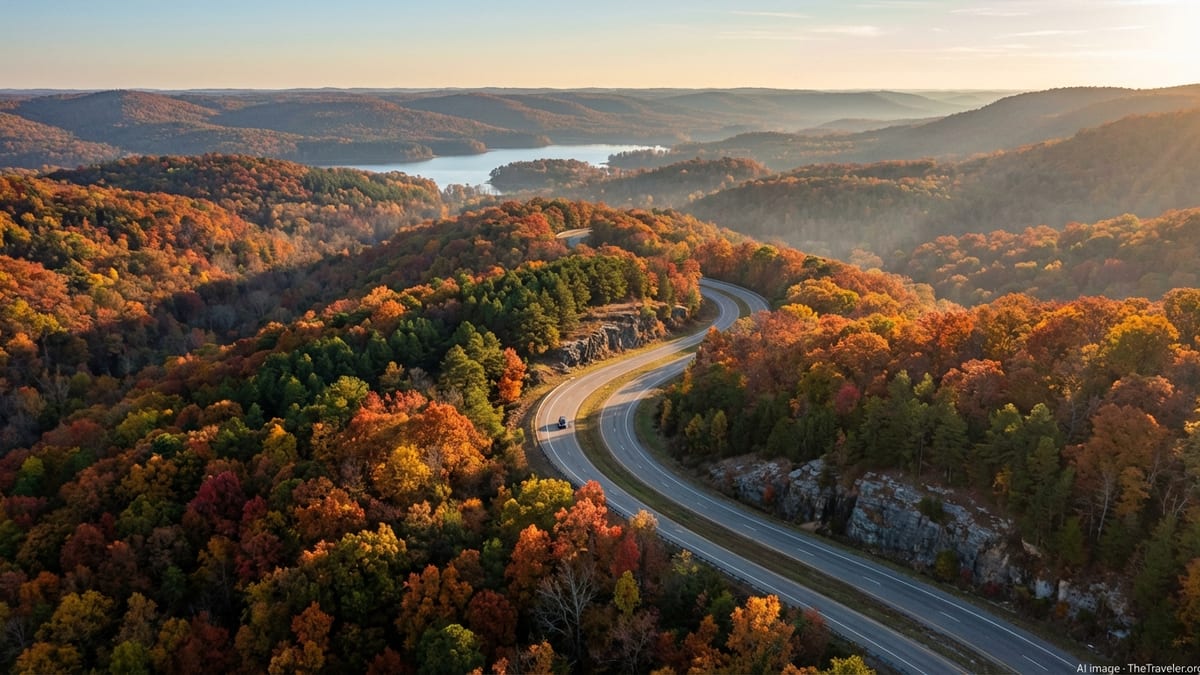
Foliage tends to arrive first in the Ozark highlands of northern Arkansas, where color typically begins to show in late September or early October. Peak conditions often occur in late October, especially at higher elevations and along scenic byways that thread through national forests. As the weeks progress, the color wave drifts south and east, reaching the Ouachita Mountains and central Arkansas roughly a week or two later, then the lower Delta and southern regions in late October into mid-November. This staggered timing gives travelers several chances to find peak color by adjusting their route across the state.
Some of the most popular leaf-peeping and scenic drives include high country around Mount Magazine and Mount Nebo, trails and overlooks in the Buffalo National River region, and routes that trace ridgelines above the Arkansas River Valley. In central Arkansas, areas around Hot Springs often enjoy their brightest color from late October into early November, while river corridors and lowlands in eastern and southern counties can remain surprisingly colorful well into November in a typical year. Because rainfall and summer heat influence foliage timing, travelers often consult seasonal updates from state parks before deciding on exact dates.
Beyond the leaves, fall is stacked with festivals and cultural events. October, in particular, is packed with state and local fairs, music festivals, harvest celebrations, and community gatherings built around pumpkins, apples, wine grapes and regional food traditions. For travelers who love pairing scenic drives with live music, farmers markets, and historic downtowns, this season is especially rewarding. The main trade-off is popularity: lodging in high-demand areas, especially in the mountains, can book out weeks or months ahead for prime fall weekends. Planning early and considering midweek stays can help you enjoy peak conditions with a bit more breathing room.
Winter: Quiet Trails, Lower Prices and Subtle Scenery
Winter in Arkansas, roughly December through February, is generally milder than in many northern or mountain states. Daytime highs in much of the state often hover in the upper 40s to 50s Fahrenheit, with overnight lows dipping near freezing. Snow does fall at times, especially in higher elevation areas of the Ozarks and Ouachitas, but major accumulations are typically brief and roads are often cleared relatively quickly. Ice events are possible some years, so flexibility and cautious driving remain wise, particularly in rural or hilly areas.
For travelers who prefer solitude to crowds, winter can be an appealing time to explore Arkansas’s outdoor areas. Popular trails that buzz in October weekends may be nearly empty on a clear January afternoon. Without foliage on the trees, long-range views can actually open up, revealing contours of ridges, bluffs and river valleys that summer greenery hides. Some hikers and photographers consider these bare-branch vistas and low-angled winter light a hidden seasonal gem.
Winter is also a good fit if your interests lean toward city breaks, hot springs, and cultural attractions rather than intensive outdoor recreation. Historic bathhouses, museums, galleries and music venues in towns across the state feel especially cozy in colder weather. Holiday events, lights displays and seasonal markets add sparkle in December, and travel costs for lodging often dip outside of major holiday or New Year periods.
The trade-offs in winter include a higher chance of gray or rainy days, early sunsets that shorten your window for outdoor exploring, and occasional cold snaps that can make hiking or camping less comfortable. Many travelers treat winter as a secondary or niche season for Arkansas: ideal for last-minute getaways, photography in unique light, or quiet weekends that balance short hikes with indoor dining and arts. If your priority is bright fall foliage or swimming temperatures, another season will suit you better, but for value and tranquility, winter has its own charm.
Regional Variations: Mountains, River Valley and Delta
Because Arkansas covers rugged highlands and broad lowlands, timing your visit can benefit from a basic understanding of regional differences. Generally, the Ozark Mountains in the north and the Ouachita Mountains in the west run slightly cooler than central and southern parts of the state, and seasonal transitions tend to occur earlier there. That pattern influences everything from the first wildflowers of spring to the last flashes of fall color in November.
In the Ozarks, higher elevations mean cooler nights and a quicker slide into autumn conditions. Wildflowers and greenery emerge earlier on south-facing slopes in spring, while fall foliage often appears earliest at ridgeline overlooks and along mountain byways. By late October, many of these areas are near or at peak color, and by early November, leaves at higher elevations may already be dropping while valleys and river corridors still glow. Travelers seeking that classic mountaintop fall panorama often target late October and adjust by a week depending on the year’s weather patterns.
Central Arkansas, including the Arkansas River Valley and the Ouachita Mountains, generally lags behind the Ozarks by roughly a week or two in both spring and fall. This means you can begin a foliage-focused trip in the north during late October and gradually work southward into early November, catching waves of color at different stages. It also allows some flexibility for spring trips: if you miss peak blooms in one region, you may still find dogwoods or redbuds showing off a little later in another nearby area.
Farther south and east, the Delta and Gulf Coastal Plain experience somewhat warmer, flatter conditions. Here, summers can feel particularly hot and humid, while shoulder seasons can be long and pleasant. Fall color arrives later and less dramatically than in the mountains but can still be rewarding along rivers, bayous and agricultural landscapes, especially in early to mid-November. Wildlife viewing, birding and quiet backroad drives are highlights, and the extended autumn can give travelers extra weeks of mild weather even after mountain regions have slipped toward winter.
Matching Your Interests to the Best Time to Visit
The best time to visit Arkansas depends heavily on what you want to experience. Leaf-peeping, swimming, paddling, hiking, festivals and city-focused trips all have slightly different ideal windows. Rather than trying to squeeze everything into one visit, many travelers pick a primary theme and choose timing that maximizes that experience while still leaving room for surprises.
If fall foliage and scenic drives are your top priority, focus on mid-October through early November. Begin in the Ozarks or higher elevations if you travel earlier, and shift south and east the later you visit. For hiking-first trips that avoid extreme heat but still offer lush landscapes, late March through April and again from late September into October are reliable bets. Backpackers and day hikers often favor these windows for cooler temperatures and more stable trail conditions.
Travelers planning primarily water-based trips will find June, early July, and early September especially appealing. Lakes are warm enough for swimming, outfitters are open for float trips, and long daylight hours maximize time on the water. If you prefer to avoid holiday crowds and the hottest late-July afternoons, consider shoulder weeks in early June or the first half of September, when kids may be just out of or just back into school and pressure on popular spots eases slightly.
For city breaks focused on dining, museums, music, and historic sites, timing can be more flexible. Early spring and fall offer pleasant walking weather, while winter can deliver excellent value and a quieter feel. Summer city visits work best if you plan for midday breaks in galleries, shopping districts or cafés and save extended walking tours for mornings and evenings. In all seasons, checking local events calendars before you book can reveal festivals, sports events or concerts that either enhance your trip or signal dates to avoid if you dislike big crowds.
The Takeaway
Arkansas does not have a single definitive best month to visit, but it does offer distinct seasonal strengths. Fall stands out for comfortable weather, colorful foliage and a rich festival calendar, making late October a top choice for many first-time visitors. Spring delivers fresh greenery, wildflowers and active waterfalls, ideal for hikers and nature-focused travelers who value slightly cooler temperatures. Summer rewards water lovers and festival-goers willing to embrace heat and humidity in exchange for long days on lakes and rivers. Winter, though quieter and more variable, offers solitude, value and subtle scenic rewards.
To decide when to plan your trip, start with your priorities. If you dream of driving mountain roads framed by fiery maples and oaks, target the heart of autumn and book early. If your perfect Arkansas day involves paddling a clear river, grilling by a cabin and diving into a lake at sunset, work around the warmest weeks of summer and early fall. Those who prefer quiet museums, historic towns and uncrowded trails may find the magic in off-season winter weekends or early spring days before the foliage fully returns.
Whichever season you choose, a bit of timing strategy will help you catch Arkansas at its best. Understand how the state’s regions move through the year, match your dates to your favorite activities, and leave space for the unexpected: a roadside farm stand, an unplanned hike to a bluff overlook, or a small-town festival you discover only after you arrive. With that flexible mindset, you can find a rewarding Arkansas experience in any month of the year.
FAQ
Q1. What is the single best month to visit Arkansas?
There is no universal best month, but many travelers consider late October ideal thanks to comfortable temperatures, vivid foliage in the mountains and an active festival calendar.
Q2. When is peak fall foliage in Arkansas?
Peak fall foliage usually occurs from late October into early November, arriving first in the Ozark highlands and then rolling south and east into the Ouachita Mountains and Delta.
Q3. Is summer too hot for a trip to Arkansas?
Summer can be hot and humid, especially in July and August, but it is excellent for lake and river trips. Plan outdoor activities for mornings and evenings and use midday for swimming or indoor attractions.
Q4. What is the best time to visit Arkansas for hiking?
Late March through April and late September through October are often best for hiking, with moderate daytime temperatures, generally stable trail conditions and either fresh spring greenery or fall color.
Q5. When should I visit Arkansas to avoid crowds?
To avoid crowds, look to winter months outside of major holidays, midweek trips in early spring, or non-peak summer weeks away from major lakes and festival weekends.
Q6. Is winter a good time to visit Arkansas?
Winter can be rewarding if you like quiet trails, lower lodging rates and a slower pace. Expect mild to cool temperatures overall, occasional cold snaps and a mix of clear and gray days.
Q7. When is the best time to visit Arkansas’s lakes and rivers?
Lakes and rivers are most popular from June through early September, when water is warm for swimming and outfitters are fully operating for boating and float trips.
Q8. What is the rainiest time of year in Arkansas?
Rainfall is spread across the year, but late winter and spring often see more frequent storms. Travelers in March and April should plan around possible rainy days and occasional thunderstorms.
Q9. When should I book if I want to travel during peak fall color?
For peak fall color, it is wise to book lodging several months in advance for popular mountain towns and state park areas, especially for weekend stays in late October and early November.
Q10. Are spring storms a reason to avoid visiting Arkansas?
Spring storms are part of the regional climate but are usually intermittent. Most travelers manage them by staying informed through forecasts and keeping flexible plans that include indoor alternatives.