

Austria’s compact size and dramatic landscapes make it unusually easy to combine mountain skiing, grand imperial cities, and glassy alpine lakes in a single trip. The tradeoff is that timing matters. Snow reliability, lake temperatures, and city crowds swing sharply with the seasons, and the “best” time to visit will look different for a first-time skier than for a traveler chasing summer swims or quiet museum days. This guide breaks down when to go to Austria for skiing, cities, and lakes so you can match your dates to the trip you actually want.
Understanding Austria’s Seasons at a Glance
Austria sits at the crossroads of Central Europe, where continental weather patterns collide with the Alps. That geography creates marked seasons. Winters in the mountains are cold and snowy, with reliable ski conditions from late November into April in many resorts. In the lower-lying valleys and cities, winter is chilly and often gray but not as severe, which is why Austria’s official ski season typically runs from late November to April while general tourism sees November to March as low season outside of holiday peaks.
Spring arrives unevenly. In April, you can still be skiing on high slopes in Tyrol while tulips bloom in Vienna. Average highs in Innsbruck, a good proxy for many alpine valleys, rise from the low 50s Fahrenheit in March to the low 60s by April and around 70 by May, while nights remain cool well into May. Summer is warm but not usually extreme, with July and August bringing the highest temperatures, frequent thunderstorms, and the liveliest atmosphere in lake districts.
Autumn (September and October) is Austria’s sweet spot if you want calmer cities and clear hiking days. In the cities, tourism experts often highlight May, September, and October as the most pleasant months for exploring Vienna, Salzburg, and Graz, thanks to mild temperatures and lighter crowds than the July and August peak. In contrast, the main mountain and lake holiday season focuses on July and August, when water temperatures and services are at their best.
When planning, it helps to think in overlapping seasons rather than just winter, spring, summer, and autumn. There is the dedicated ski season from late November to April, the high summer season from late May through August, and shoulder periods in April to early May and September to October. Each favors a different mix of skiing, city sightseeing, and lake time.
Best Time to Visit Austria for Skiing
If skiing is your priority, timing is your most critical decision. Austrian ski resorts typically open in late November or early December and close by mid to late April, though glacier areas can offer skiing from autumn into spring. Higher-altitude resorts and glacier ski areas in Tyrol and Salzburg provinces tend to have longer and more reliable seasons than small, lower-elevation family hills.
Early season in late November and the first half of December can offer quiet slopes and good value, especially in snow-sure areas such as Obergurgl, Sölden, Ischgl, and glacier resorts like Hintertux or Kitzsteinhorn near Kaprun. These higher regions often open from November and rely on both natural snowfall and extensive snowmaking. However, conditions can be more variable at this time in lower valleys, and some runs or lifts may still be coming online.
Late December and January are the heart of winter. By the Christmas and New Year holidays, higher resorts usually have solid bases, and the whole ski area is typically operational. This is also one of the busiest and most expensive times, particularly in premier destinations like St Anton, Lech, and Saalbach. Temperatures are at their coldest, which keeps snow quality high but can be bracing on exposed lifts and ridges.
February and March often deliver the best balance of snow and daylight. By February, most Austrian ski areas are fully covered, and days lengthen meaningfully. In March, high-altitude areas above roughly 1,500 meters frequently still have very good snow, with the bonus of more sunshine and slightly milder temperatures. March is especially appealing if you enjoy long lunches on sunny terraces and are willing to seek out north-facing slopes to preserve snow quality in the afternoons. Many non-glacier resorts then wind down their seasons by mid to late April, while glacier areas continue longer.
Choosing When to Visit Austria’s Cities
Austria’s cities have a very different rhythm from its ski resorts. Vienna, Salzburg, Graz, and Linz can be visited year-round, but comfort and crowd levels shift sharply between seasons. For urban sightseeing, many local tourism officials and travel experts emphasize May, September, and October as particularly pleasant months in the larger cities. During these shoulder seasons, daytime temperatures are mild, outdoor cafés are open, and hotel rates are often more forgiving than in high summer.
Spring in the cities, especially from late April into May, brings blooming parks, outdoor concert seasons, and café culture spilling onto sidewalks. Weather can be changeable, with alternating sunny days and chilly rain showers, but you avoid the heaviest summer crowds. It is an ideal time to pair Vienna’s museums and imperial palaces with short day trips to nearby wine regions or the Wachau Valley along the Danube.
Summer in Vienna and Salzburg, particularly in July and August, is the busiest period for city travel. Temperatures can climb into the high 70s or beyond, and there are more humid spells than many first-time visitors expect. In exchange, you gain late sunsets, bustling outdoor festivals, and the full cultural calendar, including the renowned Salzburg Festival in late July and August. For some travelers, the energy is worth the higher prices and crowds; for others, it feels too intense.
Autumn offers a slower, more contemplative city experience. September and early October still deliver comfortable temperatures and café life, but tourism thins, and you can enjoy major sights with shorter queues. By November, days become short and gray, but Christmas markets begin to transform city squares from late November into December, making this low sightseeing period an atmospheric time for those who enjoy seasonal lights, mulled wine, and indoor cultural attractions.
When to Go for Austria’s Lakes and Alpine Villages
Austria’s lake regions, including the Salzkammergut around Hallstatt and Lake Wolfgang, Carinthia’s warm southern lakes, and the Zell am See and Tyrol lake districts, are highly seasonal. Local tourism boards often recommend July and August as prime months for mountain and lake regions, because water temperatures are at their warmest, trail networks are clear of snow, and almost all seasonal cafés, ferries, and guesthouses are open.
Summer at the lakes brings long, light evenings, boat trips, and swimming in clear, often surprisingly warm water, especially in Carinthia where lakes are shallow enough to heat up quickly. Traditional festivals and open-air events are common, from processions on Lake Hallstatt in June to music nights on lakeside squares and cultural performances throughout July and August. The tradeoff is crowds, particularly at famous spots such as Hallstatt, where day-trippers can fill narrow streets by late morning.
Spring and autumn shoulder seasons can be rewarding alternatives if you value quieter paths over swimming. From late May into June and again in September and early October, temperatures around the lakes are typically mild enough for hiking, cycling, and scenic boat rides, while crowds are thinner. In spring, snow still caps the surrounding peaks, adding drama to the views, and wildflowers line lower-elevation trails. In autumn, forests turn copper and gold, making September in particular an excellent time for photography and mellow walks.
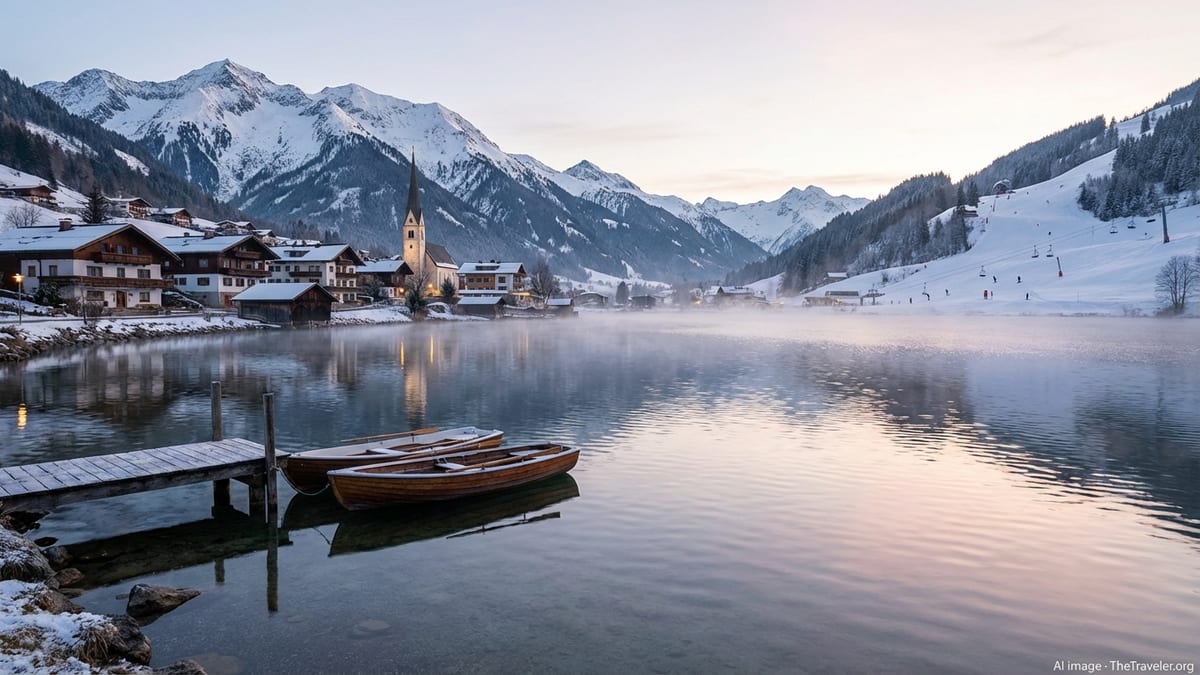
Winter is the calmest time on most lakes, apart from ski-linked resort towns where slopes rise directly above the water, such as Zell am See. Many lakeside hotels and restaurants reduce hours or close entirely between November and March. Those that remain open cater to travelers who like crisp air, quiet promenades, and the contrast between snow-dusted mountains and mirrored water. It is less suitable for water activities but can pair beautifully with nearby skiing or Christmas markets.
Combining Skiing, Cities, and Lakes in One Trip
One of Austria’s strengths is how easily you can combine different landscapes in a single itinerary. Efficient rail and road networks mean you can ski in Tyrol, tour Vienna’s palaces, and relax by a lake in the Salzkammergut region within a week or two if you time it carefully. The best seasons for a multi-theme trip are typically late winter into early spring and late summer into early autumn, when at least two of your priorities are at their best.
Between late February and late March, for example, high-altitude ski resorts still enjoy strong snow coverage, especially above 1,500 meters, while cities like Vienna and Salzburg are just beginning to emerge from winter. You can spend several days skiing in an area such as the Arlberg or the Ötztal, then travel by train to Salzburg for museums and concerts, and finish with a couple of quiet nights by a partially thawed lake. Lakeside towns will be calm at this time, and many seasonal services will not yet be running, but the scenery is spectacular and prices often lower.
Late May to June and September to early October are excellent for itineraries focused on cities and lakes, with only a light alpine component. In late spring and early summer, lowland hikes are open, the Danube valley is lush, and lakes are warming, while city temperatures are comfortable and daylight is long. Early autumn delivers similar advantages in reverse, with harvested vineyards, crisp mornings, and still-warm afternoons that suit both city walking and lakeside café hours. Serious skiing will not be an option then except on glaciers, and even there conditions vary, so winter sports should not be the centerpiece of a late-summer or autumn trip.
If you want to experience all three at their near-peak in a single journey, consider two separate trips rather than forcing skiing into a shoulder season city-and-lake itinerary or vice versa. Austria is compact enough that short, focused returns are realistic, and planning around seasonal strengths generally leads to a more relaxed experience than trying to do everything at once in a single week.
Crowds, Costs, and Festivals by Season
Beyond weather, crowds and prices shape when many travelers choose to visit. Austria’s overall high season for general tourism runs from late May through August. This is when city hotels and lakeside guesthouses see the highest occupancy, and major cultural events such as the Salzburg Festival draw international visitors. Lake regions like the Salzkammergut experience their peak in July and August, when schools across Europe break for the summer and the warmest water attracts families.
Shoulder seasons in April to early May and September to October reward travelers who want lower prices and fewer people, at some cost to guaranteed sunshine or full services. In the cities, these months often combine milder temperatures and thinner crowds, which is why they are often recommended for urban sightseeing. In lake and mountain regions, September and early October can feel almost like a quieter extension of summer, with many facilities still open on reduced schedules and daytime temperatures remaining comfortable.
Winter is officially low season for general tourism from November to March, but ski regions are a world apart. Around Christmas and New Year, and again during February school holidays in various European countries, popular ski resorts can feel as busy as Venice in summer. Accommodation and lift pass prices climb, and reservations become essential. In contrast, November outside of ski areas is one of the quietest months of the year, with short days, cool temperatures, and relatively few festivals beyond the opening of Christmas markets later in the month.
Festival-minded travelers should consider specific events when choosing dates. Summer is dense with open-air concerts and folk festivals in both cities and lake regions. June often brings traditional religious processions on lakes such as Hallstatt, while July and August host evening concerts and markets on lakeside squares. In winter, Advent and Christmas markets from late November through December in Vienna, Salzburg, Innsbruck, and smaller towns create a festive atmosphere that can transform an otherwise gray month into a highlight of the travel calendar.
Weather Considerations and Regional Variations
Austria’s climate can vary significantly over relatively short distances, especially between alpine valleys and lowland plains. Innsbruck, ringed by high peaks, has a humid continental climate with colder winters and greater annual temperature swings than many western European cities. Average high temperatures there climb from the low 30s Fahrenheit in January to the mid 50s in March, low 60s in April, and around 70 in May, before peaking in July and August. These patterns are representative of many mountain areas, where evenings remain cool even in summer.
Vienna, sitting in the eastern lowlands, tends to be drier and a little warmer than western alpine cities. Summers can feel hot and occasionally humid, particularly during heat waves in July and August. This can make midday sightseeing tiring but also supports a vibrant evening café and outdoor wine garden culture. Graz and the country’s southeast are often sunnier and slightly warmer again, useful to keep in mind if you are planning a spring or autumn trip and want the best odds of mild days.
In the lake districts, weather is shaped by altitude and surrounding topography. Lakes at moderate elevation, such as those in the Salzkammergut, warm sufficiently in summer for comfortable swimming, especially from late June through August. In shoulder seasons, the combination of cooler air and lower water temperatures can make swimming brisk, but hiking and boating remain attractive as long as you are prepared for rapid changes in conditions, especially afternoon showers and thunderstorms on warm days.
Winter visitors should treat alpine weather with particular respect. Rapid shifts from sunshine to snow, strong winds on ridgelines, and temperature inversions in valleys are all common. Even in March, valley floors may see mild afternoons while upper slopes stay well below freezing. Proper layering, good footwear, and a flexible attitude toward plans are key, whether you are skiing, walking around Innsbruck, or taking cable cars up to panoramic viewpoints above the lakes.
The Takeaway
There is no single best time to visit Austria for everyone, only better times for certain priorities. If you care most about skiing, look to the core winter months of late December through March, with a particular focus on February and March for a balance of snow reliability and daylight. For city breaks centered on Vienna, Salzburg, and Graz, late April through May and September through October often deliver the most comfortable mix of weather and crowd levels.
Lake and mountain holidays shine from late June into August, when water temperatures peak and festivals fill the calendar, though June and September can offer many of the same pleasures with more breathing room. Travelers hoping to blend skiing, cities, and lakes in one itinerary should target late winter or late summer and accept that one element will be secondary to the others.
By matching your travel dates to the seasonal strengths of each region, you can design an Austrian trip that feels less like a compromise and more like a series of perfectly timed experiences, whether that means carving fresh corduroy above a snowy Tyrolean village, lingering over coffee in a sunlit Viennese café, or watching the evening light slide across the still surface of an alpine lake.
FAQ
Q1. When is the best month to visit Austria if I want to ski and visit Vienna in one trip?
The most practical compromise is often February or March. High-altitude ski resorts usually still have strong snow coverage, and while Vienna can be cool and occasionally gray, daylight is longer than in midwinter and you can enjoy museums, cafés, and early signs of spring between colder days.
Q2. What months have the most reliable snow for skiing in Austria?
Late December through early March generally offer the most reliable snow in many Austrian ski areas, especially those above roughly 1,500 meters. February is often considered a particularly safe bet for good coverage, while March can combine high-elevation snow with sunnier days and longer lift-opening hours.
Q3. Is December a good time to visit Austria’s cities and Christmas markets?
Yes, December is atmospheric in Austrian cities, with Christmas markets, festive lights, and seasonal concerts. However, it is also a busy period with higher accommodation prices, and weather is typically cold and often overcast. If you enjoy winter moods and indoor cultural activities, it can be a memorable time to visit.
Q4. When is the best time to visit Austrian lakes for swimming and boating?
Late June through August is ideal for swimming and boating on most Austrian lakes, especially in regions like Carinthia and the Salzkammergut. Water temperatures are at their warmest, boat schedules are frequent, and lakeside facilities are fully open, although this is also the busiest and most expensive time.
Q5. Are spring and autumn too cold to enjoy Austria’s lakes?
Spring and autumn are generally too cool for relaxed swimming, but they are excellent for scenic walks, boat trips, and photography. From late May to June and in September, daytime temperatures are often mild enough for hiking and lakeside cafés, and the combination of snow-tipped peaks or autumn foliage with calmer crowds can be very appealing.
Q6. What is the quietest time to visit Austria if I want to avoid crowds?
Outside of ski resorts, November and early December, as well as much of January and early March in the cities, are relatively quiet. For a balance of quieter streets and reasonable weather, late April to early May and late September to mid October are usually less crowded than peak summer while still offering comfortable conditions and good access to attractions.
Q7. Can I still ski in April in Austria?
Yes, in many seasons it is possible to ski in April, particularly at higher-altitude resorts and glacier areas. Conditions vary by year, and lower resorts may close earlier, but glacier ski areas and snow-sure regions can often offer skiing into mid or even late April, though with softer snow in the afternoons and a more springlike feel on the slopes.
Q8. When is the best time for cultural festivals in Austria?
Summer is the richest period for cultural festivals, with major events like the Salzburg Festival in late July and August and numerous open-air concerts and local celebrations across cities and lake regions. Winter also has a strong festive season, with Advent and Christmas markets from late November and New Year’s concerts and events in many cities.
Q9. Is July or August better for visiting Vienna and Salzburg?
Both months are lively, but July can sometimes be slightly less crowded than August, when European school holidays are in full swing. Weather patterns are similar, with warm days and the possibility of heat waves. If you prefer marginally lighter crowds and still want the full summer festival atmosphere, early to mid July is often a good compromise.
Q10. How far in advance should I book if I plan to visit during peak season?
For peak winter skiing around Christmas, New Year, or February school holidays, and for high summer visits to popular lakes or major cities, it is wise to book accommodation and key transport several months in advance. Booking three to six months ahead usually gives you more choice and better prices, especially in smaller alpine villages with limited lodging.