

Phnom Penh is not a city of gentle seasons. The Cambodian capital lives on a cycle of heat, heavier heat, and heavy rain, with the added variable of when the world decides to show up.
Planning a visit here is really about choosing your preferred combination of temperature, humidity, and crowd levels rather than looking for a perfect, mild sweet spot. With a tropical monsoon climate and a tourism industry that now moves in clear patterns from month to month, understanding when to come can transform your experience of the city’s riverfront, markets, and sobering historic sites.
Understanding Phnom Penh’s Climate at a Glance
Phnom Penh has two main seasons: a dry season that typically runs from November to April and a rainy season from May to October. Within those broad bands, there are three distinct phases that matter most to travelers: the cool and busy window from December to February, the dry and increasingly hot months of March and April, and the steamy, rain-soaked but quieter months from May through October. Average temperatures sit around 27 degrees Celsius year-round, but the feel of those numbers changes dramatically with humidity, cloud cover, and wind.
Cool season in Phnom Penh, by local standards, stretches from roughly November to March, when daytime temperatures often hover between 22 and 28 degrees. This is when the air feels drier, skies are generally clear, and evenings along the Tonle Sap and Mekong rivers can seem almost breezy. April and May then deliver the hottest stretch, with daytime highs frequently in the mid to upper 30s and strong sun that makes midday walking a genuine test of endurance. From May, the southwest monsoon brings in moist air and regular showers, dropping temperatures slightly but raising humidity sharply.
Monthly climate data paints the subtler picture behind those seasons. Nighttime lows in Phnom Penh are warm all year, from around 21 to 22 degrees in December to about 25 degrees in May, which means there is little real cooling relief. Relative humidity is usually lowest near the start of the year, often around the low 70 percent range in January through March, then climbs steadily into the 80s by September and October. Those late wet-season months combine some of the highest humidity with frequent heavy downpours, creating sultry days that feel hotter than the thermometer suggests.
Rainfall is heavily concentrated in the wet season. From November to April there is minimal precipitation, and January and February are usually the driest months of the year. Showers typically begin in earnest in May, with a common pattern of bright, sunny mornings followed by short but intense afternoon or evening storms. September and October are often the wettest months, with the heaviest downpours and occasional disruption to road travel outside the capital. Within Phnom Penh itself, the rain may bring temporary street flooding, but services and attractions usually continue to operate as normal.
Cool, Dry and Crowded: December to February
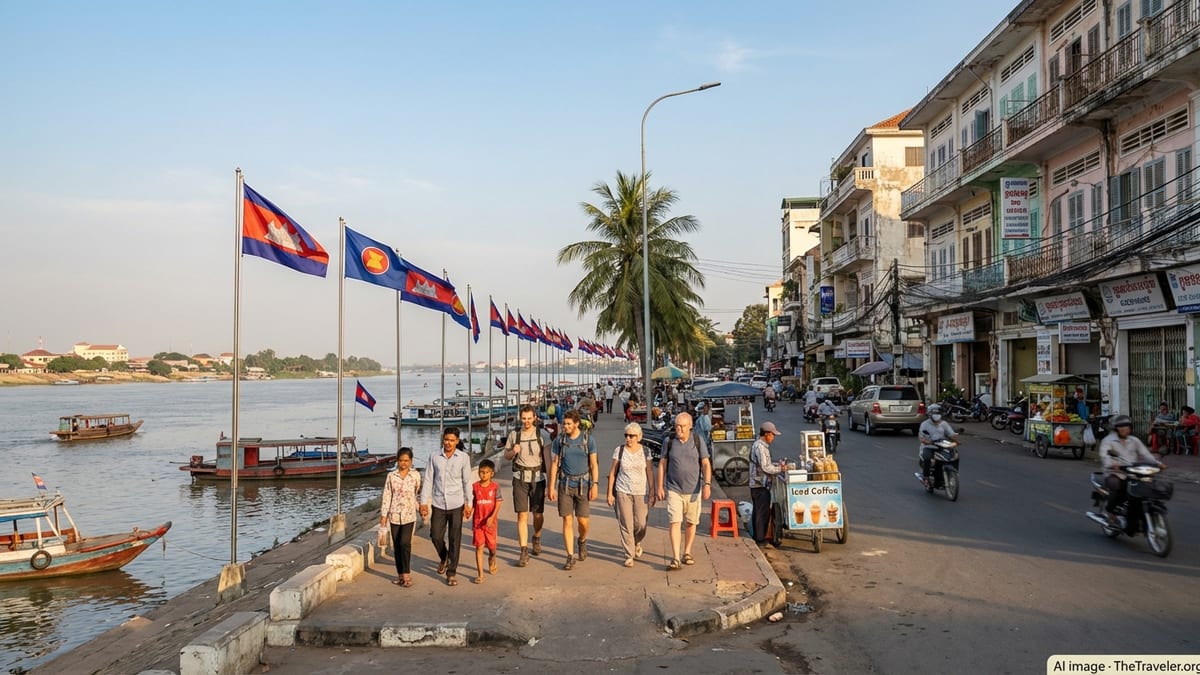
December, January, and February are widely considered the best months for pure comfort in Phnom Penh, particularly for travelers who are sensitive to heat. Daytime temperatures tend to stay in the mid to high 20s, nights are relatively cool, and the air feels less oppressive thanks to lower humidity and steady breezes. Skies are frequently clear, which means good light for photography and minimal risk of rain disrupting your plans. It is the time when long walks along Sisowath Quay, visits to Wat Phnom, and hours spent outdoors at the Royal Palace or Independence Monument feel genuinely pleasant.
This agreeable weather aligns almost perfectly with Cambodia’s peak tourism period. International arrival numbers for the country as a whole have rebounded strongly in the last two years, and the dry-season high from roughly December through February is once again bringing in the largest clusters of visitors. Phnom Penh does not see the same extreme congestion as Angkor Archaeological Park in Siem Reap, but the pattern is similar: more tour groups, fuller hotels, and busier restaurants, especially along the riverfront and around central landmarks.
In practice, visiting in these months means trading comfort for crowds and cost. Popular riverside hotels and boutique properties near the Royal Palace can book out several weeks or even months in advance, particularly around Christmas, New Year, Chinese New Year, and regional holidays. Room rates reflect demand, often sitting at their highest of the year. Key attractions such as the Tuol Sleng Genocide Museum and the Killing Fields at Choeung Ek also see steady streams of visitors, so expect more time sharing exhibits and memorial sites with groups and less solitude for reflection.
For many travelers, the trade-off is worthwhile. If this is your first time in Southeast Asia or you are planning a broader regional itinerary, these months offer the least complicated version of Phnom Penh: predictable weather, smooth overland connections, and fewer chances of disrupted flights. The recent opening of Techo International Airport, which now serves the capital with increased capacity, has further improved air connectivity in the cool, high-demand season. If your priority is to minimize discomfort from heat and humidity, December to February remains the most straightforward choice.
Heat Builds and Crowds Thin: March and April
By March, Phnom Penh’s weather begins a clear shift. The skies often remain dry and mostly blue, but temperatures climb noticeably, with daytime highs frequently reaching or exceeding 32 degrees and nights that can feel heavy and warm. Humidity edges upward, though it is still typically lower than at the height of the rainy season. For visitors, this is the moment when sun exposure and timing start to matter more. Walking between sights in the middle of the day can be draining, and most travelers find themselves seeking shade or air-conditioned cafes through the early afternoon.
In April, the heat intensifies further. Across much of Cambodia, this is typically the hottest month, with some days climbing into the mid to high 30s and heat indices that feel substantially hotter in the city’s built-up areas. The light is sharp, the air can seem almost still, and concrete and asphalt hold the warmth well into the evening. For those unaccustomed to tropical heat, it can feel unforgiving during midday hours. However, for early risers or night owls, mornings and late evenings can still be attractive times to explore the riverfront, markets, and outdoor dining scenes.
As the mercury rises, the crowds generally ease. International visitor numbers for Cambodia typically drop off after February as travelers shift to cooler destinations or adjust to shoulder-season pricing elsewhere in the region. Phnom Penh follows that pattern. Hotels that were close to full in January and February may now have more available rooms and more flexible rates, while popular restaurants along the riverfront become easier to access without advance reservations. Attractions remain open, but you are likely to share them with fewer tour groups, especially outside weekend peaks.
April also brings cultural rewards for those willing to handle the heat. The Khmer New Year period, usually falling in mid-April, is one of the country’s most important holidays. Phnom Penh can feel both festive and strangely quiet, as many residents travel to their home provinces, some businesses close, and others organize celebrations and traditional games. Visitors should expect some disruption to normal operating hours, but those who plan ahead can experience an important slice of Cambodian culture with fewer international tourists around. It is an excellent time to see how the city changes rhythm, though it demands tolerance for high temperatures and flexibility with logistics.
Wet, Green and Quieter: May to August
May marks the start of the true transition into the rainy season. Temperatures may remain high, but the first significant showers begin to roll in, softening the heat even as humidity intensifies. In Phnom Penh, this usually does not mean day-long deluges. Instead, travelers often encounter a steady pattern: bright mornings with scattered clouds, a heavy shower or thunderstorm in the late afternoon, and clearing skies in the evening. When rain breaks the heat, the city’s trees and parks quickly deepen in color, and the air can briefly feel fresher.
From June through August, this rhythm settles in. These months form the heart of Cambodia’s low tourism season. Countrywide, international visitor numbers drop well below peak-season levels, and that is reflected in Phnom Penh’s streets, museums, and hotels. Major sights such as the Royal Palace or National Museum become more relaxed, with shorter queues and more space to wander at your own pace. Markets like Central Market and Russian Market remain lively, but the balance shifts toward local shoppers and away from large tour groups.
The weather, while steamy, is not as restrictive as many first-time visitors imagine. Most days still offer several dry hours in the morning, and even afternoon storms are often relatively brief. With thoughtful planning, you can time indoor visits to museums or cafes during heavy rain and reserve outdoor walks or river cruises for clearer periods. The trade-off is the need to accept occasional sudden downpours, slippery pavements, and the possibility of localized flooding, particularly in low-lying streets after intense storms.
For budget-conscious and independent travelers, these months can be among the most attractive times to visit Phnom Penh. Hotel rates are frequently discounted, sometimes by substantial margins compared with peak season, and upgrades to larger rooms or better views are more readily available. Airlines may also adjust pricing in response to softer demand. The city’s new airport infrastructure is designed to manage increasing passenger volumes, so even in low season, arrivals and departures tend to move efficiently. If you value quieter streets, easier last-minute planning, and lower overall costs more than guaranteed blue skies, May through August offer a compelling balance.
Heavy Rains, High Humidity and the Calm Before Cool Season: September and October
By September, the monsoon is usually at or near its peak around Phnom Penh. Humidity levels are among the highest of the year, often reaching into the mid-80 percent range, and rainfall becomes more frequent and sometimes heavier. It is not unusual to see repeated downpours in a single day, and the heaviest showers can be intense, with strong winds and thunder. Temperatures, meanwhile, tend to moderate slightly compared with April and May, but the combination of moisture and warmth can make the air feel heavy and saturated.
These conditions bring both challenges and rewards. On the one hand, travelers must be prepared for flexible plans, occasional short-term flooding on certain streets, and less predictable daily weather. Some rural roads outside Phnom Penh, particularly in low-lying or unpaved areas, can become muddy or temporarily difficult to pass toward the end of the rainy season. Within the city, short delays in traffic are possible as drivers navigate waterlogged stretches after high-intensity storms.
On the other hand, this is when Cambodia is at its greenest. Fields beyond the capital turn intensely lush, and trees throughout Phnom Penh appear fuller and brighter. The nearby rivers swell, giving a stronger sense of the hydrology that shapes the country’s economy and daily life. For visitors who enjoy photographing dramatic skies, rain-washed streets, and reflections on wet pavements, September and October can be surprisingly rewarding. The interplay of sun and storm often creates vivid late-afternoon light when clouds break.
Tourism numbers in this period are generally among the lowest of the year, making it one of the quietest times to explore Phnom Penh’s cultural and historical sites. Hotels are keen for guests, which keeps room rates competitive and staff attentive. If you prefer a more contemplative experience at places like the Tuol Sleng Genocide Museum or Choeung Ek, this period can be ideal, provided you are comfortable moving around in high humidity and possibly getting caught in sudden storms. With appropriate footwear and a light rain jacket, the city remains entirely accessible.
Balancing Weather, Heat and Crowds by Traveler Type
Choosing when to visit Phnom Penh ultimately hinges on your priorities. If you are most concerned about staying physically comfortable and minimizing the risk of heat exhaustion, the cool, dry months of December, January, and early February serve you best. You will share the city with more visitors, pay higher prices on average, and work around busier attractions. Yet you will also enjoy some of the year’s clearest air, brightest sunshine, and most manageable walking conditions. This is particularly suitable for families, older travelers, and first-time visitors to Southeast Asia.
If you are comfortable planning your days to avoid the absolute midday peak of the sun, the shoulder months of March, early April, and November offer a strong compromise. In March and early April, you will face rising temperatures and strong sunlight but benefit from retreating crowds and fair weather. In November, you often catch the tail end of the rainy season, when the city remains green, rainfall drops off, and temperatures are trending toward the cooler range. These periods are useful for travelers who want more spontaneity than peak season allows but prefer not to deal with frequent rain.
For budget travelers, photographers, and repeat visitors, the wet-season months from May through October open up a different Phnom Penh. Here, the key is mindset. You trade guaranteed dry days and lower humidity for quiet temples, softer pricing, and interactions that feel less hurried. Afternoons may be spent under a cafe awning watching the rain, but evenings can still be lively once storms pass. The city’s infrastructure is designed to operate year-round, and with the newly expanded airport capacity, flights continue to arrive in steady numbers even in low season, though passenger volumes are smaller.
One more factor is worth considering in light of recent changes. With the inauguration of the new Techo International Airport, Phnom Penh is positioning itself as a more prominent regional hub, which may gradually spread arrivals more evenly across the year rather than concentrating them so sharply in the cool season. For now, however, the broad patterns remain familiar: comfort and crowds in the dry winter months, heat and fewer visitors in late dry season, and rain, greenery, and calm during the monsoon.
The Takeaway
Phnom Penh is, in practical terms, a year-round destination. The city’s essential experiences, from its riverfront life and temple complexes to its memorials and markets, remain available in every month, and the climate, while demanding, rarely becomes genuinely prohibitive. The real decision is not whether you can visit in a given season but which mix of heat, humidity, and human company you prefer.
If you want the simplest, most comfortable visit, target December through February and accept higher prices and busier attractions. If you want a balance of reasonable weather and fewer crowds, look to March, early April, and November while building in time to rest during the hottest hours. If your priorities lean toward value, quieter streets, and a city operating more for its residents than its visitors, embrace the wet season from May through October, packing light quick-dry clothing and preparing to change plans when the sky opens.
As Phnom Penh’s air links expand and Cambodia’s tourism continues to grow, these patterns may gradually adjust, but the fundamentals of its climate will not. The capital will remain hot, humid, and often rain-washed, with brief windows of comparative cool. Understanding that rhythm, and choosing your moment within it, is the most important decision you will make before stepping off the plane.
FAQ
Q1. What is the single best month to visit Phnom Penh for comfortable weather?
Many travelers consider January the most comfortable month, with relatively cool temperatures, low humidity compared with later in the year, and almost no rain, though it is also part of peak tourist season with higher prices and more crowds.
Q2. How hot does Phnom Penh really feel in April?
In April, daytime temperatures frequently climb into the mid to high 30s Celsius, and strong sun combined with urban concrete can make it feel considerably hotter, so walking in the midday hours often feels exhausting, especially for visitors not used to tropical conditions.
Q3. Will rain in the wet season ruin my sightseeing plans?
In most cases, no, because even in the wettest months the typical pattern is for heavy but relatively short showers, often in the afternoon or evening, leaving long morning or early afternoon windows with little or no rain to explore the city.
Q4. Are attractions in Phnom Penh open during the rainy season?
Yes, major attractions such as the Royal Palace, National Museum, Tuol Sleng Genocide Museum, and Choeung Ek remain open throughout the year, with occasional schedule changes or brief closures more likely around national holidays than because of weather.
Q5. When are hotel prices in Phnom Penh generally lowest?
Hotel prices are usually lowest from May through October, when international visitor numbers fall, and many properties respond with discounts, packages, or complimentary upgrades to attract guests during the rainy, low-demand season.
Q6. Is Phnom Penh less crowded than Siem Reap in peak season?
Yes, although Phnom Penh does see higher occupancy and busier streets in December through February, it generally feels less crowded than Siem Reap’s temple areas, which attract the majority of Cambodia’s international visitors in the cool, dry months.
Q7. What time of year is best for people sensitive to humidity?
Humidity is lowest around January, February, and March, so visitors who struggle with very moist air often find this period more manageable than the later wet-season months, even if temperatures are still warm.
Q8. Are there any seasonal risks from storms or natural disasters?
Cambodia is not typically affected by major tropical storms in the same way as some neighboring countries, and Phnom Penh does not face volcanic or earthquake risks, though heavy rains late in the wet season can cause short-term local flooding and travel delays.
Q9. How far in advance should I book if I plan to come in January?
If you are visiting in January and want a well-located hotel near the riverfront or major attractions, it is wise to book at least one to two months in advance, as this period coincides with both global holiday travel patterns and Cambodia’s own peak season.
Q10. Is it worth visiting Phnom Penh in September or October despite the heavy rains?
It can be very rewarding if you value quieter museums, green landscapes, and softer prices, and are comfortable working around frequent showers by planning indoor activities during storms and keeping your schedule flexible for changing weather.